
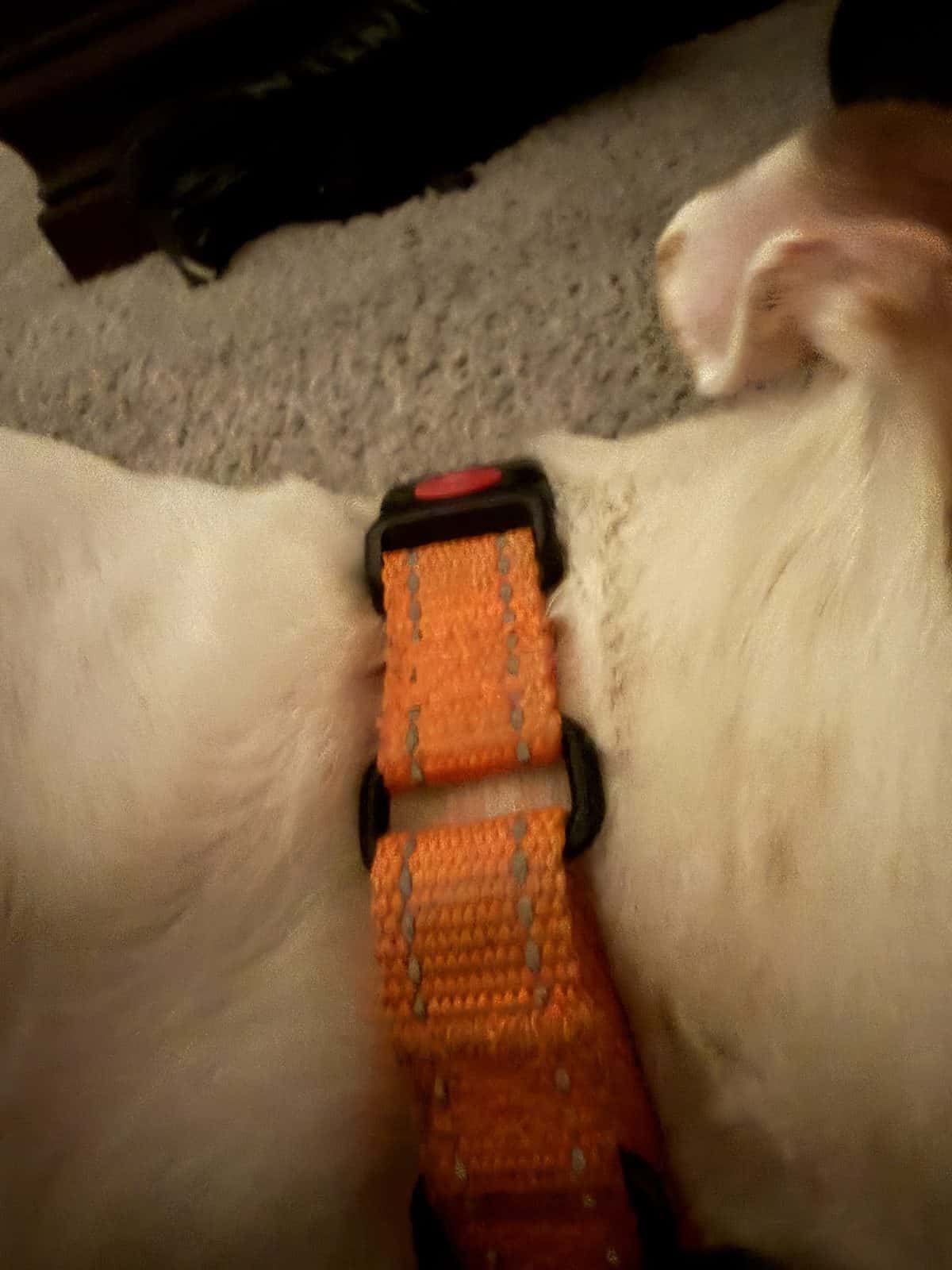
Choose a nylon collar for everyday wear, easy care, and value, and a leather collar for a classic look and long-term aging if you are willing to maintain it. That is the short answer to the leather versus nylon question. Both make fine collars, and the right one depends on your dog, your climate, and how the collar will be used, whether as an always-on ID collar or something dressier.
Quick Verdict
Pick nylon for a lightweight, water-resistant, affordable collar that is ideal for everyday wear and active or small dogs. Pick leather for a classic look and a collar that can age beautifully and last for years with care. Nylon is the practical default for an always-on ID collar, which is what I use for my small dog, the same nylon collar she has worn since the day I got her, while leather suits owners who want a premium look and will condition it. Neither is universally better, so match the material to how you will use it.
Why Trust This Guide
My dog wears a nylon collar around her neck at all times, mainly to hold her ID tags. For walks I use a harness, so her collar’s real job is everyday identification rather than leash pressure. The nylon collar is lightweight and comfortable enough that she wears it constantly without any issue, it has held up well, and it keeps her tags secure. My firsthand experience is with the nylon side; the leather points below are research-based, since I do not use a leather collar on her.
Key Takeaways
- what the walk asks of your gear
- Nylon is lightweight, water-resistant, affordable, and great for everyday wear.
- Leather is classic, sturdy, and ages well but needs care and costs more.
- Nylon suits active, small, or water-loving dogs and always-on ID collars.
- Pair either collar with a harness if your dog pulls on walks.
How We Compared Them
We weighed the factors that matter for a collar your dog wears daily: durability, comfort and weight, water resistance and ease of care, style, and price. We also considered how each holds up as an always-on ID collar versus occasional wear. Because a collar is gear rather than a health product, this comparison focuses on practical trade-offs, and each section names which material wins for that factor so you can match it to your dog.
Leather vs Nylon at a Glance
| Factor | Leather | Nylon |
|---|---|---|
| Weight | Heavier | Lightweight |
| Water resistance | Poor, needs care | Good, quick-drying |
| Durability | Long-lasting with care | Durable, low-maintenance |
| Style | Classic, ages to patina | Many colors and patterns |
| Price | Higher | Lower |
| Maintenance | Needs conditioning | Rinse or machine wash |
Leather Collars: Pros and Cons
Leather collars are the classic choice, valued for their appearance and the way good leather softens and develops character over time.
Pros
- Classic, premium look that ages to a rich patina.
- Strong and long-lasting when properly cared for.
- Softens with wear and can be gentle on the coat.
Cons
- Heavier, which matters more for small dogs.
- Damaged by water and needs periodic conditioning.
- Costs more than nylon.
Choose it for a classic look you will maintain. Skip it for water-loving dogs or a minimal-care collar.
Check Price on AmazonNylon Collars: Pros and Cons
Nylon collars are the everyday workhorse, lightweight and easy to live with, which is why my dog wears one around the clock for her tags.
Pros
- Lightweight and comfortable for constant wear, even on small dogs.
- Water-resistant and quick-drying, easy to rinse or wash.
- Affordable and available in many colors and patterns.
Cons
- Less of a premium look than leather.
- Can hold odor if it stays damp often.
- Cheaper versions may fray over time.
Choose it for everyday wear, value, and active dogs. Skip it if you specifically want a leather look.
Check Price on AmazonHead-to-Head, Factor by Factor
Durability
This is close and depends on care. Quality leather lasts for years and ages gracefully, but only if you condition it and keep it dry, while nylon is durable in a low-maintenance way that shrugs off water and rough play. For an owner who maintains it, leather wins on longevity; for hands-off durability, nylon is hard to beat. Winner: leather for long-term aging, nylon for low-maintenance toughness.
Comfort and Weight
Nylon wins, especially for small dogs. Its light weight makes it comfortable for all-day wear, which is exactly why my small dog wears hers constantly without bother. Leather is heavier, which a large dog may not notice but a small one can. For a collar that is on around the clock, lighter is friendlier. Winner: nylon.
Water Resistance and Care
Nylon wins clearly. It is water-resistant, dries fast, and can be rinsed or machine washed, handling rain, swims, and mud with ease, while leather is damaged by water and needs conditioning. For active dogs or low upkeep, nylon is the practical choice. Winner: nylon.
Style
Leather wins for a classic, premium look, developing a handsome patina as it ages. Nylon counters with endless colors, patterns, and even reflective options for night visibility. This one is subjective. Winner: leather for classic style, nylon for variety.
Price
Nylon wins on value, costing noticeably less than quality leather while still doing the job well. Leather is an investment that can pay off in longevity and looks if maintained. For a budget-friendly everyday collar, nylon leads. Winner: nylon.
Which Fits Your Situation
| If this is your dog | Better choice |
|---|---|
| Everyday ID collar, always on | Nylon |
| Small or lightweight dog | Nylon |
| Swims or gets wet often | Nylon |
| You want a classic, premium look | Leather |
| Tight budget | Nylon |
| You will condition and maintain it | Leather |
How to Choose Between Them
Start with how the collar will be used. For an always-on collar that mainly holds ID tags, nylon’s light weight and easy care make it the practical pick, as I found with my small dog. For a dressier collar you will maintain, leather rewards the effort with looks and longevity. Consider your dog’s size, since a heavier leather collar is more noticeable on a small dog, and your climate: rain, swimming, and mud all favor nylon. Whatever material you choose, if your dog pulls, pair the collar with a harness (a no-pull design for strong pullers) and use the collar for identification, which is how I set things up. For more on that split, see our guide on collars versus harnesses.
The Verdict
For most dogs and most owners, nylon is the practical everyday choice: it is lightweight, water-resistant, affordable, and low-maintenance, which makes it ideal for an always-on ID collar, and it is what I use on my small dog with a harness reserved for walks. Leather is the better pick when you want a classic, premium look and a collar that ages beautifully, provided you will keep it conditioned and dry. Since both make a solid, secure collar, the decision comes down to priorities: convenience and value point to nylon, style and craftsmanship to leather. Match the material to your dog’s size, your climate, and how the collar will be worn.
Recommended Reading
Common Collar Mistakes to Avoid
Using a Collar to Control a Puller
Relying on a collar to manage a dog that pulls puts pressure on the neck. For pullers, walk with a harness and let the collar carry ID tags, which is the setup I use. This spreads the force across the body and keeps the collar’s job simple and safe.
Fitting the Collar Wrong
A collar that is too tight is uncomfortable, and one too loose can slip off. Aim for two fingers of space between the collar and your dog’s neck, and check the fit regularly, especially on a growing dog. A proper fit matters just as much as the material you choose.
Letting a Leather Collar Get Wet
Water is hard on leather, causing it to stiffen, crack, or smell if it soaks repeatedly. If you choose leather, keep it dry, wipe it after rain, and condition it periodically. For dogs that swim or play in water often, nylon avoids this problem entirely.
Buying the Cheapest Nylon Collar
Bargain nylon collars can fray and flimsy hardware can fail. Choose a well-made one with sturdy buckles and stitching so it holds up to daily wear and keeps leash and tag attachment secure.
Frequently Asked Questions
Is leather or nylon better for a dog collar?
Neither is universally better; it depends on your dog and use. Nylon is lightweight, water-resistant, affordable, and great for everyday wear, while leather offers a classic look and long life with care. For an always-on ID collar or an active dog, nylon is the practical pick. For style and aging, leather wins if you will maintain it.
Which collar is better for a small dog?
Nylon is usually the better choice for a small dog, since its light weight is more comfortable for constant wear, which is why I use nylon on my small dog. A heavier leather collar is more noticeable on a little dog. If you prefer leather for a small dog, look for a thin, lightweight design to keep it comfortable.
Are nylon collars durable?
Quality nylon collars are durable and low-maintenance, resisting water and rough play, though very cheap ones can fray. Choose one with strong stitching and hardware and it will hold up to daily wear.
Do leather collars need special care?
Yes. Leather should be kept dry, wiped after it gets wet, and conditioned periodically to stay supple and prevent cracking. This upkeep is the trade-off for leather’s looks and longevity. If you want a collar you can rinse and forget, nylon is the lower-maintenance option.
Should my dog wear a collar all the time?
Many owners keep a lightweight collar on for ID tags, as I do, so the dog can be identified if they get loose. Make sure it fits properly and is comfortable, and supervise around anything it could snag on. Some owners remove collars during crate time or rough play for safety, so use your judgment for your dog.
Can I use a collar and a harness together?
Yes, and many owners do. A common setup is a collar for ID tags worn at all times plus a harness for walks, which is exactly what I use. The harness handles leash pressure while the collar carries identification. This keeps force off the neck for pullers while ensuring your dog is always identifiable.
How should a dog collar fit?
You should be able to slip two fingers between the collar and your dog’s neck: snug enough not to slip off, loose enough to be comfortable. Check the fit regularly, especially on growing puppies, and adjust as needed. A correct fit is important for comfort and safety regardless of whether you choose leather or nylon.
See the complete guide: the complete guide to choosing dog gear.
