
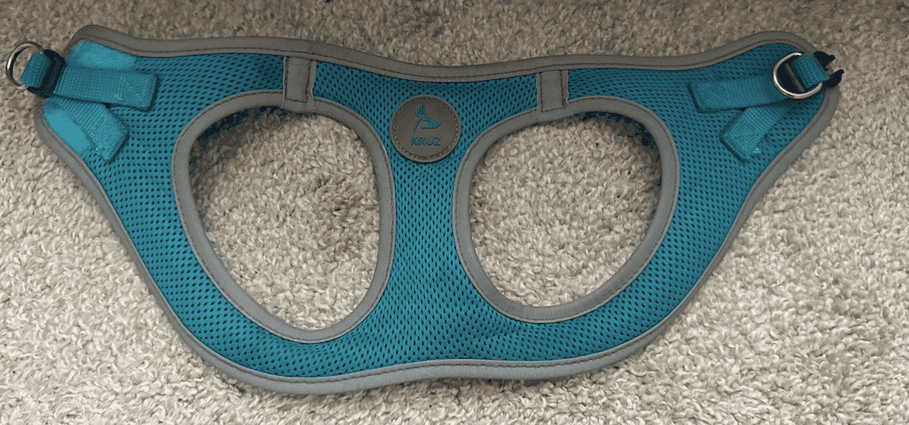
Small dogs pull, dart, and back out of gear in ways big dogs rarely do, so the right harness matters more, not less. The best dog harnesses for small dogs spread leash pressure across the chest instead of the throat, fit snugly without digging in, and stay put when your dog spots a squirrel. For little breeds especially, taking pressure off a delicate neck is the main reason many owners choose a harness over a collar for everyday walks. This guide sorts the field by closure style, fit, and your dog’s habits, with one pick I use on my own small dog for every walk.
Quick Verdict
For most small dogs, a soft mesh step-in harness with reflective trim gives a secure, breathable fit that is easy to put on and gentle to wear. The soft mesh KRUZ harness below is the one I use on every outing. Escape artists do better in a snug, three-point design, and dedicated pullers benefit from a front clip. The picks below match the harness to your dog’s size and behavior. Mesh is the format people ask about most, and we answer it in whether a mesh harness is enough.
Why Trust This Guide
Selections draw on fit, closure, and safety differences and the veterinary sources cited in Sources. First-person notes apply only to the KRUZ harness I use on my own small dog, shown in the attached photo.
Key Takeaways
- A harness moves leash pressure off the neck and onto the chest, which matters for small and toy breeds prone to airway sensitivity.
- Fit is everything: snug enough that the harness cannot twist or slip, loose enough for two fingers underneath.
- Step-in and over-the-head styles suit calm dogs; nervous or escape-prone dogs need a more enclosing design.
- Front-clip harnesses help with pulling; back-clip styles suit relaxed walkers.
Disclosure: HappyPaws is reader-supported. As an Amazon Associate, we earn from qualifying purchases made through links on this page, at no extra cost to you.
How We Picked the Best Small Dog Harnesses
We compared fit and adjustability, closure style, escape resistance, padding and breathability, and clip placement, then matched each pick to a dog rather than ranking on price alone. The neck-pressure notes follow guidance from the American College of Veterinary Surgeons, which identifies pressure on the neck as a clinical factor in small and toy breeds predisposed to tracheal collapse, the reasoning behind distributing leash force across the chest.1 Each pick below names who it fits and who should skip it.
1. Soft Mesh Step-In Harness (the one I use)
Why It Stands Out
The harness I reach for on every walk is a KRUZ soft mesh step-in, and it fits my small dog really well. The breathable mesh sits light against the body, the reflective gray trim shows up in low light, and the two top D-rings let me hook the leash on quickly and securely. It has never once strained or pressed too hard anywhere, even after constant use. For more on this, see our guide to lightweight mesh options.
Worth Knowing
Soft mesh is comfortable and cool, though it is not built for a determined puller who needs maximum control. Measure your dog’s chest girth and check the size chart, since a snug, correct fit is what makes this style work.
This harness fits calm small dogs who walk nicely on leash and need an easy, comfortable everyday option. Skip it if your dog pulls hard or routinely tries to back out of gear.
2. Adjustable Vest Harness (Custom Fit for Odd Proportions)
Why It Stands Out
An adjustable vest harness adds straps at the neck and chest so you can dial in the fit for a barrel chest, a narrow neck, or an in-between size. Small dogs vary a lot in shape, and this adjustability solves the gaps a fixed harness leaves. Fit problems show up as twisting, and our note on why a harness keeps twisting covers the causes.
Worth Knowing
More straps mean more buckles to fasten and check, which takes a few extra seconds. The payoff is a fit that stays secure on a tricky body shape.
This harness fits dogs whose proportions fall between standard sizes. Skip it if your dog fits a standard size cleanly and you want the simplest possible on and off.
3. No-Pull Front-Clip Harness (Pullers and Training)
Why It Stands Out
A front-clip harness attaches the leash at the chest, so a pulling dog gets turned gently back toward you instead of charging ahead. For a small dog learning leash manners, that redirection makes walks calmer without any harsh correction.
Worth Knowing
A loose front leash can tangle under the legs, so keep it short and steady. Pair it with reward-based training rather than relying on the harness alone, and our guide to harnesses for pulling goes deeper on technique.
This harness suits small dogs that pull and owners working on loose-leash walking. Skip it for a dog that already walks calmly and needs no extra control.
4. Escape-Proof Harness (Houdini and Nervous Dogs)
Why It Stands Out
An escape-proof design adds a third strap behind the ribcage, closing the gap a frightened small dog uses to twist and back out. For a nervous walker or a recent rescue, that extra point of contact is real peace of mind.
Worth Knowing
The enclosing fit takes a moment longer to put on and adjust correctly, and a too-loose strap defeats the purpose. Check all three points each time you head out.
This harness fits anxious dogs, flight risks, and skittish rescues. Skip it for a confident dog that has never tried to slip its gear.
5. Padded Step-In Harness (Sensitive and Comfort-First Dogs)
Why It Stands Out
A padded step-in harness cushions the chest and underarms, which helps a thin-skinned or short-haired small dog avoid rubbing on longer walks. The step-in shape also suits dogs that dislike anything going over the head.
Worth Knowing
Thicker padding can feel warm in summer, so a small dog that overheats may prefer airy mesh. Watch the underarm edges for any chafing on a new harness.
This harness fits comfort-sensitive dogs and head-shy small breeds. Skip it for a dog that runs hot or needs the lightest possible gear.
6. Lightweight Reflective Harness (Hot Weather and Night Walks)
Why It Stands Out
A thin, airy harness with bright reflective stitching keeps a small dog cool in summer and visible after dark. The minimal material is easy on a tiny frame and quick to dry after a wet walk.
Worth Knowing
Lightweight builds trade some durability and control for comfort, so they suit easy walkers more than strong pullers. Reflective trim helps in low light but does not replace a leash light on very dark routes.
This harness fits small dogs in hot climates and households that walk at dawn or dusk. Skip it for a heavy puller or a dog that needs a sturdier, more controlling harness.
Small Dog Harnesses at a Glance
| Pick | Style | Standout | Best for |
|---|---|---|---|
| Soft mesh step-in | Step-in, back-clip | Breathable, easy on | Calm everyday walkers |
| Adjustable vest | Multi-strap | Custom fit | Odd proportions |
| No-pull front-clip | Front-clip | Gentle redirection | Pullers and training |
| Escape-proof | Three-point | Hard to slip | Nervous and flight-risk dogs |
| Padded step-in | Cushioned step-in | Comfort, no rubbing | Sensitive dogs |
| Lightweight reflective | Airy mesh | Cool and visible | Hot weather and night walks |
How to Choose a Small Dog Harness
Four factors get you to the right harness. For a step-by-step walkthrough, our guide on choosing a harness for small dogs pairs well with the points below.
Fit and Measuring
Measure your dog’s chest girth at the widest point behind the front legs, then match it to the size chart rather than guessing by weight. A correct fit lets you slide two fingers under the straps with no more room than that, so the harness cannot twist, gap, or rub.
Closure Style
Step-in and over-the-head harnesses are quick for calm dogs, while three-point and vest designs enclose more of the body for security. Choose the simplest style your dog tolerates, and step up to a more enclosing design only if your dog tries to escape.
Clip Placement
A back clip suits relaxed walkers and keeps the leash off the legs, while a front clip helps redirect a puller. Some harnesses offer both, which lets you switch as your dog’s leash manners improve. Once you pick a harness, learn to fit it correctly so it works as intended.
Material and Visibility
Breathable mesh keeps a small dog cool, while padding adds comfort for thin-skinned dogs at the cost of warmth. Reflective trim or bright color helps drivers and you see your dog in low light, which matters on early or late walks. Pair the harness with a right-sized leash for small dogs for the best control.
Harness vs Collar for Small Dogs
This is the core decision for a little dog, and the difference is more than convenience.
Where the Harness Wins
A harness spreads leash pressure across the chest and shoulders instead of the throat, which matters for small and toy breeds that are predisposed to airway sensitivity.1 It also gives you more control and is harder for a small dog to slip than a collar.
Where the Collar Still Helps
A flat collar is the right place for ID tags and quick yard trips, and many owners keep one on alongside the walking harness. The collar holds identification; the harness does the walking. Using both covers identification and gentle control at once.
Common Small Dog Harness Mistakes to Avoid
A few simple errors lead to escapes, rubbing, or an unsafe walk.
Sizing by Weight Instead of Measuring
Two dogs of the same weight can have very different chest sizes, so weight alone leads to a poor fit. Measure the chest girth and the neck, then follow the maker’s chart for a harness that fits the actual body.
Fitting It Too Loose
A loose harness lets a frightened small dog twist and back straight out into traffic. Tighten it so only two fingers fit under the straps, and recheck the fit as your dog’s coat changes through the year.2
Ignoring Underarm Rubbing
Straps that sit too close to the front legs chafe the sensitive underarm area on longer walks. Look for a harness cut away from the armpits, and check a new one for red marks after the first few outings.
Leaving the Harness On All Day
A harness worn around the clock can trap moisture and rub the same spots constantly. Take it off indoors and between walks so the coat and skin underneath can breathe.
Recommended Reading
- how to handle the walk itself
- How to choose a harness for small dogs
- Dog collar vs harness, compared
- The best leashes for small dogs
- Toys made for small breeds
- harness and leash sets
- whether harnesses actually work
Small Dog Harness FAQ
What is the best harness for a small dog?
For most small dogs, a soft mesh step-in harness with reflective trim is the best all-around choice. It fits snugly, breathes well, and is easy to put on for everyday walks. Pullers do better with a front-clip harness and escape artists with a three-point design.
Is a harness better than a collar for small dogs?
For walking, yes. A harness spreads leash pressure across the chest rather than the throat, which matters for small and toy breeds prone to airway sensitivity. Keep a collar for ID tags, and use the harness for walks to combine identification with gentler control.
How should a small dog harness fit?
It should sit snug but not tight, with room to slide two fingers under any strap. A correctly fitted harness cannot twist, gap, or be backed out of. Measure the chest girth behind the front legs and follow the size chart rather than going by weight.
How do I measure my small dog for a harness?
Use a soft tape to measure the chest girth at the widest point just behind the front legs, and measure the neck where a collar sits. Match both numbers to the maker’s size chart, and size up if your dog falls between sizes.
What harness is best for a dog that pulls?
A front-clip harness redirects a pulling dog gently back toward you, which helps small dogs learn loose-leash walking. Pair it with reward-based training for lasting results, since the harness manages pulling but does not replace teaching the behavior.
How do I stop my small dog from escaping its harness?
Choose an escape-proof design with a third strap behind the ribcage, and fit it snugly so there is no slack to twist out of. Check all straps before each walk, since a loose harness is the usual reason a nervous small dog backs out.
Are step-in harnesses good for small dogs?
Yes, for calm dogs that walk nicely. Step-in harnesses are quick to put on and avoid going over the head, which suits head-shy dogs. Strong pullers and escape-prone dogs usually need a more enclosing or front-clip design for control.
Should my small dog wear a harness all the time?
No. Take the harness off indoors and between walks so the skin and coat underneath can breathe and recover. Constant wear can trap moisture and rub the same spots, which leads to irritation over time.
Related Reading
Explore more: small breed dog food, dog strollers for small dogs, dog lift harnesses, dog crates for small dogs, dog backpack carriers for small dogs, no pull harnesses large dogs, dog collars for small dogs, and cat harnesses.
Recommended Reading
See also our guides to anti bark devices dogs, dog lift harnesses, and dog strollers for small dogs.
Sources
- American College of Veterinary Surgeons. Tracheal Collapse (small and toy breed airway sensitivity and the rationale for reducing neck pressure). https://www.acvs.org/small-animal/tracheal-collapse/
- American Veterinary Medical Association. Pet Owner Resources: harness fit, supervision, and safe walking gear. https://www.avma.org/resources-tools/pet-owners/petcare
Related: mesh vs padded dog harness.
