
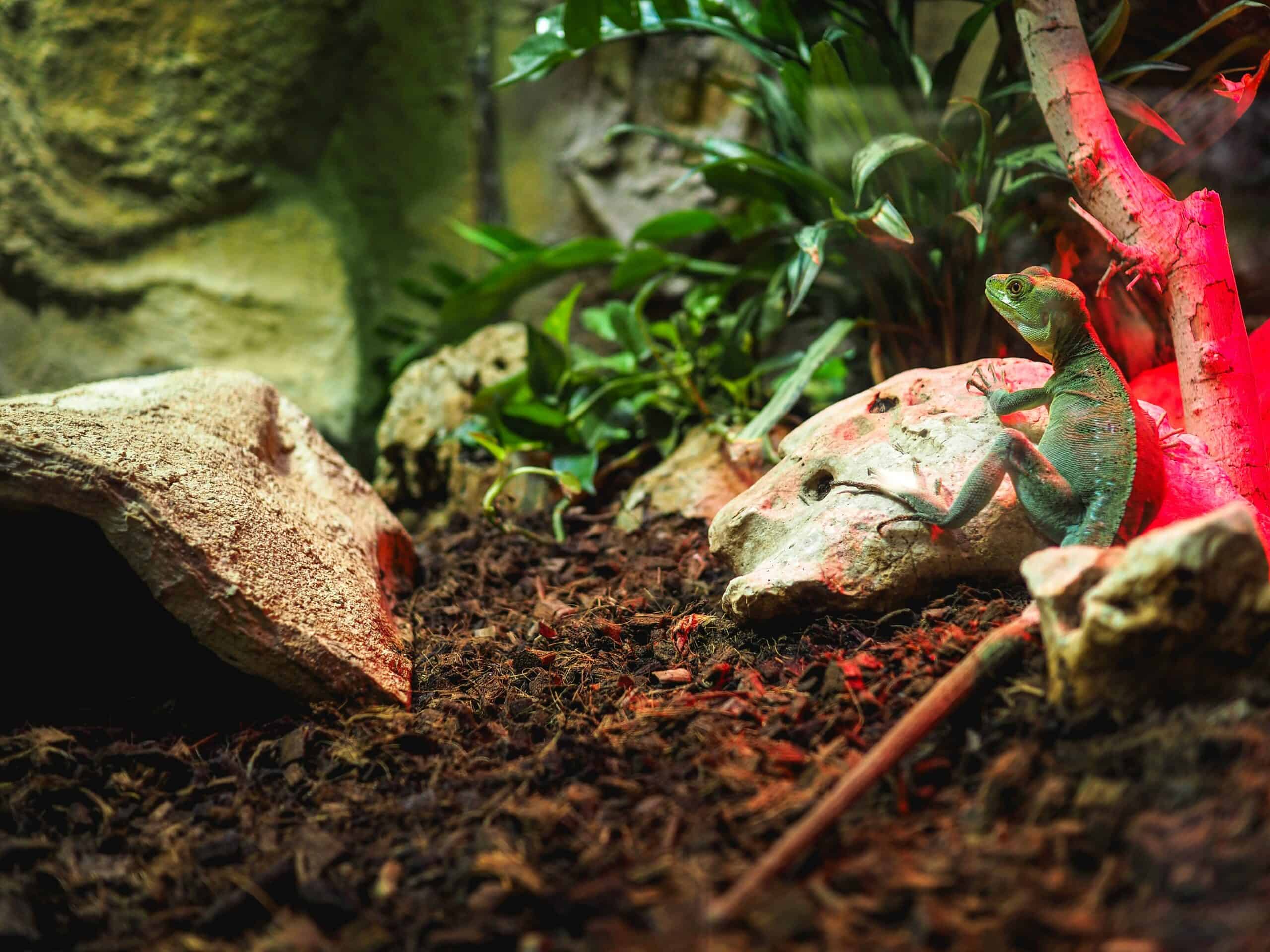
Humidity is the husbandry variable most often got wrong, because the fix people reach for is spraying more water and the actual problem is usually ventilation or substrate. A soaked enclosure that dries out by lunchtime is not a humid enclosure, it is a wet one twice a day.
The best reptile humidity and misting systems work by holding moisture rather than adding it repeatedly, which means a deep substrate, a humid hide and controlled ventilation before any pump gets involved. A timer-driven mister then maintains what the enclosure already retains.
Substrate choice does most of the work here, and reptile substrate and bedding covers which materials hold water and which do not.
Quick Verdict
Get a reliable hygrometer first, because most humidity problems are measurement problems. Then add a humid hide, which solves the issue for many species on its own. A timer-driven misting system is for setups that genuinely need maintained humidity rather than a daily spray.
Key Takeaways
- Measure before you change anything, since cheap dial gauges read badly.
- Deep moisture-holding substrate does more than any sprayer.
- A humid hide gives a moisture pocket without wetting the whole enclosure.
- Screen tops dump humidity, so partial covering is a standard adjustment.
- Constantly wet and poorly ventilated is worse than slightly too dry.
- Target ranges are species-specific and belong in a care sheet, not a roundup.
How We Picked These Systems
We sorted these by whether they add moisture or retain it, because those are different solutions to what looks like one problem.
Then we weighted control, since an uncontrolled sprayer produces swings and swings are harder on an animal than a steady slightly-off reading.
We have not run these or measured their output, so nothing here is presented as a result from our own setups, and no product here is claimed to prevent or treat any condition. Shedding problems and respiratory symptoms both need a reptile veterinarian rather than an equipment change.
1. A Digital Hygrometer, Best First Purchase
Why It Stands Out
You cannot manage humidity you cannot measure, and the analog dial gauges bundled with enclosures are widely regarded as unreliable. A digital probe gives you a number worth acting on.
Probe models let you read at the animal’s level rather than at the top of the enclosure, where the figure is different.
Worth Knowing
Humidity varies a lot within one enclosure, so a single reading describes one spot rather than the whole setup. Two cheap units beat one expensive one for that reason.
Sensors drift over time and cheap ones drift faster, so an old reading deserves some suspicion.
This suits every enclosure. Skip the stick-on analog dials entirely. Best for: knowing what your humidity actually is.
Check Price on Amazon2. A Humid Hide, Best Low-Tech Fix
Why It Stands Out
A closed hide packed with damp moss creates a high-humidity pocket the animal can enter when it wants, which is how a gradient is supposed to work. It solves shedding issues for many species without changing the rest of the enclosure.
It also costs almost nothing and needs no power or plumbing.
Worth Knowing
Damp moss in a warm box grows mold if it is not refreshed, so this is a weekly maintenance item rather than a fixture. Check it rather than trusting it.
Placement matters too, since a humid hide on the hot end behaves very differently from one on the cool end. Reptile hides and climbing decor covers positioning.
This suits most species, particularly during a shed. Skip nothing, it is the cheapest useful item. Best for: a moisture pocket without wetting the enclosure.
Check Price on Amazon3. A Timer-Driven Misting System, Best Automation
Why It Stands Out
A pump, a reservoir and nozzles on a timer deliver short bursts at set intervals, which maintains humidity rather than spiking it. For species that need genuinely high humidity it is the only practical approach.
It also runs while you are out, which daily hand spraying does not.
Worth Knowing
Tap water leaves mineral deposits that block nozzles and spot the glass, so distilled or filtered water is effectively required. That is an ongoing cost.
A system left running on an unventilated enclosure produces a permanently wet setup, which is its own problem rather than a solution.
This suits high-humidity species and planted setups. Skip it for arid species. Best for: maintaining humidity without you being there.
Check Price on Amazon4. A Cool-Mist Fogger, Best for Dense Humidity
Why It Stands Out
A fogger pushes an ultrasonic mist through a hose and fills an enclosure quickly, which suits species kept in genuinely tropical conditions. It raises the reading faster than a mister does.
Many run on their own timers or pair with a controller for automated cycles.
Worth Knowing
Foggers are frequently discussed as a respiratory risk when run on stagnant air, and the usual guidance is to pair them with ventilation and avoid continuous operation. This is the product that most rewards caution.
Standing water in the reservoir also grows bacteria, so cleaning is part of owning one, and whether a fogger suits your species is a reptile veterinarian’s question.
This suits tropical species with good ventilation. Skip continuous running. Best for: raising humidity quickly in a ventilated setup.
Check Price on Amazon5. A Humidity Controller, Best Precision
Why It Stands Out
A controller switches a mister or fogger on when the reading drops and off when it recovers, which replaces a timer’s guesswork with a response to actual conditions. That is what turns equipment into a system.
It also prevents the most common automation failure, which is a timer running during a humid spell and soaking everything.
Worth Knowing
A controller is only as good as its sensor placement, and a probe near a nozzle reads the mist rather than the enclosure. Placement is the whole skill.
These add cost and another failure point, and a failure here means an enclosure stuck wet or stuck dry.
This suits demanding species and multiple enclosures. Skip it for a simple humid-hide setup. Best for: responding to the reading instead of the clock.
Check Price on Amazon6. Screen Covers and Ventilation Control, Best Retention Fix
Why It Stands Out
A full screen top vents humidity straight out, which is why so many keepers cover part of it. Changing retention is usually cheaper and more effective than adding water.
Partial covers also let you tune the balance rather than choosing between sealed and open.
Worth Knowing
Covering too much creates stagnant air, which is the condition that makes high humidity genuinely risky. Some airflow is not optional.
Covers near a lamp also need to be heat-safe, and they change how much UVB and heat reach the animal. Reptile UVB lighting and fixtures covers what mesh does to UVB.
This suits glass enclosures with full screen tops. Skip sealing it completely. Best for: keeping the humidity you already have.
Check Price on AmazonHumidity Equipment at a Glance
| Item | Adds or Retains | Automated | Buy Order |
|---|---|---|---|
| Digital hygrometer | Measures only | n/a | First |
| Humid hide | Local pocket | No | Second |
| Timer misting system | Adds, on schedule | Yes | If needed |
| Cool-mist fogger | Adds quickly | Partly | Tropical species |
| Humidity controller | Controls the above | Yes | Demanding setups |
| Screen cover | Retains | No | Cheapest real fix |
What to Look For
A sensor you can place where it matters
Readings at the top of an enclosure bear little relation to conditions at ground level where the animal lives. A probe on a lead solves that.
Retention before addition
Substrate depth and ventilation set the baseline, and equipment maintains it. Buying a fogger for an enclosure that cannot hold moisture produces a wet enclosure rather than a humid one.
Water quality requirements
Misters and foggers clog on tap water, so distilled or filtered water is a running cost worth knowing about before you buy. Nozzles are the part that suffers.
What happens when it fails
A stuck-on pump floods an enclosure and a stuck-off one dries it out, and both matter more for a species with narrow requirements. Simpler systems fail less interestingly.
Misting or Retention
Retention is the foundation
Deep substrate that holds water, a partially covered top and a humid hide between them solve most humidity complaints with no equipment at all. That is where to start and often where to stop.
Misting maintains what retention holds
Automation makes sense for species that need consistently high humidity, or for a planted bioactive enclosure where the plants need it too. It is a maintenance tool rather than a rescue for a leaky setup, and reptile terrariums and enclosures covers which enclosures hold humidity in the first place.
What Trips People Up
Trusting the dial gauge that came with the tank
Analog stick-on gauges are widely considered unreliable, and a wrong reading sends you fixing a problem you do not have. Measure properly first.
Spraying the enclosure twice a day
Hand spraying produces a spike that falls away within an hour, which is a humidity swing rather than humidity. The animal experiences the average and the swings.
Sealing the enclosure to hold moisture
Stagnant humid air is the combination most often linked with respiratory problems by keepers, and it is worse than being slightly dry. Partial covering is the balance.
Treating a shedding problem as purely a humidity problem
Retained shed and poor sheds have several possible causes, and a reptile veterinarian is the right source rather than a bigger mister. Equipment is husbandry, not treatment.
Fitting Humidity Into the Setup
Heat and humidity interact
Warm air holds more moisture, so changing a basking setup changes the humidity reading without you touching anything else. Reptile heat lamps covers that side.
Water sources count
A large open water dish placed on the warm end raises ambient humidity measurably, which is the simplest adjustment available. Moving the dish is free.
Other small pets want the opposite
Rabbits, guinea pigs and birds all need dry housing, so a humid room suits none of them. Rabbit hutches and enclosures, guinea pig cages and bird cages cover those.
Aquariums face the mirror problem
Keeping water at a steady temperature is the same control question from the other direction. Aquarium heaters and thermostats cover it.
Recommended Reading
Worth reading next: rabbit litter and bedding, for how differently moisture is handled when the animal needs to stay dry.
Reptile Humidity FAQ
What are the best reptile humidity and misting systems
A digital hygrometer first, then a humid hide, which together solve most problems. A timer-driven misting system suits species needing maintained humidity, and a controller is worth adding where the requirement is narrow.
How do I raise humidity in a reptile enclosure
Change retention before adding water: deeper moisture-holding substrate, a partially covered screen top, and a large water dish on the warm end. A humid hide then provides a high-humidity pocket without wetting everything.
What humidity does my reptile need
That is entirely species-specific, so there is no figure worth quoting here. A species care sheet plus a reptile veterinarian who knows your animal is the right basis.
Are foggers safe
They are widely used and widely discussed as a respiratory risk when run continuously on stagnant air. The common guidance is to pair them with ventilation, run them in cycles, and keep the reservoir clean.
Why does my humidity drop so fast after misting
Because the enclosure is not retaining moisture, usually due to a full screen top or shallow non-absorbent substrate. Adding more water more often treats the symptom rather than the cause.
Can humidity be too high
Yes, particularly combined with poor airflow, and keepers generally treat constantly wet and stagnant as worse than slightly dry. Mold and respiratory problems both come up in that situation.
Do I need distilled water
For misters and foggers, effectively yes, because tap water deposits minerals that block nozzles and spot the glass. It is a small ongoing cost that saves replacing parts.
My reptile is having trouble shedding, is it humidity
It may be, and it may not be, since poor sheds have several possible causes. Add a humid hide and check your readings, and see a reptile veterinarian rather than escalating the equipment.
