
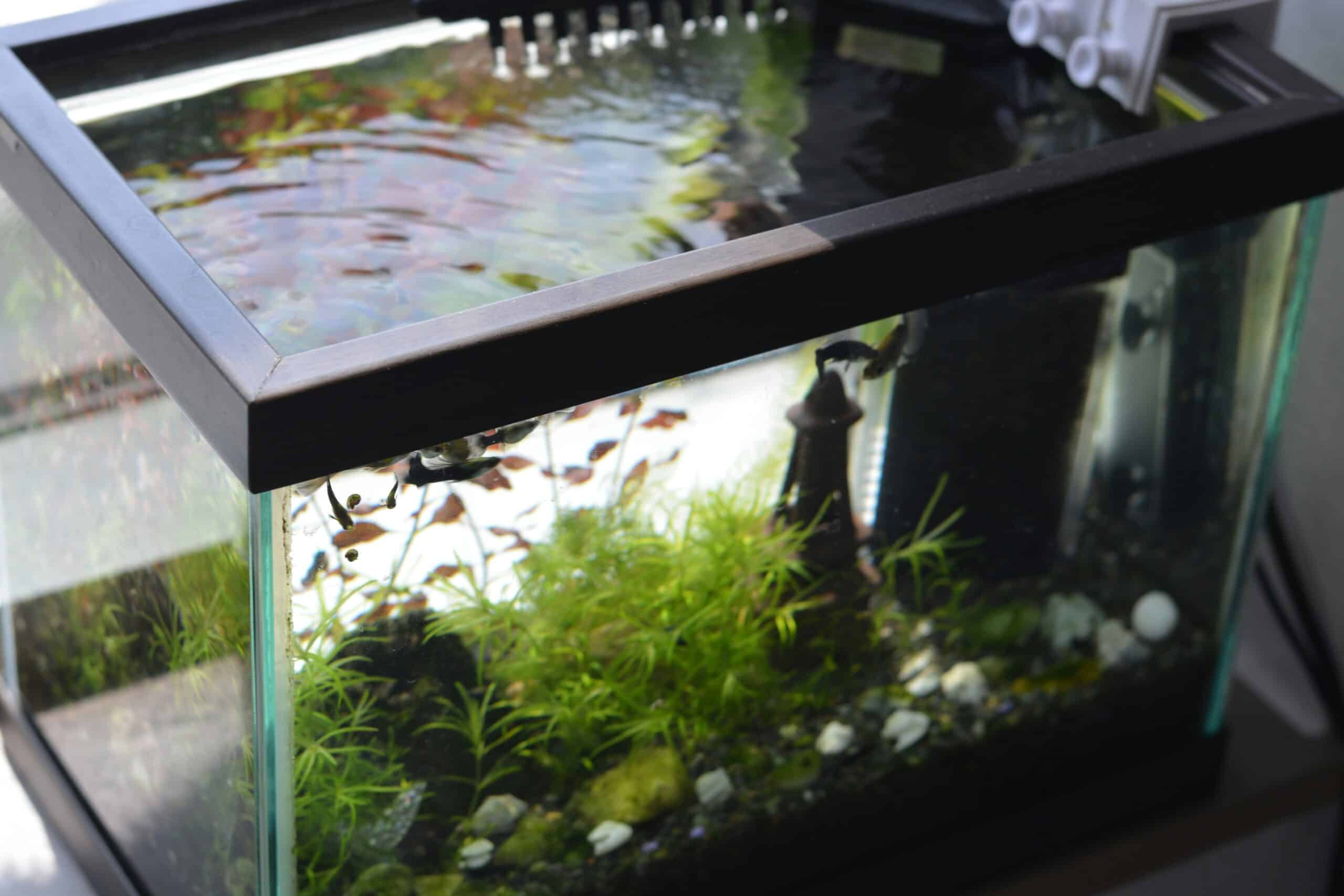
Size a heater at roughly 3 to 5 watts per gallon, then judge it on how tightly it holds temperature rather than how fast it heats. Aquarium heaters and thermostats matter because tropical fish tolerate a steady temperature far better than a drifting one, and most heater problems are control problems rather than power problems. A heater that swings three degrees twice a day stresses fish more than one running slightly cool.
The second thing that matters is what happens when the heater fails. Heaters fail stuck-on and stuck-off, and both are damaging, so a separate thermometer and an alarm are part of the setup rather than accessories.
If you are still choosing tank size, note that small volumes swing fastest, which our guide to beginner aquarium sizes covers.
The Short Version
Pick a submersible heater at 3 to 5 watts per gallon with an adjustable dial, then verify it against an independent thermometer rather than trusting the dial. Titanium with an external controller is the most durable and most accurate combination. Add a temperature alarm on any tank holding fish you care about.
Key Takeaways
- Roughly 3 to 5 watts per gallon suits most indoor tanks.
- Heater dials are frequently inaccurate, so calibrate against a separate thermometer.
- Two smaller heaters are safer than one large one on bigger tanks.
- Glass heaters crack, titanium heaters do not, and titanium needs a controller.
- Stuck-on failures cook a tank faster than stuck-off failures chill one.
- Room temperature swings drive heater cycling more than tank size does.
How We Picked These Aquarium Heaters
We ranked by temperature stability first. The number that matters is how tightly the unit holds its setpoint across a day, because fish respond to swings rather than to absolute values within a reasonable range. Units with tight differentials ranked above units with fast heat-up.
Failure behavior came second. We favored designs with genuine over-temperature protection, run-dry protection, and a shutoff that engages rather than a thermostat that simply sticks. A heater that fails safe is worth more than one that heats efficiently.
We also weighted physical durability. Glass heaters break when a large fish knocks them or when they are lifted from the water while hot, and that fragility is a real cost in a tank with active fish.
Finally we considered whether the unit can be verified. Sealed preset heaters offer no adjustment and no readout, which is fine in a nano tank and limiting anywhere else.
1. Submersible Glass Heaters
Why It Stands Out
The glass submersible heater is the standard of the category, and for good reason. It is inexpensive, widely stocked, available in every wattage, and accurate enough once calibrated against a separate thermometer. For most community tanks it is all you need.
Modern versions mount horizontally near the substrate, which improves heat distribution considerably compared to vertical mounting. Placing one in the filter outflow spreads heat further.
Worth Knowing
Glass breaks, and it breaks in two specific situations. Large or boisterous fish knock it against the glass, and lifting a hot heater into the air cracks it when it re-enters water. Always unplug and let it cool for fifteen minutes before any water change that exposes it.
The dial is a suggestion rather than a reading. Set it, wait a day, measure with an independent thermometer, then adjust and repeat.
Best for: Community freshwater tanks from 10 to 55 gallons where cost and availability matter. Skip it in tanks with large cichlids, plecos, or anything that rearranges the decor.
Check Price on Amazon2. Titanium Heaters
Why It Stands Out
A titanium heating element is effectively unbreakable in an aquarium, which removes the single biggest failure mode of glass. The tube is slim, conducts heat well, and survives being bumped by anything a freshwater tank contains. In a tank with big fish this is the durable answer.
Titanium also handles higher wattages in a smaller physical package, which suits large tanks where a glass heater of equivalent power would be awkward.
Worth Knowing
Most titanium heaters have no internal thermostat and require an external controller. That is a feature rather than a drawback, since external controllers are far more accurate than built-in dials, and it does mean buying two items.
A titanium heater plugged straight into an outlet will run continuously and cook the tank. Never run one without its controller.
Best for: Large tanks, cichlid tanks, and anyone who has already broken a glass heater. Skip it if you want a single self-contained unit with nothing else to buy.
Check Price on Amazon3. Preset Nano Heaters
Why It Stands Out
Preset heaters are sealed at a fixed temperature, usually somewhere in the mid-seventies Fahrenheit, with no dial to misread. In a small betta or shrimp tank that simplicity is genuinely useful, because there is nothing to set wrong. Physical size is also tiny.
Low wattage makes them safer in small volumes. A 50 watt heater in a 5 gallon tank is a hazard, and a 15 watt preset unit is not.
Worth Knowing
No adjustment means no adjustment. If the preset value does not suit your species, the heater is wrong for that tank and no setting will fix it. Check the stated temperature against your fish before buying.
Small tanks also swing fastest, so an independent thermometer matters more here, not less. Our guide to setting up a freshwater aquarium covers where equipment goes.
Best for: Nano tanks from 2 to 10 gallons holding a single betta, shrimp, or a small school. Skip it if your species needs a temperature outside the preset value.
Check Price on Amazon4. External Inline Heaters
Why It Stands Out
Inline heaters plumb into a canister filter’s return line and heat water outside the tank entirely. Nothing sits in the display, heat distributes perfectly because it enters with the flow, and the element cannot be knocked by fish. For a planted display tank it is the cleanest solution.
They also remove the burn risk of a hot element in a tank you reach into regularly.
Worth Knowing
They only work with a canister filter or an external pump, so a hang-on-back tank cannot use one. They also add two more connection points where a leak can start, and a leak below the tank is a floor problem.
Flow dependency is the real risk. If the canister stops, the inline heater has no water moving through it, so choose a model with run-dry protection.
Best for: Canister-filtered display tanks where visible equipment is unwelcome. Skip it entirely if your filter is a hang-on-back, internal, or sponge unit.
Check Price on Amazon5. External Temperature Controllers
Why It Stands Out
A controller plugs into the wall, the heater plugs into the controller, and a probe in the tank drives the switching. This is the single biggest accuracy upgrade available, because a controller with a digital probe holds a tighter differential than any built-in dial. It also gives you a temperature readout you can trust.
Crucially, it adds a second line of defense. A heater that fails stuck-on still gets cut off by the controller.
Worth Knowing
The probe is the weak point. Mount it away from the heater and away from the filter outflow, otherwise it reads a local hot spot and undershoots the rest of the tank. Verify the controller against a separate thermometer at setup.
Controllers need a spare outlet and add a box to hide. That is a small price for the accuracy.
Best for: Titanium heaters, large tanks, sensitive species, and anyone who wants a second safety layer. Skip it only on a nano tank with a low-wattage preset heater.
Check Price on Amazon6. Thermometers and Temperature Alarms
Why It Stands Out
An independent thermometer is the only way to know what the water is actually doing, and it costs almost nothing. Digital units with a probe read faster and more precisely than stick-on strips, and alarm models warn you when temperature leaves a set range. That warning is what turns a heater failure into an inconvenience.
Two thermometers at opposite ends of a long tank also reveal poor circulation, which no single reading can show.
Worth Knowing
Stick-on strips read the glass rather than the water, so treat them as a rough guide only. Floating glass thermometers are accurate and break easily, and digital probes drift over time and need occasional checking against a second unit.
Temperature measurement is worth doing well across pets generally, which is why our guide to pet thermometers exists for a different purpose entirely.
Best for: Every heated tank without exception, and alarms on any tank with fish you would be upset to lose. Skip nothing here, since a thermometer costs less than a single fish.
Check Price on AmazonAquarium Heaters and Thermostats at a Glance
| Type | Best Tank Size | Adjustable | Breakage Risk | Needs a Controller |
|---|---|---|---|---|
| Submersible glass | 10 to 55 gal | Yes, dial | Moderate | No |
| Titanium | 40 gal and up | Via controller | Very low | Yes |
| Preset nano | 2 to 10 gal | No | Moderate | No |
| Inline external | Canister tanks | Yes | None in tank | Sometimes |
| External controller | Any | Precise | N/A | N/A |
| Thermometer or alarm | Any | N/A | Varies | N/A |
How to Choose an Aquarium Heater
What wattage do you need?
Roughly 3 to 5 watts per gallon covers most indoor tanks, so a 20 gallon tank wants around 60 to 100 watts. Go to the upper end in a cold room and the lower end in a warm one. Oversized heaters cycle less often and overshoot further when they stick on.
Is one heater or two better?
Two smaller heaters beat one large one on tanks above roughly 40 gallons. Heat distributes better, a single stuck-on unit cannot cook the whole tank as fast, and a single failure leaves you partially heated rather than cold. Split the total wattage between them.
Where should the heater go?
Mount it horizontally, low in the tank, in or near the filter flow so warm water circulates instead of stratifying. Keep it clear of substrate and decor so nothing traps heat against the element. Place the controller probe at the far end.
How do you verify the temperature?
Set the heater, wait a full day, then read an independent thermometer and adjust. Repeat until the reading matches your target. Dials and even digital displays drift, so the verification step is not optional.
Glass vs Titanium
When glass is the right choice
Choose glass for community tanks up to about 55 gallons with calm fish, where the built-in thermostat keeps the setup to a single item. It costs less and it works. Handle it carefully around water changes.
When titanium is the right choice
Choose titanium for large tanks, boisterous fish, and any tank where a broken heater would be a disaster. Budget for a controller at the same time, since the element alone has no thermostat. The pair is more accurate as well as more durable.
What Trips People Up
Trusting the dial
Heater dials are commonly off by a couple of degrees, and some are off by more. The dial is a starting point and the independent thermometer is the truth. Verify at setup and again seasonally.
Lifting a hot heater out of the water
Thermal shock cracks glass heaters, and this usually happens during a water change when the level drops below the element. Unplug and wait fifteen minutes before the level falls, which fits naturally into the routine in our guide to aquarium water changes.
Oversizing for faster heating
A heater twice the needed wattage does not make a better tank, and it makes a stuck-on failure far more dangerous. Match wattage to volume and room temperature. Speed is not the goal; stability is.
Ignoring room temperature swings
A room that drops overnight makes the heater cycle harder, and that cycling is what fish feel. Moving the tank away from exterior walls, drafts, and vents often stabilizes temperature more than any equipment change. Cloudiness after a temperature swing is covered in why aquarium water goes cloudy.
Related Reading
- Cycling a new fish tank
- Aquarium starter kits and what they include
- Reptile heat lamps, for keepers running other heated habitats
Frequently Asked Questions
What size aquarium heaters and thermostats do you need per gallon?
Plan on roughly 3 to 5 watts per gallon, which puts a 20 gallon tank near 60 to 100 watts. Cold rooms need the upper end of that range. Splitting the total across two heaters improves both distribution and failure behavior on larger tanks.
Do aquarium heaters need a separate thermostat?
Glass submersible heaters have one built in, and titanium heaters usually do not. An external controller improves accuracy on either and adds a second cutoff if the heater sticks on. Titanium without a controller will run continuously.
Why does my heater not match the thermometer?
Heater dials are often inaccurate by a couple of degrees, and the probe or thermometer may also sit in a hot or cold spot. Move the thermometer away from the heater and the filter outflow, then recheck. Calibrate the dial to whatever the independent reading says.
Is one big heater or two small heaters better?
Two smaller units are better above roughly 40 gallons. Heat spreads more evenly, a stuck-on failure raises temperature more slowly, and a stuck-off failure leaves you partially heated. Split the calculated wattage between them.
Can an aquarium heater break the glass of the tank?
A heater resting directly against the tank glass can create a hot spot, which is why mounts hold it slightly off the pane. Mount it properly with clearance and keep substrate away from the element. The more common breakage is the heater itself.
What temperature should a tropical freshwater tank be?
Most common community species sit comfortably in the mid-seventies Fahrenheit, though the correct figure depends on the specific fish you keep. Look up your species rather than using a general number. Stability within a degree matters more than the exact setpoint.
How long do aquarium heaters last?
Expect a few years from a glass submersible and longer from titanium with a controller. Replace any heater that has cracked, that fails to hold setpoint, or that has been run dry. Keeping a spare on hand is cheap insurance.
Do you need a heater in a room that stays warm?
Often yes, because rooms swing overnight and across seasons even when they feel warm. The heater’s value is holding a steady temperature rather than raising it. A low-wattage unit plus a thermometer handles a warm room fine.
