
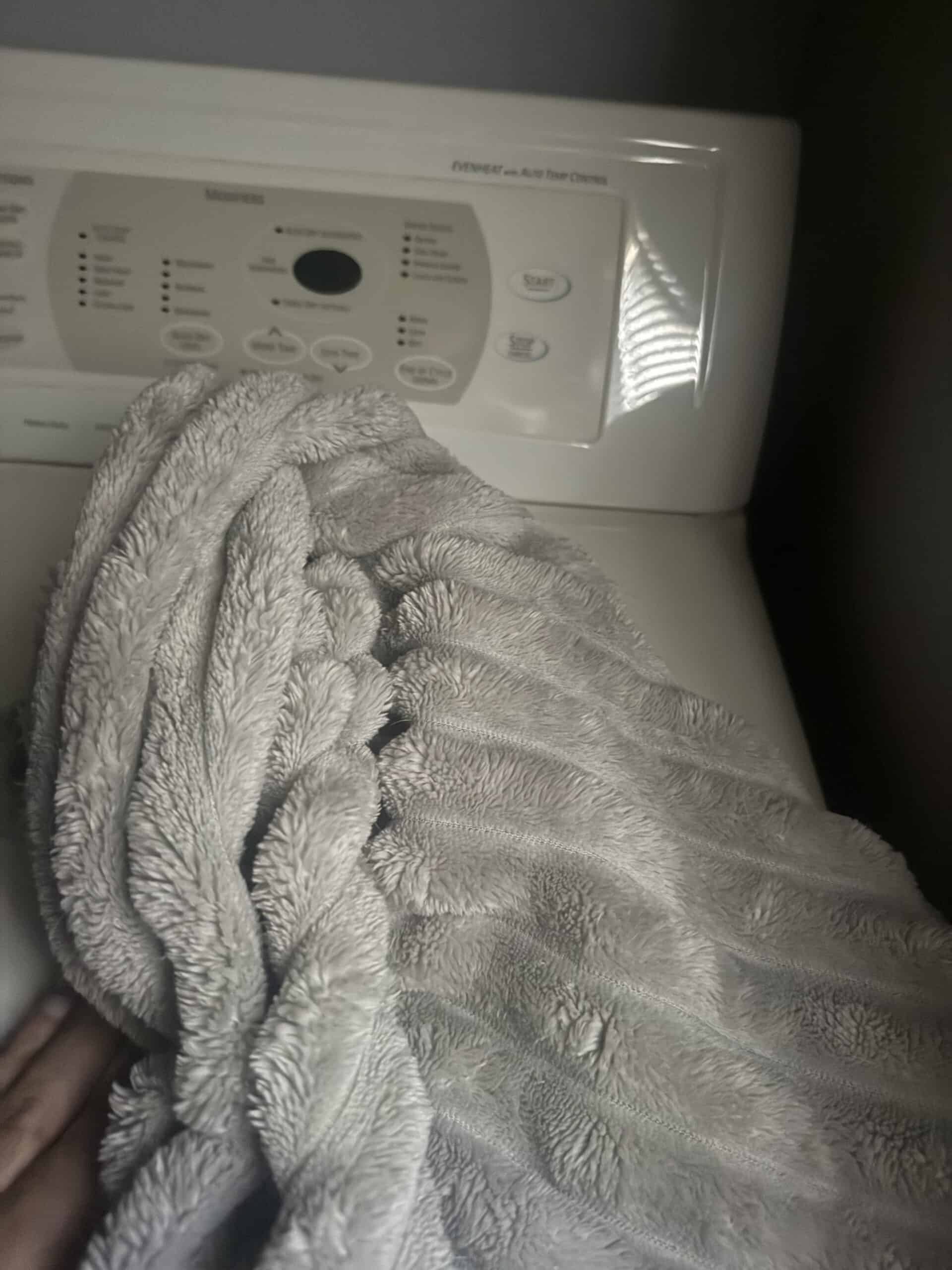
Most dog blankets go through the dryer without trouble, and the exceptions are the ones with a waterproof backing, a bonded fleece layer, or any elastic in them. Putting a dog blanket in the dryer is safe for plain fleece, cotton, and microfiber, and the damage people report almost always traces to a coating rather than to the fabric itself.
The care label decides it, and most people have thrown the label away. Our roundup of dog blankets and throws covers what the common constructions are.
Quick Answer
Plain fleece, cotton, and microfiber blankets tumble dry fine on low or medium. Skip the dryer for anything with a waterproof or rubberized backing, a laminated membrane, or elastic edges, since heat delaminates and degrades all three. When in doubt, low heat and pull it out slightly damp.
Key Takeaways
- Fabric is rarely the problem, coatings and backings are.
- Low heat costs you time and prevents almost every failure.
- High heat sets stains and bakes odors into fibers.
- Dryer balls cut the time on a bulky blanket.
- Hair comes off better in the dryer than in the wash.
- Monthly washing is plenty for a blanket on a bed.
| Blanket Type | Dryer? | Why |
|---|---|---|
| Plain fleece | Yes, low | Polyester tolerates low heat |
| Cotton or cotton blend | Yes, low or medium | Shrinks on high |
| Microfiber or sherpa | Yes, low | High heat mats the pile |
| Waterproof backed | No | Backing delaminates or cracks |
| With elastic edges | No, or air only | Heat kills elastic |
| Weighted | Check the label | Filling can clump or melt |
| Wool | No | Felts and shrinks |
What Actually Gets Damaged
Polyester fleece is the most common dog blanket material and it is a thermoplastic, which means enough heat softens it. At dryer temperatures that shows up as matting and pilling rather than melting, and low heat avoids it entirely.
Waterproof backings are the real casualty. A polyurethane or laminated layer bonded to fabric separates when heated repeatedly, and once it lifts it never goes back. The blanket stops being waterproof and starts shedding flakes.
Elastic is the third. Anything with a gathered edge or a fitted corner has elastic in it, and heat breaks it down faster than anything else you can do to it.
Cotton simply shrinks. It is predictable, it happens mostly on the first hot cycle, and low heat limits it.
Wool is the one to keep out of the machine entirely. Heat and agitation together felt the fibers, and a felted blanket comes out smaller, stiffer, and permanently changed.
Weighted blankets are worth checking the label on. Some are filled with glass beads that tolerate a dryer and some with plastic pellets that do not, and the failure there is the filling clumping into one end.
Monthly, Washer and Dryer, No Trouble
The blanket on her bed is a soft throw I bought for her. It goes in the wash about once a month, and both the washer and the dryer have been fine for it.
That is the number worth handing you: monthly, not weekly. A blanket that sits on a bed in one spot does not get dirty at the rate people assume.
Nothing about it has changed since I started doing that. No shrinking, no matting, and it comes out the way it went in.
It is a plain soft throw with no waterproof layer and no elastic, which is exactly the easy case. If yours has a backing or a fitted edge, my experience does not transfer, and the sections above on coatings are how those materials behave rather than something I have watched fail.
Getting the Hair Out
- Shake it outside first. Loose hair that never enters the machine cannot clog it.
- Run a dryer-only cycle on air for ten minutes. No heat, just tumbling, and the lint trap catches a surprising amount.
- Clean the lint trap. Then wash.
- Wash alone, not with clothes. Hair transfers to everything else in the drum.
- Dry on low with dryer balls. They keep a bulky blanket moving so it dries evenly.
- Clean the trap again. A blocked trap is a fire risk and a slow dryer.
The pre-dry tumble is the step that does the most work, and it is the one nobody does. Our roundup of dog hair removal tools for laundry covers the tools that help, and our guide to reducing dog shedding addresses the supply side.
Temperature and Detergent
Wash warm rather than hot
Warm water handles odor and dirt without setting stains. Hot water can bake protein stains in rather than lifting them.
Skip fabric softener
It coats fibers, which reduces fleece absorbency and leaves a residue some dogs react to. Half a cup of white vinegar in the rinse does the softening job without the coating.
Use an unscented detergent
Heavy fragrance is for you rather than the dog, and a strongly scented blanket is one some dogs avoid lying on.
Low heat, always
There is no version of this where high heat is the better choice. It costs you a longer cycle and saves you every failure mode on the list.
Pull it out slightly damp
Finishing the last of the drying on a rack or over a door avoids the part of the cycle that does the matting. It takes an hour and it is the single easiest way to extend how long a fleece blanket looks new.
How Often It Actually Needs Doing
Monthly covers a blanket on a bed in one spot with no accidents. That is the honest baseline and it is less often than most advice suggests.
Raise it for a puppy, a senior dog with accidents, a dog who comes in wet or muddy, or anyone in the house with allergies. Those are the cases where frequency is doing real work.
Two blankets in rotation is the practical upgrade if you are washing weekly. One on the bed, one clean, and the couch or bed is never bare while something dries.
Spot clean between washes rather than running the whole blanket through. Our guide to cleaning a dog bed covers the bed underneath, and our guide to how often to wash a dog couch cover covers the same question for the other big textile.
Related Reading
Frequently Asked Questions
Can you put a dog blanket in the dryer?
Plain fleece, cotton, and microfiber blankets tumble dry fine on low or medium heat. Avoid the dryer for anything with a waterproof backing, a laminated layer, or elastic edges, since heat destroys all three. Low heat is the safe default for everything else.
Will a dog blanket shrink in the dryer?
Cotton and cotton blends shrink, mostly on the first hot cycle. Polyester fleece does not shrink meaningfully and mats instead. Low heat limits both.
Why did my dog blanket come out crunchy?
Usually a waterproof backing that has started to delaminate, or high heat that has matted the pile. Neither reverses. Drop to low heat and expect the change to be permanent.
How do you get dog hair off a blanket in the wash?
Shake it outside, then run it through the dryer on an air setting for ten minutes before washing. The lint trap captures most of the loose hair. Wash it alone rather than with clothes.
Can you wash a dog blanket with your own laundry?
It is better not to. Hair transfers to everything in the drum, and dog blankets often carry odors that need a dedicated cycle. Washing it alone also lets you skip fabric softener.
How often should you wash a dog blanket?
About monthly for a blanket that lives on a bed with no accidents. Weekly if the dog is a puppy, is having accidents, comes in wet, or if anyone in the house has allergies. Spot clean between washes.
Should you use fabric softener on a dog blanket?
Skip it. It coats fibers, reduces fleece performance, and leaves residue against your dog’s skin. White vinegar in the rinse softens without the coating.
What if the blanket has no care label?
Feel for a backing and check the edges for elastic. If it is plain fabric with neither, wash warm and dry on low. If it has either, wash cold and air dry.
