
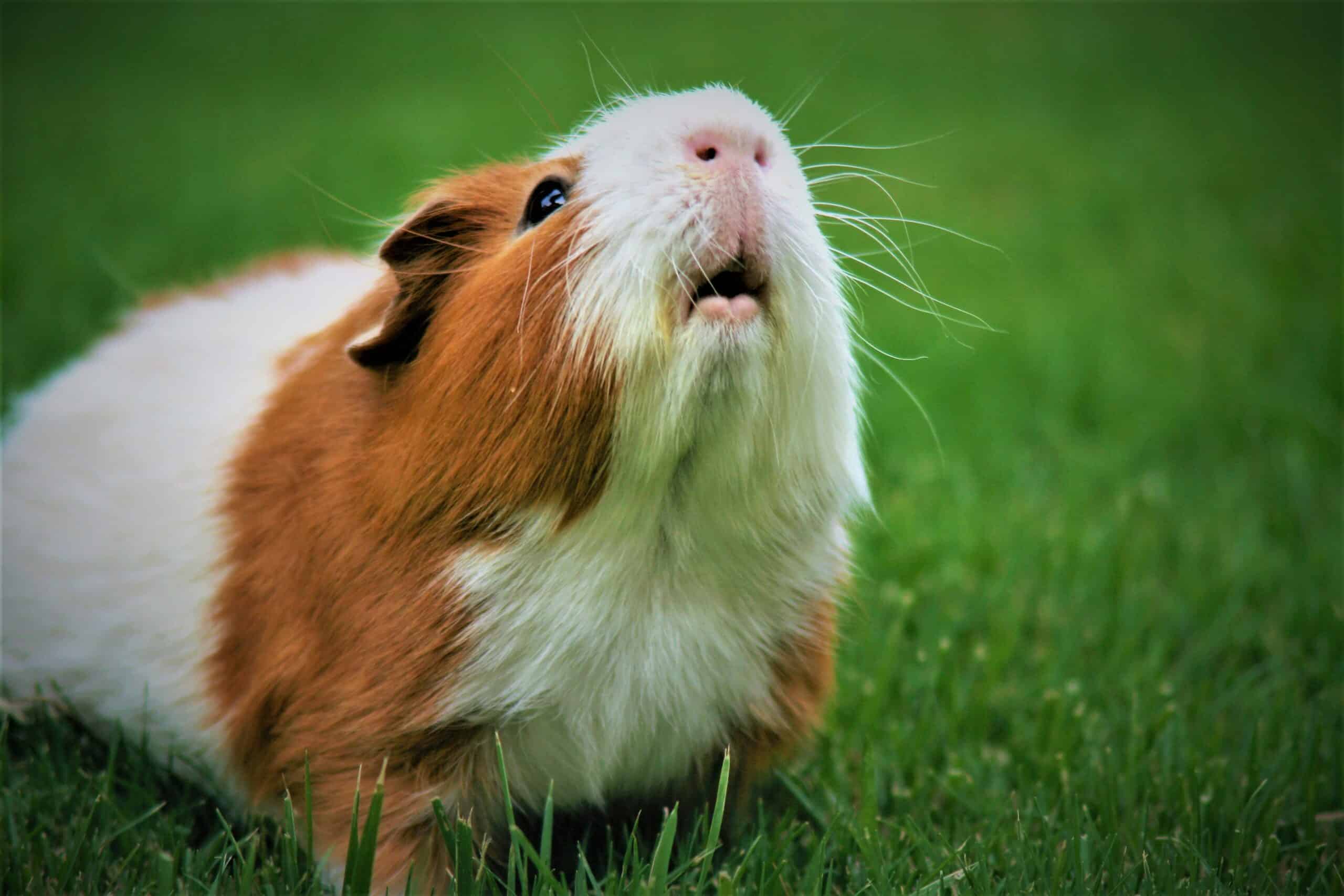
Because they are unusually vocal animals with a genuine repertoire, and most of what you hear is either a request for food or a statement about another guinea pig. Why does my guinea pig squeak in one particular way rather than another is the more useful question, because the sounds mean different things and two of them are warnings.
Handling is where owners most often misread a sound. Our guide to picking up a rabbit safely covers the same principle in a species that goes quiet instead.
Quick Answer
The loud rising wheek is a learned food call aimed at you. Low rumbling is usually dominance or courtship. Teeth chattering is a warning to back off. Soft purring can mean contentment or irritation depending on body posture. A sudden shriek means pain or fear.
Key Takeaways
- The wheek is directed at humans and is learned, not instinctive.
- Teeth chattering is the clearest warning they give.
- Purring means opposite things depending on posture.
- Rumbling is usually about another guinea pig, not you.
- A shriek is urgent and worth investigating immediately.
- A normally vocal animal going quiet is a signal in itself.
- Most vocalization is social, which is why singles sound different.
| Sound | What it usually means | What to do |
|---|---|---|
| Loud rising wheek | Food request, aimed at you | Nothing, or feed on your schedule |
| Low rumbling | Dominance or courtship display | Watch, do not intervene early |
| Teeth chattering | Warning, back off | Stop what you are doing |
| Soft purr, relaxed body | Contentment | Carry on |
| Higher purr, tense body | Irritation or unease | Put them down, give space |
| Short repeated chut | Contentment while exploring | Nothing |
| Sudden loud shriek | Pain or acute fear | Check immediately |
| Unusual silence | Possible illness | Observe closely, consider a vet |
The Wheek Is About You
This is the sound most people mean by squeaking, and it is the one with the most interesting explanation.
The wheek is a loud rising call, unmistakable once you have heard it, and guinea pigs do not use it much with each other. They use it with people.
It is learned. A fridge door opening, a bag rustling, footsteps in the hall, a particular time of evening: anything that has previously predicted food becomes a trigger, and the call follows.
That means you shape it. Feeding in response to wheeking teaches that wheeking produces food, which is fine if you do not mind the volume and worth knowing if you do.
Feeding on a schedule rather than on demand keeps the behavior from escalating without suppressing it. There is nothing to correct here, only a pattern to be deliberate about.
The Two Warnings
Teeth chattering
A rapid clicking of the teeth, sometimes with the head raised and the animal making itself look larger. This is the clearest statement of displeasure they have, and it means back off now.
Who it is aimed at
Between guinea pigs it precedes a scuffle, most often at an introduction or over a resource. Directed at you, it means whatever you are doing should stop.
The purr that is not a purr
A low purr with a loose relaxed body is contentment. A higher, shorter purr with a tense body and the animal frozen in place is the opposite, and it is routinely misread as enjoyment during handling.
Read the body, not the sound
Posture disambiguates every one of these. Tense, still, weight forward and ears back is a different animal from one sprawled out with its eyes half closed.
Rumbling and Social Noise
Low rumbling, sometimes with a swaying hip movement, is almost always about another guinea pig rather than about you.
It appears in dominance interactions and in courtship, and the two look similar enough that telling them apart from sound alone is unreliable. Context does it: who is present, how new the pairing is, and what happens next.
During an introduction, rumbling and mild chasing are part of establishing an order and generally resolve without help. Intervening too early prevents the animals from settling it.
What warrants intervention is escalation: sustained chasing that does not let up, teeth chattering that continues, or any contact that draws blood.
Most of a guinea pig’s repertoire is social, which is why a single animal sounds different from a pair. Our guide to whether rabbits need a companion covers the social question in a species where the arrangement works differently, and our guide to why rabbits thump covers a comparable signal in an animal that communicates by sound in a completely different way.
The Quiet Ones and the Loud Ones
Individual variation here is large and it is not a problem to solve.
Some guinea pigs wheek at everything and some barely make a sound for months. Both are normal, and a quiet animal is not unhappy by default.
What matters is change relative to that animal’s own baseline. A consistently vocal guinea pig that goes quiet has told you something, and it is worth more attention than a quiet one staying quiet.
Guinea pigs hide illness well, and reduced vocalization sits alongside reduced movement and reduced eating as an early indicator. None of those is dramatic on its own.
Weighing weekly gives you a number to check that impression against, which is more reliable than trying to remember how much noise last week contained. Our roundup of pet scales covers doing that.
Sounds That Are Not Vocalizations
Three noises get filed with the repertoire and do not belong to it, and confusing them with a squeak is the one way this subject becomes urgent.
A wheeze, a whistle on the intake, or a fine crackling as the animal breathes is not communication. Those come from the respiratory tract, they continue regardless of what is happening around the animal, and they warrant a vet the same day.
Teeth grinding is the second. It is slower and duller than the rapid chatter of a warning, it is not aimed at anything, and it is associated with pain rather than displeasure.
The third is a sound that does not stop. Every genuine vocalization is a response to something and tails off when the situation changes. Anything continuous belongs in the first category.
The test that separates them is context. A wheek stops when food arrives and a chatter stops when you back away, so a noise that answers to nothing is not a message.
Reducing the Noise You Do Not Want
- Feed on a schedule. Not in response to the wheeking.
- Avoid the accidental cue. Vary which bag you rustle and when.
- Give enough floor space. Crowded animals vocalize more at each other.
- Separate resources. Two hideouts, two water points, two hay piles.
- Do not punish teeth chattering. It is information you want kept.
- Put them down when the purr tightens. Handling is not the place to persist.
- Note the baseline. So a change registers as a change.
The resource point does most of the work in a pair. A great deal of rumbling and chattering between two otherwise settled animals is competition over a single favored spot, and duplicating it ends the argument.
Floor space is the other structural fix, and our roundup of guinea pig cages covers what counts as usable ground. Our guide to how much space a rabbit needs covers the same reasoning for a larger animal.
Related Reading
Frequently Asked Questions
Why does my guinea pig squeak?
Most often the loud rising wheek, which is a learned food call aimed at people rather than at other guinea pigs. Other sounds mean different things: rumbling is social, teeth chattering is a warning, and a sudden shriek means pain or acute fear.
What is the wheek exactly?
A loud rising call they direct at humans rather than at each other. It is learned rather than instinctive, triggered by anything that has previously predicted food, which means feeding in response to it teaches more of it.
What does teeth chattering mean?
Back off. It is the clearest warning a guinea pig gives, a rapid clicking often paired with a raised head. Between animals it precedes a scuffle; aimed at you, it means whatever you are doing should stop.
My guinea pig purrs when I hold it. Is that good?
It depends on the body. A low purr with a loose, sprawling posture is contentment. A higher, shorter purr with a tense frozen body is unease, and it gets misread as enjoyment constantly. Read the posture rather than the sound.
Should I stop two guinea pigs rumbling at each other?
Not immediately. Rumbling and mild chasing are how an order gets established, particularly at an introduction, and intervening early stops them settling it. Step in for sustained chasing that does not let up, continued teeth chattering, or any blood.
Is a quiet guinea pig unhappy?
Not necessarily. Individual variation is large and some animals are simply quiet. What matters is change from that animal’s own baseline, because a normally vocal guinea pig going quiet is a signal worth attention.
Why does mine squeak constantly?
Usually because the call has been reinforced. Feeding on a fixed schedule rather than on demand keeps it from escalating. Crowding and shared resources also drive noise, so extra floor space and duplicate hideouts, water points and hay piles often quieten a pair.
What sound should worry me?
A sudden loud shriek, which indicates pain or acute fear and is worth checking straight away. Beyond that, the absence of usual sound in a normally vocal animal, particularly alongside reduced movement or eating.
