
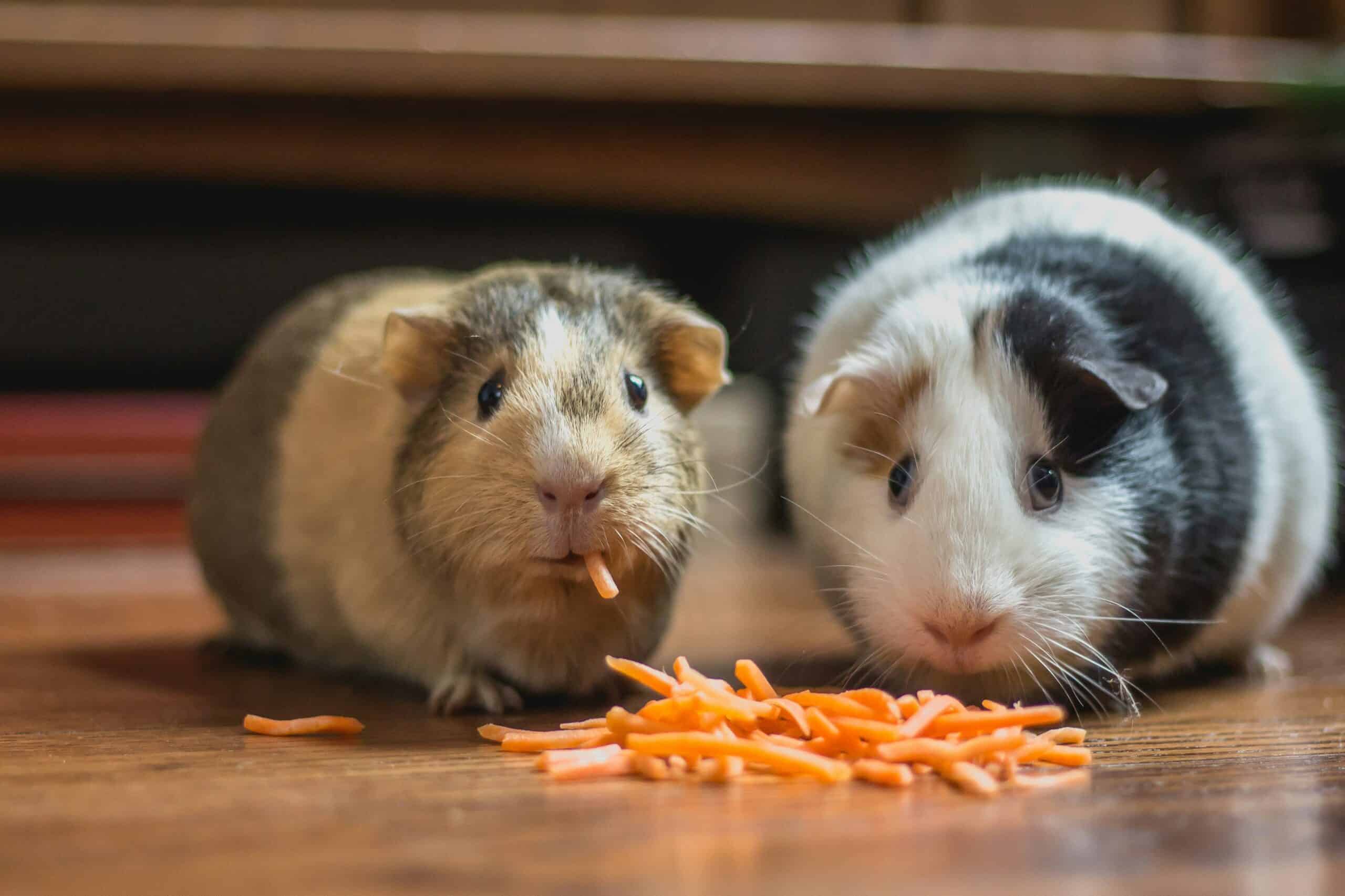
Nothing from the onion family, no potato or tomato foliage, no rhubarb, avocado, chocolate or caffeine, no dairy or meat, no bread or cereal, no nuts or seeds, and no grass cut with a mower. What can guinea pigs not eat also includes several things marketed for small animals, which is the part that catches careful owners out.
Sugar is the other half of this and it has its own logic. Our note on whether rabbits can eat carrots covers that reasoning in a comparable species.
The list below separates genuinely toxic from merely unsuitable, because the two need different responses.
| Keep away | Category | Why |
|---|---|---|
| Onion, garlic, leek, chives | Toxic | Allium family damages red blood cells |
| Potato and tomato foliage | Toxic | Nightshade leaves and stems |
| Rhubarb, including leaves | Toxic | High oxalate content |
| Avocado | Toxic | Unsafe across many pet species |
| Chocolate, caffeine, alcohol | Toxic | No safe amount |
| Dairy, meat, eggs | Unsuitable | Herbivore gut cannot process them |
| Bread, cereal, pasta, nuts, seeds | Unsuitable | Starch and fat, no fiber |
| Iceberg lettuce | Unsuitable | Near-zero nutrition, causes loose stool |
| Mower clippings | Unsafe | Ferment quickly, cause gut upset |
| Rabbit pellets | Unsuitable | No vitamin C fortification |
Health Disclaimer
This article is general information about guinea pig husbandry. It is not veterinary advice and it cannot cover every plant or product. If a guinea pig has eaten something you believe is unsafe, contact a vet immediately rather than waiting for symptoms, and never attempt to make an animal vomit.
Quick Answer
Avoid the allium family, nightshade foliage, rhubarb, avocado, chocolate and caffeine outright. Avoid dairy, meat, bread, cereal, nuts and seeds as unsuitable for a herbivore. Skip iceberg lettuce, mower clippings and rabbit pellets. Assume unknown garden plants are unsafe until confirmed otherwise.
Toxic Against Merely Unsuitable
These two categories get merged into one list and they are not the same problem.
Toxic means a substance that causes harm in its own right. The allium family damages red blood cells, nightshade foliage carries compounds the plant makes to deter being eaten, and rhubarb is high in oxalates. None of these has a safe portion.
Unsuitable means food an animal cannot use. Bread, cereal and pasta are starch a hindgut fermenter is not built for. Dairy and meat are worse, because the digestive system has no route for them at all.
The Merck Veterinary Manual describes the guinea pig as a strict herbivore whose digestive tract depends on a continuous supply of long-fiber forage, which is the standard everything else gets measured against.
The practical difference is in how you respond. Something toxic eaten is a phone call to a vet. Something unsuitable eaten once is a note to be more careful, without the alarm.
The Things Sold for Small Animals
Muesli-style mixes
Bowls of mixed flakes, pellets, seeds and colored pieces invite selective feeding. The animal eats the sweet parts and leaves the fiber, which is the opposite of the intended result.
Yogurt drops and similar treats
Dairy-based treats sold on small animal shelves have no place in a herbivore diet regardless of the packaging. The same applies to anything honey or seed based.
Rabbit pellets
Not toxic, and still the wrong food, because rabbit pellets carry no vitamin C fortification. Rabbits make their own and guinea pigs cannot, which is the whole difference between two bags that look identical.
Salt and mineral licks
A guinea pig on a correct diet has no use for these, and they are frequently sold as though it did.
The RSPCA describes the guinea pig diet as built on constant access to good quality hay or grass, with a measured portion of species-specific pellets and daily fresh vegetables.
Why Rabbit-Safe Is Not Transferable
This is the single most common route to a wrong decision, and it is understandable, because the animals are kept in similar housing and eat similar-looking food.
The vitamin C difference is the headline. It makes rabbit pellets an unsuitable substitute and it means a guinea pig fed a rabbit diet is short of something a rabbit never needs.
Portion logic differs too. A vegetable that is an occasional item for one species may be a routine one for the other, and lists published for rabbits are not written with the other animal’s requirements in mind.
Hay is the one area where the two genuinely align. Both need constant access to long-fiber forage, and for the same reason. Our guide to why rabbits need unlimited hay covers that mechanism in full.
So the useful rule is that hay guidance transfers and food lists do not. When you find a list, check which species it was written for before acting on it.
The Garden and the Lawn
Fresh growing grass is excellent food and a lawnmower ruins it, which surprises people every summer.
Cut grass begins fermenting almost immediately, and warm clippings in a bag are well along by the time they reach the hutch. That fermentation is what causes the gut upset, not the grass itself.
Grass picked by hand and fed straight away is fine. The distinction is the mower and the delay rather than the plant.
Garden plants are a separate hazard and the honest position is that many ornamentals are unsafe and most owners cannot identify them reliably. Assume unknown is unsafe.
Treated lawns add another layer, since herbicide and fertilizer residue is not visible. Anywhere sprayed is off the menu regardless of what is growing there.
If Something Has Been Eaten
- Call a vet for anything toxic. Immediately, not once symptoms appear.
- Never try to induce vomiting. Guinea pigs cannot vomit, and attempting it causes harm.
- Keep the packaging or the plant. Identification matters more than description.
- Note the time and the likely amount. Both change the assessment.
- Do not withhold hay. Gut movement needs to continue.
- Watch eating and stool closely. Changes in either are the early signal.
- Weigh daily for a few days. A falling weight beats waiting for symptoms.
The vomiting point matters because the instinct comes from dog and cat advice and does not transfer. The PDSA describes reduced eating and reduced stool output in a guinea pig as urgent rather than something to monitor, and that is the response any dietary incident should trigger.
Weighing is the most useful home measurement available, because a guinea pig that is eating less shows it on a scale before it shows it anywhere else. Our roundup of pet scales covers doing that consistently.
Worth reading next: our roundup of guinea pig cages covers floor space and where hay sits in an enclosure, which affects how much of it actually gets eaten. Our guide to how much space a rabbit needs and our guide to whether rabbits need a companion cover the two husbandry questions that most often sit alongside a diet problem, since an animal eating poorly is frequently an animal housed poorly.
Frequently Asked Questions
What can guinea pigs not eat?
The allium family, nightshade foliage, rhubarb, avocado, chocolate and caffeine are toxic. Dairy, meat, bread, cereal, nuts and seeds are unsuitable for a herbivore. Iceberg lettuce, mower clippings and rabbit pellets should also be avoided, along with unidentified garden plants.
What is the difference between toxic and unsuitable?
Toxic causes harm in its own right and has no safe portion. Unsuitable is food the animal cannot use, like starch or dairy. The responses differ: something toxic eaten is a call to a vet, while something unsuitable eaten once is a note to be more careful.
Can guinea pigs eat rabbit food?
No. Rabbit pellets are not fortified with vitamin C because rabbits synthesize their own and guinea pigs cannot. The bags look interchangeable and the fortification is the entire difference, which makes this the most consequential substitution people make.
Is iceberg lettuce actually dangerous?
Not toxic, but close to nutritionally empty and high enough in water to cause loose stool. It also displaces food that would do something. Darker leafy greens rotated through the week are the better use of the same handful.
Can I feed grass from the lawn?
Picked by hand and fed straight away, yes, and it is excellent food. Cut with a mower, no, because clippings begin fermenting almost immediately and that fermentation causes gut upset. Avoid anywhere treated with herbicide or fertilizer entirely.
What about treats sold for small animals?
Many are unsuitable despite the shelf they sit on. Yogurt drops are dairy, seed and honey sticks are fat and sugar, and muesli-style mixes invite selective feeding where the animal eats the sweet parts and leaves the fiber.
My guinea pig ate something unsafe. Should I make it sick?
No, and this is important: guinea pigs cannot vomit, so attempting to induce it causes harm without achieving anything. Call a vet, keep the packaging or plant for identification, and do not withhold hay.
When should I see a vet?
Immediately after any toxic item is eaten, without waiting for symptoms. Also see a vet promptly if an animal has stopped eating, is producing less stool than usual, or is losing weight, since a guinea pig that goes off food declines quickly.
Sources
- Merck Veterinary Manual. Guinea pig nutrition and digestive physiology.
- RSPCA. Guinea pig diet and feeding guidance.
- PDSA. Guinea pig health and signs of urgent illness.
