
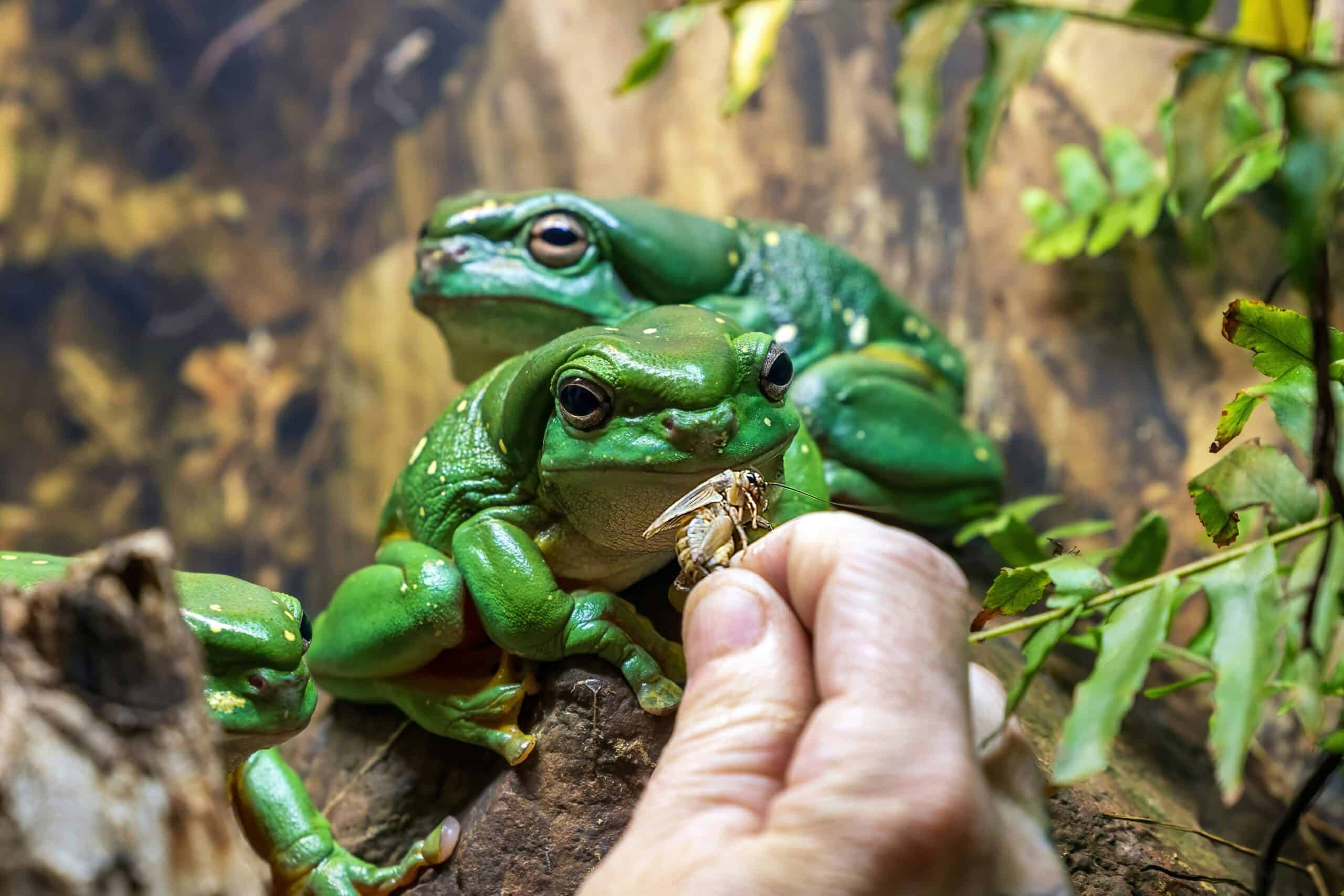
Feeding tongs exist for two reasons that have nothing to do with squeamishness: they keep your fingers out of a strike zone, and they stop food landing in loose substrate where it gets swallowed along with the meal. Both problems are avoidable with inexpensive tools.
The best reptile feeding supplies and tongs are the blunt-tipped ones long enough to reach the far side of the enclosure, paired with a dish or a feeding container so nothing is taken off the enclosure floor. A snake that associates an opening lid with food is a snake that strikes at a hand.
Substrate ingestion is the reason feeding off a dish gets recommended so often, and reptile substrate and bedding covers that side in full.
Quick Verdict
Buy long blunt-tipped stainless tongs and a shallow feeding dish, and that covers most keepers. Add a separate feeding container if your animal lives on loose substrate and takes food off the floor. Sharp or serrated tips are the thing to avoid entirely.
Key Takeaways
- Blunt tips only. Sharp or serrated tongs can injure a mouth that grabs them.
- Length is the specification that matters, measured against your enclosure.
- Feeding off a dish keeps loose substrate out of the animal.
- Live insects need gut-loading and dusting, which is its own small kit.
- Tongs and dishes get cleaned between feedings, like any food surface.
- Feeding method and schedule are species questions worth checking per animal.
How We Picked These Supplies
We sorted these by what they do at feeding time, since handling food, presenting it and keeping substrate out are three separate problems.
Then we weighted anything that reduces the chance of an accidental bite or an ingested mouthful of bedding.
We have not used these with animals or compared them, so nothing here is presented as a result from our own keeping. Feeding frequency, prey size and whether a species should take live food are questions for a reptile veterinarian or a species care sheet rather than a roundup.
1. Long Blunt-Tipped Stainless Tongs, Best Overall
Why It Stands Out
Length puts your hand outside the strike zone and blunt tips mean a grab at the tongs does no damage. Stainless also cleans properly rather than absorbing anything.
A long pair reaches the far corner of a wide enclosure without you leaning in over the animal, which is the posture that causes problems.
Worth Knowing
Very long tongs are clumsy in a small terrarium, and a pair that does not fit through the door is no use. Measure the enclosure before choosing a length.
Cheap stainless can have a rough seam at the tip that wants filing smooth before first use.
This suits almost every keeper and every species. Skip anything with a point or a serrated edge. Best for: keeping hands clear while placing food accurately.
Check Price on Amazon2. Soft-Tipped or Bamboo Tongs, Best for Small Animals
Why It Stands Out
Bamboo and silicone-tipped tongs are gentler around a small gecko or a juvenile, where metal feels clumsy and a misjudged grab matters more. They also will not scratch glass.
Lighter tools give better feel, which helps when offering a single insect precisely.
Worth Knowing
Bamboo absorbs moisture and stains, so it does not clean as thoroughly as stainless and needs replacing periodically. Treat it as a consumable.
These are also shorter, which makes them unsuitable for anything with a feeding response worth respecting.
This suits small lizards, geckos and juveniles. Skip it for larger snakes or monitors. Best for: delicate placement with small animals.
Check Price on Amazon3. A Shallow Feeding Dish, Best Substrate Barrier
Why It Stands Out
A heavy shallow dish keeps food off loose bedding, which is the simplest way to reduce how much substrate an animal takes in with a meal. It also contains greens and insects in one place.
Weighted ceramic will not tip when an animal climbs on it, which plastic dishes do constantly.
Worth Knowing
Insects climb out of anything with shallow or rough sides, which is the whole reason smooth-walled dishes exist. Match the dish to what you feed.
Whether substrate ingestion is a significant risk for your species is discussed among keepers rather than settled, and it is a question for a reptile veterinarian who knows the animal.
This suits any animal on loose substrate. Skip rough-sided dishes for insects. Best for: keeping bedding out of the meal.
Check Price on Amazon4. Smooth-Walled Worm Dishes, Best for Live Insects
Why It Stands Out
Steep smooth sides keep mealworms and similar larvae contained instead of burrowing into the substrate the moment you look away. Escaped insects become a cleaning problem and a wasted meal.
Containment also lets you see exactly how much the animal has eaten.
Worth Knowing
These hold burrowing larvae well and do very little for crickets or roaches, which climb or jump. Different insects need different approaches.
Deep dishes can also be hard for a small animal to reach into, so depth matters both ways.
This suits mealworm and larvae feeders. Skip it for crickets. Best for: stopping larvae escaping into the bedding.
Check Price on Amazon5. A Dusting and Gut-Loading Kit, Best Insect Prep
Why It Stands Out
Insects are only as nutritious as what they have eaten, so gut-loading them and dusting before feeding is how the meal actually delivers something. A shaker cup and a bag of insect food is the whole kit.
A dedicated shaker also stops you coating the enclosure in powder.
Worth Knowing
What to dust with, and how often, varies by species, age and whether the animal has UVB access. That combination is a veterinary and care-sheet question rather than a product one.
Lighting is part of the same picture, since whether a supplement needs added vitamin D3 depends on UVB access. Reptile UVB lighting and fixtures covers that side.
This suits every insect feeder. Skip guessing at the schedule. Best for: making insect meals worth feeding.
Check Price on Amazon6. A Separate Feeding Container, Best for Loose Substrate
Why It Stands Out
Moving an animal to a bare tub to eat removes substrate from the equation completely, which some keepers prefer for species that strike at the floor. It also keeps the main enclosure cleaner.
A plain ventilated tub is cheap and easy to disinfect between uses.
Worth Knowing
Handling an animal around feeding stresses some species and is debated among keepers, so this is not a universal recommendation. Moving a snake after a meal is widely avoided.
The tub also needs the right temperature while it is in use, which is easy to overlook. Reptile heat lamps cover the heating side.
This suits keepers already using this method. Skip it if handling stresses your animal. Best for: removing substrate from feeding entirely.
Check Price on AmazonFeeding Supplies at a Glance
| Item | Main Job | Suits | Watch For |
|---|---|---|---|
| Long blunt stainless tongs | Distance and placement | Most species | Rough tips, wrong length |
| Bamboo or soft-tip tongs | Gentle placement | Small lizards, juveniles | Absorbs moisture, short |
| Shallow ceramic dish | Food off the substrate | Loose bedding setups | Insects climbing out |
| Smooth-walled worm dish | Containing larvae | Mealworm feeders | Useless for crickets |
| Dusting and gut-load kit | Insect nutrition | Every insect feeder | Schedule is a vet question |
| Separate feeding tub | No substrate at all | Floor-striking species | Handling stress, temperature |
What to Look For
Blunt tips, always
An animal that grabs the tongs instead of the food should not be injured by doing so. Rounded tips are the single most important feature here.
Length against your enclosure
Long enough to reach the far side, short enough to maneuver through the door. Measure both before ordering, and reptile terrariums and enclosures covers the dimensions involved.
Material you can actually clean
Anything that touches food needs washing between feedings, and stainless and ceramic both take that better than wood or soft plastic. Treat tongs like kitchen tools.
A dish that suits your feeders
Burrowing larvae need steep smooth walls and greens need a wide shallow dish. One dish rarely does both jobs well.
Tongs or Dish Feeding
Tongs control the moment
You decide where the food is and when it moves, which matters for species that respond to movement and for keeping your hand out of the way. It is also how frozen-thawed prey gets offered.
Dishes suit grazers and insects
An animal that browses greens or picks through insects does better with food left in place, and a dish keeps it off the bedding. Most keepers end up using both depending on the meal.
What Trips People Up
Feeding by hand
It teaches an animal that hands arrive with food, which is how a calm species becomes one that strikes at an opening lid. Tongs cost very little by comparison.
Buying sharp kitchen tongs
Pointed or serrated tips are designed to grip food, not to be bitten. A reptile that grabs them can be injured, which is why reptile tongs are blunt.
Dropping food straight onto loose substrate
An animal striking at the floor takes up whatever is there with the meal. A dish is the cheapest way to reduce that, and reptile hides and climbing decor covers keeping the floor layout workable.
Feeding insects straight from the tub
Undusted, un-gut-loaded insects deliver much less than they could. The prep takes a minute and changes what the meal is worth.
Where Feeding Fits With Everything Else
Temperature drives digestion
A reptile that is too cool cannot process a meal properly, which makes heating part of feeding rather than separate from it. Getting the gradient right comes first.
Other small pets have their own kit
Herbivores and seed eaters feed completely differently, and rabbit hay and pellets and bird food and seed mixes cover those.
Supplements vary by species
Guinea pigs need a dietary vitamin most animals make themselves, which is a useful reminder that no feeding routine transfers across species. Guinea pig vitamin C supplements covers that case.
Missed meals mean different things
A snake refusing food can be normal and a lizard refusing food often is not, so species context decides whether to worry. A reptile veterinarian is the right source when an animal stops eating.
Recommended Reading
Worth reading next: how long fish can go without food, for the same question in a very different animal.
Reptile Feeding Supplies FAQ
What are the best reptile feeding supplies and tongs
Long blunt-tipped stainless tongs plus a heavy shallow dish covers most keepers. Add a smooth-walled worm dish for larvae, a dusting and gut-loading kit for insects, and bamboo tongs if your animal is small.
Why use tongs instead of hands
Two reasons. Your hand stays outside the strike zone, and the animal does not learn to associate hands with food, which is what turns a calm reptile into one that strikes when the lid opens.
How long should feeding tongs be
Long enough to reach the far side of the enclosure without leaning in, and short enough to maneuver through the door. Measure the enclosure rather than buying the longest pair available.
Can I use kitchen tongs
Not the pointed or serrated kind, since those can injure an animal that grabs them. A blunt-tipped pair sold for reptiles costs very little and removes the risk.
Do I need a feeding dish
It helps considerably if your animal lives on loose substrate and takes food off the floor, since it reduces how much bedding goes in with the meal. Whether that risk is significant for your species is worth asking a reptile vet.
Should I feed in a separate container
Some keepers do, to remove substrate from feeding entirely, and others avoid it because handling around mealtimes stresses certain species. It is a debated practice rather than a clear best approach.
What is gut-loading
Feeding insects a nutritious diet before offering them, so the meal delivers more than an insect raised on nothing would. Dusting adds supplement powder on top, and both are routine for insect feeders.
How do I clean feeding tools
Wash them between feedings as you would kitchen utensils, which is why stainless and ceramic are preferred over wood and soft plastic. Anything that has touched prey gets cleaned rather than wiped.
