
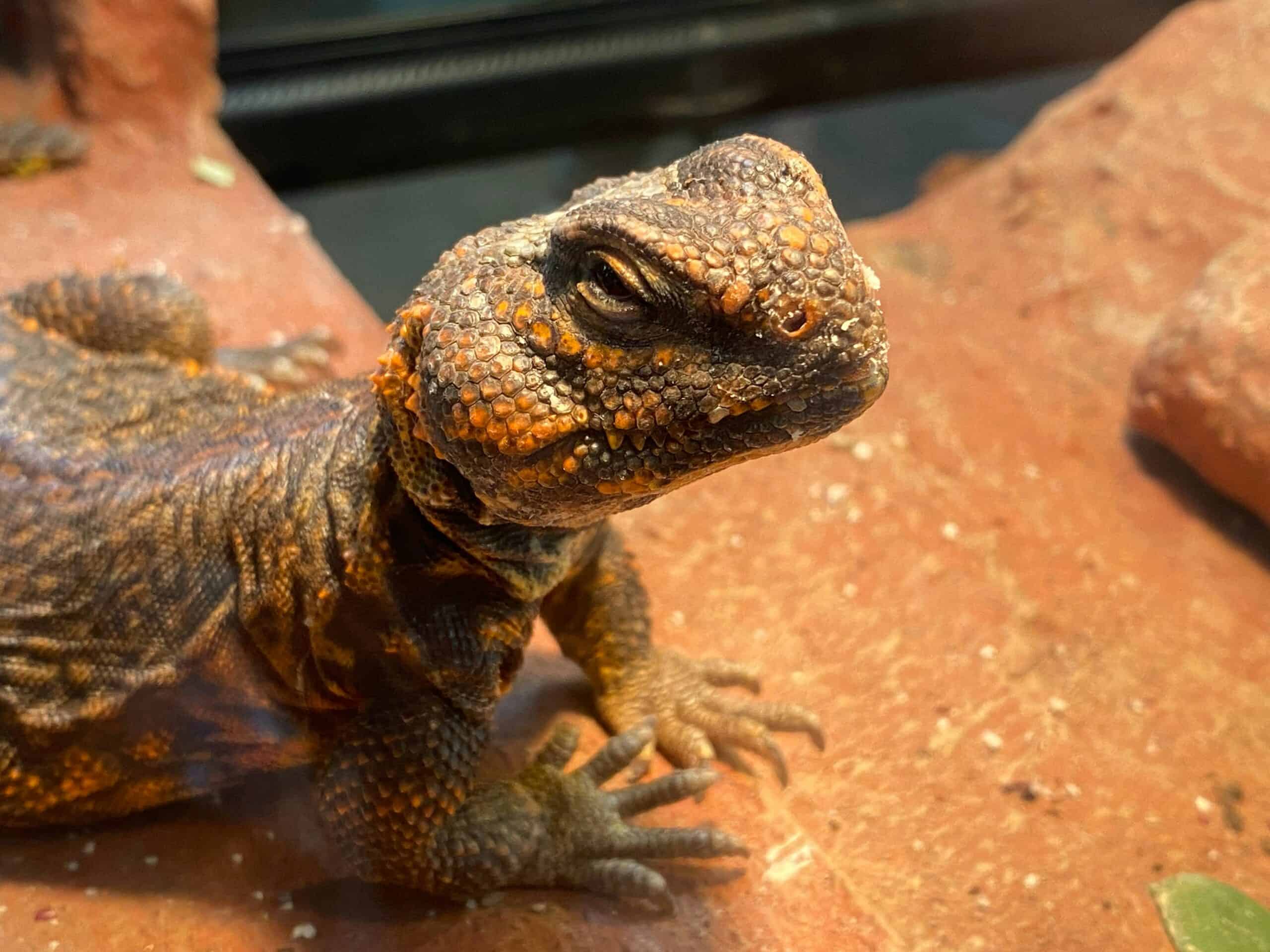
An enclosure has to do three things at once: hold a temperature gradient from one end to the other, hold the humidity your species needs, and reliably hold the animal inside, which is why front-opening glass terrariums and PVC enclosures dominate for different reasons. The best reptile terrariums and enclosures are chosen by species first and by appearance last. A box that cannot hold a gradient is the wrong box regardless of what it cost.
The gradient is the part beginners underestimate. A reptile regulates its own temperature by moving between a warm end and a cool end, so floor length matters more than volume for ground-dwelling species.
Humidity pulls against ventilation, and that tension is what separates the materials. Glass with a screen top vents well and dries out fast, while PVC holds moisture and needs ventilation designed in, which is the same balance our roundup of reptile heat lamps has to work with from the other direction.
Quick Verdict
A front-opening glass terrarium suits most keepers, because the door is at the animal’s level and the screen top lets UVB through. PVC is the better answer for humidity-dependent species. Screen cages suit arboreal animals needing airflow, and top-opening tanks are the budget route with real tradeoffs.
Key Takeaways
- Floor length sets the thermal gradient for ground species; height matters more for climbers.
- Glass blocks UVB, so lighting has to sit above a screen rather than shine through a pane.
- Ventilation and humidity pull against each other, and the material you pick decides which is easier.
- Front-opening doors suit animals that read overhead movement as a threat from above.
- Size requirements come from your species, not from what the enclosure is marketed as holding.
How We Picked These Enclosures
We sorted by material and opening style, since those determine humidity behavior, lighting options and how the animal experiences being approached. Security of the doors and latches was weighed alongside.
We have not kept animals in these or measured their performance, so nothing here is presented as a result from our own setups.
Species requirements are the one thing we deliberately do not generalize. Temperature, humidity and space needs differ enormously between a desert lizard and a rainforest snake, so the right figures come from a species care guide or a reptile veterinarian rather than from a roundup.
1. Front-Opening Glass Terrariums, Best Overall
Why It Stands Out
Hinged or sliding doors at the front let you work at the animal’s level rather than reaching down over it, which matters because many reptiles treat movement from above as a predator approaching. Feeding without putting a hand in at all is the related problem, and reptile feeding supplies and tongs cover it.
Glass with a mesh top also gives you the full range of overhead lighting and heating options, since UVB does not pass through glass and has to come through screen.
Worth Knowing
Glass sheds heat and humidity quickly, so humidity-dependent species need more work: partial top covering, more frequent misting, or a different material entirely.
Front doors also need to latch positively. A sliding door that can be nosed open is an escape waiting to happen, and secure latching matters more than any other feature on the box.
This suits most beginner and intermediate keepers across a wide range of species. Skip it if your animal needs consistently high humidity. Best for: the default choice, with good lighting access and low-stress servicing.
Check Price on Amazon2. Top-Opening Glass Tanks, Best Value
Why It Stands Out
A standard glass tank with a screen lid is the cheapest enclosure that works, widely available in many footprints, and easy to find secondhand.
The full screen top gives unobstructed access for overhead lighting and heating, which keeps the equipment side simple.
Worth Knowing
Everything happens from above, which is the stressful direction for a lot of reptiles. Animals that are already nervous tend to stay that way in a top-opening tank.
Screen lids also need clips or weights, since a determined animal will push one up. Our roundup of aquarium starter kits covers the same tank format used for a very different purpose.
Buy this to get started affordably or for species that are not shy. Skip it for nervous or defensive animals. Best for: value and simple lighting, accepting access from above.
Check Price on Amazon3. PVC and Composite Enclosures, Best Humidity Retention
Why It Stands Out
Solid PVC panels insulate and seal far better than glass, so humidity stays where you put it and heating is more stable and cheaper to maintain.
They are also much lighter than glass of the same size and will not shatter, which makes a large enclosure genuinely movable.
Worth Knowing
Because they hold moisture so well, ventilation has to be designed in rather than assumed. Stagnant humid air causes its own problems, so vents and airflow placement matter.
Solid tops also mean lighting has to be mounted inside or through a cut opening, which complicates UVB placement compared with a screen top.
Choose this for humidity-dependent species and for large setups. Skip it if you want the simplest possible lighting arrangement. Best for: holding humidity and heat efficiently, in a light and durable box.
Check Price on Amazon4. Screen Cages, Best Ventilation for Arboreal Species
Why It Stands Out
All-mesh sides give maximum airflow, which suits arboreal animals from humid environments that need moving air rather than still humid air.
The mesh also gives a climbing surface on every wall, so the whole volume becomes usable for an animal that lives vertically.
Worth Knowing
These dry out extremely fast and hold almost no heat, so they need frequent misting or an automated system and they are unsuitable for desert species needing a hot basking area.
Mesh can also abrade the nose of an animal that rubs at the walls. Keeping the enclosure interesting enough that it does not is part of the job, as our roundup of bird perches and toys covers for a different climbing animal.
Buy this for arboreal species that need airflow. Skip it for anything requiring held heat or humidity. Best for: climbing species from humid environments with moving air.
Check Price on Amazon5. Stackable Rack Enclosures, Best for Multiple Animals
Why It Stands Out
Shallow tubs in a heated rack house several animals in the floor space of one large enclosure, with consistent heating applied across the whole system.
For keepers with a collection this is the arrangement that makes the space and the heating bill work.
Worth Knowing
Rack tubs are deliberately plain, with limited height and no view. They prioritize the keeper’s logistics over enrichment, which is a genuine tradeoff rather than a neutral one.
Heating is usually belly heat from below, which suits some species and not others. This is a setup to choose on species requirements rather than on convenience, and the odor management in our roundup of air purifiers for pet odor becomes more relevant as the number of animals rises.
Choose this for multiple animals where species suit it. Skip it for a single pet you want to watch. Best for: collections, prioritizing consistent heating and floor space.
Check Price on Amazon6. Bioactive-Ready Enclosures With Deep Bases, Best for Planted Setups
Why It Stands Out
A raised waterproof base lets you run a deep substrate layer with drainage underneath, which is what a planted or bioactive setup needs to work rather than turn to mud.
These also tend to come with sealed seams and better glass thickness, because they are built expecting weight and moisture.
Worth Knowing
A deep substrate layer plus plants plus water is heavy, so the stand underneath has to be rated for it rather than assumed adequate.
Bioactive setups take time to establish and are harder to spot-clean, which is more commitment than a simple enclosure. Our guide to choosing a beginner tank size covers the same lesson about starting bigger than feels necessary.
Buy this for planted and bioactive setups. Skip it if you want the simplest possible maintenance. Best for: deep substrate and living plants, with a stand rated for the weight.
Check Price on AmazonReptile Enclosures at a Glance
| Type | Humidity | Ventilation | Suits |
|---|---|---|---|
| Front-opening glass | Dries out moderately fast | Screen top | Most species, low-stress access |
| Top-opening glass tank | Dries out fast | Full screen top | Budget setups, confident animals |
| PVC and composite | Holds well | Needs designed vents | Humidity-dependent species |
| Screen cage | Does not hold | Maximum | Arboreal species needing airflow |
| Stackable rack | Holds moderately | Limited | Multiple animals |
| Bioactive-ready | Holds well with drainage | Varies by model | Planted and bioactive setups |
How to Choose a Reptile Enclosure
What does your species actually need
Start with a care guide for the species you are keeping or plan to keep, because space, temperature and humidity requirements differ enormously between reptiles. The figure on the box describes the enclosure, not whether it suits your animal.
Can it hold a gradient end to end
A reptile thermoregulates by moving, so there has to be a genuinely warm end and a genuinely cool end. For ground-dwelling species that means floor length; for climbers it means usable height with a warm upper area and a cooler lower one.
Does the lighting work with the lid
Glass blocks UVB, so a UVB lamp has to shine through screen or sit inside the enclosure. A solid-topped PVC box needs a mounting plan before you buy it rather than afterward.
How secure are the doors and lid
Escapes are the common failure, and they happen through unlatched doors, unclipped screen lids and gaps around cable entries. Positive latches and clips matter more than any other feature here.
Glass or PVC
When glass wins
Choose glass for visibility, for straightforward overhead lighting through a screen top, and for lower cost. It suits species that do not need high held humidity, and it is the easier starting point for a first enclosure.
When PVC wins
Choose PVC when humidity has to stay up, when the enclosure is large enough that weight matters, or when heating efficiency is a real cost. The tradeoffs are lighting complexity and needing to think about ventilation deliberately.
Common Enclosure Mistakes to Avoid
Buying for the animal’s current size
Many reptiles sold small grow substantially, and an enclosure bought for a juvenile becomes inadequate. Checking adult requirements before buying avoids replacing the whole setup, and a scale is a useful way to track growth.
Putting a UVB lamp behind glass
Glass blocks the wavelengths that make UVB lighting worth having, so a lamp sitting on top of a closed glass pane is doing far less than it appears to. It has to shine through mesh or be mounted inside.
Treating the lid as secure because it fits
A screen lid resting in place will be pushed up by a determined animal, and a sliding door will be nosed along its track. Clips, locks and weights are the difference between a closed enclosure and a secure one, which also matters for the planning in our roundup of emergency supplies.
Recommended Reading
- Bird cages, judged on bar spacing and flight length
- Guinea pig cages and floor space
- The rabbit supplies checklist
Reptile Enclosure FAQ
What are the best reptile terrariums and enclosures for a first reptile?
A front-opening glass terrarium suits most first reptiles, because you can service it at the animal’s level and the screen top takes overhead lighting including UVB. Choose PVC instead if your species needs consistently high humidity, and check adult size requirements before buying rather than juvenile ones.
What size enclosure does a reptile need
It depends entirely on the species and on its adult size rather than the size it is when you get it. A care guide for your specific animal, or a reptile veterinarian, is the right source for that figure. Enough floor length to establish a warm end and a cool end is the general principle.
Is glass or PVC better for reptiles
Glass is cheaper, gives better visibility and takes overhead lighting easily through a screen top, while drying out faster. PVC holds humidity and heat far better and is lighter, with lighting needing more planning. Your species’ humidity requirement usually decides it.
Does UVB go through glass
No, which is why UVB lamps have to shine through a mesh screen or be mounted inside the enclosure. A lamp resting on a closed glass pane delivers far less than it appears to, and this is one of the more common setup errors.
Why do front-opening enclosures matter
Many reptiles instinctively read movement from above as a predator, so reaching down into a top-opening tank is more stressful than opening a door at their level. For a nervous or defensive animal this affects how settled it becomes.
How do reptiles escape their enclosures
Through unlatched front doors, screen lids pushed up from inside, and gaps left around cable or tubing entries. Positive latches, lid clips and sealing the cable openings address all three, and checking them is worth doing every time you close up.
Are rack systems bad for reptiles
They prioritize the keeper’s space and heating consistency over the animal’s view and enrichment, which is a real tradeoff. Whether that suits depends heavily on the species, and it is a question worth asking a reptile veterinarian or an experienced keeper rather than deciding on convenience.
