
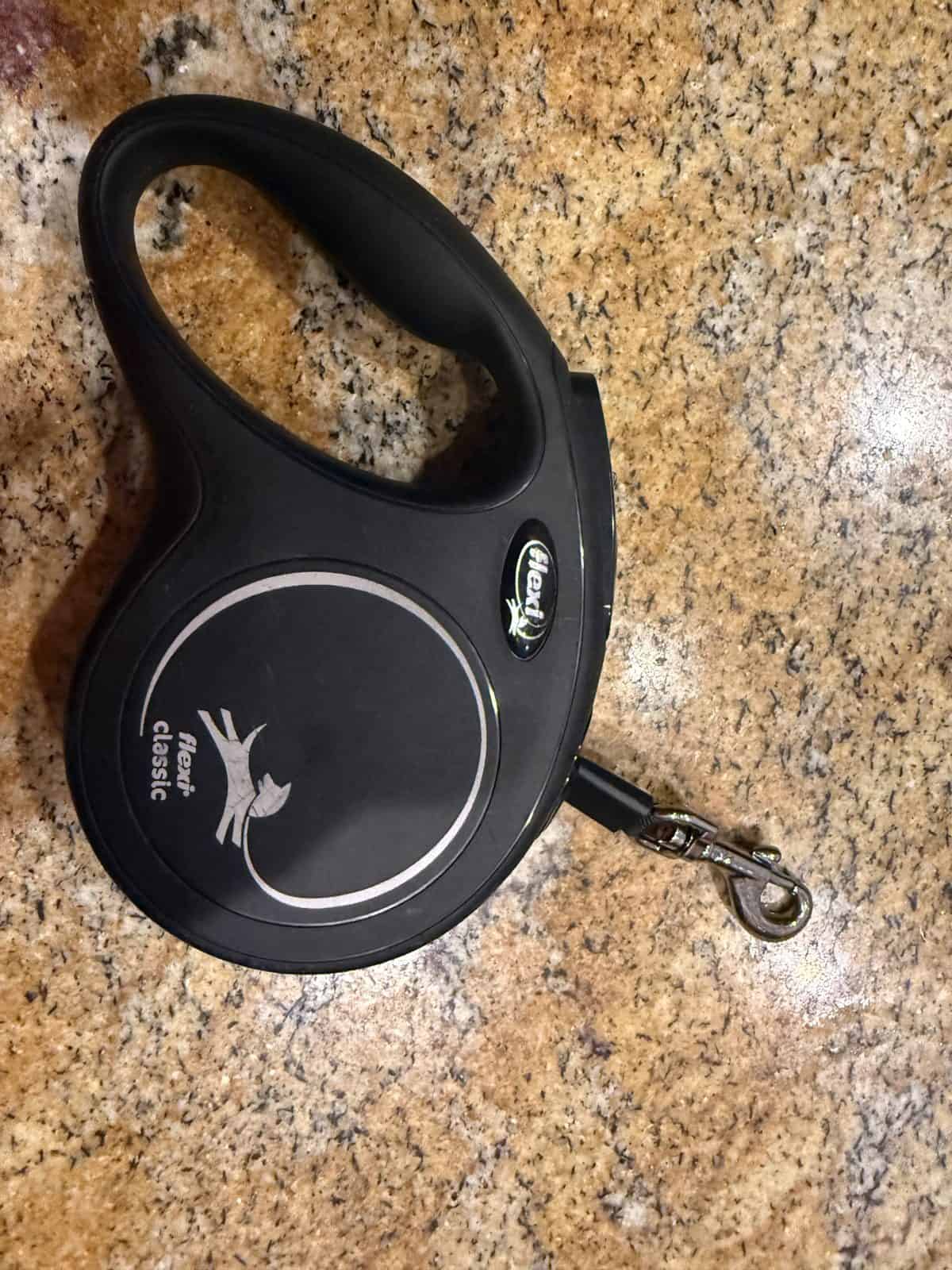
A small dog walks best on a leash that actually fits them, and that is where a lot of owners go wrong. Most leashes are built with bigger dogs in mind, so a little dog ends up on something heavier and longer than they need. For everyday walks, a light standard leash of four to six feet gives the best control, though rope, hands-free, and retractable styles each have their place. Below are six leashes that work well for small dogs, including the retractable one I walk mine with. For more on this, see our guide to leashes for apartment walking.
HappyPaws is reader-supported; purchases made through links on this page may earn a commission at no added cost to you.
Quick verdict: For everyday walks and training, a lightweight standard leash of four to six feet gives small dogs the best mix of freedom and control, ideally with reflective stitching and a secure clip. A double-handle leash adds control in traffic, a hands-free leash suits jogging, and a retractable can be great for open, low-traffic areas. Match the leash to where you actually walk.
How We Picked These Small-Dog Leashes
We focused on what keeps a small dog safe and comfortable: an appropriate light weight and width, a secure metal clip, and a length that balances freedom with control. The American Kennel Club recommends starting with a four-to-six-foot nylon leash for everyday walking and training, and adding a traffic handle for crowded areas.1 From there we included options for different needs, from hands-free walking to open-space freedom, and noted where each fits best.
1. Max and Neo Reflective Nylon Leash, Best Overall
The Max and Neo Reflective Nylon Leash is the sensible everyday pick for most small dogs, a standard flat leash with reflective stitching for visibility and a strong clip. At a controlled four-to-six-foot length, it keeps your little dog close and safe while still allowing room to explore, and the brand donates a leash to a rescue with every purchase.
Why It Stands Out
The blend of everyday practicality, reflective safety, and a secure clip is the appeal, exactly what most small-dog walks call for. The neoprene-padded handle is comfortable to hold. For a dependable daily leash with good control, it is the standout.
Worth Knowing
Choose the narrower, lighter width for a small dog so it is not bulky. It is a fixed length, which is the point for control. Pair it with a well-fitted harness from our small-dog harnesses guide.
Check Price on Amazon2. The Retractable Leash I Use, What I Use
The leash I actually walk my small dog with is a retractable, and it has been trouble-free. It is sturdy, the mechanism has never jammed or gotten stuck the way cheaper ones can, and it works smoothly clipped to her harness. In terms of how it functions day to day, I have no complaints about it at all.
Why It Works for Me
What I like is the room it gives her to sniff and wander a little on quieter stretches while she stays attached to me. The brake lets me shorten it in a second when I want her close, and the retract has stayed smooth and reliable. For open, low-traffic spots, it has been a genuinely good fit for us.
Worth Knowing
To be fair about the type, retractable leashes give less moment-to-moment control than a standard leash, so I keep it locked short around traffic, other dogs, and crowds, where a fixed four-to-six-foot leash is the safer choice. If you want one, buy a model rated for your dog’s weight and use the lock. See our dedicated retractable dog leashes guide and retractable vs standard comparison.
Check Price on Amazon3. BAAPET Padded-Handle Rope Leash, Best for Comfort
The BAAPET rope leash pairs a strong climbing-rope-style cord with a thickly padded handle that is easy on your hands. For small dogs it comes in lighter widths, and the cushioned grip makes it comfortable to hold even if your dog gives the occasional tug.
Why It Stands Out
Handle comfort plus durability is the draw, with a soft padded grip and a tough rope that resists fraying. A reflective thread adds visibility. For walkers who want a comfortable, sturdy everyday leash, it is a strong pick.
Worth Knowing
The rope style is a bit heavier than flat nylon, so pick the thinnest version for a very small dog. The clip is robust. Work on loose-leash manners with our stop-pulling guide.
Check Price on Amazon4. Blueberry Pet Lightweight Leash, Best Lightweight
The Blueberry Pet Lightweight Leash is made with small and medium dogs in mind, using a slim, soft nylon webbing that will not weigh a little dog down. It comes in a wide range of colors and coordinates with matching collars and harnesses if you like a set.
Why It Stands Out
Its light, small-dog-friendly build is the appeal, comfortable for both you and a little dog without bulk. The soft webbing is gentle in the hand, and the style options are a bonus. For very small dogs, its light weight stands out.
Worth Knowing
Being lightweight, it is best for small dogs rather than strong pullers. Match it with a coordinating collar from our small-dog collars guide.
Check Price on Amazon5. Joytale Double-Handle Leash, Best for Traffic Control
The Joytale Double-Handle Leash adds a second handle down near the clip, so you can grab your small dog close in an instant. That traffic handle is exactly what the AKC suggests for walking in busy or crowded areas, giving you fast, direct control when you need it.
Why It Stands Out
The extra close-up handle is the differentiator, letting you shorten your hold instantly near roads, other dogs, or crowds. It is padded and reflective too. For city walkers who want quick control, it is the standout.
Worth Knowing
The second handle adds a little bulk you may not need on quiet routes. Choose the smaller size for a little dog. Learn calm-walking basics in our leash-training guide.
Check Price on Amazon6. Mighty Paw Hands-Free Leash, Best for Active Walks
The Mighty Paw Hands-Free Leash wraps around your waist so you can walk, jog, or hike with your hands free, with a bit of bungee stretch to cushion sudden movements. For active owners of small dogs, it keeps your dog attached while freeing you up.
Why It Stands Out
Hands-free convenience with shock-absorbing stretch is the appeal, ideal for running or hiking with a small dog. The waist belt is adjustable and padded. For active walkers, it is the clear pick.
Worth Knowing
The bungee stretch means slightly less precise control, so it suits open paths more than crowded sidewalks. Keep your dog’s tags current with our ID tags guide.
Check Price on AmazonSmall-Dog Leashes at a Glance
Prices shift with sales and seller, so treat cost as a rough tier and confirm current pricing before buying.
| Leash | Type | Length | Best for |
|---|---|---|---|
| Max and Neo | Standard reflective | 4 to 6 ft | Everyday walks |
| My leash (brand-free) | Retractable | Extends | Open, quiet areas |
| BAAPET | Padded rope | 4 to 6 ft | Handle comfort |
| Blueberry Pet | Lightweight nylon | 4 to 6 ft | Very small dogs |
| Joytale | Double-handle | 4 to 6 ft | Traffic control |
| Mighty Paw | Hands-free bungee | Waist worn | Jogging, hiking |
How to Choose a Leash for a Small Dog
Get the Length and Weight Right
For everyday walks, a four-to-six-foot leash gives a small dog room to sniff while keeping them close enough to control. Shorten to three or four feet, or use a traffic handle, in busy areas. Just as important, pick a light, narrow leash so it does not overwhelm a little dog, and confirm the clip is secure but not heavy.
Match the Leash to Where You Walk
No single leash does everything. A standard leash is best for sidewalks, training, and crowded places where control matters most. A hands-free bungee suits jogging, and a retractable can be nice for open, low-traffic spaces where your dog can safely wander. Many owners keep more than one for different outings.
Understand Retractable Trade-Offs
Retractable leashes give freedom but less direct control, and the AKC and PetMD both note they are a poor choice around traffic, crowds, or before a dog is leash-trained, since the dog can hit the end of the line or the cord can tangle.12 Used in the right setting, with the lock and a weight-rated model, they can still be a good fit, as they are for me in open areas.
Pair It With the Right Harness
For most small dogs, clipping the leash to a well-fitted harness rather than a collar is gentler on the neck and gives better control. This is especially true for tiny breeds prone to tracheal strain. See whether a collar or harness suits your dog in our collar vs harness guide.
Which Leash Fits Your Situation
| If this is you | Standard | Retractable | Double-handle | Hands-free |
|---|---|---|---|---|
| Everyday sidewalk walks | Best fit | Skip | Workable | Skip |
| Training or busy areas | Best fit | Skip | Best fit | Skip |
| Open, low-traffic spaces | Workable | Best fit | Skip | Workable |
| Jogging or hiking | Skip | Skip | Skip | Best fit |
| Walking near heavy traffic | Best fit | Skip | Best fit | Skip |
Standard vs Retractable Leashes for Small Dogs
For small dogs specifically, a standard fixed leash is the safer everyday default. It gives you constant, direct control, which matters because a little dog can dart toward the street, another dog, or a person in an instant, and a fixed leash lets you react immediately. A retractable, by contrast, keeps your dog farther away and cannot be reeled in under tension, so it is not the tool for sidewalks or crowds. Where a retractable shines is open, quiet space: a big empty field or a calm trail where your dog can explore at a distance with the lock ready. The honest summary is that most small-dog owners want a standard leash for daily life and can add a retractable for the right occasional setting, which is exactly how I use mine.
Related: harness and leash sets.
Frequently Asked Questions About Small-Dog Leashes
What length leash is best for a small dog?
Four to six feet suits most everyday walks, giving a small dog room to sniff while staying close enough to control. In busy or high-traffic areas, shorten to three or four feet, or use a leash with a traffic handle. Longer lines are better saved for open spaces and recall practice rather than sidewalks.
Are retractable leashes bad for small dogs?
Not inherently, but they have real trade-offs. They give less control and can let a small dog reach traffic or tangle before you react, so trainers and vets advise against them for crowded or high-traffic use. In open, low-traffic areas with a well-behaved dog, a weight-rated retractable used with the lock can be fine, which is how many owners, myself included, use them.
Should I attach the leash to a collar or a harness?
For most small dogs, a harness is the better choice, since it spreads pressure across the chest instead of the throat and reduces strain on a delicate windpipe. A collar is fine for ID and quick trips, but for walks, especially if your dog pulls, clip the leash to a well-fitted harness for comfort and control.
What leash width should a small dog have?
Small dogs do best with a narrower, lighter leash, often around a half to five-eighths inch wide, so it is not heavy or bulky for them. A thick, wide leash meant for a large dog adds unnecessary weight. Match the leash weight to your dog, keeping the clip secure but not oversized.
How do I stop my small dog from pulling on the leash?
Use a standard four-to-six-foot leash and reward your dog for staying near you, stopping when they pull so pulling never gets them forward. Avoid retractable leashes during training, since they teach that pulling earns more freedom. A front-clip harness can also help. Consistency and short, positive sessions work best over time.
What kind of leash is safest for walking near roads?
A short, fixed standard leash, ideally with a traffic handle near the clip, is safest near roads because it keeps your dog right by your side with instant control. Reflective stitching adds visibility at night. Retractable leashes are a poor choice by traffic, since you cannot reel your dog in quickly if they dart toward the street.
Do I need more than one leash?
Many owners find it useful to have two: a standard leash for daily walks, training, and busy areas, plus something for special situations, like a hands-free leash for jogging or a retractable for open fields. One good standard leash covers most needs, but a second style tailored to how you walk can be worth it.
Are hands-free leashes good for small dogs?
They can be, especially for jogging or hiking, since the waist belt frees your hands and the bungee cushions sudden movements. For a small dog, choose a lighter version and be mindful that the stretch reduces precise control, so they suit open paths more than crowded sidewalks. For everyday sidewalk walks, a standard leash is usually easier to manage.
Recommended Reading
Pair the right leash with our guides to small-dog harnesses and small-dog collars. Learn calm walking in our leash-training guide and why dogs pull explainer, and for night walks see our reflective collars guide. See also our guides to anti bark devices dogs, dog strollers for small dogs, and how to choose a harness for small dogs.
Sources
- American Kennel Club, “Dog Leashes 101: Choosing the Right Dog Leash” and “Retractable Dog Leashes: When and How to Use Them Safely.” https://www.akc.org/expert-advice/lifestyle/choosing-right-dog-leash/
- PetMD, “Are Retractable Leashes Bad? 7 Risks and Which Leashes To Use Instead.” https://www.petmd.com/dog/general-health/are-retractable-leashes-bad
- how the walk should go
- hands-free leashes, for running or walking with your hands occupied.
- how to choose dog gear
Related: dog gear for hiking with small dogs.
Related guides: our guide to long line dog leashes.
