
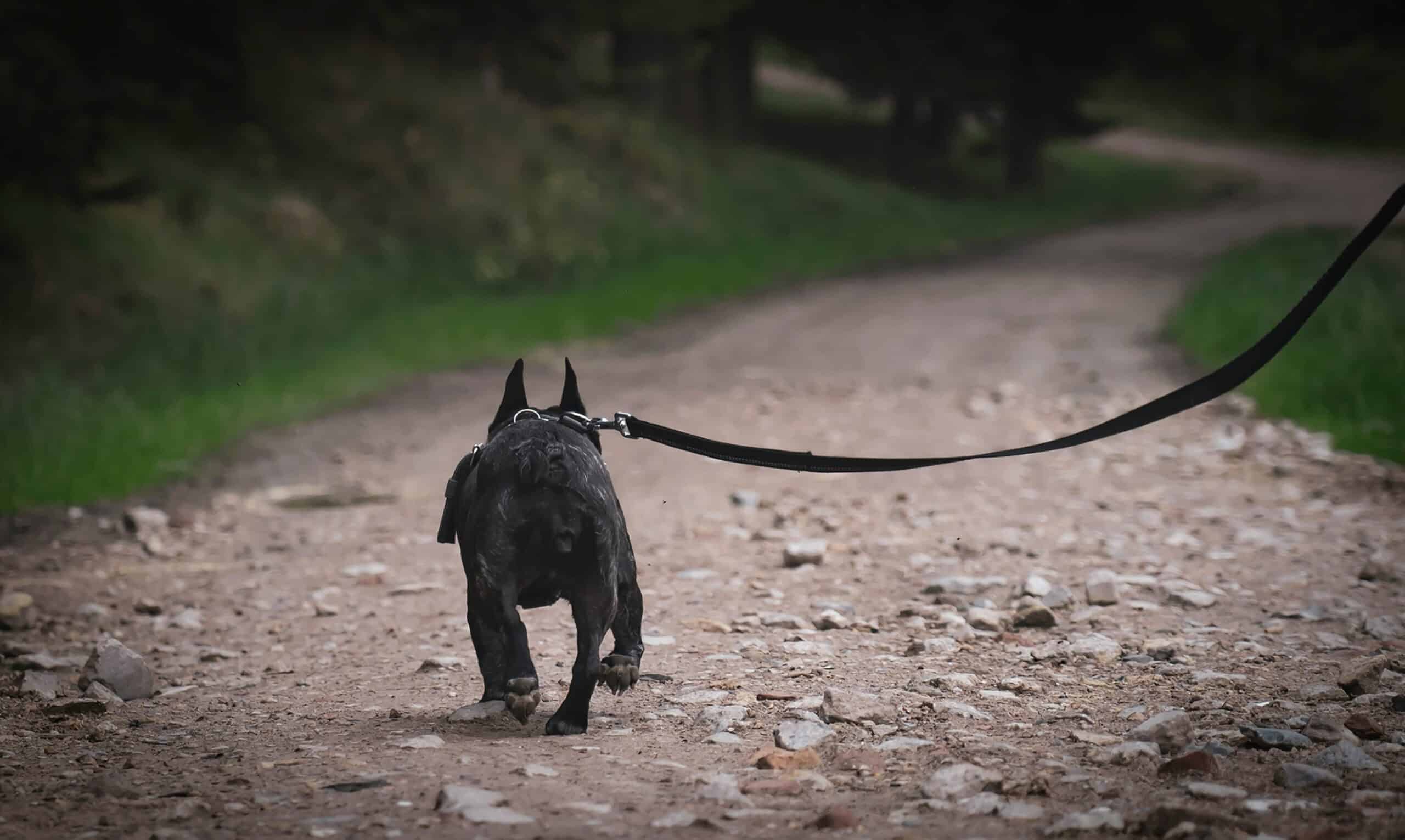
A long line is the training tool that bridges the gap between a six-foot leash and true off-leash freedom, giving your dog room to roam and sniff while you keep a safety connection for recall practice. Unlike a retractable leash, the best long line dog leashes are a fixed length of strong webbing, rope, or coated biothane that you can let out, reel in, or let drag, which makes them ideal for teaching a reliable come cue in open space. If your dog still bolts or ignores you, pairing a long line with our guide to teaching a solid recall is the way to build it safely.
Quick Verdict
For most owners, the Leashboss Long Trainer is the go-to: durable webbing in a range of lengths with a comfortable handle for controlled recall work. Owners who train in wet or muddy places should choose the waterproof Viper Biothane, small-dog owners the lighter Fairwin, and anyone wanting a classic check cord the Mendota. Pick a length that suits your space and a material that fits your terrain.
Key Takeaways
- A long line is a fixed-length lead for recall training and supervised freedom, not a walking leash.
- Common lengths run from about fifteen to fifty feet, matched to your training space.
- Biothane resists water and mud and wipes clean; webbing is lighter and cheaper.
- A long line is safer and more controllable than a retractable for training.
- Always attach a long line to a harness, not a collar, to avoid neck injury on a sudden stop.
How We Picked the Best Long Lines
We focused on strength and secure hardware, a comfortable grip for when you need to hold on, and a range of lengths and materials to suit different dogs and terrain. We looked for lines that hold up to dragging across the ground and stay easy to handle rather than tangling.
We favored designs that clip cleanly to a harness and resist fraying at the wear points. Every pick is widely available so you can compare lengths and widths to your dog and your training space.
Leashboss Long Trainer
Why It Stands Out
The Leashboss Long Trainer uses durable flat webbing with a padded handle, offering a comfortable, controllable long line across a range of lengths. The handle means you can hold on securely during recall work, and the sturdy hardware clips reliably to a harness. It is the versatile all-around choice for training in the yard or a field.
Worth Knowing
Flat webbing absorbs water and holds some dirt, so it needs occasional washing after muddy sessions. Longer lengths take practice to manage without tangles. Our notes on reducing pulling help before long-line work.
Best for owners who want a comfortable, all-purpose training line. Skip it if you need a fully waterproof, wipe-clean line.
Check Price on AmazonViper Biothane Long Line
Why It Stands Out
The Viper Biothane long line is coated so it resists water and mud and wipes clean, which suits training near water, on the trail, or in wet grass. It stays supple in the cold and does not soak up odors the way webbing can, making it the low-maintenance choice. The strong coated material handles dragging well.
Worth Knowing
Biothane is slightly heavier than plain webbing at the same length. It often comes without a padded handle, so grip a section rather than the end. It is the top pick for messy or wet environments.
Best for training in wet, muddy, or trail conditions. Skip it if you want the lightest line or a padded handle.
Check Price on AmazonFairwin Long Training Leash
Why It Stands Out
The Fairwin long training leash comes in lighter widths that suit small and medium dogs, giving freedom without a heavy line dragging them down. It offers several lengths for close work or wide recall practice, and the nylon build keeps the price friendly. It is an easy entry into long-line training.
Worth Knowing
Lighter nylon is less rugged than thick webbing or biothane for very strong dogs. It absorbs water like other webbing. Match the width to your dog’s size and strength.
Best for small and medium dogs on a budget. Skip it if you have a large, powerful dog that needs heavier hardware.
Check Price on AmazonMendota Check Cord
Why It Stands Out
The Mendota check cord is a classic rope-style long line built for sporting and field training, with a smooth braided rope that slides freely and holds up outdoors. It suits owners doing formal recall or field work who want a traditional, durable cord. The rope resists tangling and runs cleanly through your hand.
Worth Knowing
Rope can cause friction burn if it runs fast through a bare hand, so gloves help for a strong dog. It is a training tool rather than a walking leash. It is the pick for field and sporting recall work.
Best for field training and formal recall work. Skip it if you want a flat webbing line or a padded handle.
Check Price on AmazonMax and Neo Long Line
Why It Stands Out
The Max and Neo long line pairs strong webbing with heavy-duty hardware and reflective stitching, adding visibility for low-light training sessions. The rugged build suits larger dogs, and the brand donates a leash to rescues with each sale. It is a dependable, well-made training line.
Worth Knowing
The heavier webbing and hardware make it sturdier but less featherweight. It absorbs water like other nylon lines. For night sessions, pair it with our reflective gear picks.
Best for larger dogs and low-light training. Skip it if you want a lightweight line for a small dog.
Check Price on AmazonTUG Long Training Lead
Why It Stands Out
The TUG long training lead offers a straightforward, affordable nylon line in multiple lengths, covering the basics of recall training without extras. It is a low-risk way to start long-line work and see whether the length suits your space. The simple design is easy to handle for beginners.
Worth Knowing
Basic nylon is less rugged than biothane or heavy webbing for powerful dogs. It holds water and dirt. It is a sensible starter line before investing in a specialized one.
Best for owners starting long-line training on a budget. Skip it if you need a rugged or waterproof line.
Check Price on AmazonLong Line Leashes at a Glance
| Long line | Material | Handle | Best for | Wet conditions |
|---|---|---|---|---|
| Leashboss Long Trainer | Webbing | Padded | All-around training | Fair |
| Viper Biothane | Coated biothane | None | Wet and muddy terrain | Excellent |
| Fairwin | Nylon | Loop | Small and medium dogs | Fair |
| Mendota Check Cord | Braided rope | Loop | Field and sport work | Good |
| Max and Neo | Webbing | Padded | Larger dogs, low light | Fair |
| TUG | Nylon | Loop | Budget starter | Fair |
How to Choose a Long Line
Pick the Right Length
Shorter long lines around fifteen feet suit close recall work and tight spaces, while thirty to fifty feet gives room for distance training in an open field. Start shorter while you learn to handle the line, then size up. Match the length to your training space and skill.
Match Material to Terrain
Webbing and nylon are light and affordable but soak up water and mud, while coated biothane wipes clean and shrugs off wet conditions. Rope suits field work but can cause friction burn. Choose the material for where you train most.
Size the Width to Your Dog
A small dog needs a lighter, thinner line so the weight does not drag, while a large, strong dog needs wider webbing and heavier hardware. Too thin and it may fail on a hard hit; too thick and it burdens a small dog. Match width to size and strength.
Always Use a Harness
A long line lets a dog build speed, so a sudden stop at the end can jolt the neck if clipped to a collar. Attach it to a well-fitted harness instead to spread the force safely. Our leash training guide covers building good habits first.
Long Line vs Retractable Leash
Why a Long Line Wins for Training
A long line is a fixed length you fully control, letting it drag or reeling it in, which makes it ideal for recall training and predictable in an emergency. It has no mechanism to fail or lock unexpectedly. It is the trainer’s choice.
Where Retractables Fit
A retractable leash offers convenience for casual walks with a well-behaved dog but gives less control and can encourage pulling. It is not a training tool. Our comparison of retractable and standard leashes covers the trade-offs.
How to Use a Long Line Safely
Start in a Safe, Open Space
Begin in a fenced field or quiet open area where a dropped line will not tangle on obstacles or people. Let the dog explore while you hold or step on the line to stay connected. Build distance gradually as recall improves.
Prevent Tangles and Burns
Keep the line from wrapping around legs, yours or the dog’s, and wear gloves if a strong dog might yank rope through your hand. Let the line drag for hands-free freedom while staying close enough to grab it. A treat pouch keeps rewards ready for recall practice.
Common Long Line Mistakes
Clipping to a Collar
A dog hitting the end of a long line at speed can hurt its neck on a collar. Always attach a long line to a harness to spread the force.
Starting Too Long
A fifty-foot line is hard to manage before you have the handling down, leading to tangles and lost control. Start shorter and work up as your skill grows.
Treating It Like a Walking Leash
A long line is for training and supervised freedom, not strolling down a sidewalk where the slack becomes a hazard. Use a standard leash for everyday walks and the long line for recall work.
Recommended Reading
- Hands-free leashes for active walks
- Sturdy leashes for large dogs
- Matched harness and leash sets
- Lightweight leashes for small dogs
Frequently Asked Questions
What is a long line dog leash used for?
A long line is a fixed-length training lead, usually fifteen to fifty feet, used to give a dog freedom to roam and sniff while you keep a safety connection. It is the standard tool for recall training and supervised off-leash practice. It is not meant for everyday sidewalk walks.
How long should a long line be?
Shorter lines around fifteen feet suit close recall work and tight spaces, while thirty to fifty feet gives room for distance training in an open field. Start shorter while you learn to handle the line, then size up as your skill and your dog’s recall improve. Match the length to your training space.
Is a long line better than a retractable leash?
For training, yes. A long line is a fixed length you fully control and can let drag or reel in, with no mechanism to fail or lock. A retractable is a convenience leash for casual walks, not a training tool, and it offers less control. Choose a long line for recall work.
Should I attach a long line to a collar or harness?
Always a harness. A dog can build speed on a long line, and a sudden stop at the end can jolt the neck if the line is clipped to a collar. A well-fitted harness spreads that force across the body and is much safer.
What material is best for a long line?
Coated biothane resists water and mud and wipes clean, making it best for wet or trail conditions, while webbing and nylon are lighter and cheaper but absorb water. Rope suits field work but can cause friction burn. Choose the material for where you train most often.
Can you use a long line for a small dog?
Yes, with a lighter, thinner line so the weight does not drag on a small dog. Match the width to the dog’s size and strength, and clip it to a harness. A shorter length is often easier to manage for close recall work with a small dog.
See also the comprehensive dog training methodology.
See the complete guide: the complete guide to choosing dog gear.
