
For the foundational guidance behind these picks, see the complete clear-communication dog training framework.
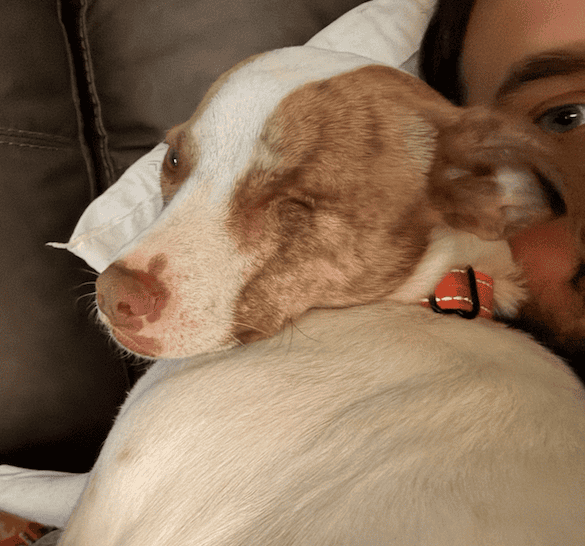
A dog with PTSD carries fear from something that already happened, and helping one recover is slow, quiet work built on safety and patience. My own rescue came to me with PTSD from an attack before I adopted her, so the steps here come from living it: a retreat she controls, new people who let her approach first, and trust earned on her schedule. None of it is a quick fix, and a calm calming bed she can call her own is one of the first things that helped. The goal is a dog who feels safe enough to settle, not a dog pushed to act fine.
This article shares one owner’s experience and general guidance, not veterinary advice. A dog showing signs of trauma should be seen by a veterinarian or a credentialed veterinary behaviorist, who can rule out pain and build a treatment plan.
Quick Verdict
Help a traumatized dog by giving her a safe retreat she controls, letting new people ignore her until she chooses to approach, and rewarding calm without ever forcing contact. Recovery runs on her timeline, and a veterinarian or veterinary behaviorist should guide anything beyond basic comfort and routine.
Key Takeaways
- PTSD in dogs shows up as lasting fear, startle, hiding, or avoidance tied to a past event.
- A safe retreat with her own bed and blankets gives a frightened dog a place to settle.
- New people should avoid eye contact and let the dog approach first, never reach for her.
- Reward calm and choice, and never force a scared dog into contact or a corner.
- A veterinarian or veterinary behaviorist should assess a dog with ongoing trauma signs.
Disclosure: HappyPaws is reader-supported. As an Amazon Associate, we earn from qualifying purchases made through links on this page, at no extra cost to you.
How We Researched This
This guide pairs first-hand experience with a rescue dog and guidance from veterinary behavior groups that favor reward-based, force-free methods for fearful animals1. Trauma-related behavior in dogs overlaps with fear and anxiety, and a professional assessment matters because pain and medical issues can look like fear2.
Everything below stays on comfort, environment, and trust-building. Diagnosis and any medication belong with a veterinarian, not a checklist.
What PTSD Looks Like in a Dog
Common Signs
A dog with trauma in her history may freeze, tremble, or bolt at a sound, a person, or a place that echoes the bad event. Some hide for hours, flinch at raised hands, or guard a corner, while others swing into barking or snapping when they feel cornered2.
What I Saw in My Own Dog
With mine, the tells were a hard freeze when a stranger reached toward her and a retreat to the same safe spot whenever the house felt busy. Naming her triggers came before any progress, because I could not help her avoid what I had not yet noticed.
Give Her a Safe Retreat She Controls
Her Own Space
A frightened dog calms faster when she has a spot that belongs to her and that no one invades. I leaned on her bed and her blankets as that anchor, a low-traffic corner she could reach on her own and leave on her own. When the room got loud or a guest arrived, she had somewhere to go that meant safety instead of a dead end.
Make It Comforting, Not a Cage
The retreat works because she chooses it, so I never dragged her there or used it as a timeout. Soft bedding, her own scent, and a clear exit turned the space into a place she trusts. A bolster or donut-style bed gives an anxious dog edges to curl against, which many trauma survivors prefer over an open mat.
Check Price on AmazonLet New People Ignore Her First
No Eye Contact, No Reaching
The fastest way to scare a traumatized dog is to greet her the way people greet a friendly one. I coached every visitor to skip eye contact, skip the outstretched hand, and act as if she were not in the room. Without that pressure, she got to study the person on her own terms instead of bracing for contact.
Let Her Make the First Move
When a guest stayed calm and uninterested, curiosity eventually won and she came to them. That first sniff happened because she decided it was safe, which is worth far more than a pet she only tolerated. People who let her approach earned a calm dog, and people who rushed her sent her straight back to her retreat.
Build Trust on Her Timeline
Reward Calm and Choice
Trust grew when I marked and rewarded the calm moments rather than coaxing her through scary ones. Reward-based, force-free handling is the approach veterinary behavior groups back for fearful dogs, because pressure and punishment deepen fear instead of easing it1. A treat for choosing to stay near, a soft word for a relaxed body, and no consequence for backing away all told her that safety was hers to control.
Soothing Tools That Help
Some dogs settle faster with gentle pressure from a snug wrap, a steady routine, or background sound that masks startling noises. A snug anxiety wrap can take the edge off for a dog who braces at thunder or a busy house. None of these fix trauma on their own, and they work best alongside the safe retreat and patient introductions.
Check Price on AmazonKeep the Day Predictable
Routine Lowers the Guesswork
A steady rhythm of meals, walks, and rest gives a fearful dog fewer surprises to brace against. When she could predict the shape of the day, her baseline stress dropped and the scary moments stood out less.
Manage the Triggers You Know
Once I knew what set her off, I could lower the volume on it, whether that meant a wider berth on walks or a heads-up before company arrived. Avoiding a known trigger is not coddling; it is giving a healing dog room before you ever ask her to face it.
When to Involve a Vet or Behaviorist
Signs You Need a Professional
Call a veterinarian if the fear is severe, getting worse, or paired with aggression, since a pro can rule out pain and weigh whether medication would help the behavior work take hold2. A credentialed veterinary behaviorist builds a plan that home comfort alone cannot match.
What a Plan Adds
A behaviorist can structure desensitization at a safe pace and coordinate any medication with a vet. Pairing that with the retreat, calm introductions, and routine at home gives a traumatized dog the steadiest path forward.
Recommended Reading
Common Mistakes to Avoid
Good intentions can set a frightened dog back when they ignore how she experiences the world.
Forcing Contact to Show There Is Nothing to Fear
Pushing a scared dog into a hand or a lap proves the opposite of what you intend and teaches her that people override her signals. Let her approach, and let her leave.
Punishing Fear Reactions
Scolding a growl or a cower punishes the warning, not the fear, and a dog who learns to hide her signals can escalate without notice. Reward calm and remove the pressure instead.
Flooding Her With Triggers
Throwing a traumatized dog into a crowded park or a houseful of guests to get her used to it overwhelms a nervous system that needs small, safe steps. Build exposure slowly and back off when she tenses.
Expecting a Fast Recovery
Trauma fades on the dog’s timeline, and comparing her progress to a confident dog’s only adds pressure. Measure wins in small settles, not in a finish line.
Frequently Asked Questions
Can dogs really have PTSD?
Dogs can develop lasting fear and stress responses after a frightening event, a pattern often called canine PTSD that overlaps with fear and anxiety disorders. A veterinarian or veterinary behaviorist can assess the dog and separate trauma signs from pain or other medical causes.
What are the signs of PTSD in a rescue dog?
Watch for freezing, trembling, hiding, flinching at hands or sounds, bolting, or sudden barking and snapping tied to specific triggers. Naming those triggers is the first step, since you cannot ease a fear you have not spotted.
How do I help a traumatized dog trust me?
Give her a safe space she controls, let her approach you instead of reaching for her, and reward calm choices without forcing contact. Trust grows on her timeline, so steady routine and patience do more than any single session.
Should new people pet a fearful dog right away?
No. Ask visitors to avoid eye contact, skip the outstretched hand, and ignore the dog until she chooses to come to them. Letting her make the first move turns a scary stranger into something she investigated on her own terms.
Do anxiety wraps and calming beds help dogs with PTSD?
They can take the edge off for some dogs by adding gentle pressure or a den-like retreat, but they support recovery rather than cure trauma. Use them alongside a safe space, calm introductions, and a steady routine.
When should I see a vet or behaviorist about my dog’s trauma?
Reach out if the fear is severe, worsening, or comes with aggression, or if home steps are not helping. A vet rules out pain and can discuss medication, and a veterinary behaviorist builds a structured, force-free plan.
Related Reading
Explore more: why does my dog sleep at my feet, wireless dog fence vs gps tracker, wireless dog fence, wireless dog fences reliability, low calorie dog treats, Signs Your Dog Is Overweight and What to Do Next, dog lift harnesses, and dog pools.
Recommended Reading
See also our guides to dog drying coats, and help dog lose weight.
Sources
- American Veterinary Society of Animal Behavior (AVSAB). Position statements on humane, reward-based training. https://avsab.org/resources/position-statements/
- ASPCA. Dog behavior, fear, and anxiety resources. https://www.aspca.org/pet-care/dog-care
