
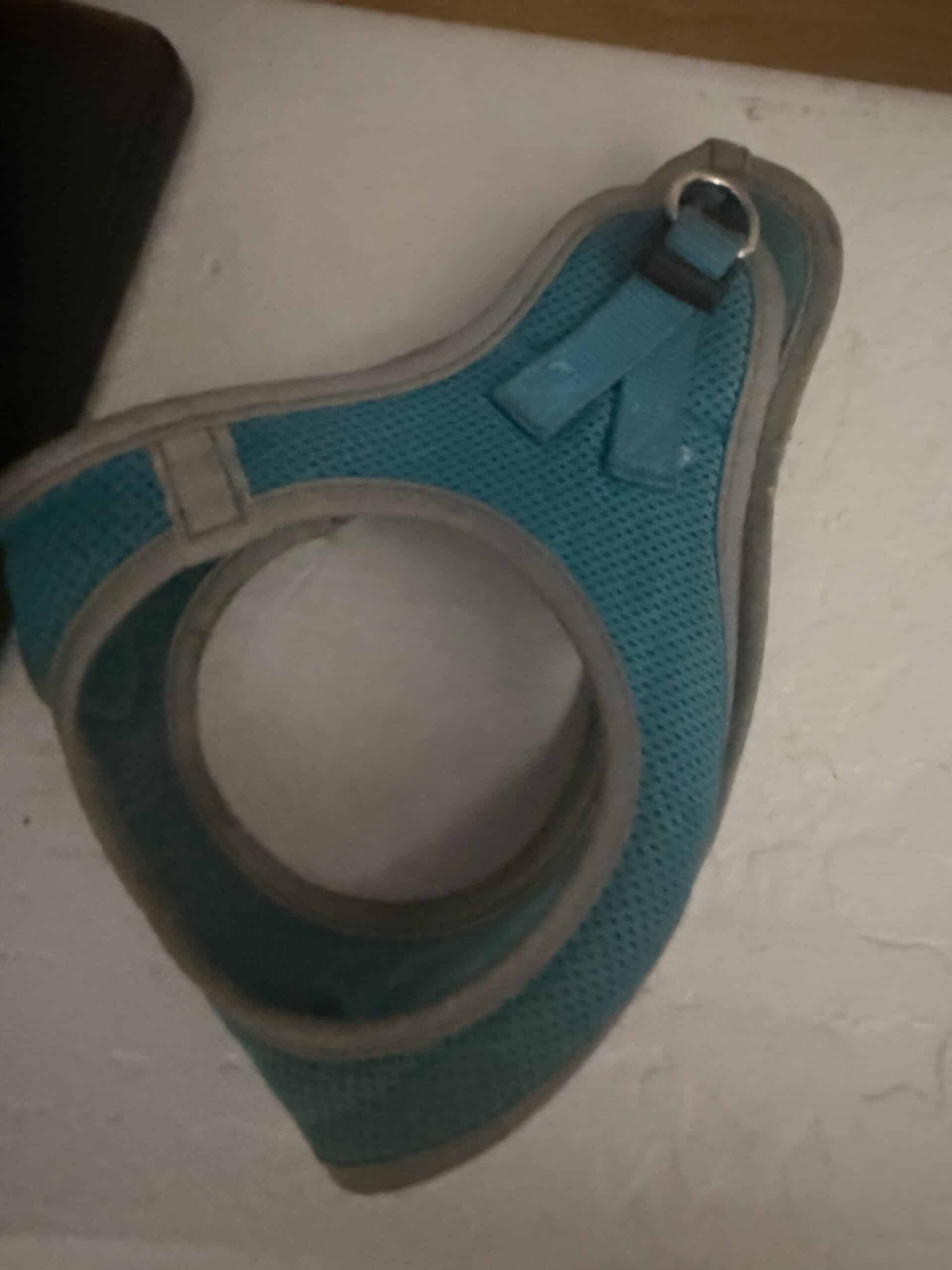
The standard guidance is two fingers flat under the strap, and it is right as far as it goes. What it leaves out is where to check, because a harness can pass the two-finger test at the neck and still be loose enough at the chest for a dog to reverse out of.
The chest strap behind the front legs is the one holding the harness on. That is the measurement that matters. Our note on whether a mesh harness is enough for a small dog covers the design.
Quick Answer
Two fingers should slide flat under each strap with slight resistance. Check the chest strap specifically, and check again after the first few walks as the mesh settles.
Why Too Loose Is the Dangerous Direction
A dog that backs up hard against a lead can reverse straight out of a loose harness, and it happens fastest with exactly the dogs least safe loose: nervous ones startled by something unexpected.
Small dogs escape more easily because the difference between a snug and a loose fit is a smaller absolute distance. A centimeter matters more on a 25 pound dog than on a 70 pound one.
The escape route is backward and downward, with the front legs coming out through the chest opening. Which is why that strap is the one to check.
Too tight causes rubbing and restricted movement, which is uncomfortable and not an immediate safety failure. Our roundup of lightweight mesh harnesses covers the category.
Getting that one strap right does more for safety than every other adjustment combined.
Where to Check
The chest strap
Behind the front legs. The one preventing escape and the one people skip. Two fingers flat, snug.
The neck opening
Should not press on the throat or slide loosely. Two fingers here too.
Behind the elbows
Check clearance so the strap does not sit in the armpit where the leg moves through it.
The whole thing at once
Lift gently upward at the back. A correctly fitted harness stays put rather than riding up toward the neck. Our note on no spill dog water bowls covers that spot.
That order matters: a harness a dog can escape is a different category of problem from one that chafes.
Mesh Settles
Mesh and soft webbing give slightly with use, more than stiff nylon does. A harness fitted correctly out of the packet is frequently looser after two weeks.
That is normal rather than a defect, and it is the reason to recheck after the first several outings rather than fitting once and forgetting.
Washing accelerates it in some materials and shrinks others, so a recheck after the first wash is worth doing.
Mine is a lightweight mesh harness and rechecking has been part of using it rather than something I did once.
Getting the Size Right First
Adjustment cannot rescue a harness that is the wrong size, which is worth establishing before spending time on fit.
Chest girth is the measurement that matters, taken around the widest part behind the front legs. Neck measurement matters less on a harness than it does on a collar.
Weight is a poor proxy and it is what most sizing charts lead with. Two dogs at the same weight can have very different chest measurements depending on build.
Where a dog falls between sizes, the larger one with the straps taken in is usually better than the smaller one at full extension, since a harness at the limit of its adjustment has nowhere to go.
The exception is when sizing up pushes the chest strap forward into the armpit, which is a fit failure adjustment cannot fix.
Coat and Season Change the Fit
A harness fitted over a winter coat is loose in summer, and the difference is enough to matter on a double-coated dog.
Weight changes do the same thing more slowly, and a few pounds either way on a small dog is a meaningful proportion.
Dogs still growing need checking far more often, since a harness that fitted last month may not now.
None of that needs a calendar. Checking the chest strap whenever you notice yourself adjusting anything is enough. Our roundup of harnesses for small dogs covers sizing.
Checking It Takes Ten Seconds
The whole check is three things and it does not need a routine or a reminder.
Two fingers flat under the chest strap. Two fingers under the neck opening. A gentle lift at the back to see whether it rides up.
Doing that while the harness is going on anyway costs nothing, and it catches the gradual loosening that mesh does over weeks.
The alternative is discovering the fit is wrong when a dog backs out of it on a street, which is the outcome the whole exercise exists to prevent.
Our roundup of leashes for small dogs covers the other end of the connection.
Signs It Is Wrong
Hair worn thin or skin irritation under a strap means too tight or rubbing, and it appears behind the front legs most often.
A harness rotating so the clip ends up on the dog’s side rather than the back means it is loose.
Riding up toward the neck when the lead is tensioned is the same problem showing differently.
And a dog that has ever backed out of it, even once, has told you the fit is wrong regardless of what the finger test says.
Straps Loosen at Different Rates
A harness has multiple adjustment points and they do not stay put equally.
The strap that takes the most load loosens first, which on a front-clip harness is different from a back-clip one. Watching which one you keep tightening tells you where the load actually goes.
Plastic sliders hold less reliably than metal ones, particularly on soft webbing that gives slightly under tension.
Some harnesses have keepers or elastic loops holding excess strap, and a strap slipping through a slider shows up as slack appearing at the keeper.
Checking all the adjustment points rather than just the one you usually touch catches this before the whole fit drifts. Our roundup of gear for short frequent walks covers frequent-use equipment.
Fitting Is Easier When They Like It
Mine is easy to put on and take off, and she gets excited when it comes out because she knows what it means. That makes checking the fit a two-second job rather than a wrestle.
A dog holding still is a dog you can actually fit properly, which is a practical argument for building that association rather than a nice extra.
Where a dog does resist, fitting tends to get rushed, and rushed fitting is loose fitting.
The association builds the ordinary way, which is that the harness reliably predicts something good. Our note on water bowls for small dogs covers that.
Mesh Harness Fit FAQ
How tight should it be?
Two fingers should slide flat under each strap with slight resistance. Not so loose they pass easily, not so tight they will not fit.
Which strap matters most?
The chest strap behind the front legs. That is what holds the harness on, and it is the one people skip when checking at the neck.
How do I know if my dog can escape it?
Lift gently upward at the back and see whether it rides toward the neck. Any dog that has backed out of it once, even accidentally, is telling you the fit is wrong.
Do mesh harnesses loosen over time?
Yes, more than stiff nylon does. Recheck after the first several outings and again after the first wash, since some materials give and others shrink.
What if it rubs?
Usually too tight or sitting in the wrong place behind the front legs. Check for thin hair or irritation there, and adjust so the strap clears the leg movement.
Does a winter coat change the fit?
Considerably on a double-coated dog. A harness fitted over full winter coat is loose in summer, so it is worth rechecking as the coat changes.
How often should I check?
Whenever you notice yourself adjusting something, plus after washing and after any weight change. A growing dog needs it far more often than that.
Does it matter if my dog likes the harness?
Practically, yes. A dog that holds still is one you can fit properly, and rushed fitting on a resisting dog tends to end up loose.
Recommended Reading
See our note on choosing dog gear.
