
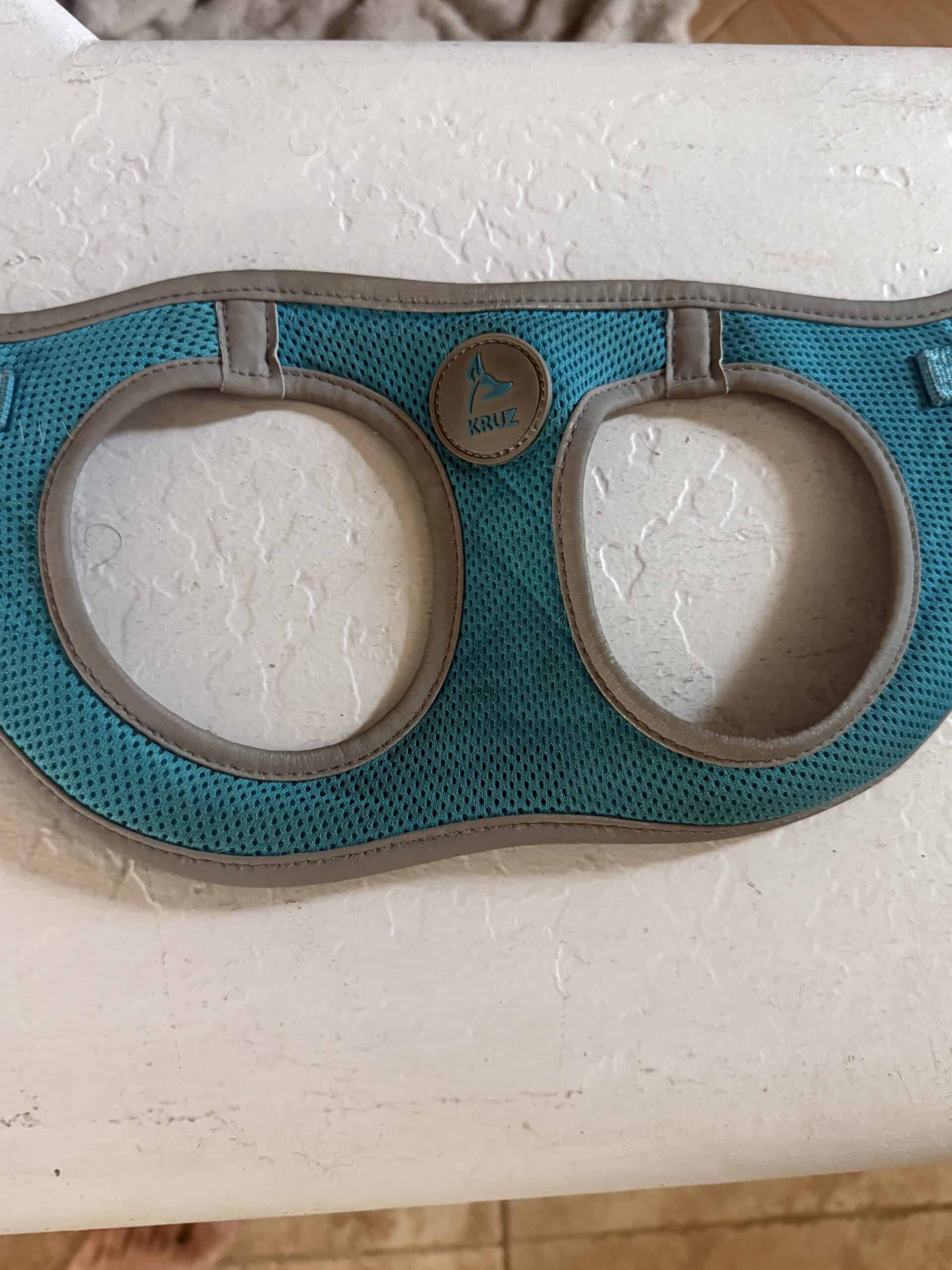
Mesh harnesses breathe and weigh less. Padded harnesses spread pressure and feel softer against the coat. The choice comes down to whether heat or pressure is the bigger problem for your dog. For more on this, see our guide to lightweight mesh harnesses.
Quick Verdict
Choose mesh for hot climates, short-coated dogs, and dogs that do not pull. Choose padded for dogs that pull, dogs with thin coats prone to rubbing, and cold climates. In genuine heat, mesh wins even for dogs that would otherwise suit padding.
Key Takeaways
- Mesh breathes, padding insulates
- Padding spreads pressure from pulling
- Mesh weighs considerably less
- Padded harnesses take longer to dry
- Fit matters more than either material
- Heat is the deciding factor in hot climates
Veterinary Disclaimer
This article covers harness materials rather than veterinary advice. Persistent rubbing, hair loss, skin irritation, or reluctance to be harnessed are worth raising with a veterinarian rather than solved by changing material alone.
How We Compared
Heat handling came first, since a harness sits over the chest and back where a dog sheds a good deal of heat.
Pressure distribution mattered next, because that is the entire argument for padding and it applies unevenly depending on how a dog walks.
Durability and drying time counted, as both determine how a harness holds up across a year of daily use.
We treated fit as separate, since a badly fitted harness of either type causes more problems than the material choice does.
Mesh and Padded at a Glance
| Criterion | Mesh | Padded |
|---|---|---|
| Breathability | High | Low |
| Pressure spreading | Limited | Good |
| Weight | Very light | Noticeable |
| Drying after rain | Fast | Slow |
| Suits pullers | Less well | Better |
| Hot climates | Better | Worse |
| Long-coat dogs | Can catch fur | Smoother |
Mesh Harnesses, Pros and Cons
- Airflow through the panel rather than over it
- Very light, which small dogs notice
- Dries quickly after rain or a swim
- Less bulk under the legs
- Little cushioning if the dog pulls
- Thin mesh can fray at stress points
- Open weave catches long fur
Suits hot climates, small and short-coated dogs, and dogs walking calmly on leash. Skip for strong pullers and in genuinely cold conditions.
Padded Harnesses, Pros and Cons
- Spreads pressure across a wider area
- Softer against thin or sensitive skin
- More durable at stress points
- Adds warmth in cold weather
- Holds heat, which matters in summer
- Stays damp for hours after rain
- Heavier and bulkier on small dogs
Suits pullers, thin-coated dogs, cold climates, and dogs that rub easily. Skip in sustained heat, where the insulation works against you.
Which Handles Heat Better?
Mesh, clearly. Air passes through the panel rather than being blocked by it, which matters because the chest and belly are where a dog sheds heat most readily.
Padding does the opposite. It traps a layer of warm air against the coat, which is useful in winter and works against you in summer.
In hot climates this is not a marginal difference. A padded harness on a long summer walk adds meaningful heat load to a dog that is already managing.
Winner: mesh, decisively, and the gap widens with temperature. Heat safety generally sits in keeping a dog safe in extreme heat.
Which Is Better for a Dog That Pulls?
Padded. Force concentrated on narrow straps digs in, and padding spreads that load across a wider contact area.
Thin mesh straps under sustained tension can rub, particularly in the armpit area where the harness moves against skin with every step.
That said, front-clip design does more for pulling than padding does, since it redirects rather than cushioning, covered in front clip against back clip harnesses.
Winner: padded, and training matters more than either.
Which Suits Small Dogs?
Mesh, usually. Weight that a large dog would not register is noticeable on a small one, and lightweight mesh sits closer to the body without bulk between the front legs.
Padded harnesses on small dogs can restrict shoulder movement simply through thickness, which produces the odd gait people sometimes see.
The exception is a small dog that pulls hard, where thin straps on a small frame concentrate force in a small area.
Winner: mesh for most small dogs, and options sit in harnesses for small dogs.
Which Lasts Longer?
Padded, at the stress points. Thin mesh frays where buckles and clips sit, and once it starts it spreads.
Mesh has one durability advantage: it dries fast. Padded harnesses stay damp for hours, and a harness that goes back on damp develops odor and degrades faster from that.
Both fail at the hardware before the fabric if the hardware is cheap, which is worth more attention than the material.
Winner: padded on abrasion, mesh on moisture.
Why I Went With Mesh
My dog wears a lightweight mesh harness, and I chose it because it is cooler. That was the whole reasoning, and in Arizona it is the factor that matters most. Both formats wear out eventually, and our note on how long a harness lasts covers the signs.
The downside is the obvious one, which is that there is no padding. She does not pull much, so that has not caused a problem, and I would think differently about it if she did.
It has held up well. No fraying, no fit issues, and nothing that has made me want to replace it.
What I would say to anyone in a hot climate is that the heat consideration outweighs the comfort one for a dog that walks calmly. If your dog pulls, that flips.
Which Fits Your Situation
| If this is you | Better choice |
|---|---|
| Hot climate, calm walker | Mesh |
| Dog pulls consistently | Padded, front clip |
| Small dog under 25 pounds | Mesh |
| Thin coat, rubs easily | Padded |
| Cold climate | Padded |
| Frequent rain or swimming | Mesh |
| Long-coated breed | Padded, smoother against fur |
Fit Matters More Than Material
A well-fitted mesh harness beats a badly fitted padded one, and the reverse is also true. Most rubbing complaints trace to fit rather than to what the harness is made of.
Two fingers should slide under any strap. Tighter causes rubbing, looser lets the harness shift and lets a startled dog back out.
The armpit area is where problems appear first, since straps sitting too close to the leg move against skin with every step.
Growing dogs need checking monthly, and any dog needs a look after a coat change, covered in how to fit a dog harness.
The Verdict
Mesh wins for heat, weight, and drying, which covers most small dogs in warm climates walking calmly on leash. Padded wins for pullers, thin coats, and cold weather.
If you are in a hot climate, buy mesh unless your dog pulls hard. The heat load from a padded harness on a summer walk is a real cost and the padding solves a problem you may not have.
If your dog pulls, address that with a front-clip design and training rather than with padding alone, since cushioning the pressure does not reduce it.
Recommended Reading
- harnesses for small dogs
- fitting a harness
- front against back clip
- collar against harness
- harnesses for pulling
- heat safety
- cooling vests
- choosing a small dog harness
- harness and leash sets
- how tight a mesh harness should be
Part of our guide to choosing dog gear.
Common Misconceptions
That padding always means comfort
Padding helps with pressure and adds heat. For a dog that does not pull, in a warm climate, it is a cost rather than a benefit.
That mesh is flimsy
Quality mesh with reinforced stress points holds up fine. The failures come from thin unreinforced mesh at buckles, which is a construction issue.
That a padded harness stops pulling
It makes pulling more comfortable for the dog, which is not the same thing. Front-clip design and training address the pulling itself.
That material fixes rubbing
Most rubbing is a fit problem. A harness sitting too close to the armpit rubs regardless of what it is made of.
Mesh vs Padded Harness FAQ
Which is better, mesh or padded?
Mesh for heat, weight, and small dogs that walk calmly. Padded for pullers, thin coats, and cold climates. Climate is usually the deciding factor.
Do mesh harnesses rub?
They can if fitted poorly or if the dog pulls, since thin straps concentrate force. A correct fit with two fingers of clearance prevents most of it.
Is mesh cooler for dogs?
Yes. Air passes through the panel rather than being blocked, and the chest and belly are where dogs shed heat most readily.
Which is better for a small dog?
Mesh usually, since weight and bulk that a large dog ignores are noticeable on a small one. A small dog that pulls hard is the exception.
Do padded harnesses stop pulling?
No. They spread the pressure, which makes pulling more comfortable rather than less frequent. Front-clip design redirects instead.
Which lasts longer?
Padded at abrasion points, mesh in wet conditions since it dries fast. Both usually fail at cheap hardware before the fabric gives out.
How do I know if the harness fits?
Two fingers should slide under any strap, and nothing should sit tight against the armpit. Check monthly on a growing dog and after any coat change.
Sources
- American Kennel Club. Dog Harness vs Collar. https://www.akc.org/expert-advice/training/dog-harness-vs-collar/
- American Veterinary Medical Association. Hot Weather Pet Safety. https://www.avma.org/resources-tools/pet-owners/petcare/hot-weather-safety-pets
