
For our current top picks, see the best washable dog beds guide. The clip is small, but where it sits changes how every walk feels. The front-clip vs back-clip dog harness choice comes down to control versus comfort: a front clip sits on the chest and gently turns a pulling dog back toward you, while a back clip sits between the shoulders for easy, comfortable walking with a dog that already behaves on leash. Neither is better in every case, and many harnesses now offer both. If you are still deciding between a harness and a collar at all, our collar vs harness breakdown covers that first step. This guide sorts the clip question by your dog’s leash manners.
Quick Verdict
Use a front clip if your dog pulls, since the chest attachment redirects that force and makes loose-leash training easier. Use a back clip if your dog walks calmly, since it is comfortable, tangle-free, and quick to put on and take off. A back clip is the everyday choice I use on my own small dog, and a dual-clip harness lets you switch as leash manners improve.
Why Trust This Guide
Comparisons draw on harness design and the pet-safety guidance cited in Sources. First-person notes apply only to the back-clip harness I use on my own small dog; the front-clip side is research-based.
Key Takeaways
- A front clip on the chest redirects pulling, which helps with training and strong pullers.
- A back clip between the shoulders is comfortable, tangle-free, and easy on and off for calm walkers.
- Front-clip leashes can tangle under the legs; back clips give less steering control.
- A dual-clip harness offers both, letting you adapt as your dog learns.
Disclosure: HappyPaws is reader-supported. As an Amazon Associate, we earn from qualifying purchases made through links on this page, at no extra cost to you.
How Front-Clip and Back-Clip Harnesses Differ
It comes down to leverage. A front clip sits at the center of the chest, so when your dog pulls, the leash turns the body sideways and points the dog back toward you. A back clip sits over the shoulders, so pulling force runs straight ahead with the dog, which is comfortable but gives you little steering. One manages pulling; the other prioritizes easy, relaxed walking.
The Front-Clip Harness
Strengths
The chest attachment gently redirects a pulling dog without any harsh correction, which makes it a useful tool for loose-leash training and for strong pullers. It gives you more steering control in busy or distracting places.
Trade-Offs
A loose front leash can drift under the front legs and tangle, so it needs a shorter, more attentive hold. It is a management and training aid rather than a fix on its own, and it pairs best with reward-based training. Our guide to harnesses for pulling goes deeper on technique.
The front clip suits dogs that pull and owners actively working on leash manners. If your dog already walks calmly, the extra steering is more than you need.
Check Price on AmazonThe Back-Clip Harness
Strengths
The back clip keeps the leash up and off the legs, so it never tangles, and it is comfortable for relaxed walking. It is the easiest style to live with day to day for a dog that does not pull.
Trade-Offs
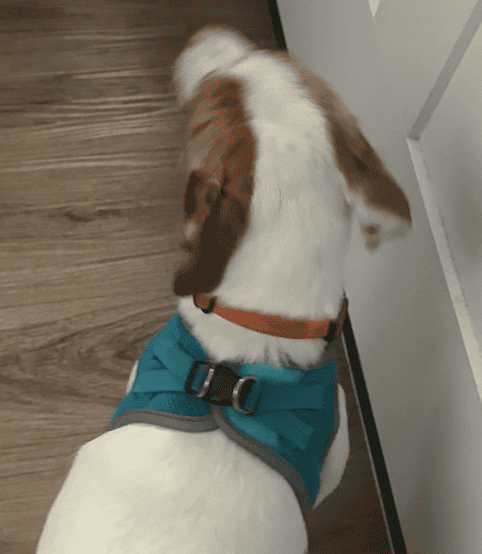
I use a back clip on my own small dog, and the on-and-off routine is the reason I like it. I get her front legs in first, then clip around her, and when we come back inside I just unclip, so it comes off easily without any fuss. The honest trade-off is steering: a back clip gives little control if a dog suddenly lunges, so it works best with a calm walker rather than a hard puller.
The back clip suits dogs with good leash manners and owners who want a comfortable, quick, tangle-free walk. If your dog pulls strongly, it will not give you enough control.
Check Price on AmazonFront Clip vs Back Clip, Head to Head
For Pulling and Training
The front clip wins. Redirecting force at the chest discourages pulling and supports loose-leash training, while a back clip can actually let a dog lean into the harness and pull harder, the way sled dogs do.
For Comfort and Everyday Walks
The back clip wins for a calm dog. It sits naturally, never tangles under the legs, and is quick to clip and unclip, which makes routine walks simpler. Proper fit matters either way, so learn to fit the harness correctly before your first walk.1
For Small Dogs
Many small dogs walk calmly and do well on a comfortable back clip, while small dogs that pull or dart benefit from a front clip for control. Match the clip to the individual dog, not to the breed.
For Versatility
A dual-clip harness offers both attachment points, so you can use the front clip during training and switch to the back clip once your dog walks nicely. It is the most flexible choice if you are unsure, and it spares you from buying a second harness later as your dog learns to walk on a loose leash.
Front Clip vs Back Clip at a Glance
| Factor | Front clip | Back clip |
|---|---|---|
| Best for | Pullers and training | Calm, relaxed walkers |
| Control | More steering | Less steering |
| Comfort | Good | Excellent, tangle-free |
| Ease on and off | Standard | Quick clip and unclip |
| Leash tangling | Can tangle under legs | Stays up and clear |
| Best paired with | Reward-based training | A dog with good manners |
Which Should You Choose?
Choose a Front Clip If
Your dog pulls, lunges, or is learning leash manners, and you want gentle redirection without correction. Pair it with training, and keep the leash short enough that it does not tangle under the legs.
Choose a Back Clip If
Your dog walks calmly and you want the most comfortable, tangle-free, easy-on-and-off option for daily walks. For many small dogs and well-mannered walkers, this is all you need. Pair it with a right-sized leash for small dogs for the smoothest walk.
Recommended Reading
- walking mechanics in practice
- The best harnesses for small dogs
- Harnesses built for pullers
- How to fit a dog harness correctly
- Dog collar vs harness, compared
- harness rubbing behind the front legs
- a dog recognizing the harness
Front Clip vs Back Clip FAQ
Is a front-clip or back-clip harness better?
Neither is better in every case. A front clip is better for pulling and training because it redirects force at the chest. A back clip is better for calm dogs, offering comfort, no tangling, and easy on and off. Choose based on your dog’s leash manners.
Does a back-clip harness encourage pulling?
It can. Because the leash sits over the shoulders, a dog can lean into a back clip and pull straight ahead. For a calm walker this is not an issue, but a strong puller often does better with a front clip during training.
Are front-clip harnesses good for small dogs?
Yes, for small dogs that pull or dart, a front clip adds helpful control. Many small dogs walk calmly, though, and do just as well on a comfortable back clip. Match the clip to the individual dog rather than to its size alone.
Why does my front-clip leash keep tangling?
A front clip sits low on the chest, so a loose leash can drift under the front legs. Keep the leash a little shorter and more attentive, and consider a dual-clip harness if tangling continues to be a problem on your walks.
Can one harness have both clips?
Yes. Many dual-clip harnesses include both a front and a back attachment, which lets you use the front clip for training and the back clip for relaxed walks. It is the most flexible option if you are unsure which you need.
Which clip is easier to put on and take off?
Most owners find a back-clip harness quick to manage: step the front legs in, secure it, and unclip to remove. The exact ease depends on the harness style, but the back clip keeps the routine simple for daily walks.
Does the clip position affect a dog’s neck?
Both clips attach to a harness rather than a collar, so both keep leash pressure off the throat compared with a neck collar, which matters for small breeds prone to airway sensitivity. The clip choice mainly affects steering and comfort, not neck pressure.
Should I start a puppy on a front or back clip?
A front clip can help a puppy learn not to pull, while a comfortable back clip suits early, low-pressure walks. Many owners use a dual-clip harness so they can switch as the puppy grows and its leash manners develop.
Related Reading
Explore more: dog poop bags and dispensers, how to introduce a new dog to your home, why does my dog dig at the bed, help dog lose weight, retractable vs standard dog leash, dog socks for traction, how to tell if your dog is in pain, and indoor dog agility equipment.
Recommended Reading
See also our guides to dog pheromone diffusers, and dog tents camping shelters.
Sources
- American Veterinary Medical Association. Pet Owner Resources: harness fit, supervision, and safe walking gear. https://www.avma.org/resources-tools/pet-owners/petcare
