
A leash gets handled every day and washed almost never, which is odd given it goes from the ground to your hands to everything else you touch.
Mine gets a wipe when it needs one, which in a dry dusty climate is more about dust than mud. That is the honest routine and it has been sufficient. Our note on when to replace a leash covers the other maintenance question.
A Safety Note
Disinfectant wipes leave residue, and a dog that mouths its leash will ingest it. Rinse and dry anything cleaned with disinfectant before the next walk if your dog chews or carries the leash. Never use bleach on webbing, since it weakens the fibers.
Quick Answer
Wipe for dust and light dirt, hand wash in warm soapy water for anything worse, and air dry completely. Retractable housings get wiped rather than soaked.
Method by Mess
| Situation | Method | Note |
|---|---|---|
| Dust | Wipe down | The common case in dry climates |
| Mud | Let dry, brush, then wash | Wet mud smears |
| General grime | Warm soapy water, hand wash | Rinse thoroughly |
| Smell | Soak in soapy water | Dry fully or it returns |
| Retractable | Wipe cord and housing | Never submerge the housing |
| Leather | Damp cloth, then condition | Never soak |
Wiping Is Usually Enough
Most leash dirt is surface dust and light grime, and a wipe removes it without any of the drying time a wash needs.
In a dry climate that is nearly the whole problem. Dust settles on everything, and a leash that has been on a dusty trail is dusty rather than dirty.
I use wipes for this, and it is quick enough that it actually happens rather than being a task that gets postponed.
The caveat is residue. If a dog mouths or carries its leash, anything with disinfectant in it wants rinsing and drying before the next walk. Our roundup of dog grooming wipes covers the products.
Washing Nylon Webbing
Warm soapy water
Mild dish soap or pet shampoo in a sink. Work the leash through your hands to get soap into the weave.
Rinse thoroughly
Soap left in webbing attracts dirt faster than clean webbing does, so rinsing matters as much as washing.
Never bleach
It weakens nylon fibers, which is a strength problem on the one piece of equipment holding your dog.
Air dry fully
Hang it rather than bundling it. Damp webbing left coiled develops a smell within a day. Our note on what size leash you need covers materials.
Why It Is Worth Doing at All
A leash is handled more than almost anything else a dog owner touches, and it spends its life on the ground.
Whatever a leash drags through ends up on your hands, and from there on doors, phones, and everything else. That is the practical argument rather than any concern about the leash itself.
Bacteria and dirt build in the weave of webbing, which is why a leash that looks clean can still smell after a warm day.
Salt from sweat on the handle section is the part people never think about, and it is the section held for an hour a day.
None of that makes this urgent. It makes a periodic wash worth the ten minutes rather than something to skip entirely. Our note on cleaning a dog bed covers the same reasoning.
The Machine Washing Question
Nylon webbing survives a machine, and the hardware is the problem rather than the strap.
A metal clip tumbling in a drum bangs against the drum wall, which is hard on the machine and on the clip mechanism.
A mesh laundry bag solves most of that, and putting the leash in a pillowcase does the same job.
Cold water and no dryer. Heat is what degrades nylon and warps plastic components, and a leash dries perfectly well hanging up. Our note on cleaning dog toys covers the same principle.
Hardware Needs Different Care
The clip is metal and it gets none of the attention the strap does, despite being the part that fails.
Grit works into the spring mechanism, which is what makes a clip stiff to open and eventually slow to close. In a dusty climate that happens without any obvious dirt.
Rinsing the clip under running water clears most of it, and drying it properly afterward matters because water sitting in the mechanism corrodes the spring.
A drop of light machine oil on a stiff clip helps, applied sparingly and wiped off, since excess oil attracts more grit than it displaces.
None of that applies to plastic clasps, which either work or crack, and cannot be maintained. Our roundup of dog collars covers similar hardware.
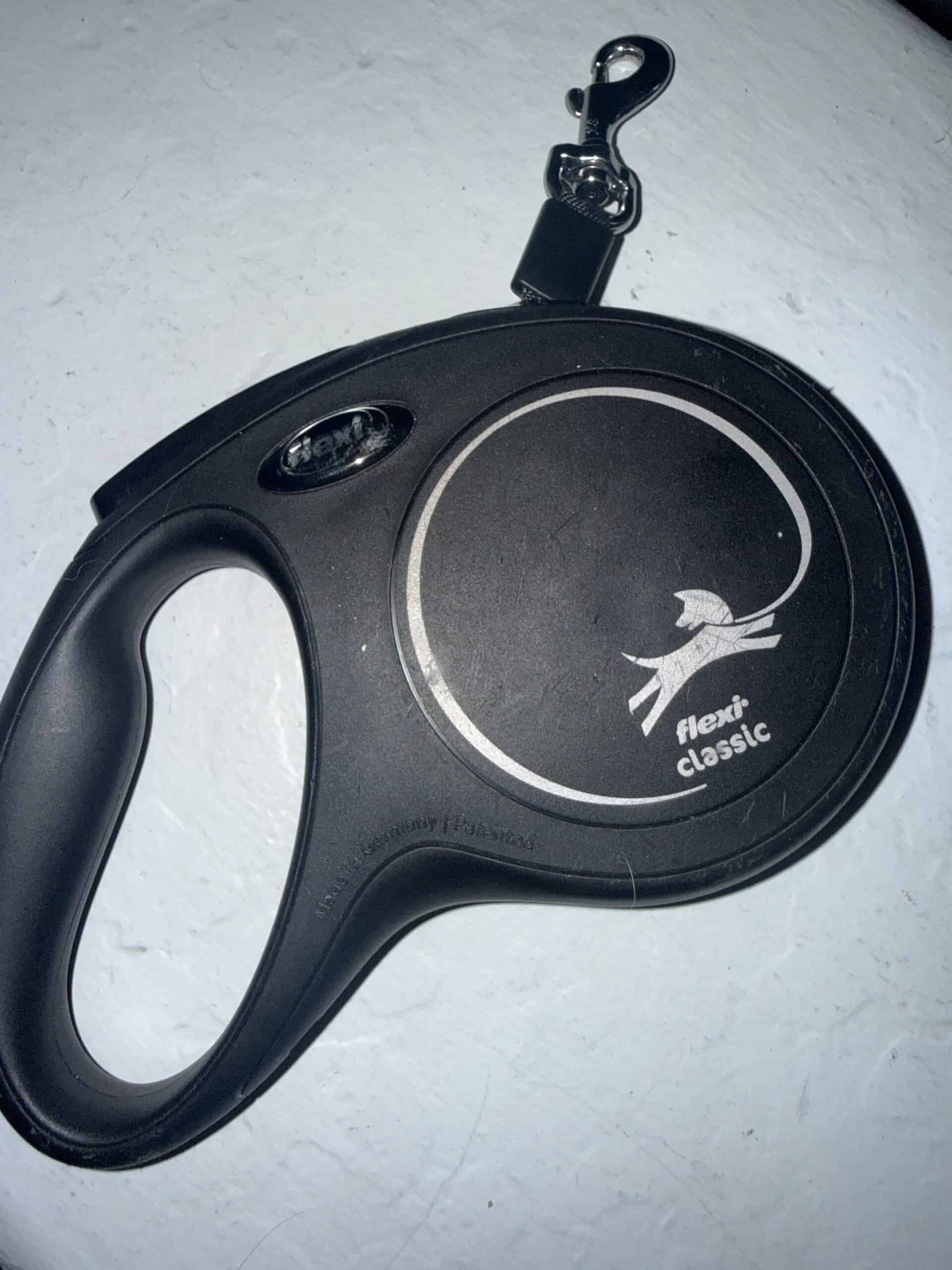
Retractable Leashes Are Different
The housing contains a spring, a spool, and a braking mechanism, and none of that should get wet.
Water inside causes corrosion on the spring and can make the brake unreliable, which is the component you least want failing.
The cord can be cleaned by extending it fully, locking it, and wiping along its length with a damp cloth, then letting it dry before retracting.
Retracting a damp cord winds moisture into the housing, which produces exactly the problem you were avoiding. Our roundup of retractable leashes covers the mechanism.
Leather Needs the Opposite Treatment
Water is the enemy rather than the solution. Soaking leather leads to it drying stiff and cracking, which is permanent.
A damp cloth for dirt, dried immediately, is the whole cleaning method.
Conditioning periodically is what actually maintains it, since leather dries out over years and cracks at the flex points.
A leather leash that has been thoroughly soaked usually never recovers its original feel, which is worth knowing before treating it like nylon.
Drying Is Where It Goes Wrong
Most leash cleaning problems happen after the washing rather than during it.
Webbing holds water in the weave, so a leash that feels dry on the surface can still be damp inside, and coiling it at that point traps the moisture.
That is what produces the musty smell people blame on the washing rather than on the drying.
Hanging it full length rather than looping it lets air reach every part, and somewhere with airflow beats somewhere warm.
Direct heat is the thing to avoid. A radiator or a dryer degrades nylon and warps plastic components, and it saves an hour at the cost of the leash. Our note on dog leashes for small dogs covers what wears one out.
How Often
When it looks or smells like it needs it, which is a less satisfying answer than a schedule and a more accurate one.
Frequency depends entirely on where you walk. Muddy trails mean regularly; dry pavement means rarely.
Dust is the version that accumulates without ever looking dramatic, and it is why a leash in a dry climate needs attention despite never being properly dirty.
A wipe when you notice it is enough to keep it from ever needing more than that, which is the argument for the quick method over the thorough one. Our note on how to walk your dog covers daily use.
Cleaning a Dog Leash FAQ
How do I clean a dog leash?
Wipe it for dust and light dirt, hand wash in warm soapy water for anything worse, and hang it to dry completely before use.
Can I put it in the washing machine?
Nylon webbing survives it. Use a mesh bag or a pillowcase so the metal clip does not bang around, cold water, and no dryer.
Are disinfectant wipes safe?
Fine for the strap, and rinse and dry before the next walk if your dog mouths or carries the leash, since residue gets ingested.
How do I clean a retractable leash?
Extend the cord fully, lock it, wipe along its length, and let it dry before retracting. Never submerge the housing, since water reaches the spring and brake.
Can I use bleach?
No. It weakens nylon fibers, and this is the one piece of equipment where strength failure means a loose dog.
What about leather?
Damp cloth and immediate drying, never soaking. Condition it periodically, since dried-out leather cracks at the flex points and does not recover.
Why does my leash smell?
Usually damp webbing left coiled. Hang it to dry fully rather than bundling it, and a soak in soapy water clears an established smell.
How often should I clean it?
When it needs it rather than on a schedule. In a dry climate dust is the accumulating problem, and a wipe when you notice keeps it from ever needing more.
For the wider picture, see our guide to how to choose the right dog bed.
