
People inspect the webbing and ignore the hardware, which is backwards. A nylon strap in normal use outlasts the clip attached to it, and the clip is what fails without warning.
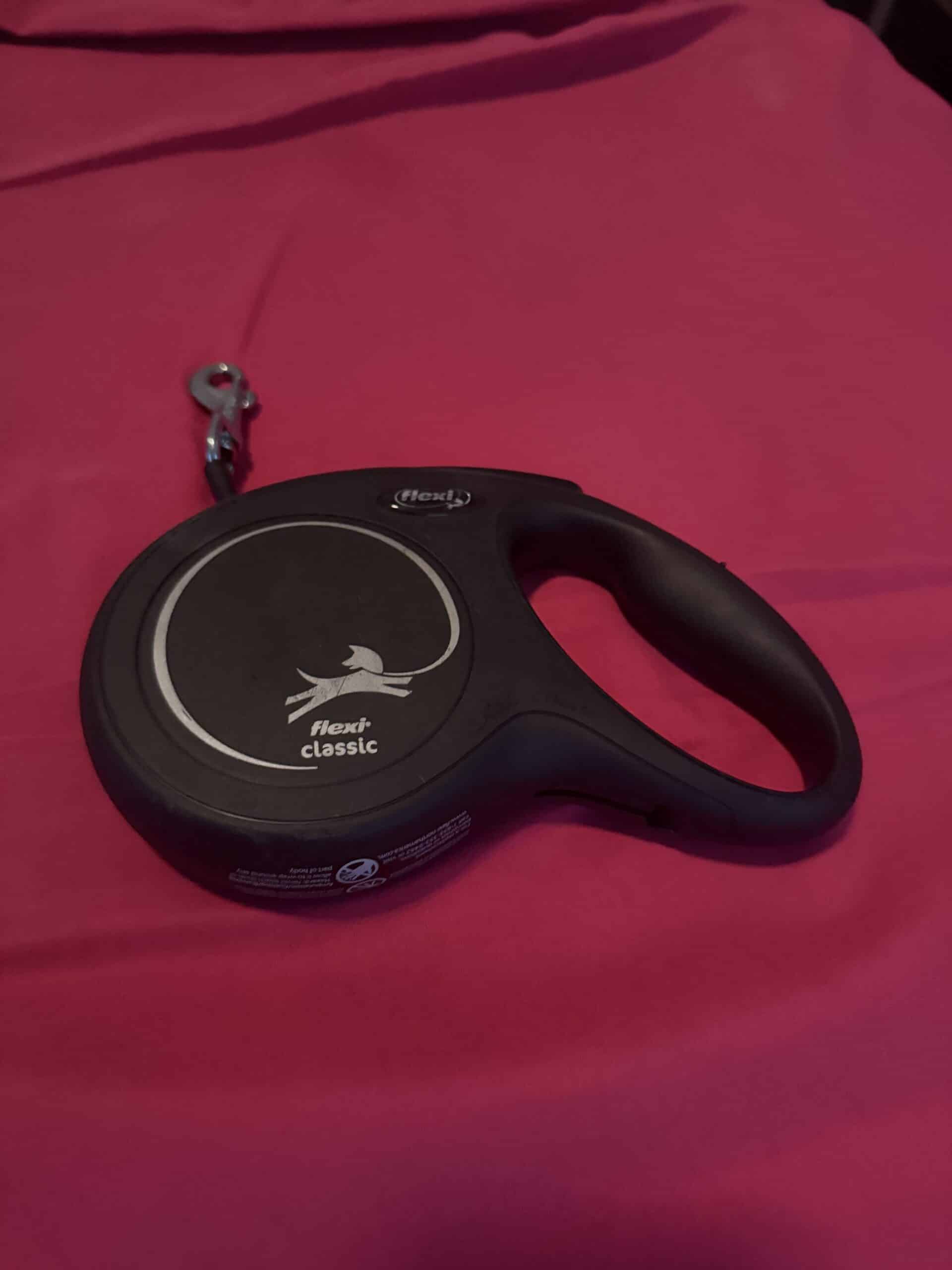
Mine is a retractable I have had since I got her, and it has not worn anywhere or shown any sign of needing replacing. That is a useful data point precisely because retractables are the type people expect to fail. Our note on what size leash you need covers choosing one.
A Safety Note
A leash failing in traffic or near another dog is a serious event. If you are unsure whether something is worn enough to matter, replace it. Leashes are inexpensive relative to the consequence, and no inspection routine is a substitute for replacing something you have doubts about.
Quick Answer
Replace when the clip no longer closes firmly, when webbing shows fraying or a cut, when stitching has come loose at a stress point, or after any incident that put unusual force through it.
What to Check
| Part | Warning sign | Action |
|---|---|---|
| Clip spring | Slow or weak closing | Replace |
| Clip gate | Does not seat fully | Replace immediately |
| Webbing | Fraying, cuts, thinning | Replace |
| Stitching | Loose threads at the loop or clip | Replace |
| Retractable cord | Kinks, fraying, uneven retraction | Replace |
| Retractable brake | Slipping or not locking | Replace immediately |
The Clip Is the Weak Point
Bolt snaps rely on a small spring, and springs weaken with thousands of cycles. A clip that closes slowly, or that can be pushed open with light pressure, is telling you something.
The failure is that the gate does not seat fully, the clip looks attached, and it comes off when the dog turns.
Corrosion accelerates it. Salt, rain, and repeated wetting work into the mechanism, and a clip that has been through those needs checking more often.
Testing it takes a second: close it and press the gate. If it moves under light pressure, the leash is done regardless of what the strap looks like. Our roundup of harness and leash sets covers replacements.
Webbing and Stitching
Fraying
Loose fibers along an edge mean the weave is opening. It does not repair and it spreads.
Cuts
A clean cut across the width is worse than general wear, since load concentrates there. Any visible cut means replacement.
Thinning
Compare a section against an unstressed part. Where the leash folds or takes constant load, it compresses and thins.
Stitching at stress points
The handle loop and the clip attachment carry all the force. Loose threads there matter far more than a scuff mid-strap.
What Actually Wears a Leash Out
Knowing the mechanisms explains why the clip goes first and the strap rarely does.
Repeated cycling is what kills clips. Every walk means opening and closing the gate, and a spring rated for thousands of cycles reaches that number faster than people expect on a dog going out several times a day.
Abrasion wears webbing where it drags on pavement or rubs against a harness ring, which is why wear concentrates near the clip end rather than in the middle.
Moisture is the quiet one. Repeated wetting and drying works into clip mechanisms and, in leather, dries out the fibers until they crack.
Sunlight degrades nylon over years, which matters for a leash stored outdoors or hanging in a window rather than one kept inside.
Sudden shock loading does more damage than all of it combined, which is why a single hard lunge matters more than a year of ordinary walking. Our note on how to walk your dog covers reducing that.
Retractable-Specific Checks
The cord is thinner than webbing and takes more concentrated wear, so kinks, fraying, or any section that looks compressed is a replacement signal.
Retraction should be smooth. A cord that comes back unevenly, sticks, or does not fully retract suggests the spool mechanism is going.
The brake is the critical one. If the lock slips under load or does not hold at all, the leash is not doing its main job and cannot be trusted near a road.
Mine has none of that after the whole time I have owned her, which is longer than the reputation of these would suggest. Our comparison of retractable and standard leashes covers the trade.
Replace After an Incident
Any event that put sudden heavy force through a leash is a reason to replace it regardless of how it looks.
A hard lunge, a fall where the leash caught weight, or a moment where the dog hit the end at speed all load the hardware well beyond normal walking.
Damage from that is frequently internal. A bent clip pin or a stressed spring looks identical to an undamaged one.
The same logic applies to a leash that has been chewed even once, since a partial cut in webbing is a failure waiting for load. She has never chewed hers, which removes that variable entirely.
Repair Versus Replace
Some leash problems are fixable and most are not worth fixing.
A worn clip can be replaced on a leash where the hardware attaches through a loop rather than being sewn in, and replacement clips cost very little.
Stitching can be resewn, and it is only worth doing on an expensive leather leash where the strap itself has years left.
Frayed webbing cannot be repaired in any way that restores strength. Cutting out the damaged section and reattaching hardware leaves you with a shorter leash of unknown integrity.
Retractable mechanisms are effectively sealed units, and a failed brake or spool is the end of that leash.
Given what a standard leash costs against the consequence of one failing, replacement is almost always the right call for anything load-bearing. Our roundup of dog collars for small dogs covers replacements.
Things That Are Not Replacement Signals
Dirt and staining are cosmetic. A grubby leash with sound hardware is a fine leash.
Faded color means sun exposure, and while heavy UV exposure does degrade nylon over years, fading alone is not evidence the strap has weakened.
Mild surface scuffing on webbing is normal wear rather than damage.
Age by itself is not a useful measure either. A leash used twice a week for five years has seen less than one used four times a day for two. Our note on how many trips a dog needs covers usage frequency.
How Often to Check
A quick look while clipping it on covers most of it, since that is when you handle the clip anyway.
A proper inspection, running the whole length through your hands and testing the clip, is worth doing every few months for a leash in daily use.
After anything unusual, check immediately rather than at the next scheduled point.
Keeping a spare removes the temptation to keep using something you have doubts about, which is the actual failure mode rather than not noticing wear. Our roundup of leashes for small dogs covers what to keep spare.
Replacing a Dog Leash FAQ
How long does a dog leash last?
Usage decides it rather than years. Mine has lasted the whole time I have had her with no wear, and a leash used four times a day wears faster than one used twice a week.
What should I check first?
The clip. Close it and press the gate; if it moves under light pressure the leash is finished regardless of how good the strap looks.
Is fraying a problem?
Yes. Loose fibers mean the weave is opening, it does not repair, and it spreads. Any clean cut across the width is worse still.
Does a chewed leash need replacing?
Yes, even after one incident. A partial cut in webbing holds fine until it takes load, and then it does not.
What is specific to retractables?
Cord kinks or fraying, uneven retraction, and above all the brake. A lock that slips under load means the leash cannot do its job near a road.
Should I replace after a hard pull?
If it was a sudden heavy load, yes. Damage from that is often internal, and a stressed spring or bent pin looks identical to an undamaged one.
Does a faded or dirty leash need replacing?
No. Both are cosmetic. Heavy sun exposure does degrade nylon over years, and fading alone is not evidence the strap has weakened.
How often should I inspect it?
A glance while clipping it on, plus a proper run-through every few months for daily use. Keep a spare so you are never tempted to use something you doubt.
Recommended Reading
See our note on choosing dog gear.
