
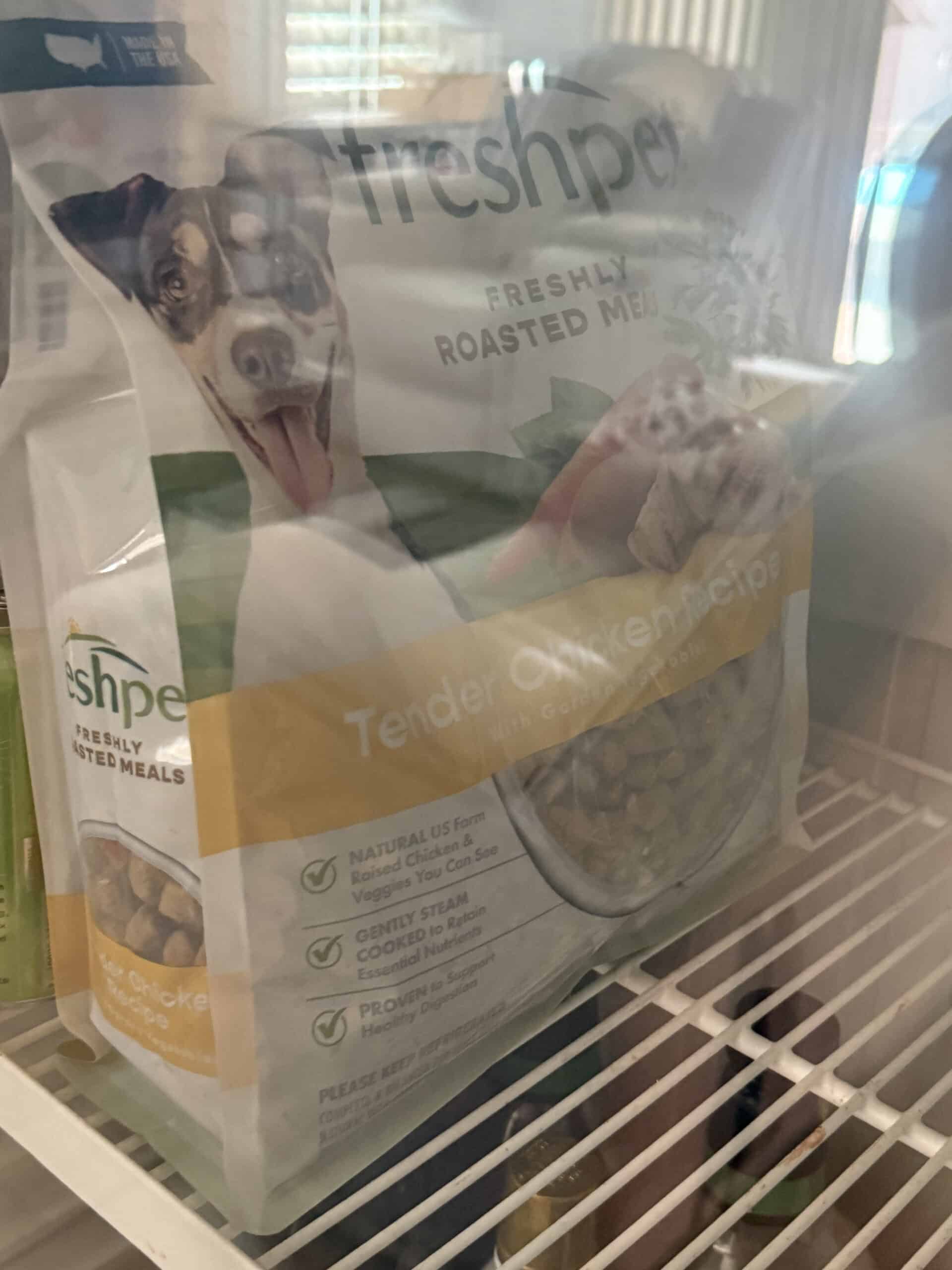
Most refrigerated fresh dog food keeps three to seven days once opened, and the manufacturer’s own figure on the pack is the one to follow. Unopened, it lasts until the printed date provided it has stayed cold the whole time.
Pack size is what actually decides whether that window becomes a problem at all. A pack sized correctly for your dog gets finished well inside it, and a pack that is too large means either throwing food away or quietly pushing past the safe limit.
A Quick Note
This covers food handling rather than veterinary advice. Vomiting, diarrhea, lethargy, or loss of appetite after eating anything questionable warrant contacting a veterinarian rather than waiting to see whether it passes.
Quick Answer
Three to seven days after opening for most refrigerated fresh food, following the pack rather than a general rule. Keep it below 40F, sealed, and away from raw human food. Discard anything left at room temperature more than two hours.
Typical Windows
| State | Typical window | Notes |
|---|---|---|
| Unopened, refrigerated | To the printed date | Must stay cold throughout |
| Opened, refrigerated | 3 to 7 days | Follow the pack |
| Frozen fresh food | Months, per pack | Thaw in the fridge |
| Thawed from frozen | Usually 3 to 4 days | Do not refreeze |
| In the bowl | Under 2 hours | Discard uneaten |
| Left out over 2 hours | Discard | 1 hour above 90F |
All of those figures follow exactly the same food safety logic as human perishables, because fresh pet food is a perishable meat product being held at refrigeration temperature.
Why the Two Hour Rule Applies Here
Bacteria multiply fastest between roughly 40F and 140F, which food safety guidance calls the danger zone.
Fresh dog food sitting in a bowl is inside that range from the moment it leaves the fridge, and the clock runs whether or not the dog is eating.
Two hours is the standard limit, dropping to one hour when the ambient temperature is above 90F, which matters a great deal in a hot climate.
That is the argument against free feeding fresh food, and it is why uneaten portions get picked up rather than left down, covered in how to feed fresh dog food.
How It Works With My Pack
A pack lasts me about two weeks, and I have never had any go bad before it was finished.
Part of that is the format. The bag I get is resealable, so it closes properly between meals rather than relying on a clip or a bag folded over.
I scoop from the container at each meal rather than portioning the whole thing out in advance, which means the bulk of it stays sealed and cold until it is needed.
The fridge space it occupies is mildly annoying, since a two-week supply is not a small object, covered in fresh dog food.
Worth saying that a two-week pack lasting two weeks depends entirely on the format and the manufacturer’s stated window, and other products work differently.
What Actually Shortens It
Fridge door storage
The door is the warmest part of a fridge and fluctuates every time it opens. Fresh food belongs on a shelf toward the back.
Poor resealing
Air exposure accelerates spoilage and lets the food take on fridge odors. A proper seal or an airtight container matters.
Cross contamination
Storing near raw human meat, or using the same utensil for both, moves bacteria in both directions.
Repeated warming
Taking the whole pack out for each meal and returning it warms and cools the entire quantity repeatedly, covered in dog food storage containers.
How to Tell It Has Turned
Smell is the most reliable everyday indicator. Fresh food has a distinct meaty smell, and sour, ammonia, or off notes mean discard it.
Texture changes are the next sign, with sliminess, excessive liquid separation, or a tacky surface all pointing the same way.
Color shifts toward gray or green, and any visible mold, mean the whole container goes rather than the affected portion.
And when you are genuinely uncertain, discard it. The cost of one wasted portion is trivial set against a veterinary visit, covered in finding a food intolerance in dogs.
Why Fresh Food Rules Differ From Kibble
People carry kibble habits over to fresh food, and the two products need genuinely different handling.
Kibble is shelf stable because moisture has been removed, and bacteria need water to grow. Fresh food is around seventy percent water, which is why it lives in a fridge in the first place.
Preservation is different too. Dry food relies on low moisture plus preservatives to last months, where fresh food relies on refrigeration and has a short window by design.
Scooping habits transfer badly. Leaving a scoop inside a kibble bin is common and harmless enough, and doing the same in fresh food introduces bacteria into a medium that supports them.
Bowl practice differs as well. A dog that grazes kibble across a day is normal, and the same pattern with fresh food means the meal spends hours in the danger zone.
And the smell test works differently. Rancid kibble smells like old oil and stale food, where spoiled fresh food goes sour or ammoniac, which is a more obvious signal once you know what you are checking for.
Buying the Right Pack Size
Work out how much your dog eats in the manufacturer’s stated open window, and buy the size that fits inside it.
A small dog on a mixed diet eats fresh food slowly, so a large pack sized for a bigger dog will not be finished in time.
Some brands sell frozen portions specifically to solve this, letting you thaw only what you need over a few days.
Buying smaller packs more often costs slightly more per unit and wastes considerably less, which usually comes out ahead, covered in comparing dog food cost per calorie.
Freezing and Thawing
Many fresh foods can be frozen if the manufacturer says so, which extends the window from days to months.
Thaw in the fridge rather than on the counter, since counter thawing puts the outer layer in the danger zone while the middle is still frozen.
Thawed food generally keeps three to four days and should not be refrozen, since each cycle degrades texture and adds a further period in the danger zone.
Portioning before freezing is what makes this practical, so you thaw a few days at a time rather than the whole quantity.
Related Reading
- feeding fresh dog food
- mixing fresh and dry
- fresh dog food
- food storage containers
- fresh against dry
- cleaning bowls
Frequently Asked Questions
How long does fresh dog food last in the fridge?
Three to seven days once opened for most products, and the manufacturer’s stated window on the pack is what to follow rather than a general figure.
How long can it sit in the bowl?
Under two hours, dropping to one hour when the ambient temperature is above 90F. Uneaten portions should be picked up rather than left down.
Can I freeze it?
If the manufacturer says so, yes, which extends the window to months. Thaw in the fridge rather than on the counter, and do not refreeze.
How do I know it has gone bad?
Sour or ammonia smell, sliminess, excessive liquid separation, gray or green color, or any visible mold. When uncertain, discard it.
Where in the fridge should it go?
A shelf toward the back rather than the door, since the door is the warmest part and fluctuates in temperature every time it opens.
What pack size should I buy?
One your dog finishes inside the stated open window. Smaller packs bought more often cost slightly more per unit and waste considerably less.
Can I treat it like kibble?
No. Kibble is shelf stable because moisture has been removed, and fresh food is around seventy percent water. Leaving a scoop inside or letting a dog graze both work badly with fresh.
Is it safe to warm it up?
Bringing it to room temperature briefly is common for palatability. Heating it properly is generally unnecessary, and it should not sit out beyond the two hour limit either way.
Sources
- United States Food and Drug Administration. Tips for Safe Handling of Pet Food. https://www.fda.gov/animal-veterinary/animal-health-literacy/tips-safe-handling-pet-food-and-treats
- United States Department of Agriculture. Safe Food Handling and the Danger Zone. https://www.fsis.usda.gov/food-safety/safe-food-handling-and-preparation
- American Veterinary Medical Association. Pet Nutrition. https://www.avma.org/resources/pet-owners/petcare/nutrition
When should I talk to a vet?
Before any significant change to diet or routine for a pet with a health condition, and promptly if you notice changes in appetite, drinking, weight, energy, or toileting. Those can indicate conditions worth catching early, and they are not things a product resolves.
Recommended Reading
See our note on choosing the right dog food.
