
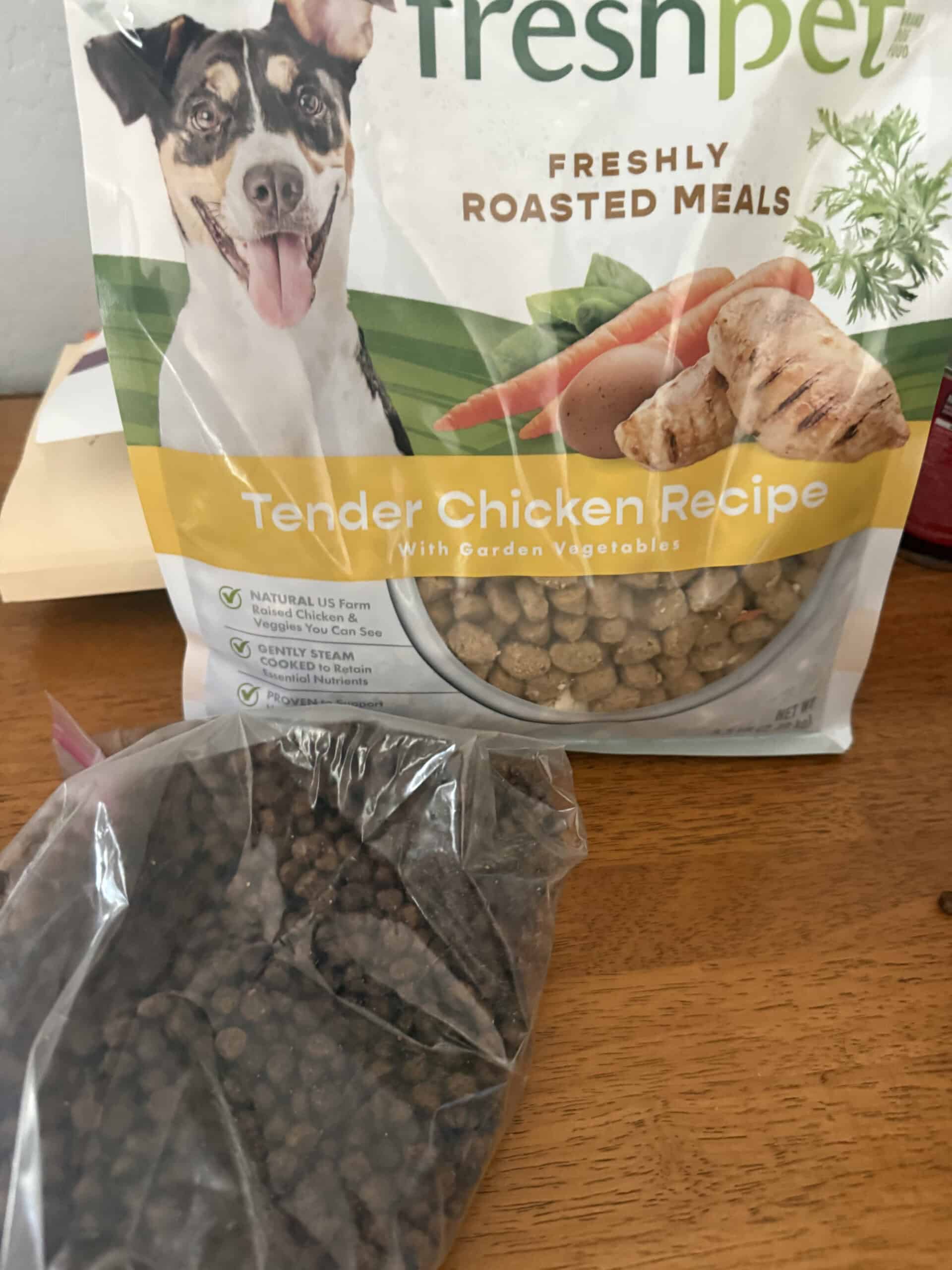
he best kibble to mix with fresh food is a complete and balanced dry food with a calorie density you can work with and a piece size that suits your dog. Because both foods should be complete on their own, the choice comes down to practical fit rather than to filling gaps the fresh food leaves.
I feed a small-breed kibble underneath refrigerated fresh food, at roughly one third kibble to two thirds fresh. She has been on that kibble since I got her, and it came first rather than being chosen to pair with anything.
A Quick Note
This covers pairing rather than veterinary advice. Calorie targets, prescription diets, and food choices for dogs with health conditions or sensitivities should come from a veterinarian who knows your dog.
Quick Verdict
Pick a complete and balanced kibble matched to your dog’s size and life stage, then work out the split by calories. Small kibble suits small mouths and mixes more evenly. Higher calorie density means a smaller kibble portion, which leaves more room in the budget for fresh.
Key Takeaways
- Both foods should be complete and balanced independently
- Kibble size affects how evenly a mixed bowl combines
- Calorie density decides how much room fresh food gets
- Resealable or well-stored kibble stays fresher across a longer bag
- You will get through kibble slowly, so bag size matters
- Keep the kibble constant when changing the fresh component
How We Compared
Complete and balanced status came first, since a kibble that is not nutritionally complete cannot safely be a third of the bowl.
Piece size mattered next, because small kibble distributes through fresh food far more evenly than large pieces do and suits small mouths better.
Calorie density was weighted heavily. A denser kibble means fewer grams for the same calories, which frees budget and bowl space for the fresh portion.
Bag size and storage were assessed on the basis that mixed feeders get through kibble slowly, so a large bag can go stale before it is finished.
1. Small Breed Kibble
Why It Stands Out
Smaller pieces distribute evenly through fresh food rather than sitting as distinct lumps, and they suit small mouths without needing to be crunched awkwardly. Small breed formulas are also typically more calorie dense, which suits a smaller kibble share.
Worth Knowing
Higher calorie density means portion errors matter more, since a small overpour represents a larger proportion of the day’s target.
Suits small dogs and anyone wanting an evenly mixed bowl. Skip it for large breeds, where piece size and formulation are matched to different needs.
Options sit in small breed dog food.
Check Price on Amazon2. Small Kibble for Larger Dogs
Why It Stands Out
Some formulas produce small pieces without being small-breed specific, which suits a medium or large dog whose owner wants the mixing behavior of small kibble.
Worth Knowing
Small pieces can encourage faster eating in a larger dog, which is where a slow feeder bowl earns its place alongside.
Suits larger dogs on mixed diets where even distribution matters. Skip it if your dog already eats too quickly and you are not addressing that separately.
More sits in small kibble dog food.
Check Price on Amazon3. High Protein Kibble
Why It Stands Out
Owners choosing fresh food frequently want a protein-forward dry component alongside, and higher protein formulas keep the overall diet consistent in composition rather than mixing two very different profiles.
Worth Knowing
Higher protein is not automatically better for every dog, and it is specifically something to discuss with a veterinarian for dogs with kidney or liver conditions.
Suits active dogs on veterinary-approved diets. Skip it where a vet has recommended otherwise.
Options sit in high protein dog food.
Check Price on Amazon4. Sensitive Stomach Kibble
Why It Stands Out
Introducing fresh food is a dietary change, and a limited-ingredient or sensitive-stomach kibble gives a stable base while the fresh component is added or varied.
Worth Knowing
These formulas are not a substitute for diagnosis. A dog with recurring digestive problems needs a veterinary assessment rather than a different bag.
Suits dogs that react to changes. Skip it if the underlying issue has not been investigated.
More sits in dog food for sensitive stomachs.
Check Price on Amazon5. Senior Kibble
Why It Stands Out
Older dogs frequently eat mixed diets because fresh food improves palatability when appetite drops. A senior formula underneath keeps the dry portion matched to life stage rather than defaulting to adult maintenance.
Worth Knowing
Senior formulas vary enormously between brands, since there is no single regulatory definition of what senior means nutritionally.
Suits older dogs, particularly where appetite is the reason fresh was introduced. Skip it for younger dogs, where the formulation is aimed at different needs.
Options sit in dog food for senior dogs.
Check Price on Amazon6. Storage Container for Slow-Moving Kibble
Why It Stands Out
Not a food, and the accessory mixed feeders need most. Getting through a bag slowly means kibble sits open for longer, and fats oxidize once exposed to air.
Worth Knowing
Keeping kibble in its original bag inside the container works better than tipping it loose, since the bag is designed as a fat barrier and carries the batch details.
Suits anyone feeding kibble as a minority of the diet. Skip it only if you get through a bag quickly.
Options sit in dog food storage containers.
Check Price on AmazonKibble for Mixed Feeding at a Glance
| Type | Best for | Watch out for |
|---|---|---|
| Small breed | Small dogs, even mixing | Portion errors matter more |
| Small kibble, all breeds | Larger dogs wanting even mix | Can speed up eating |
| High protein | Active dogs, vet approved | Not suitable for all conditions |
| Sensitive stomach | Dogs reacting to change | Not a substitute for diagnosis |
| Senior | Older dogs, low appetite | Definition varies by brand |
| Storage container | Slow-moving bags | Keep the original bag inside |
What I Feed and How It Ended Up That Way
She has been on a small-breed kibble since I got her, so it was the existing food rather than something chosen to complement fresh.
That is worth saying because most articles on this assume you are choosing both at once. In practice the kibble usually comes first and the fresh gets added to it.
The split runs about one third kibble to two thirds fresh, which is a fresh-heavy version of mixing and means the bag lasts a long time.
Kibble goes in the bowl first and the fresh sits on top, then I shake rather than stir, which works because the pieces are small enough to distribute, covered in mixing fresh and dry dog food.
What I would not claim is that this kibble is optimal alongside fresh food. It was already working and I saw no reason to change it.
What to Look For
Complete and balanced on its own
The label should state it meets established nutritional profiles for your dog’s life stage. Toppers and mixers frequently do not, and they belong in small percentages.
Calorie density you can work with
Kilocalories per cup is on the bag. Denser kibble means a smaller dry portion for the same calories, leaving more room for fresh.
Piece size that suits the mouth
Small pieces distribute through fresh food evenly and suit small dogs, while very large pieces sit as lumps in a mixed bowl.
A bag size you will finish
Mixed feeders use kibble slowly, so a large bag can go stale before it is done, covered in choosing the right dog food.
Why Bag Size Matters More Here
Kibble contains fats that oxidize once the bag is opened and exposed to air, and that process is what makes old kibble smell stale and taste different.
A dog eating kibble alone gets through a bag at the expected rate. A dog on a third kibble takes three times as long, so the same bag sits open considerably longer.
Buying smaller bags more often costs slightly more per pound and delivers fresher food, which is usually the better trade for a mixed feeder.
Storing the original bag inside an airtight container preserves it better than decanting, since the bag itself is built as a barrier, covered in food storage containers.
Which Fits Your Situation
| If this is you | Better choice |
|---|---|
| Small dog on a mixed diet | Small breed kibble |
| Larger dog, want even mixing | Small kibble, all breeds |
| Older dog with low appetite | Senior formula |
| Dog reacts to dietary change | Sensitive stomach formula |
| Fresh is most of the bowl | Smaller bags, bought more often |
| Kibble already works | Keep it, add fresh gradually |
The Verdict
If your dog already eats a kibble that suits them, keep it. Adding fresh food is a change on its own, and changing both at once removes your ability to tell what caused any reaction.
If you are choosing fresh, a complete small-breed or small-piece kibble matched to life stage is the straightforward answer, since piece size is the one factor genuinely specific to mixing.
Beyond that, buy a bag you will finish while it is fresh and work the split out by calories rather than by cup.
Recommended Reading
- mixing fresh and dry
- how much fresh to mix
- choosing dog food
- cost per calorie
- switching foods
- fresh dog food
- storage containers
- meat meal explained
Common Mistakes to Avoid
Changing both foods at once
If something goes wrong you cannot tell which change caused it. Keep the kibble constant while introducing fresh.
Treating kibble as filler
A third of the bowl is a third of the nutrition, so the dry component should be complete and balanced rather than chosen as a cheap bulking agent.
Buying the biggest bag
Mixed feeders use kibble slowly, and a bag that takes three months to finish is stale for the last portion of it.
Measuring by cup across both foods
Fresh food is around seventy percent water against kibble’s ten, so volume comparisons between them are meaningless.
Kibble for Mixed Feeding FAQ
What kibble is best to mix with fresh food?
A complete and balanced formula matched to your dog’s size and life stage, with small enough pieces to distribute evenly and a calorie density you can portion accurately.
Does the kibble need to be premium?
It needs to be complete and balanced. Beyond that, price correlates with ingredient quality rather than with suitability for mixing specifically.
Should I change kibble when adding fresh?
Better not to. Changing both at once means you cannot identify the cause if something goes wrong.
Does kibble size matter?
For mixing, yes. Small pieces distribute through fresh food evenly where large pieces sit as distinct lumps in the bowl.
What bag size should I buy?
One you will finish within a couple of months. Mixed feeders use kibble slowly, and fats oxidize once the bag is open.
Can I use a topper instead of complete kibble?
Toppers are usually not complete and balanced, so they suit small percentages rather than a third of the bowl.
How do I split the two by amount?
By calories rather than volume. Both foods list calorie density on the packaging, and equal volumes contain very different amounts of food.
Should the kibble match the fresh food’s protein source?
Not necessarily, and it can help for dogs with suspected sensitivities. That is a question for a veterinarian rather than a general rule.
Sources
- American Kennel Club. Dog Nutrition. https://www.akc.org/expert-advice/nutrition/
- American Veterinary Medical Association. Pet Nutrition. https://www.avma.org/resources/pet-owners/petcare/nutrition
- United States Food and Drug Administration. Pet Food Labels. https://www.fda.gov/animal-veterinary/animal-food-feeds/pet-food
