
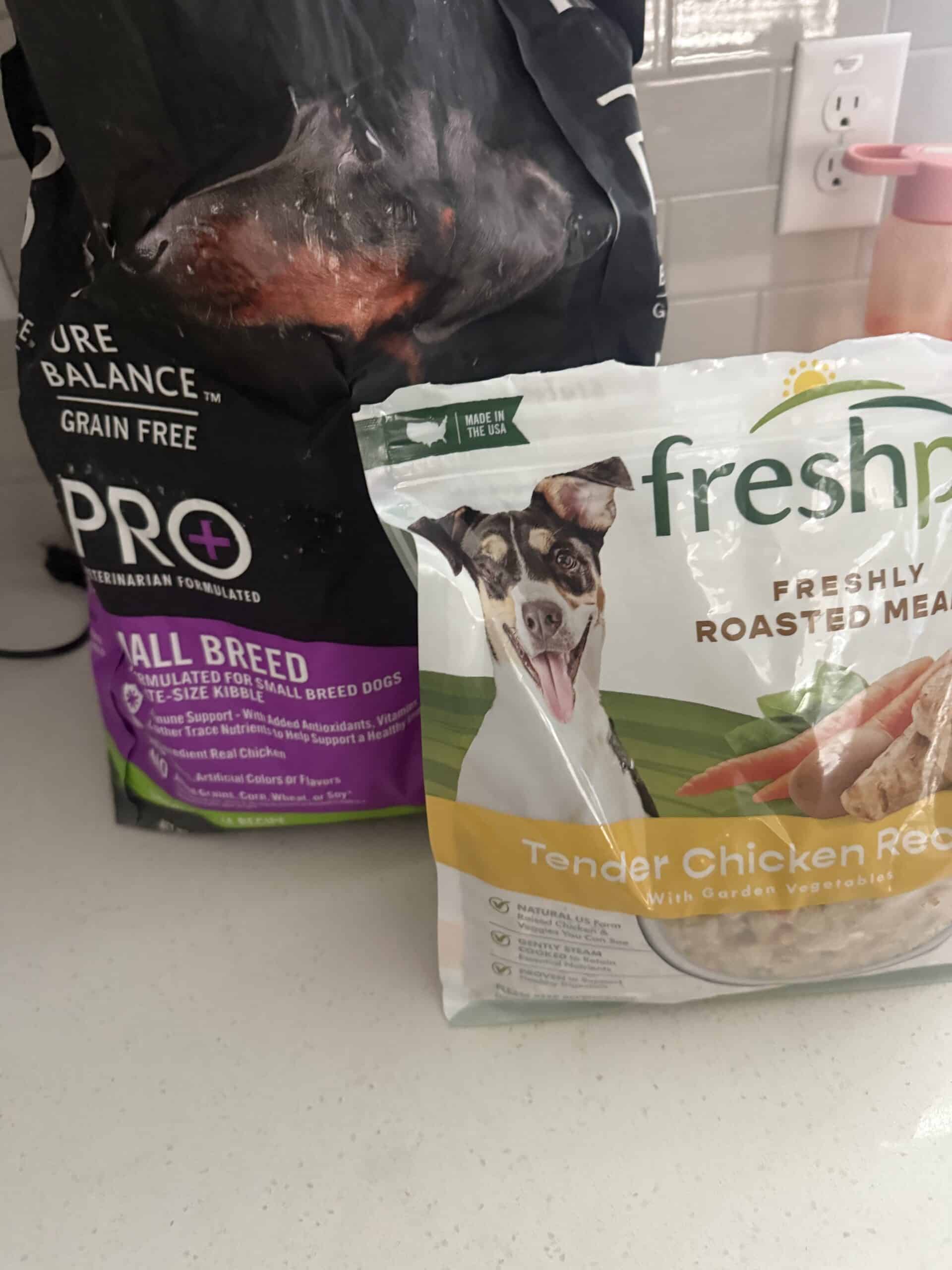
Pet food aisles are built around two dogs: the tiny one and the giant one. Small breed formulas exist because little mouths and fast metabolisms are genuinely different, and large breed formulas exist because growth rate and joints are genuinely different. Medium dogs, roughly the twenty to fifty pound range, fall between the marketing and mostly do fine on standard adult food. The best dog food for medium dogs is therefore less about a special formula and more about portion accuracy, kibble size, and honest calorie math. Here is how to think about it, with the wider framework in our guide on how to choose the right dog food.
Not Veterinary Advice
This is general information for comparing products, not veterinary advice. Your dog’s ideal diet and daily calorie target depend on their age, weight, activity level, and health, and your veterinarian is the right person to set them. Talk to your vet before changing your dog’s food, particularly if they have a health condition or are on a prescription diet.
Quick Verdict
A complete and balanced standard adult formula covers most medium dogs, and the “medium breed” label on a bag rarely means anything a general adult food does not already do. Where size genuinely matters is kibble piece size and portion accuracy, since a medium dog’s daily calorie budget is small enough that guesswork shows up on the scale. Borderline dogs at the small end of medium are often better served by small breed kibble sizing, which is a real consideration rather than a marketing one.
Key Takeaways
- Medium roughly means twenty to fifty pounds.
- Standard adult formulas suit most medium dogs.
- Medium breed labeling is largely marketing.
- Kibble size matters more than the formula name.
- Borderline dogs may do better with small breed sizing.
How We Picked
We judged this category on what genuinely differs for a mid-sized dog: kibble piece size relative to mouth size, calorie density against a moderate daily budget, protein sources, and whether the food is formulated as complete and balanced for adult maintenance, which is the thing that actually matters and the thing least discussed on packaging. We were deliberately skeptical of medium breed labeling, because unlike small and large breed formulas, which address real physiological differences, medium breed formulas frequently describe a market segment rather than a nutritional need.
Complete Adult Formula (Best Overall)
Standard adult maintenance food, formulated as complete and balanced, with no size-specific claims.
Why It Stands Out
For most medium dogs this is simply the right answer, and it is usually cheaper than the size-labeled version beside it. A complete and balanced adult formula meets established nutritional profiles, which is what your dog actually needs, and the absence of a “medium breed” badge costs them nothing. Buy on ingredient quality and kibble size rather than on the size word.
Worth Knowing
Kibble size varies widely, so check it suits your dog’s mouth. Best for the majority of healthy adult medium dogs.
Check Price on AmazonMedium Kibble Size Formula (Best Fit)
Food with pieces sized between small breed and large breed kibble.
Why It Stands Out
This is the one place where the size label earns something. Kibble that is awkward to pick up gets dropped, gulped, or abandoned, and a mid-sized mouth genuinely sits between the extremes. If your dog scatters food or swallows pieces whole, piece size is worth fixing before you change anything about the recipe.
Worth Knowing
Piece size is rarely stated clearly, so photos and reviews tell you more than the label does. Best for dogs who struggle with their current kibble.
Check Price on AmazonSmall Kibble for Borderline Dogs (Best for the Small End)
Small breed sizing for dogs at the lower edge of medium, where the small and medium categories blur.
Why It Stands Out
The line between small and medium is fuzzy, and plenty of dogs sit honestly on both sides of it. My own dog is around twenty-five pounds, a Jack Russell and Chihuahua mix, and she is genuinely kind of both: I think of her as small, but she is not far off the medium range either. For dogs like that, small breed kibble sizing often suits the mouth better than mid-sized pieces, and our roundups of small kibble dog food and small breed dog food cover that end.
Worth Knowing
Small breed formulas are often more calorie dense, so portions need attention. Best for dogs in the twenty to thirty pound range.
Check Price on AmazonHigh Protein Formula (Best for Active Dogs)
Food built on named animal sources, aimed at medium dogs with genuine daily output.
Why It Stands Out
Plenty of medium dogs are the working and sporting builds, and a dog with real energy demands has requirements a couch-based dog does not. The important part is the ingredient list rather than the percentage, which our roundup of high protein dog food covers in depth.
Worth Knowing
Calorie dense enough to add weight to a less active dog. Best for genuinely active medium dogs.
Check Price on AmazonWeight Management Formula (Best for Heavier Dogs)
Lower calorie density food for medium dogs carrying extra weight.
Why It Stands Out
Medium dogs are where weight creep hides easily, since a few extra pounds do not look dramatic on a mid-sized frame but represent a real percentage of body weight. Lower density food lets a dog eat a satisfying volume on fewer calories, and our guides on signs a dog is overweight and helping a dog lose weight cover the assessment.
Worth Knowing
Weight loss should be planned with your vet rather than started on a hunch. Best for medium dogs under a vet’s weight plan.
Check Price on AmazonWet or Fresh Food (Best for Appeal)
Canned or refrigerated food, fed as a diet or mixed into kibble.
Why It Stands Out
Medium dogs eat enough that feeding wet or fresh exclusively gets expensive quickly, which is why mixing is the common landing spot. It solves appeal without the full cost, and our roundups of wet dog food and fresh dog food cover both formats.
Worth Knowing
Costly at medium-dog volumes, and perishable once opened. Best for picky medium dogs or as a partial topper.
Check Price on AmazonMedium Dog Food at a Glance
| Type | Best for | Trade-off |
|---|---|---|
| Complete adult formula | Most medium dogs | Check kibble size yourself |
| Medium kibble size | Mouth fit | Size rarely stated clearly |
| Small kibble | Borderline small dogs | More calorie dense |
| High protein | Genuinely active dogs | Weight gain if inactive |
| Weight management | Heavier dogs | Plan it with your vet |
| Wet or fresh | Picky dogs | Expensive at this size |
What Medium Actually Means
The category is looser than the packaging implies, which is worth knowing before you shop by it. Medium generally covers roughly twenty to fifty pounds, but the boundaries move between brands and no regulator enforces them, so a food labeled for medium breeds may be aimed at a thirty pound dog or a forty-five pound one. The edges are especially blurry. My dog is around twenty-five pounds and honestly sits in both categories: I consider her small, and she would not be out of place in a medium range either. That fuzziness is precisely why the label is a weak guide, and why the useful questions are whether the food is complete and balanced, whether your dog can comfortably eat the kibble, and whether you are feeding the right number of calories. Our guide on comparing dog food cost per calorie covers the last one, which matters more than any size badge.
Why Large and Small Formulas Exist But Medium Barely Does
The asymmetry is not an oversight, and understanding it explains the whole category. Large breed formulas exist because large breed puppies grow fast enough that growth rate itself affects skeletal development, so controlling calcium and calorie density has a genuine purpose, which our roundup of puppy food for large breeds covers. Small breed formulas exist because small dogs have faster metabolisms per pound, tiny stomachs, and mouths that cannot manage standard kibble. Medium dogs have none of these problems: they eat normal amounts, grow at unremarkable rates, and manage standard kibble sizes. So “medium breed” on a bag is mostly filling a gap on the shelf rather than solving a physiological problem, and buying the standard adult formula next to it usually gets you the same food for less money.
Choosing for a Medium Dog
Check complete and balanced first
The statement on the label is the thing that matters and the thing nobody reads. It means the food meets established nutritional profiles for your dog’s life stage, and no size badge substitutes for it.
Look at kibble size, not the size word
The genuine size variable is whether your dog can comfortably pick up and chew the pieces. Photos and reviews tell you more than the front of the bag does, since piece size is rarely specified.
Measure the portion
A medium dog’s daily calorie budget is modest enough that eyeballing the scoop drifts into overfeeding across months. Get a target from your vet and measure against it rather than filling the bowl by feel.
Count the treats
Treats, chews, and training rewards are food, and on a medium dog they add up faster than owners expect. Our roundup of low calorie treats covers keeping that budget in check, and our guide on switching your dog’s food covers changing anything safely.
The Verdict
Buy a complete and balanced adult formula with good ingredients and a kibble size your dog can comfortably eat, and do not pay extra for the word medium on the bag, because unlike small and large breed formulas it is rarely solving a real problem. Step to high protein if your dog genuinely works rather than walks, weight management if your vet says so, and wet or fresh if appeal is the issue and you can absorb the cost at this size. If your dog sits at the blurry small end like mine does at around twenty-five pounds, small breed kibble sizing may fit their mouth better than mid-sized pieces, and that is worth more than whichever category the bag claims them for.
Best Dog Food for Medium Dogs FAQ
What size is a medium dog?
Roughly twenty to fifty pounds, though the boundaries vary by brand and nobody enforces them. The edges are genuinely blurry, and plenty of dogs sit honestly in both the small and medium ranges depending on who is defining them.
Do medium dogs need special food?
Generally no. Unlike large breed formulas, which address growth rate, and small breed formulas, which address metabolism and mouth size, medium breed labeling rarely reflects a physiological need. A complete and balanced adult formula suits most medium dogs well.
Is medium breed dog food worth it?
Usually not as a category, though a bag with the right kibble size and good ingredients is worth buying regardless of what it is labeled. Judge the food on its ingredient list, its complete and balanced statement, and its piece size rather than its size badge.
How much should I feed a medium dog?
It depends on their weight, age, activity, and the specific food’s calorie density. Label guidelines are a starting point rather than an answer, and they tend to run generous. Get a daily calorie target from your veterinarian and measure against it.
My dog is 25 pounds, is she small or medium?
Honestly both, depending on who you ask, and that is the category’s fuzziness rather than your dog’s. Mine is around that weight and I think of her as small while acknowledging she is not far off medium. Kibble size and calorie needs matter more than the label.
Should medium dogs eat small or large kibble?
Whatever they can comfortably pick up and chew. Dogs at the smaller end of medium often do better with small breed sizing, while dogs at the upper end manage standard pieces fine. Watch your dog eat and let that decide it.
Can medium dogs eat large breed food?
Adult large breed formulas are generally complete and balanced and not harmful, though they are formulated with large breed considerations in mind and the kibble may be awkwardly big. Ask your vet if you are considering it for a specific reason.
Sources
- American Kennel Club, guidance on breed size categories and canine nutrition.
- Association of American Feed Control Officials, nutrient profiles and complete and balanced labeling standards.
Recommended Reading
- small breed dog food, for the lower end.
- dog food for large breeds, for the upper end.
- high protein dog food, for active dogs.
- comparing cost per calorie, the math that matters.
