
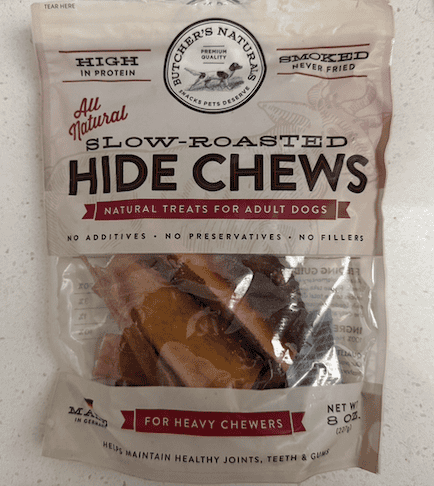
The best hide chews for dogs keep a dog busy and relaxed for a long stretch while lowering the risks that give cheap rawhide a bad name. Slow-roasted, single-ingredient hides break down more easily than bleached, chemically processed rawhide, and the right size keeps a chunk from being swallowed whole. My own dog will settle in and gnaw on hers for hours, calm and content, and they have never bothered her teeth or caused a problem. Every dog chews differently, so I still supervise her and swap the chew out once it gets small, and this guide ranks hide chews with that same safety-first eye. For a different long-lasting option, see our guide to bully sticks for dogs.
Quick Verdict
A slow-roasted, single-ingredient hide chew sized larger than your dog can swallow is the pick for most homes, since it lasts and digests better than bleached rawhide. Worried about hide at all, or have a hard gulper? A collagen chew offers a rawhide alternative, and any chew needs supervision and a vet’s okay for dogs with health issues.
Key Takeaways
- Slow-roasted, single-ingredient hides digest more easily than bleached, chemically processed rawhide.
- Always pick a chew bigger than your dog’s mouth so it cannot be swallowed whole.
- Supervise every chew session and take the piece away once it shrinks small enough to gulp.
- Hard gulpers, aggressive chewers, and dogs with health issues should check with a vet first.
- Chewing supports dental health and calm, but it does not replace tooth brushing.
Disclosure: HappyPaws is reader-supported. As an Amazon Associate, we earn from qualifying purchases made through links on this page, at no extra cost to you.
How We Picked the Best Hide Chews
A chew is a safety item as much as a treat, so we put digestibility, size options, and ingredient quality ahead of price. Veterinary guidance stresses supervising any chew and choosing one too large to swallow, which shaped every pick here1.
We favored slow-roasted or single-ingredient hides over bleached rawhide, included sizes for small and large dogs, and added a collagen option for owners who want to skip hide entirely. Choices draw on product design, ingredient labels, and common chewing behavior rather than lab testing.
Are Hide Chews Safe for Dogs?
The Real Risks
Hide and rawhide chews can pose a choking or intestinal blockage risk if a dog bites off and swallows a large piece, and cheaper rawhide is often bleached and treated, which makes it harder to digest1. No chew is risk-free, so the goal is to lower the odds rather than pretend they are zero.
How to Lower the Odds
Pick a slow-roasted, single-ingredient hide that breaks down more readily, size it bigger than your dog can swallow, and stay in the room while she chews. Take the chew away once it wears down to a gulp-sized piece, and talk to your vet before offering one to a hard gulper, an aggressive chewer, or a dog with digestive or dental problems. My dog does well with hers, but I treat supervision as part of the routine, not an optional extra.
Slow-Roasted Hide Chews
Why It Stands Out
Slow-roasted hide chews are smoked or roasted rather than bleached, which gives them a single-ingredient label and a more digestible texture than standard rawhide. This is the style I keep for my own dog, and it holds up to a long, relaxed chew without falling apart into risky shreds.
Worth Knowing
Premium roasted hides cost more than bulk rawhide bags, and they still need the same supervision and sizing as any chew. The natural smoke smell is stronger than a plain hide, which most dogs love and some owners notice.
The everyday pick for moderate chewers whose owners want a cleaner ingredient label. Hard gulpers who bolt large pieces should skip hide and try a collagen chew.
Smoked Beef Hide Rolls
Why It Stands Out
A tightly wound beef hide roll lasts longer than a flat chew because the dog has to work through the layers, which stretches out the chewing time. The rolled shape also gives larger dogs something substantial to hold between their paws.
Worth Knowing
Rolls can unravel into thinner strips near the end, and those strips are the pieces to remove before they get swallowed. Choose a roll length that suits your dog’s size rather than the biggest one on the shelf.
A good fit for medium and large dogs who like a long project. Small dogs do better with a chew scaled to their jaws.
Thick Hide Chews for Power Chewers
Why It Stands Out
Thick, dense hide chews are built for strong jaws that tear through softer treats in minutes. The extra density slows a determined chewer down and gives the kind of long session that burns off energy.
Worth Knowing
Power chewers are also the dogs most likely to break off and swallow a chunk, so supervision matters most here. Pair a thick chew with close watching, and pull it the moment a large piece works loose.
Best for strong chewers who destroy lighter treats fast. If your dog tends to gulp rather than gnaw, a chew toy may suit her better than any edible hide.
Small-Breed Hide Chews
Why It Stands Out
Small-breed hide chews scale the thickness and length down so a little dog can hold and work the chew without straining. A right-sized chew keeps a small dog engaged instead of frustrated by a slab built for a retriever.
Worth Knowing
Small chews reach swallow size faster, so the swap-it-out moment comes sooner. Check the chew often and trade it for a fresh one before the last piece gets too small.
The pick for toy and small breeds who need a chew matched to their mouths. Large dogs will go through these too quickly to be worth it.
Basted Hide Chews
Why It Stands Out
Basted hide chews add a chicken or peanut-flavor coating that wins over picky dogs who ignore a plain hide. The flavor draws a hesitant chewer in and turns the chew into a reward.
Worth Knowing
Added flavor coatings can mean added ingredients, so read the label if your dog has a sensitive stomach or allergies. The basting can also make the surface slippery at first.
Good for picky dogs who turn their noses up at unflavored hide. Dogs with food sensitivities are safer with a single-ingredient roasted hide.
Collagen Chews (Rawhide Alternative)
Why It Stands Out
Collagen chews come from a different layer of the hide and are marketed as a more digestible rawhide alternative for owners who want to avoid traditional rawhide. They still give a long, satisfying chew with a single-ingredient label.
Worth Knowing
More digestible does not mean risk-free, so the same sizing and supervision rules apply. Collagen sticks can splinter into shorter pieces near the end that need removing.
The choice for owners uneasy about hide who still want a long-lasting chew. Dogs who do fine on roasted hide can stick with what works.
Hide Chew Comparison at a Glance
| Pick | Type | Best for | Trade-off |
|---|---|---|---|
| Slow-roasted hide | Single-ingredient roasted | Moderate chewers, clean label | Costs more than rawhide |
| Beef hide rolls | Wound roll | Medium and large dogs | Unravels near the end |
| Thick hide chews | Dense, heavy | Power chewers | Needs close supervision |
| Small-breed hide | Scaled-down | Toy and small breeds | Reaches gulp size fast |
| Basted hide | Flavor-coated | Picky dogs | Extra ingredients |
| Collagen chews | Rawhide alternative | Hide-averse owners | Still needs supervision |
How to Choose a Hide Chew
Size It Bigger Than the Mouth
The single most important rule is that a chew should be too large for your dog to swallow whole. Measure by your dog’s size and err big, since a chew that starts oversized stays safe longer as it wears down.
Pick a Digestible, Slow-Roasted Hide
Look for slow-roasted or single-ingredient hides over bleached, chemically treated rawhide, since the cleaner processing digests more easily if a small piece goes down. A short ingredient list is the signal to look for on the bag.
Match the Chew to Your Chewer
Give a power chewer a dense, thick hide and a gentle chewer a lighter one, and scale the size to the breed. If your dog gulps rather than gnaws, an edible hide may not suit her, and a tough chew toy for aggressive chewers can be the safer outlet.
Supervise and Swap Out Small Pieces
Stay in the room while your dog chews and take the hide away once it shrinks to a gulp-sized piece. Keeping that habit turns a chew from a worry into a calm, safe part of the day.
Hide Chews vs Bully Sticks
Hide Chews: Long-Lasting Layers
Hide chews give a dense, layered chew that a determined dog works through slowly, and roasted versions keep the ingredient list short. They carry the sizing and supervision rules that come with any hide, and digestibility depends on choosing quality over bulk rawhide.
Bully Sticks: Fully Digestible Protein
A bully stick is a single muscle that breaks down fully, so it sidesteps the digestion worry that follows hide. It tends to disappear faster than a thick hide and costs more per chew, which our bully sticks guide covers in depth.
Recommended Reading
- weighing the chew options
- Best dog dental chews
- How to brush a dog’s teeth
- Best chew toys for aggressive chewers
- training a dog guide
Common Hide Chew Mistakes to Avoid
A few habits turn a safe chew into a hazard.
Buying a Chew That Is Too Small
A hide a dog can fit fully in her mouth is a chew she can try to swallow. Size up so the chew stays too big to gulp, even as it wears down.
Leaving the Dog Unsupervised
Most chew accidents happen when no one is watching and a large piece breaks loose. Keep your dog in sight for the whole session.
Letting the Last Piece Get Too Small
The end of a chew is the most dangerous part, since it is just the right size to swallow. Trade the nub for a fresh chew before it gets there.
Ignoring a Sensitive Stomach
A dog who gets loose stools or vomits after a hide may not digest it well. Stop the chew and ask your vet rather than pushing through it.
Frequently Asked Questions
Are hide chews safe for dogs?
They can be when you choose a slow-roasted, single-ingredient hide, size it bigger than your dog can swallow, and supervise every session. The main risks are choking and blockage from swallowed pieces, so take the chew away once it shrinks and ask your vet about dogs with health issues.
What is the difference between hide chews and rawhide?
Most hide chews are a form of rawhide, but slow-roasted, single-ingredient versions skip the bleaching and chemical processing of cheap rawhide and tend to digest better. Reading the ingredient list is the fastest way to tell a clean hide from a heavily processed one.
How long should I let my dog chew a hide chew?
Let your dog enjoy a long session while you supervise, then take the chew away once it wears down to a piece small enough to swallow. Many dogs will happily work a quality hide for a good while before that point.
Do hide chews clean a dog’s teeth?
Gnawing can help scrape away soft plaque and gives the jaw a workout, though chewing does not replace regular tooth brushing1. For chews aimed mainly at clean teeth, look for products carrying the Veterinary Oral Health Council seal2.
Are hide chews good for heavy chewers?
Thick, dense hides last longer against strong jaws, but power chewers are also the most likely to break off and swallow a chunk. Supervise closely, and if your dog gulps pieces, a durable chew toy may be the safer choice.
What is the safest rawhide alternative?
Collagen chews are marketed as a more digestible rawhide alternative, and bully sticks break down fully as a single muscle. Both still need the same sizing and supervision as any chew.
Related Reading
Explore more: cat dental treats and chews.
Recommended Reading
See also our guides to why some dogs howl at sirens.
Sources
- American Veterinary Medical Association (AVMA). Pet dental care and safe chewing guidance. https://www.avma.org/resources-tools/pet-owners/petcare/pet-dental-care
- Veterinary Oral Health Council (VOHC). Accepted products for plaque and tartar control. https://vohc.org/
