
That click-click-click across the kitchen floor is your dog telling you the trims are overdue. The best dog nail clippers turn a chore most owners dread into a quick, calm habit: a sharp blade that cuts in one clean pass, a safety stop that keeps you clear of the quick, and a grip that does not slip when your dog squirms. For most households a plier-style clipper with a built-in safety guard is the easiest place to start, while guillotine clippers reward a steadier hand and grinders suit nervous dogs. The right pick depends on your dog’s size and temperament, and a little technique helps, so it pays to know how to trim dog nails at home before the first session.
Quick Verdict
For most dogs, the BOSHEL clippers are the safest first buy: sharp plier-style blades, a safety stop, and a built-in file in one affordable tool. Choose by your dog and your nerve, not by price. Plier clippers suit large or thick nails, guillotine clippers give clean cuts for a confident trimmer, and a grinder is gentler for anxious dogs and dark nails where the quick is hard to see.
Why Trust This Guide
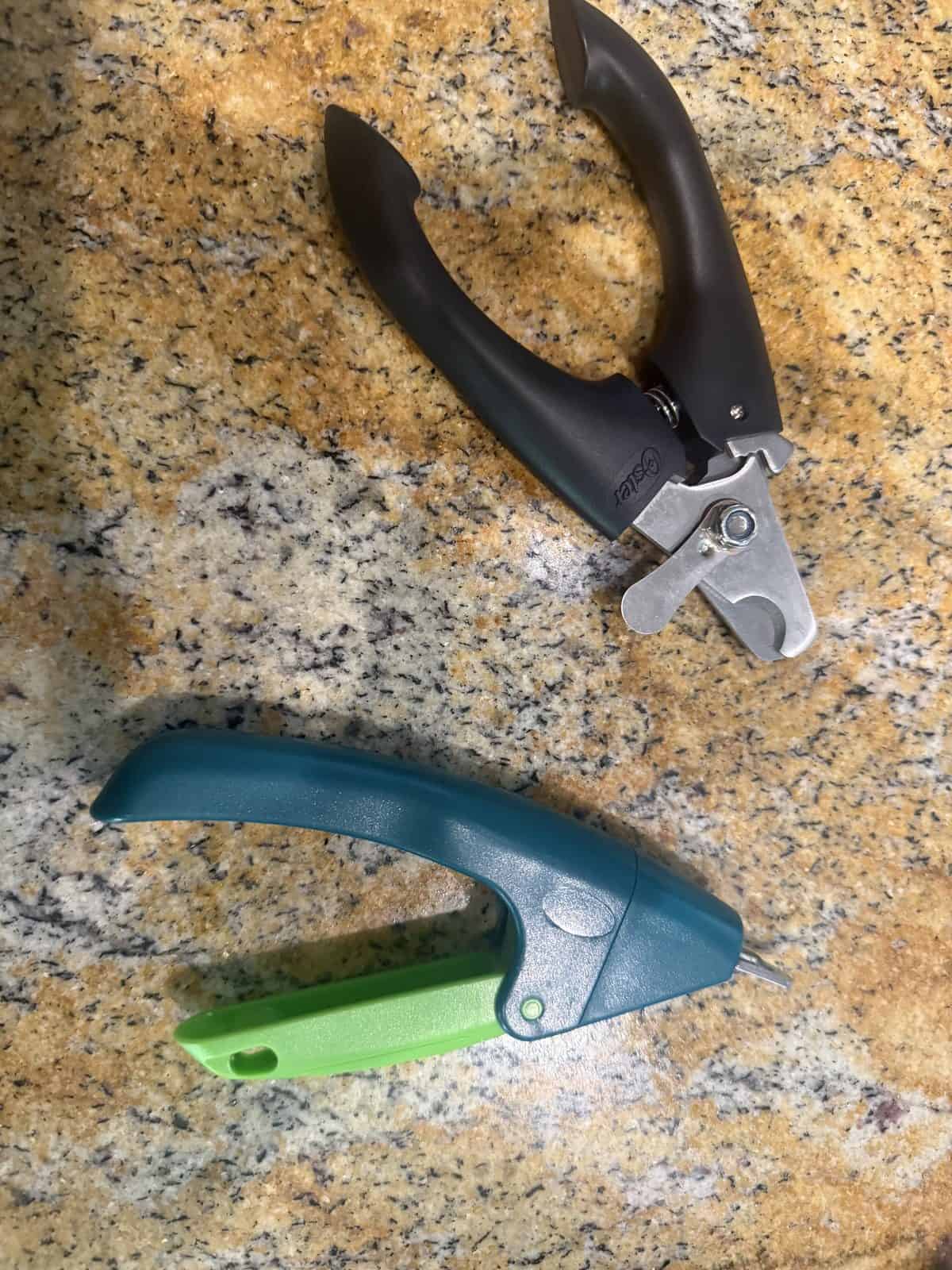
Selections draw on product research, manufacturer specs, and the veterinary care sources cited below. First-person notes appear only where the gear was genuinely used: pick two is the Oster guillotine clipper I trim my own dog with, paired with a second scissor-style clipper.
Key Takeaways
- A safety stop or guard is the feature beginners should not skip; it keeps the blade clear of the quick, the blood vessel inside the nail.
- Match the clipper to the dog. Plier styles handle large or thick nails, scissor clippers suit small dogs and cats, guillotines reward a steady hand.
- Sharp stainless blades cut cleanly; dull blades crush the nail and pinch the quick, which is what makes a dog flinch.
- Grinders are gentler for anxious dogs and for dark nails where you cannot see the quick, at the cost of speed and noise.
- Keep styptic powder within reach in case you nick the quick, and trim little and often instead of one long overgrown session.
Disclosure: HappyPaws is reader-supported. As an Amazon Associate, we earn from qualifying purchases made through links on this page, at no extra cost to you.
How We Picked the Best Dog Nail Clippers
Nail trimming is routine care, not a medical procedure, but a poor tool turns it into one. Regular trims keep nails from overgrowing, curling, and changing how a dog stands and walks, which is why a clipper you actually reach for matters more than any single feature.1 Every pick here had to cut cleanly in one pass on the size of nail it is meant for, hold an edge, and give the owner a way to avoid the quick, whether through a safety guard, a controlled blade, or sheer visibility.
Brands stay named only where the product is current and widely sold. One pick is the clipper I use at home, so it carries my own notes and a button pointing to the same tool rather than a guessed model. Where a pick is a generic style rather than a single maker, the button points to that style.
1. BOSHEL Dog Nail Clippers: Best Overall
Ask a groomer for a safe home clipper and the BOSHEL comes up fast. It is the plier-style pick that gets the basics right: ergonomic cushioned handles, a spring that does the work, and a safety stop that stands between you and the quick.
Why It Stands Out
The wide, grippy handles push together with little force, which matters when your dog is wriggling and you want one clean cut rather than three nervous ones. A safety guard limits how far the blade travels, and a mini file tucks into the handle for smoothing rough edges afterward. For owners new to trimming, this is the tool that builds confidence, and it pairs well with a calm-handling routine like the one in our guide to grooming a dog at home.
Worth Knowing
The blades are sharp but suit medium and large nails best; very thick nails take a firmer squeeze. The sensor and guard make it bulky for toy breeds and cats, who do better with a compact scissor clipper.
Buy it for a first-time trimmer or a medium-to-large dog. Skip it for a tiny dog or a cat, where the size works against you.
Check Price on Amazon2. Oster Guillotine Nail Clipper: What I Use
Pick two is the clipper on my counter. I trim my dog with an Oster guillotine clipper, and I keep a second scissor-style clipper with a safety guard beside it; I use the two together and between them they handle every nail she has. Both have held up through steady use, and neither has gone dull or loose on me, which is the quiet test a grooming tool either passes or fails over time.
Why It Stands Out
The guillotine action gives a clean single cut, and a clean cut is the whole game when a nail has started to curl. My dog’s nails curl now and then, and catching them with a sharp clipper before they grow into a problem keeps her comfortable and pain-free on her feet; a curled or overgrown nail is the kind of thing that nags at a dog with every step.1 Because she is a nervous rescue, a fast clean cut beats a long wrestling match, which is the same reason a gentler approach helps with grooming an anxious dog, covered in our notes on helping a dog with PTSD.
Worth Knowing
Guillotine clippers reward a steady hand: you feed the nail through a ring and the blade comes up, so you want to see what you are cutting before you commit. On very thick large-breed nails a plier clipper has more leverage. My second clipper carries no legible brand, so I have not named it; the button below points to the Oster guillotine style I actually use. If your dog struggles with any clipper, a grinder is the gentler route, and our dog nail grinder guide walks through it.
Reach for a guillotine like this if you want clean single cuts and have a steady hand. Pass if you are brand new to trimming and want a safety guard doing more of the thinking.
Check Price on Amazon3. Millers Forge Nail Clipper: Best Value
The clipper professionals keep in the drawer is not flashy. Millers Forge has been a groomer staple for years thanks to heat-treated Italian steel, a spring-loaded plier action, and a price that undercuts most of the field.
Why It Stands Out
These cut cleanly with minimal effort and stay sharp through heavy use, which is exactly what you want from a tool you will own for years. The handles are plain, the lock keeps the jaws closed for storage, and the whole thing is light enough that your hand does not tire mid-session.
Worth Knowing
The plastic handles look budget, and some versions ship without a swing-out safety guard, so a nervous beginner may want to add a grinder for the first few trims. Sizing matters here; pick the larger jaw for a big dog with thick nails.
Choose these when you want pro-grade cutting for the lowest sensible price. Look elsewhere if a built-in safety guard is non-negotiable for you.
Check Price on Amazon4. Safari Professional Nail Trimmer: Best for Thick Nails
For a big dog with stubborn nails, leverage and durability beat clever features. The Safari Professional, from Coastal Pet, is the heavy-duty plier clipper groomers reach for on the tough jobs.
Why It Stands Out
Comfortable in either hand and built to last, it powers through thick nails without crushing or splitting them. The double-plier design and solid stainless blades make quick work of a large dog’s claws, and the build shrugs off years of regular use.
Worth Knowing
The strength that suits large breeds makes it overkill for a toy dog, where the jaws are simply too big. As with any sharp clipper, keep the blade clean and dry so it stays keen between trims, a habit our grooming kit guide builds into a routine.
Get it for a medium-to-large dog with thick or fast-growing nails. Pass for a small dog or cat that needs a lighter touch.
Check Price on Amazon5. LED Quick-Sensor Clipper: Best for Dark Nails
Black nails hide the quick, which is what makes them nerve-wracking to cut. A lighted, sensor-style clipper tackles exactly that problem by shining through the nail so you can spot where the safe zone ends before the blade moves.
Why It Stands Out
The light and guard combination takes much of the guesswork out of dark or thick nails, which is where most owners freeze. For anyone who has nicked a quick once and lost their nerve, the visibility makes trimming feel safe enough to keep doing, and that consistency is what actually keeps nails short.
Worth Knowing
These run on a small battery, so check that it is replaceable or charged before a session. The lighting helps but does not replace care; go slowly on dark nails and stop at the first sign of a darker center. For dogs that hate any clipper, weigh a grinder instead, which our clippers versus grinder comparison lays out.
Pick a lighted sensor clipper if your dog has dark nails or you are anxious about the quick. It suits a cautious owner more than a speed-focused groomer.
Check Price on Amazon6. Compact Scissor Clipper: Best for Small Dogs and Cats
A toy dog’s nail needs a small, precise tool, not a heavy plier. A compact scissor-style clipper gives the control a tiny paw demands, with little blades and a classic finger grip that makes accurate cuts easy.
Why It Stands Out
The semicircular blades cradle a slim nail and guide the cut, so you take off a sliver at a time instead of a risky chunk. Light and easy to hold, it suits small dogs, puppies, and cats, and the precision helps with the dewclaws that bigger clippers fumble. It earns a place in a small-dog grooming setup alongside paw care like paw balm for dry pads.
Worth Knowing
The small jaws that make it precise also make it wrong for a large dog with thick nails, where it will struggle and skip. Keep the blades sharp, since a small dull clipper crushes a thin nail rather than cutting it.
Choose it for a small dog, a puppy, or a cat. Skip it for any medium or large breed with substantial nails.
Check Price on AmazonDog Nail Clippers at a Glance
| Clipper | Style | Best for | Safety feature | Nail file | Price band |
|---|---|---|---|---|---|
| BOSHEL | Plier / scissor | First-timers, medium-large dogs | Safety stop + guard | Built-in | $12–$16 |
| Oster Guillotine (what I use) | Guillotine | Clean single cuts, steady hand | None; visual control | No | $10–$18 |
| Millers Forge | Plier | Value, durability | Locking jaw (varies) | No | $8–$15 |
| Safari Professional | Heavy plier | Large dogs, thick nails | Sturdy build | No | $13–$22 |
| LED Quick-Sensor | Scissor + light | Dark or thick nails | Light + guard | Varies | $12–$25 |
| Compact Scissor | Small scissor | Small dogs, puppies, cats | Semicircle blade guide | No | $8–$15 |
Prices move with sales and size, so read the bands as a guide. Whatever you choose, the safest clipper is the sharp one you keep clean and use often.
How to Choose Dog Nail Clippers
Three things decide the right clipper: your dog’s size, your dog’s temperament, and how confident you feel near the quick. Sort those out first, and the style picks itself.
Match the size to the nail, not the dog
Thick nails need leverage, which means a plier or heavy plier clipper. Thin nails on a small dog or cat call for a compact scissor clipper that takes off slivers. A clipper that is too big crushes a slim nail; one too small skips off a thick one.
Pick a safety feature that matches your nerve
A built-in safety stop or guard limits how far the blade travels, which is the single best feature for a beginner. If your dog has dark nails, a light helps you see the quick. If the whole idea makes you flinch, a grinder removes the snip entirely, and our grinder roundup covers the options.
Demand sharp stainless blades
Sharp stainless steel cuts in one motion and resists rust; a dull blade crushes the nail and pinches the quick, which is what makes a dog yelp and learn to hate trims. Cheap soft metal dulls fast, so blade quality is worth paying for even on a budget tool.
Mind the grip and the routine
Cushioned, non-slip handles keep your hand steady when your dog moves, and a hand that does not slip is a hand that does not cut the quick. Build trims into a wider care habit alongside paw checks and washes; our look at why dogs lick their paws covers the signs that a paw needs attention.
Nail Clippers vs Nail Grinders
Clippers and grinders solve the same problem in opposite ways, and the better choice depends entirely on your dog. Our full clippers versus grinder comparison goes deeper, but here is the short version.
When clippers win
Clippers are fast, quiet, and cheap, and a confident owner can finish all four paws in a couple of minutes. For a dog that tolerates the snip and an owner who can read the quick, clippers are hard to beat.
When a grinder wins
A grinder files the nail down gradually, so there is no single scary cut and far less chance of hitting the quick. Dogs that shut down at the sound of a clipper often handle a grinder better, and the smooth finish suits dark nails where the quick is invisible. The trade is noise, dust, and a slower session.
Common Dog Nail Trimming Mistakes to Avoid
Most trimming disasters come from a handful of avoidable habits, and fixing them is easier than buying a fancier clipper.
Letting nails overgrow
The longer a nail gets, the longer the quick grows inside it, which makes a safe short trim impossible until you bring the nail back gradually. Little and often beats one dreaded marathon, and it keeps a curling nail from ever reaching the pad.
Cutting with a dull blade
A blunt clipper crushes before it cuts, hurting the dog and teaching her to fear the tool. Keep blades clean, dry, and sharp, and replace a clipper that no longer cuts in one pass.
Rushing a nervous dog
Pinning a frightened dog down to power through teaches her that trims are an ambush. Go slow, reward calm, and split the job across days if you need to; for a truly anxious dog, pairing trims with calming chews and patience helps more than force.
Trimming with no plan for the quick
Sooner or later you will nick a quick, and a dog that bleeds while you scramble learns to dread the clipper. Keep styptic powder or a styptic pencil within reach before you start, and stop calmly if it happens.
Recommended Reading
- dog nail scratch pads, a low-stress way to file front nails.
- How to trim dog nails at home
- Best dog nail grinders
- Best dog paw cleaners
- How often should you bathe your dog
Frequently Asked Questions
What kind of nail clipper is best for my dog?
Match it to size and nerve. Plier-style clippers suit medium and large dogs with thick nails, compact scissor clippers suit small dogs and cats, and guillotine clippers give clean single cuts for a steadier hand. If you are anxious about the quick, choose one with a safety stop or a light.
How do I avoid cutting the quick?
The quick is the blood vessel inside the nail. On light nails you can see it as a pink core; on dark nails it hides, so trim a sliver at a time and watch for a darker dot at the cut face. A safety guard or a lighted clipper helps, and styptic powder stops bleeding if you go too far.
How often should I trim my dog’s nails?
A good rule is to trim whenever you hear nails clicking on hard floors or see them touching the ground when your dog stands. For most dogs that lands at a regular cadence of a few weeks, though active dogs who wear nails down on pavement need it less.
Why do my dog’s nails curl, and is that a problem?
Nails that go untrimmed keep growing and can curve toward or into the paw pad, which is uncomfortable and can change how a dog walks.1 Catching them early with regular trims prevents the curl; if a nail has already grown into the pad or looks infected, have a veterinarian or groomer handle it.2
Are clippers or grinders better?
Clippers are faster, quieter, and cheaper; grinders are gentler and reduce the risk of hitting the quick, which suits anxious dogs and dark nails. Many owners keep both and use whichever their dog tolerates that day.
My dog hates having her nails done. What can I help with?
Build it up slowly with treats, handle the paws often when nothing is happening, and trim one or two nails at a time instead of all four paws at once. Calm handling and short sessions matter more than the tool, and a grinder is often easier for a fearful dog.
Can I use dog nail clippers on my cat?
A small scissor-style clipper works on cats, though dedicated cat clippers fit a thin claw better. Skip large plier or guillotine clippers for cats, since the jaws are sized for a dog’s nail.
How do I keep my clippers working well?
Wipe the blades clean and dry after each session, store them locked or capped, and add a drop of oil to the pivot now and then. A sharp, clean clipper cuts safely; a neglected one dulls and starts to crush.
Related Reading
Explore more: cat nail caps soft claws, dog clippers, and cat nail clippers.
Recommended Reading
See also our guides to dog clippers, and dog whistles for training.
Sources
- American Veterinary Medical Association, routine pet care and grooming guidance. https://www.avma.org/ (Regular nail trimming is part of routine care; overgrown nails can curl, cause discomfort, and affect how a dog stands and walks.)
- American Animal Hospital Association, preventive and routine care standards. https://www.aaha.org/ (Nail care belongs in a regular care routine; severely overgrown, ingrown, or infected nails warrant a veterinary or professional groomer visit.)
Finish a trim gently with a dog nail file.
