
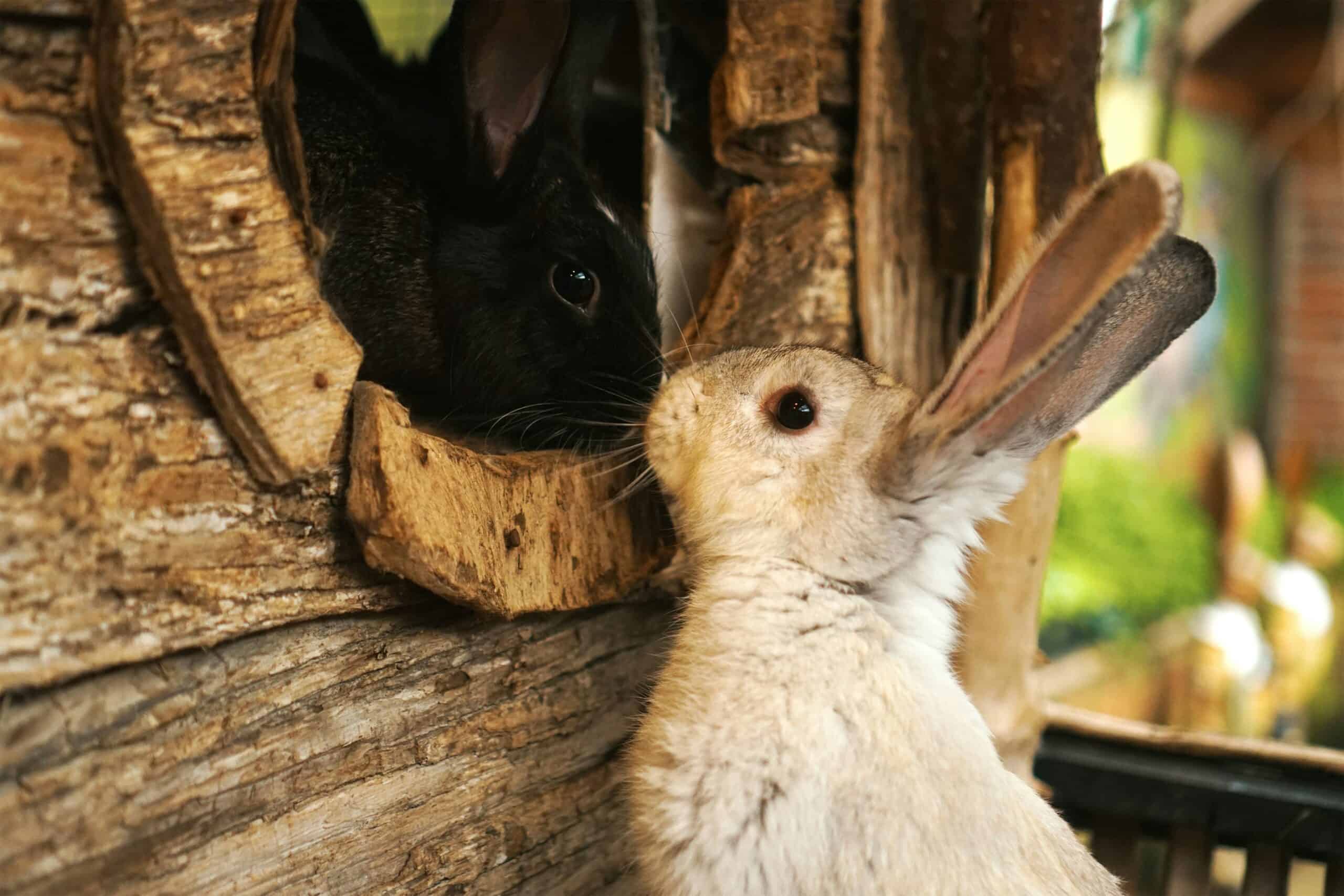
Rabbits need far more floor space than the hutches sold for them usually provide, so the practical answer for most keepers is a large pen rather than a traditional hutch. The best rabbit hutches and enclosures are judged on usable floor area first, then on shelter and security, and almost never on how they look in a catalog. A hutch that a rabbit cannot take three hops across is a shelter, not a home.
Height matters less than people expect and width matters more. A rabbit needs to stretch out flat, sit up on its back legs, and run, and how much space a rabbit needs works through the numbers behind that.
Quick Verdict
For indoor rabbits a large exercise pen beats any cage, because you can make it as wide as the room allows. Outdoors, buy a hutch with a permanently attached run and upgrade the latches. Multi-level setups look generous but add less usable space than simply going wider.
Key Takeaways
- Usable floor area is the measurement that matters. Levels and ramps are a bonus, not a substitute.
- Most hutches sold as complete rabbit housing are too small on their own.
- Wire floors are hard on rabbit feet, so a solid floor or a solid covering is standard.
- Outdoor security comes down to latches and a dig-proof base, not cage bar thickness.
- A pair needs more room than one rabbit, not the same space shared.
- Access for cleaning decides whether the enclosure stays clean in practice.
How We Picked These Enclosures
We sorted these by the shape of the space they create rather than by what the manufacturer calls them. A pen, a condo and a hutch are three different propositions.
Then we weighted the practical failures: floor surfaces that hurt feet, doors too small to reach through, and latches a determined animal can open from either side.
We have not kept rabbits in these or run comparisons, so nothing here is presented as a result from our own setups. Predator risk varies enormously by location, which makes local advice worth more than a general rule.
1. Large Indoor Exercise Pens, Best Overall
Why It Stands Out
A pen is panels rather than a box, so you set the footprint and you can expand it later. That solves the space problem directly instead of working around it.
Open-topped pens are also far easier to reach into, which makes daily cleaning and handling much less of a fight.
Worth Knowing
Determined rabbits climb or push panels, so the join between sections needs securing. A lightweight pen on a slippery floor slides when leaned on.
You also need a floor covering underneath, since bare panels offer no protection for carpet or laminate.
This suits indoor rabbits and anyone who wants to scale the space up over time. Skip it where a secure roof is essential. Best for: the most usable floor space for the money, indoors.
Check Price on Amazon2. Modular Grid Condos, Best Customizable Setup
Why It Stands Out
Grid panels with a plastic base let you build the exact shape your room allows, including an L to fit around furniture. Nothing off the shelf matches that flexibility.
The same system scales to other small animals, which is why it is popular with keepers of several species. Guinea pig keepers use it constantly, as our roundup of guinea pig cages covers.
Worth Knowing
Grid spacing is the thing to check. Wide grids that suit a guinea pig can let a small rabbit get its head through, and panels need reinforcing where a rabbit leans.
Assembly takes real time, and a badly built condo sags. Zip ties rather than the supplied connectors are a common fix.
This suits anyone with an awkward room shape or a plan to expand. Skip it if you want something that arrives ready to use. Best for: building the enclosure around the room rather than the reverse.
Check Price on Amazon3. Furniture-Style Indoor Hutches, Best for Living Rooms
Why It Stands Out
These are built to look like a sideboard or a cabinet, so a rabbit can live in a shared room without the setup dominating it. For a lot of households that is what makes indoor keeping possible.
The enclosed structure also gives a nervous rabbit somewhere genuinely dark to retreat to.
Worth Knowing
You pay for the furniture finish and lose floor area doing it. Almost all of these need pen time attached to work as full housing.
Untreated wood absorbs urine and eventually smells, and painted surfaces get chewed. Rabbits chew whatever they live in.
This suits a rabbit kept in a main living space with daily run time. Skip it as standalone housing. Best for: blending into a room a family actually uses.
Check Price on Amazon4. Outdoor Hutches With Attached Runs, Best Outdoor Option
Why It Stands Out
A sheltered sleeping box joined permanently to a covered run gives a rabbit both shelter and movement without anyone having to open a door. Rabbits are active at dawn and dusk, when nobody is there to let them out.
Having the run attached also removes the daily transfer, which is where escapes happen.
Worth Knowing
Factory latches are the weak point and most keepers replace them. A simple turn-catch is not secure against a determined animal outside the hutch.
Whether outdoor keeping suits your climate and location is its own decision, and whether rabbits can live outside goes through it properly.
This suits gardens with real shade and a keeper willing to upgrade the hardware. Skip it in extreme heat or cold. Best for: outdoor rabbits that need shelter and run access together.
Check Price on Amazon5. Walk-In Enclosures, Best Large Outdoor Setup
Why It Stands Out
A frame you can stand inside turns cleaning and handling into ordinary tasks, and it gives a rabbit genuine running room. Space stops being the limiting factor.
It also makes supervision easy, since you can sit in there with the animal rather than reaching through a hatch.
Worth Knowing
These are expensive and semi-permanent, and the base is the part people underestimate. Rabbits dig, so a buried skirt or a solid base is part of the build.
A sheltered sleeping area still has to go inside it. The frame alone is not weather protection.
This suits keepers with garden space and a long-term setup in mind. Skip it for a single indoor rabbit. Best for: the most space and the easiest access, outdoors.
Check Price on Amazon6. Wire Cages With Solid Floors, Best Budget Starting Point
Why It Stands Out
A cheap cage with a solid plastic base gives you somewhere safe immediately, which matters when a rabbit arrives sooner than the proper setup does. It also works as a litter and feeding base inside a larger pen.
Deep plastic bases contain scattered hay and litter better than open panels do.
Worth Knowing
No cage in this class provides enough space on its own, and wire-floored versions are worth avoiding entirely. Rabbit feet have no protective pads against mesh.
Door openings tend to be small, which makes lifting a rabbit out awkward. Picking a rabbit up safely is harder through a narrow hatch.
This suits a stopgap or a base station inside a pen. Skip it as permanent housing. Best for: getting set up cheaply while you build something better.
Check Price on AmazonRabbit Enclosures at a Glance
| Type | Where | Space Created | Main Catch |
|---|---|---|---|
| Large exercise pen | Indoors | As wide as the room | No roof, needs floor protection |
| Modular grid condo | Indoors | Any shape you build | Assembly time, grid spacing |
| Furniture-style hutch | Indoors | Limited | Needs attached run time |
| Hutch with attached run | Outdoors | Moderate, always available | Latches usually need upgrading |
| Walk-in enclosure | Outdoors | Large | Cost, dig-proof base, still needs shelter |
| Wire cage, solid floor | Indoors | Small | Not standalone housing |
How to Choose a Rabbit Enclosure
Measure the floor, not the volume
Rabbits run along the ground rather than climbing. A tall enclosure with a small footprint gives a rabbit much less than its dimensions suggest, so compare floor area between options.
Check the floor surface
Wire mesh underfoot is the main thing to rule out, since rabbits have furred feet rather than padded ones. Solid plastic, sealed wood or a covered base all work.
Count how many rabbits will live there
Two rabbits need more room than one, not the same space divided. Pairs are generally recommended, and whether rabbits need a companion explains why that is worth planning for from the start.
Open it before you buy it
An enclosure you cannot easily reach into gets cleaned less often. Large doors, removable roofs or open tops are the difference between a daily job and a weekly one.
Indoor or Outdoor
Indoors is easier to get right
Temperature is stable, predators are not a factor, and you notice changes in behavior quickly because the rabbit is in front of you. Space is the only real constraint, and a pen solves it.
Outdoors needs more hardware
Shade, weatherproofing, secure latches and a dig-proof base all become your responsibility, and an outdoor rabbit is checked rather than simply seen. Done properly it gives a rabbit more room than most houses can.
What Trips People Up
Believing the box on the label
Hutches are frequently sold as suitable for two rabbits when they are barely adequate for one. The label is a marketing claim rather than a space standard.
Counting levels as floor space
A second shelf adds somewhere to sit, not somewhere to run. Useful, but it does not replace width.
Leaving the factory latches on
Most outdoor losses come down to a catch that something outside the hutch worked loose. Bolts and clips cost very little to add.
Forgetting rabbits chew their housing
Painted finishes, soft wood and plastic trim all get sampled sooner or later. Plan for untreated chewable surfaces and give the rabbit better things to chew.
Recommended Reading
Worth reading next: the full rabbit supplies checklist, litter training a rabbit, why rabbits thump, and whether guinea pigs can live with rabbits.
Rabbit Hutch and Enclosure FAQ
What are the best rabbit hutches and enclosures
Indoors, a large exercise pen gives the most usable floor space for the money and can be expanded. Outdoors, a hutch with a permanently attached run is the practical choice, with upgraded latches. Walk-in enclosures are the best outdoor option where budget and garden space allow.
How big should a rabbit enclosure be
Big enough that a rabbit can take several consecutive hops, stretch out fully, and sit up without touching the roof. Published minimums exist and most commercial hutches fall short of them, which is why pens are so widely recommended.
Are wire floors bad for rabbits
They are widely avoided, because rabbit feet are furred rather than padded and mesh puts pressure on them. If an enclosure has a wire floor, covering it with a solid surface is the standard fix.
Can a rabbit live in a hutch alone
A hutch without attached run access is generally considered too restrictive as full-time housing. Either attach a run permanently or commit to daily pen time, because a rabbit shut in a small box all day cannot move the way it needs to.
Do rabbits need a roof on their pen
Indoors a roof is mainly about stopping a rabbit climbing out and keeping other pets from getting in. Outdoors a secure roof is not optional, since it is the main protection against anything that climbs or flies.
How do you stop a rabbit digging out
Solid bases, paving slabs, or wire mesh buried and turned outward around the perimeter are the usual approaches. Rabbits dig along edges, so the boundary is where the effort goes.
What should go inside the enclosure
A litter tray, a hay rack positioned over or beside it, water, a hide, and chew items. Hay availability matters most, and why rabbits need unlimited hay covers the reason.
Is a hutch warm enough in winter
It depends heavily on your climate and the hutch itself, and cold plus damp is harder on a rabbit than cold alone. Whether outdoor keeping is appropriate where you live is worth checking with a local vet or rescue rather than assuming.
