
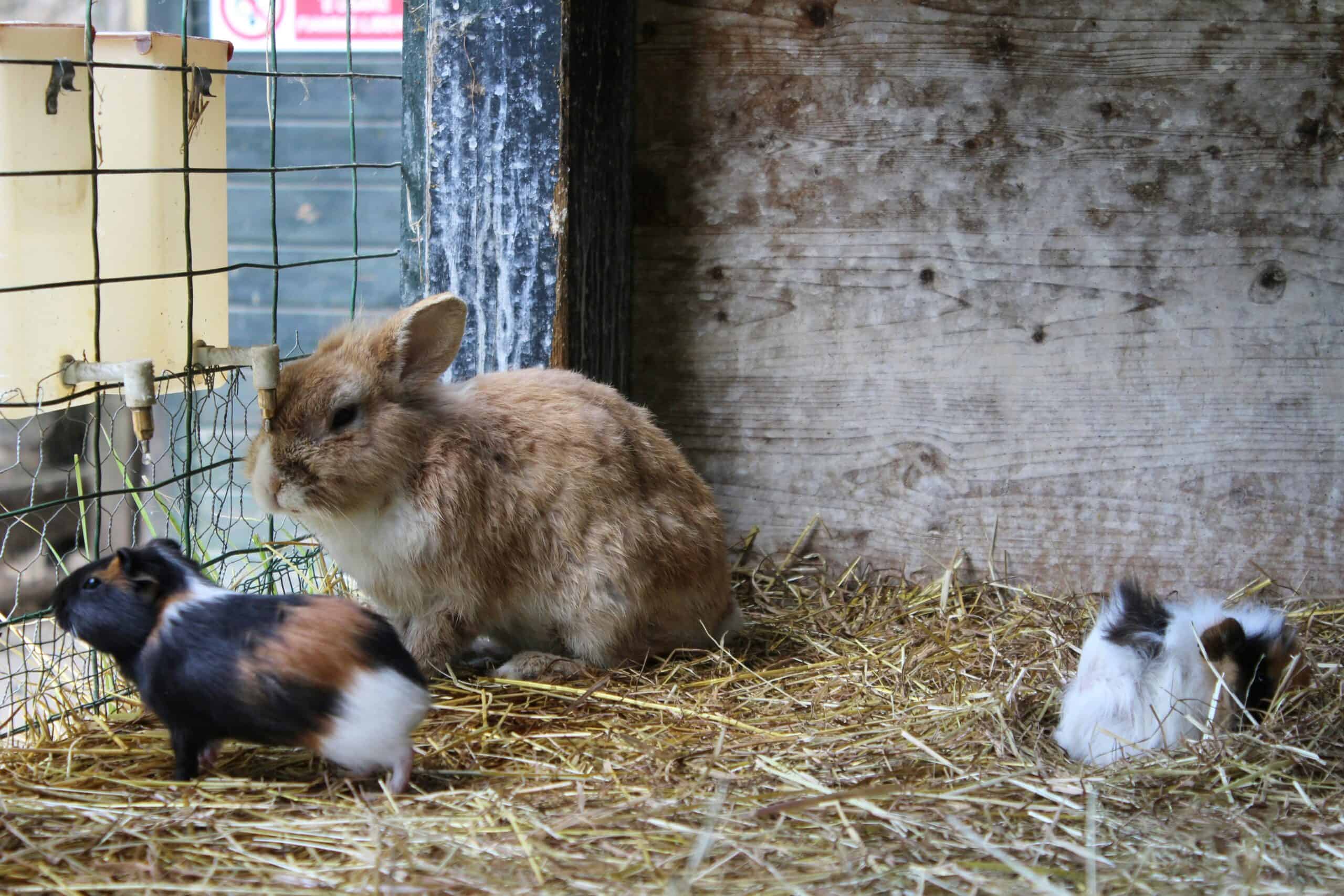
They can be housed together and it is widely advised against, for three separate reasons that each hold on their own. Can guinea pigs live with rabbits was standard practice for decades, which is why the arrangement still looks normal in older books and in some pet shop displays.
The better answer to both animals’ social needs is their own species. Our guide to whether rabbits need a companion covers that side.
Health Disclaimer
This article is general information about small animal husbandry. It is not veterinary advice and it cannot assess a specific pair of animals. If you currently house the two species together, speak with a vet about the arrangement rather than acting on a general article, and seek prompt care for any injury or respiratory sign.
Quick Answer
The three reasons are injury, diet and disease. A rabbit’s hind legs can break a guinea pig’s bones without intent. The two species need different food, and guinea pig pellets are the only ones carrying vitamin C. Rabbits commonly carry a bacterium that causes respiratory illness in guinea pigs.
Key Takeaways
- Injury is usually accidental rather than aggressive.
- Neither animal can eat a diet correct for the other.
- Rabbits can carry bordetella without appearing ill.
- They do not share a communication system.
- The arrangement was normal practice and has been revised.
- Separate enclosures side by side is a reasonable middle route.
- Each animal still needs its own species for company.
| Concern | Why it matters | Whether management helps |
|---|---|---|
| Hind leg kick | Can break bones in a smaller animal | Not reliably, it is accidental |
| Size difference | Crushing and cornering risk | Space helps, does not remove it |
| Vitamin C in pellets | Only guinea pig food carries it | Separate feeding, difficult in shared space |
| Bordetella carriage | Rabbits carry it symptom-free | No, carriage is not visible |
| Communication mismatch | Signals are not shared | No, it is species-level |
| Social need | Neither meets the other’s | No, needs same-species company |
| Bullying over resources | Larger animal usually wins | Duplicated resources help somewhat |
| Neutering status | Unneutered rabbits mount | Neutering helps, does not resolve the rest |
The Injury Risk Is Not About Temperament
This is the part people push back on, usually because their own rabbit is gentle, and the objection misses the mechanism.
A rabbit’s hind legs are built for explosive acceleration. A startled rabbit kicking out in an enclosure generates enough force to fracture bones in a considerably smaller animal.
Nothing about that requires aggression. It happens when a rabbit is startled, when it bolts, or when it lands after a jump, and the guinea pig simply needs to be in the wrong place.
Size compounds it. A guinea pig cannot get out of the way quickly, does not jump, and cannot climb, which means its options when a larger animal moves suddenly are limited.
So a well-tempered rabbit that has never shown aggression does not remove the risk, because the risk was never about intent. More space reduces the frequency of near misses and does not change the physics.
Neither Can Eat the Other’s Food
The dietary problem is structural rather than a matter of supervision.
Guinea pigs cannot synthesize vitamin C and depend on it in their food. Guinea pig pellets are fortified for that reason, and rabbit pellets are not, because rabbits make their own.
In a shared enclosure both animals eat from whatever is available. A rabbit eating fortified guinea pig pellets is taking in more of a vitamin it does not need, and a guinea pig eating rabbit pellets is missing the one thing its food exists to provide.
Separating feeding in a shared space is harder than it sounds, because it requires supervision at every meal rather than a divided bowl.
Hay is the one genuine overlap. Both species need constant access to long-fiber forage for the same reason, and our guide to why rabbits need unlimited hay covers that requirement.
The Merck Veterinary Manual describes the guinea pig’s inability to synthesize vitamin C as creating a dietary requirement absent in most other species, which is why the two feeding regimes cannot be merged.
The Bacterium Nobody Sees
This is the reason that carries the most weight and is the least widely known.
Rabbits commonly carry bordetella bronchiseptica in their respiratory tract without showing any sign of illness. In guinea pigs the same organism is a recognized cause of respiratory disease.
So a rabbit that appears entirely healthy can be a source of infection for a guinea pig sharing its air. There is nothing to observe, no symptom to watch for in the carrier, and no way to manage it by keeping the enclosure clean.
The RSPCA advises against housing rabbits and guinea pigs together, citing bullying, differing needs and the risk of rabbits passing on diseases that affect guinea pigs.
Respiratory illness in a guinea pig moves quickly, which is what makes an invisible ongoing exposure a poor thing to accept. Reduced eating, labored breathing, nasal discharge or lethargy are reasons to see a vet the same day.
Weighing weekly gives an earlier signal than any of those, because an animal that has begun eating less shows it on a scale first. Our roundup of pet scales covers doing that consistently.
They Also Do Not Understand Each Other
Different signals
Guinea pigs communicate heavily by sound, with a repertoire aimed at their own species. Rabbits communicate mostly by posture, position and scent, with very little vocalization.
What that produces
A guinea pig teeth chattering a warning at a rabbit is not understood. A rabbit thumping or presenting a posture is not understood either. Neither animal can de-escalate with the other.
Mounting
An unneutered rabbit will mount a guinea pig, which is both a stress and an injury risk given the size difference. Neutering reduces this and does not address anything else on the list.
Company is not provided
Whatever the pair tolerate, neither is getting species-appropriate company from it. Our guide to how much space a rabbit needs covers the housing side for the larger animal.
If You Already Keep Them Together
- Speak with a vet about the arrangement. Rather than acting on an article.
- Plan separate enclosures. Side by side is a reasonable destination.
- Pair each with its own species. That is what actually meets the need.
- Feed the correct pellets separately. Supervised, until housing changes.
- Duplicate every resource now. Hideouts with two exits, water, hay.
- Weigh the guinea pig weekly. The earliest available signal.
- Treat any respiratory sign as urgent. Same day, not next week.
Separate enclosures within sight and smell of each other is the sensible middle route. It keeps whatever companionship the animals have found while removing the injury and shared-food problems, though it does not eliminate airborne exposure entirely.
The PDSA describes guinea pigs as needing the company of other guinea pigs, which is the part a mixed pairing cannot deliver regardless of how well the animals get along.
Outdoor housing adds its own considerations for both species, and our note on whether rabbits can live outside covers that for the larger animal. Our roundup of guinea pig cages covers the indoor floor space a separate enclosure needs.
Related Reading
Frequently Asked Questions
Can guinea pigs live with rabbits?
They can be housed together and it is widely advised against for three separate reasons: accidental injury from a rabbit’s hind legs, incompatible diets where only guinea pig pellets carry vitamin C, and rabbits commonly carrying a bacterium that causes respiratory disease in guinea pigs.
My rabbit is gentle. Does that change it?
Not for the injury risk, because that was never about temperament. A rabbit’s hind legs generate enough force to fracture bones in a much smaller animal when it is startled, bolts or lands from a jump. Intent is not part of the mechanism.
What is the disease concern?
Rabbits commonly carry bordetella bronchiseptica without appearing ill, and in guinea pigs the same organism is a recognized cause of respiratory disease. There is no symptom to watch for in the carrier and no way to manage it through cleaning.
Why can they not share food?
Guinea pigs cannot synthesize vitamin C, so their pellets are fortified with it and rabbit pellets are not. In a shared enclosure both animals eat what is available, which leaves the guinea pig short of the one thing its food exists to supply.
Do they understand each other at all?
Very little. Guinea pigs communicate mostly by sound and rabbits mostly by posture and scent, so neither can read the other’s warnings or de-escalate a situation. A teeth chatter or a thump does not land.
Does neutering the rabbit fix it?
It removes mounting, which is a real stress and injury risk given the size difference. It does not affect the kick risk, the dietary conflict, the bacterial carriage or the communication mismatch, so it addresses one item on a list of several.
What should I do if they already live together?
Speak with a vet about the arrangement, plan separate enclosures side by side, and pair each animal with its own species. In the meantime feed the correct pellets under supervision, duplicate every resource, and weigh the guinea pig weekly.
When should I see a vet?
Immediately for any injury, however minor it looks, since internal damage from a kick is not visible. See a vet the same day for reduced eating, labored breathing, nasal discharge or lethargy in a guinea pig, because respiratory illness in this species progresses quickly.
Sources
- Merck Veterinary Manual. Guinea pig nutrition and vitamin C requirement.
- RSPCA. Housing rabbits and guinea pigs together.
- PDSA. Guinea pig company and social needs.
