
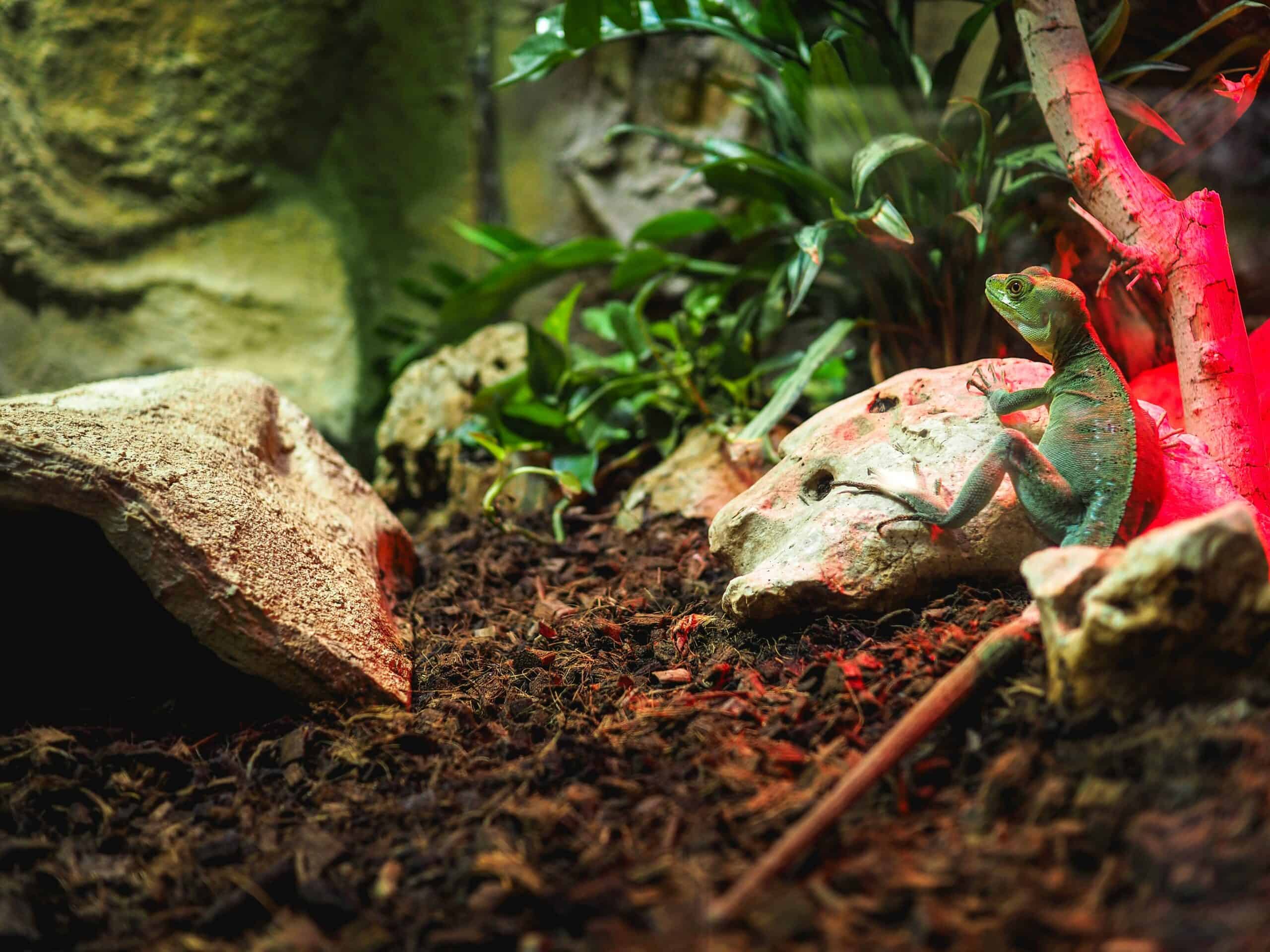
Substrate is asked to do two things that pull against each other, hold the humidity your species needs and not end up inside the animal, which is why the safest choices are either solid liners or particles too large to swallow accidentally. The best reptile substrate and bedding are decided by your species and its feeding habits rather than by how a setup looks. Loose particulate in the enclosure of an animal that strikes at food on the ground is the case to think about hardest.
Humidity is the reason loose substrate exists. A deep bed of coconut fiber or soil mix holds moisture and releases it slowly in a way a flat liner never will. Holding that level reliably is a separate job, and reptile humidity and misting systems cover it.
Ingestion is the reason to be careful about it. Reptiles pick up substrate while feeding, and impaction is a widely discussed husbandry concern rather than a settled one, which is a question for a reptile veterinarian who knows your animal rather than a roundup.
For most keepers a reptile carpet or paper liner is the right starting substrate, since it removes the ingestion question entirely and makes problems visible. Move to a coconut fiber or soil mix when the species genuinely needs held humidity or burrowing depth, and keep loose fine particles away from animals that feed off the enclosure floor. Bioactive soil is the most work and the most rewarding where the species suits it.
Reptile Substrates at a Glance
| Type | Holds Humidity | Ingestion Concern | Suits |
|---|---|---|---|
| Paper and reptile carpet | No | None | Beginners, quarantine, visible monitoring |
| Coconut fiber and husk | Yes, well | Loose particulate | Humid species, burrowers |
| Cypress mulch and bark | Yes | Large pieces, lower concern | Humid species, snakes |
| Topsoil and sand mixes | Holds shape when damp | Fine particulate | Burrowing species, bioactive |
| Bioactive soil with drainage | Yes, self-regulating | Loose, but established | Planted long-term setups |
| Tile and slate | No | None | Easy cleaning, heat conduction |
Key Takeaways
- Humidity retention and ingestion risk pull in opposite directions, and your species decides the balance.
- Solid liners and tile remove the ingestion question completely and hold no humidity.
- Large-particle substrates like bark are generally treated as lower concern than fine sand.
- Feeding method matters: an animal that strikes food on the floor picks up whatever is there.
- Spot-clean constantly, because loose substrate hides waste that a liner would show immediately.
How We Picked These Substrates
We grouped these by what they are made of and how they behave with moisture, since that is what determines whether a substrate can support your species’ humidity needs. Cleaning practicality was weighed alongside.
We have not kept animals on these or run comparisons, so nothing here is presented as a result from our own setups, and no substrate here is claimed to prevent or cause any health outcome.
On ingestion we have deliberately stayed general. Impaction risk is discussed extensively among keepers and the specifics depend on species, particle size, feeding method, hydration and temperature, which makes it a conversation for a reptile veterinarian rather than a line in a product roundup.
1. Paper and Reptile Carpet, Best for Beginners
Why It Stands Out
Nothing can be swallowed, nothing hides waste, and you can see immediately whether the animal has passed something normal. For a new keeper or a new animal that visibility is worth a great deal.
It is also the cheapest option and the fastest to change, since the whole liner lifts out and a fresh one goes in.
Worth Knowing
It holds no humidity at all, so a species needing a damp environment will need misting, a humid hide or a different substrate entirely.
Reptile carpet also catches claws in its loops, and frayed loops are worth trimming or replacing. Paper is less attractive and avoids that problem, much as the plain-but-practical choices in our roundup of guinea pig cages often beat the better-looking ones.
This suits beginners, quarantine periods and any animal you want to monitor closely. Skip it for humidity-dependent species. Best for: starting out and watching closely, with no ingestion question.
Check Price on Amazon2. Coconut Fiber and Husk, Best Humidity Retention
Why It Stands Out
Coconut fiber absorbs a large amount of water and releases it slowly, which is the most reliable way to hold humidity in an enclosure that is otherwise losing it through a screen top.
It also holds a burrow shape when damp, so burrowing species can actually use the depth rather than having it collapse.
Worth Knowing
It is loose and fine, so it clings to feeder insects and to anything damp, and the animal will pick some up while feeding. Feeding in a separate container or on a flat dish is the common way keepers reduce that.
It also grows mold if kept too wet with poor airflow, so humidity and ventilation have to be balanced rather than maximized. Our roundup of air purifiers for pet odor addresses the room side of a damp enclosure.
Buy this for humid species and burrowers. Skip it for animals that strike food off the floor unless you feed separately. Best for: holding humidity and supporting burrows.
Check Price on Amazon3. Cypress Mulch and Bark, Best Large-Particle Option
Why It Stands Out
Bark chips and cypress mulch hold moisture well while being physically too large to be swallowed incidentally, which is why many snake keepers settle on them.
The chunky texture also allows airflow through the substrate itself, so the bottom layer stays less swampy than a fine mix would.
Worth Knowing
Large pieces make spot-cleaning harder, since waste works down between chips rather than sitting on top.
Sourcing matters as well: some wood products carry oils or treatments unsuitable for animals, so buy substrate sold for reptiles rather than garden mulch. The same sourcing caution applies to the chew materials in our roundup of bird perches and toys.
Choose this for humid species where particle size is the concern. Skip it if you want to see waste immediately. Best for: snakes and humid setups wanting lower ingestion concern.
Check Price on Amazon4. Topsoil and Sand Mixes, Best for Burrowing Species
Why It Stands Out
A soil and sand blend packs down when damp and holds a tunnel, which is what a genuinely burrowing animal needs rather than loose material that caves in.
It also reads as a natural environment and supports plants, which makes it the base layer for most bioactive builds.
Worth Knowing
Fine sand is the substrate most often raised as a concern around ingestion, particularly for animals fed on the enclosure floor. Pure sand in particular is widely avoided in favor of a mix.
Mixes are also heavy once damp and deep, which pushes the enclosure base and the stand under it. Weight planning matters, as does tracking the animal’s condition with something like a scale.
Buy this for burrowing species and bioactive bases. Skip pure fine sand, and feed off a dish where you can. Best for: burrowing behavior and planted setups.
Check Price on Amazon5. Bioactive Soil With a Drainage Layer, Best Long-Term Setup
Why It Stands Out
A living substrate with a drainage layer, plants and small invertebrates breaks down waste in place, which means far less substrate changing over the life of the setup.
Humidity also self-regulates once it is established, since the soil holds water and the drainage layer takes the excess.
Worth Knowing
It takes weeks to establish before it works, and during that period it is less forgiving than a simple substrate rather than more.
Spot-cleaning is harder by design, since the point is that the system processes waste. That requires trusting the setup, which is a different relationship than watching a liner. Our guide to changing aquarium water covers the same shift from replacing to maintaining a balance.
Choose this for a long-term planted setup with a suitable species. Skip it for a first enclosure or a quarantine. Best for: established planted setups, with patience during setup.
Check Price on Amazon6. Tile and Slate, Best for Easy Cleaning
Why It Stands Out
A cut tile floor wipes clean completely, lasts indefinitely and cannot be ingested, which makes it the lowest-maintenance surface here after paper.
Stone also conducts heat well and holds it, so a tile over a heated area gives a stable warm surface rather than a hot spot.
Worth Knowing
It holds no humidity whatsoever, so humid species need separate provision through hides and misting.
Tile is also heavy, has to be cut to fit, and gives nothing for a burrowing animal to dig into. Keeping the enclosure interesting then falls to furnishings, and the cleanup side is covered by our roundups of stain and odor removers and handheld vacuums.
Buy this for easy cleaning and stable heat conduction. Skip it for burrowers and humid species. Best for: low-maintenance floors and steady surface heat.
Check Price on AmazonWhat to Look For in a Reptile Substrate
What humidity does your species need
This is the first question and it comes from a species care guide rather than a product page. A desert species and a rainforest species want opposite things from the same enclosure, and the substrate is the main lever for that.
How does the animal feed
An animal that strikes or snaps at food on the enclosure floor will pick up whatever is on that floor. Feeding on a flat dish or in a separate container is how many keepers use loose substrate while reducing that.
Can you see and remove waste
Liners and tile show everything, loose substrates hide it, and bioactive systems are meant to process it. Pick the level of visibility that matches how closely you want to monitor the animal.
Is it sold for reptiles
Garden products can carry fertilizers, treatments or oils that are not appropriate for an enclosure. Buying substrate sold for reptile use avoids a problem that is invisible until it is not.
Loose Substrate or Solid Liner
When the loose substrate wins
Choose loose when the species needs held humidity or the ability to burrow, because neither can be delivered by a liner. Coconut fiber and bark are the usual answers, with feeding arrangements adjusted to suit.
When the liner wins
Choose a liner or tile for a first animal, a quarantine period, or any time you want to see exactly what is happening. It removes the ingestion question completely and makes problems visible early, at the cost of holding no humidity.
Common Substrate Mistakes to Avoid
Choosing substrate by appearance
A naturalistic-looking enclosure is not the same as a suitable one, and the substrate that photographs best is often the one that suits the species least. Work from humidity and feeding requirements and let the look follow.
Keeping it too wet
Damp substrate with poor airflow grows mold, which is a problem for the animal and for the room. Humidity is a target to hit rather than a maximum to chase, and ventilation is part of achieving it.
Feeding on loose fine substrate
An animal snapping at a feeder insect on fine sand or coconut fiber takes in some of what is underneath. A feeding dish or a separate container is a simple change that most keepers make, and it is worth asking a reptile veterinarian what applies to your species. Our roundup of reptile heat lamps covers the heating side that interacts with all of this.
Recommended Reading
- Bird cages and bar spacing
- The rabbit supplies checklist
- Gravel vacuums for substrate cleaning in tanks
Reptile Substrate FAQ
What are the best reptile substrate and bedding options for a beginner?
Paper or reptile carpet is the usual recommendation to start with, because nothing can be ingested and waste is immediately visible. Move to coconut fiber, bark or a soil mix once you know your species needs held humidity or the ability to burrow, and adjust how you feed accordingly.
Is sand safe for reptiles
Fine sand is the substrate most often raised as a concern, particularly for animals fed directly off the enclosure floor, and pure sand is widely avoided in favor of a soil and sand mix. Whether it suits your specific animal is a question for a reptile veterinarian rather than a general rule.
What is impaction and how do you reduce the risk
It is a blockage caused by ingested material, and it is discussed extensively among keepers because the contributing factors are numerous: particle size, feeding method, hydration and enclosure temperature all come into it. Feeding on a dish and using large-particle or solid substrates are common precautions. A reptile veterinarian who knows your animal is the right source on this.
Which substrate holds humidity best
Coconut fiber and husk absorb and release a lot of moisture, with cypress mulch and bark close behind while being physically larger. Soil mixes hold shape when damp, which suits burrowers. Paper, carpet and tile hold essentially none.
How deep should reptile substrate be
Deep enough for the behavior you are supporting, which means shallow for a species that does not dig and genuinely deep for one that burrows. A burrowing animal with insufficient depth cannot do something it is built to do, so this comes from the species rather than from a general figure.
How often should you change reptile substrate
Spot-clean waste as you see it, and replace loose substrate on a schedule that depends on the type, the species and how heavily the enclosure is used. Liners can be changed whenever they need it, while an established bioactive setup is designed to go far longer between full changes.
Can you use garden soil or mulch
It is a risk, because garden products can contain fertilizers, pesticides, or oils from woods that are not appropriate in an enclosure. Substrate sold for reptile use avoids an exposure you would have no way of detecting afterward.
