
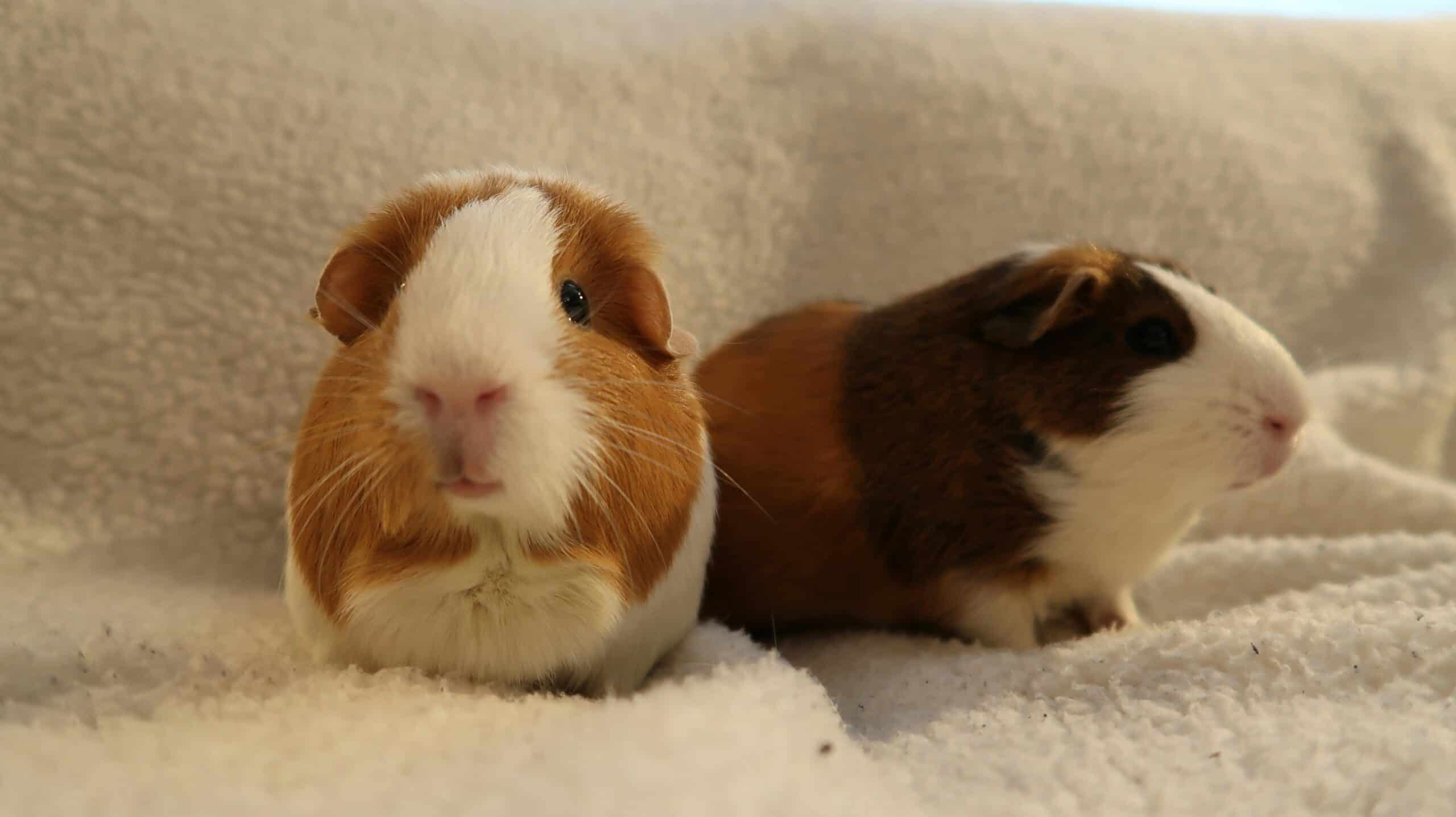
Yes, and more straightforwardly than most social pets, because a guinea pig kept alone is missing something no amount of human attention replaces. Do guinea pigs need a companion badly enough that it is a welfare requirement rather than a preference? In several countries the law says so, which is an unusual level of agreement about a pet.
The equivalent question for rabbits has a different answer with different mechanics. Our guide to whether rabbits need a companion covers that one.
Quick Answer
Guinea pigs are herd animals that communicate constantly and take security from the presence of their own species. Keeping one alone is discouraged everywhere and prohibited in some countries. Same-sex pairs are the usual arrangement, and introductions are far simpler than rabbit bonding.
Key Takeaways
- They are herd animals, not solitary ones that tolerate company.
- Some countries prohibit keeping a single guinea pig.
- Human attention does not substitute for a conspecific.
- Introductions are simpler than rabbit bonding.
- Same-sex pairs are the standard arrangement.
- Two animals need more floor space, not the same amount.
- A bereaved single should generally be paired again.
| Combination | How it usually goes | Watch for |
|---|---|---|
| Two females | Most straightforward pairing | Initial dominance sorting |
| Two neutered males | Works well | Needs generous floor space |
| Two unneutered males | Possible, less reliable | Escalating conflict at maturity |
| Neutered male and female | Often the easiest of all | Neutering must be confirmed |
| Unneutered male and female | Avoid | Continuous pregnancy |
| Trio or larger group | Fine with space | Resources multiplied, not shared |
| Guinea pig and rabbit | Not recommended | A separate question entirely |
| Single with lots of handling | Not a substitute | The gap is species-specific |
Why a Single Guinea Pig Struggles
The reason is not sentimental, and it comes down to how the animal reads its environment.
Guinea pigs are prey animals that live in groups, and a great deal of their sense of safety comes from other guinea pigs being present and unbothered. A settled companion is continuous evidence that nothing is wrong.
They also communicate almost constantly, with a repertoire aimed largely at each other rather than at people. A single animal has most of that vocabulary with nobody to use it on.
What that produces is not obvious distress. It is more often a flatter animal: less active, more time hidden, less of the popcorning and exploring that a settled pair does routinely.
Human attention helps and does not replace it. You are not present at three in the morning, you do not smell right, and you cannot answer a rumble.
Several European countries have written this into animal welfare law, prohibiting the keeping of a single guinea pig. Whether or not that applies where you live, it reflects an unusual degree of consensus about what the species needs.
Pairing Combinations
Two females
The default and the simplest. Expect a period of dominance sorting with rumbling and mild chasing, which resolves without help in most cases.
Males together
Two males can live together well, particularly when neutered and when raised together, and they need more floor space than a pair of females to avoid friction over territory.
A neutered male with a female
Frequently the easiest arrangement of all, because it removes same-sex competition. The neutering has to be confirmed rather than assumed, and there is a waiting period after the procedure before it is reliable.
What to avoid
An unneutered male with a female produces continuous litters. Sexing errors at purchase are common enough that this happens by accident regularly, so verify rather than trust the label on the pen.
Introductions Are Easier Than You Expect
Anyone who has read about rabbit bonding arrives at this braced for a long process, and guinea pigs are considerably more forgiving.
There is no extended bonding protocol. The usual approach is a neutral space neither animal has claimed, both freshly cleaned housing, and enough room that either can move away.
Rumbling, chasing, mounting and teeth chattering in the first hours are the animals establishing an order rather than a failure. Intervening at the first noise prevents them from settling it.
What warrants stepping in is sustained chasing that does not let up, continued chattering with no resolution, or any contact that draws blood. Those are different from a scuffle.
Once settled, guinea pigs generally stay settled, and the relationship does not need the maintenance a bonded rabbit pair does. Our guide to why rabbits thump covers signal-reading in a species where the cues are much quieter and easier to miss.
What Two Animals Actually Need
The most common mistake after deciding to pair is assuming the existing setup will do.
Floor space has to increase. Two guinea pigs in a cage sized for one produce exactly the friction that gets blamed on incompatibility, and the fix is square footage rather than separation. Our roundup of guinea pig cages covers what counts as usable ground floor.
Resources get duplicated rather than shared. Two hideouts with two exits each, two water points, two hay piles, two food bowls. A single favored spot is what most disputes are actually about.
Hideouts with two openings matter more than they sound. A tunnel with one entrance is a place to be cornered, and a second exit removes that.
Litter and cleaning scale too, and our note on whether rabbits can be litter trained covers the general principle, which applies less neatly to guinea pigs since they are not reliably trainable in the same way. Our guide to how much space a rabbit needs covers the same space-per-animal reasoning in a larger species.
When a Pairing Does Not Work
Some pairs genuinely fail, and the answer is not a lone animal.
Real failure looks like sustained fighting rather than a noisy first day: injuries, one animal permanently excluded from food or shelter, or a pattern that has not settled after the initial period rather than hours of rumbling.
Before concluding it, exhaust the ordinary causes. Insufficient floor space, a single favored hideout, one water point, and hideouts with only one exit produce most of what gets read as incompatibility.
Where it has genuinely failed, side-by-side enclosures with a barrier they can see, hear and smell through is the fallback rather than isolation. The animals get most of the social benefit without the conflict, and some pairs settle enough over weeks to be reintroduced.
Trying a different partner is the other route, and a rescue will often help with that because they know which of their animals live easily with others.
When One Is Left Alone
- Expect a visible change. Quieter, less active, more hidden.
- Pair again in most cases. The species need has not changed.
- Do not rush the same week. A short settling period first.
- Consider an adult rather than a baby. Age-matched is usually calmer.
- Use neutral ground again. Same approach as any introduction.
- Watch eating and weight closely. Bereaved animals sometimes eat less.
- Ask a rescue about a known-social animal. They often match deliberately.
The weight point is the one worth acting on rather than watching. An animal eating less after a loss is at genuine risk, and weighing on the same scale each week turns an impression into something you can act on. Our roundup of pet scales covers that.
Rescues are frequently the better route for a replacement companion, because they know which of their animals live well with others and will often match rather than simply rehome.
Related Reading
Frequently Asked Questions
Do guinea pigs need a companion?
Yes. They are herd animals that take security from the presence of their own species and communicate largely with each other rather than with people. Keeping one alone is discouraged everywhere and prohibited by animal welfare law in several European countries.
Can I be the companion instead?
No, and this is the honest answer rather than a discouraging one. Handling and attention help, and you are absent overnight, you do not smell like a guinea pig, and you cannot answer the sounds they make to each other. The gap is species-specific.
Which pairing is easiest?
Two females is the usual default. A neutered male with a female is frequently easier still, since it removes same-sex competition. Two males work well with generous floor space, particularly when neutered and raised together.
Is bonding as hard as it is with rabbits?
Considerably easier. There is no extended protocol: neutral space, freshly cleaned housing, and room to move away from each other. Rumbling, chasing and mounting in the first hours is order-setting rather than failure, and once settled they tend to stay settled.
When should I step in during an introduction?
For sustained chasing that does not let up, continued teeth chattering with no resolution, or any contact that draws blood. Intervening at the first noise stops the animals settling their own order, which prolongs the process.
Do two guinea pigs need more space than one?
Yes, and this is where pairings fail. Two animals in a cage sized for one produce friction that gets blamed on incompatibility. Increase floor space, and duplicate the hideouts, water points, hay piles and bowls rather than sharing them.
My guinea pig’s companion died. Should I get another?
In most cases yes, since the species requirement has not changed. Allow a short settling period first rather than pairing the same week, consider an age-matched adult over a baby, and watch eating and weight closely, because bereaved animals sometimes eat less.
Can a guinea pig live with a rabbit instead?
It is not recommended, and it is its own question rather than a variation on this one. The two species differ in size, in dietary needs and in how they communicate, and the arrangement carries risks that a same-species pairing does not.
