
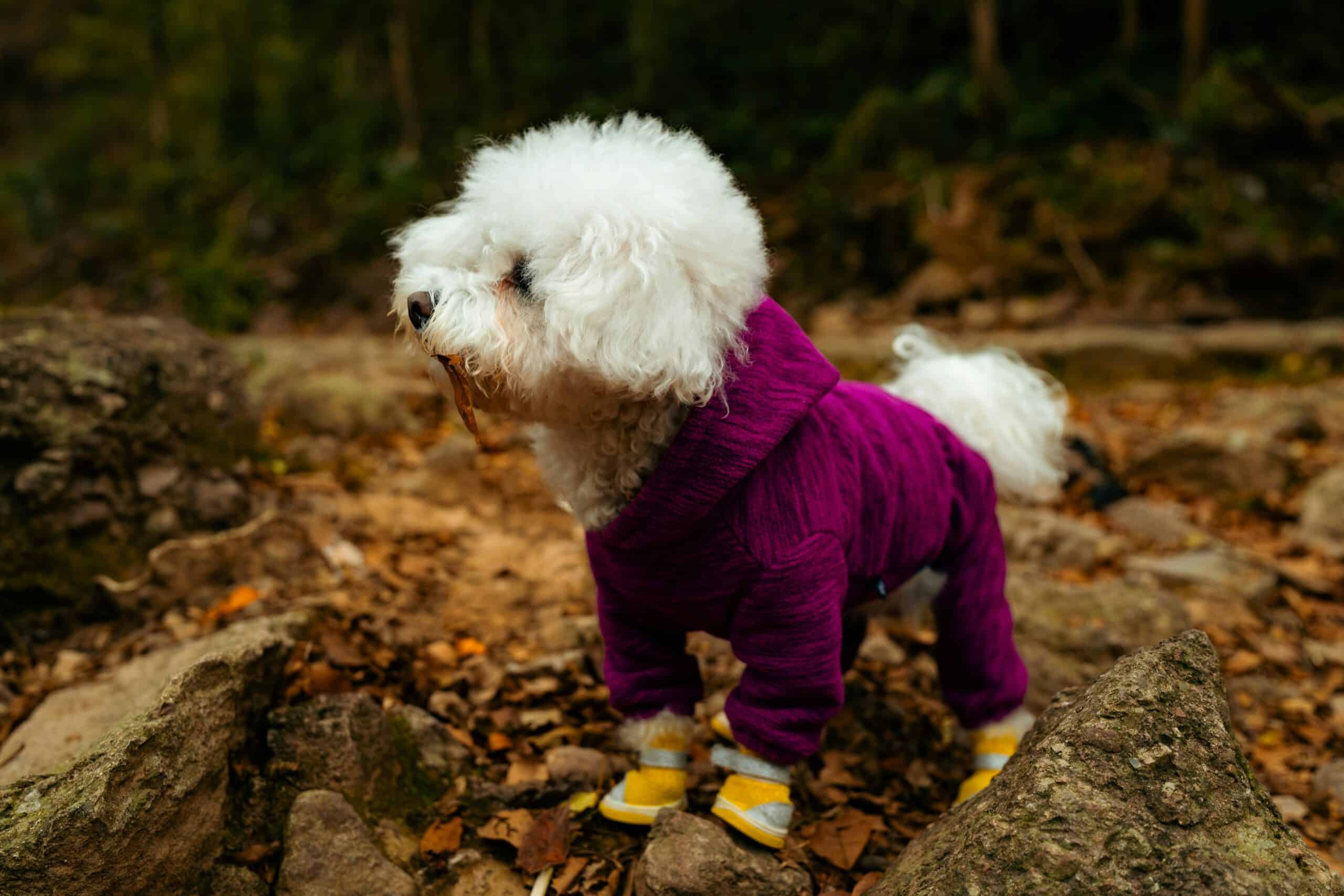
Boots protect paws better in almost every hard condition, so a dog that tolerates footwear should wear boots, and a dog that fights them should get balm instead. The dog boots vs paw balm question is not a contest between two equal products. One is a physical barrier and the other is a conditioning layer.
A boot puts a sole between pad and ground, blocking heat, cold, grit and salt. Balm sits on the pad itself, helping it stay supple and adding a thin buffer. Owners facing summer heat often read up on walking safely in brutal weather first.
Quick Verdict
Boots win on protection, shielding paws from hot asphalt, salted sidewalks and packed snow in a way balm cannot match. Balm wins on tolerance and ease, because nearly every dog accepts it instantly. Pick boots if the dog will wear them, and balm if the dog will not.
Key Takeaways
- Boots are a barrier. Balm is a conditioner with a small buffering effect.
- Only boots block heat from pavement. Balm offers no insulation.
- Balm is the realistic fallback, not an equal alternative.
- Fit decides everything. A loose or twisted boot is worse than bare paws.
- Many owners run both: balm daily, boots for the worst days.
Which Fits Your Situation
| If this is you | Better choice |
|---|---|
| The dog walks calmly in boots after a few sessions | Boots, every time |
| The dog kicks boots off within a minute | Balm, applied before the walk |
| Summer routes cross dark asphalt with no shade | Boots, since balm gives no heat protection |
| Sidewalks get treated heavily with ice melt | Boots first, balm as partial cover |
| Pads look dry, rough or flaky | Balm, a conditioning fix |
| Long winter hikes through deep snow | Boots, balm on rest days |
| Short potty breaks in mild weather | Balm, or nothing |
How We Compared
This comparison sorts the two options by what they physically do, not by how they are marketed. A barrier and a conditioner solve different problems, so the criteria stay separate throughout.
Six questions drive the ranking: heat, salt, tolerance, pad condition, daily effort and deep snow. Tolerance carries real weight, because gear a dog refuses to wear protects nothing.
Dog Boots vs Paw Balm at a Glance
| Criterion | Dog boots | Paw balm |
|---|---|---|
| What it does | Barrier between pad and ground | Conditioning layer on the pad |
| Hot pavement | Strong protection | No real protection |
| Ice melt and salt | Blocks contact directly | Partial buffer only |
| Dry, cracked pads | Little effect on texture | Its core strength |
| Dog acceptance | Often refused at first | Accepted by most dogs |
| Effort per walk | Four boots on, fit checked | Quick rub at the door |
| Deep snow | Handles it well | Wears off fast |
| Common failure | Slipping and twisting | Licked off before it absorbs |
Which Protects Better Against Hot Pavement?
Boots win this decisively. A sole puts real material between skin and a surface that soaked up sun all afternoon. Balm does not insulate at all.
Conditioning oils sit only microns thick. That film cannot stop heat moving from asphalt into a pad.
The practical check costs nothing. Hold the back of a hand flat against the pavement for several seconds. If it is too hot to hold, it is too hot for paws.
Shade, grass and early walks all help. On routes with none of those, booties built for hot ground do what balm cannot.
Check Price on AmazonWhich Protects Better Against Ice Melt and Road Salt?
Boots win again, though balm earns partial credit. A boot keeps salt crystals off the pad and out of the webbing between toes, where irritation usually starts.
Balm coats the pad and blunts some contact. It cannot stop grains lodging between toes, and it wears thin on treated concrete.
Owners can at least fix their own walkway with gentler de-icing products. Public sidewalks stay out of anyone’s hands.
Either way, salt is worth wiping off afterward. That habit matters enough that many owners debate cleaning paws after every outing.
Which Does a Dog Actually Tolerate Wearing?
Balm wins by a wide margin, and this is the honest reason most owners end up there. A dab of balm asks nothing of the dog. Boots ask a lot.
Dogs read the ground through their pads. Covering that feedback feels strange, so many dogs high step, freeze, or shake the boots loose.
Patience indoors fixes some of this, though not all. Some dogs never accept footwear, and forcing the issue helps nobody.
That is why the balm roundup stays relevant even though boots protect more. Protection a dog refuses to wear is worth zero.
Check Price on AmazonWhich Helps With Dry, Cracked Pads?
Balm wins clearly, because dryness is a conditioning problem rather than a barrier problem. Boots cover a pad without changing its texture.
Balm softens rough keratin and helps the pad flex without splitting. Repeated use over weeks beats a single heavy application.
Dry air, hot sand and salted paths all pull moisture from pads. Balm works against that steadily, which is why owners keep using it after boot season.
One caution belongs here. Cracked, bleeding or persistently sore paws are a reason to see a vet, not a balm problem to solve at home.
Which Is Easier to Use on a Walk by Walk Basis?
Balm wins on speed and simplicity. A rub across four pads takes seconds, while four boots need a fit check before the door opens.
Balm still has one recurring failure mode. Applied too close to walk time, it gets licked straight off before it ever absorbs into the pad.
Distraction during absorption is the usual fix. A short training game or a chew buys the minute the balm needs to settle.
Persistent licking is worth understanding, since dogs lick their paws for several reasons. Not all of them involve balm.
Which Suits Deep Snow and Long Winter Walks?
Boots win outright. Deep snow packs into the fur between toes and forms hard ice balls that press on the pad with every step.
A boot stops that packing before it starts. Balm slows it slightly, then wears down past a few blocks.
Contact time matters too. Long winter walks mean sustained exposure, which is where a barrier separates itself from a topical layer.
Owners gearing up for those walks usually pair boots with warm coats for cold days. Both address the same trip differently.
How to Choose Between Them
Start with the dog, not the gear. A dog that walks normally in boots after a week of practice belongs in them.
Fit is the whole problem with boots. A boot that slips off or twists sideways is worse than none, since it bunches under the pad and unbalances the step.
Size each paw separately. Front and rear paws often differ, and one size across the whole dog is a costly assumption.
Acclimation deserves patience. Short indoor sessions with treats, one boot at a time, then two, then four, prevent most failures. Skipping that step is where owners lose the battle.
The Verdict
Boots win protection. They handle hot asphalt, road salt and deep snow better than any topical layer.
Balm wins tolerance, speed and pad condition. It goes on in seconds and keeps pads supple through dry months.
Running both suits many households. Balm goes on most days, boots come out for the worst conditions, and salt gets wiped off regardless of which was used.
Read next for practical follow ups. Sizing and construction get closer attention in the guide to boots built for winter walking, aftercare gets easier with tools that rinse grit off quickly, and full body warmth is covered in the roundup of jackets for cold weather.
Common Misconceptions
Balm acts like a heat shield
It does not. Balm conditions the pad and buffers grit and dryness. Heat still travels straight through it from the pavement.
One boot size fits the whole dog
Paws vary between front and back on the same animal. Measuring each paw beats guessing, since a boot sized wrong twists or falls off mid walk.
A dog that hates boots will never wear them
Many first refusals trace back to skipped acclimation. Slow indoor practice with rewards turns plenty of protesters into calm walkers, though some dogs still refuse.
Boots make paw cleaning unnecessary
Salt and grit still reach leg fur and the edges of the boot. A quick wipe after treated sidewalks stays worthwhile either way.
Dog Boots vs Paw Balm FAQ
Is the dog boots vs paw balm choice really about protection alone?
No, because tolerance decides the outcome for most households even though boots protect more. A dog that refuses boots gets no protection from them at all, which makes balm the practical answer. Protection that stays on the paw beats stronger protection that comes off in the driveway.
Can balm replace boots on hot pavement?
It cannot, since balm carries no insulating property and heat passes straight through it into the pad. Boots or route changes are the only real options on hot days. The hand check on pavement tells owners quickly whether a surface is safe to cross.
Do boots work for road salt in winter?
Yes, and they work better than balm here. A boot keeps crystals off the pad and away from the soft webbing between the toes. Balm blunts contact but wears down over a long walk on treated pavement, so it functions as a partial barrier rather than a full one.
How long before a walk should balm go on?
A few minutes of absorption time helps the layer stay put. Applying it right at the door usually ends with the dog licking most of it off. A short training game or a chew during that window solves the problem for the majority of dogs.
Why do boots keep falling off?
Fit is almost always the cause of it. Boots sized by guess, or sized once for all four paws, rotate and slide during normal movement. Measuring each paw separately and checking the closure before every walk fixes the large majority of these cases.
Can a dog use boots and balm together?
Yes, and plenty of owners do exactly that. Balm keeps pads conditioned through the dry and cold months, while boots come out for hot asphalt, heavy road salt or deep snow. The two address different problems, so pairing them creates no conflict at all.
What if the pads look cracked already?
Balm supports normal dryness, not damage. Cracked, bleeding or persistently sore paws warrant a professional look rather than another layer of product. Protective gear helps prevent future wear, but only once the underlying issue has been properly checked and addressed.
