
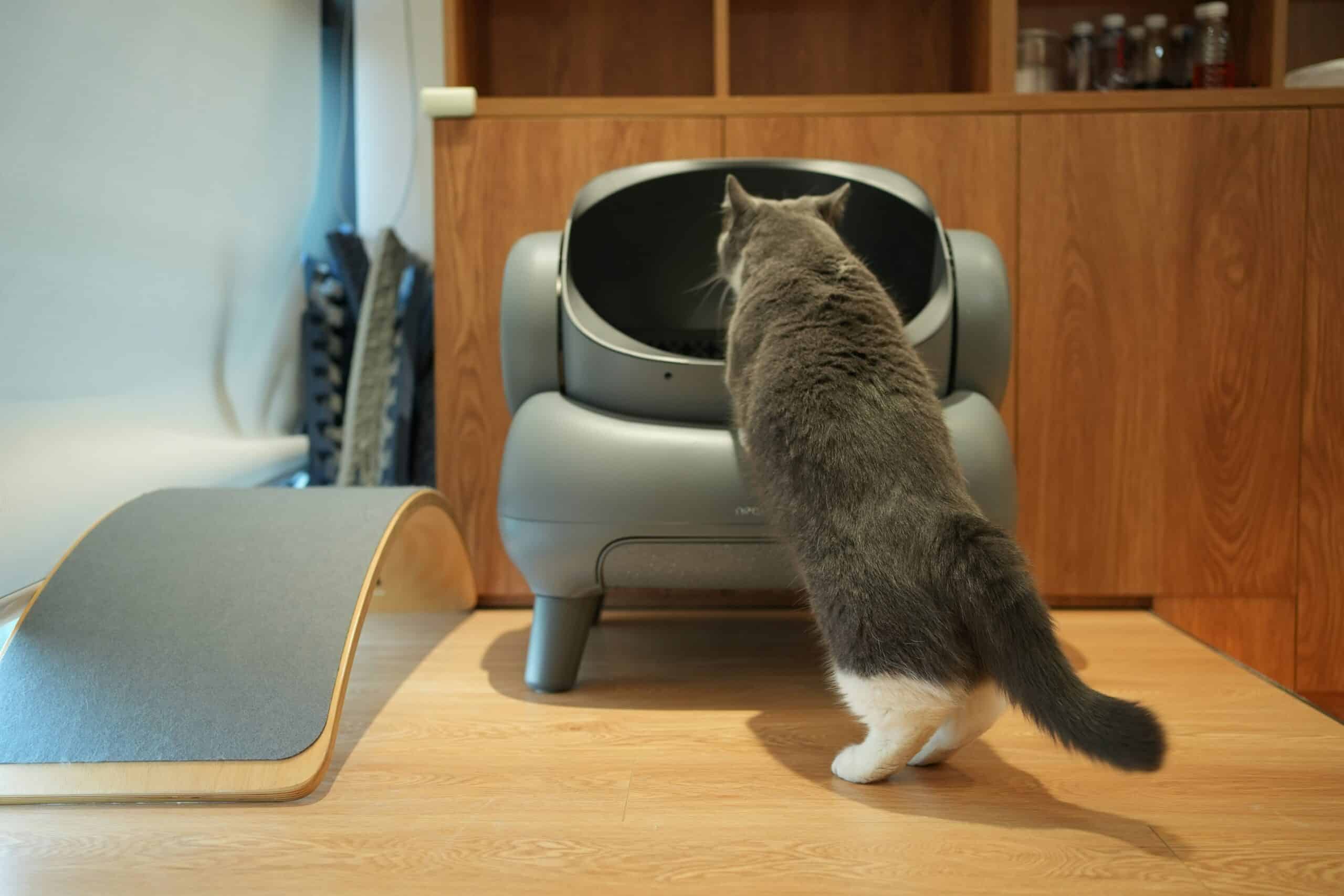
Homes fighting scatter or a box-raiding dog should pick top entry, while senior, large, or anxious cats do better with front entry. The top entry vs front entry litter box choice is about where the cat climbs in, not whether the box has a lid.
These are separate decisions, and owners collapse them constantly. Lid or no lid belongs to the covered versus uncovered debate. Entry style asks a narrower question about the cat’s body and its nerve.
Quick Verdict
Top entry holds scatter in and keeps dogs out, so it suits agile adult cats. Front entry asks far less of a cat’s joints, size, and confidence, so it suits seniors, big cats, kittens, and shy cats. The box a cat uses wins.
Key Takeaways
- Top entry contains scatter better, since the lid wipes the paws.
- Top entry is the strongest option for keeping a dog out.
- Front entry suits seniors, large cats, kittens, and shy cats.
- Multi-cat homes need one box per cat plus one, so mixing styles lets cats pick.
How We Compared
This comparison ranks both entry styles on what an owner can watch at home. Scatter, dog resistance, joint demand, room, nerve, and cleaning effort carry the weight.
No brand claims appear below, and no measurement is a threshold. Anyone starting from scratch should read this guide to picking the right litter box.
Top Entry vs Front Entry at a Glance
| Criterion | Top entry | Front entry |
|---|---|---|
| Litter scatter | Strong, lid catches grit | Moderate, paws hit floor |
| Dog resistance | Strong, opening out of reach | Weak unless hidden |
| Stiff joints | Demanding, every visit a climb | Easy, low entry exists |
| Large cats | Tight, less turning space | Roomier inside |
| Nervous cats | Lower, exit out of sight | Higher, exit stays visible |
| Scooping | Harder, a deep reach | Easier, hood lifts off |
Top Entry Litter Boxes, Pros and Cons
- Pro: The lid wipes litter off the paws on exit.
- Pro: Dogs cannot reach the contents without effort.
- Pro: Tall walls stop spraying and over-the-edge digging.
- Con: Every visit costs the cat a climb and a drop.
- Con: Turning room inside is tighter than it looks.
- Con: The cat cannot see the room, which unsettles timid cats.
Best for: agile adult cats, dog-owning homes, and owners losing the tracking battle.
Should skip: kittens, seniors, arthritic cats, large cats, and hesitant cats.
Check Price on AmazonFront Entry Litter Boxes, Pros and Cons
- Pro: Getting in costs the cat almost nothing.
- Pro: The cat keeps a clear line of sight to an exit.
- Pro: Scooping means reaching in sideways, not down.
- Pro: Low entry versions exist for stiff, aging cats.
- Con: Litter leaves with the cat and lands nearby.
- Con: A determined dog helps itself unless the box is blocked.
Best for: seniors, kittens, large cats, shy cats, and easy cleaning.
Should skip: homes where a dog raids the box and no barrier exists.
Check Price on AmazonWhich Contains Litter Scatter Better?
Top entry wins this outright. A cat leaving the box hauls itself up and out through the lid opening. That surface brushes granules off the paws before they reach the floor.
Front entry sends the cat straight out at floor level instead. Anything still clinging to the paws drops a step or two later, usually in a trail across the room.
Neither style ends tracking completely. A mat under the exit still earns its keep with both. Top entry simply starts from a cleaner baseline.
Which Keeps Dogs Out of the Box?
Top entry wins again, and this is its strongest practical argument. Dogs raid litter boxes because the contents sit at nose height and cost nothing to reach. A top opening turns that easy habit into an awkward climb.
Front entry leaves that path open at floor level. A flap slows a small dog down, but a bigger one gets past without much thought.
There is a second route to the same result. Enclosed cabinet style housing hides a front entry box behind a cat-sized door.
Which Suits a Senior Cat or Stiff Joints?
Front entry wins, and it is not close. A top entry box asks for a jump up and a controlled drop down, several times a day. An aging cat that finds this hard does not complain, it stops using the box.
Front entry removes the climb entirely. Some designs cut the lip down further, and these low entry boxes for older cats exist for exactly this reason.
Stiffness creeps in slowly, so the change is easy to miss. A cat perching on the rim is worth noticing.
Which Works Better for a Large Cat?
Front entry wins here. Top entry boxes force a vertical climb, and a heavy cat pays that cost on every visit. The interior is usually the bigger problem though.
Top entry designs often trade internal turning room for a compact footprint. A large cat needs space to circle, dig, and settle. Without it, the cat ends up hanging over the edge.
Front entry boxes tend to give more usable floor area for the same outside size. For a big cat, usable floor area beats height every time.
Which Is Easier for a Nervous Cat to Use?
Front entry wins clearly. A cat is at its most vulnerable in the litter box, so it wants to see what is coming. Front entry keeps the room in view.
A top entry box hides all of that. From inside, the cat sees walls and a hole above its head. A cat that cannot spot an exit route is more reluctant to enter.
Confident cats shrug this off. Shy cats, new arrivals, and cats bullied at home do not, so a visible exit matters far more for them.
Which Is Easier to Scoop and Clean?
Front entry wins for most owners. A top opening means reaching down into a deeper box at an awkward angle, with the lid against the wrist. Corners get missed because they are hard to see.
Front entry boxes open right up. Lift the hood off, or simply scoop through the doorway, and the whole litter surface stays visible while working.
Either way, the right tool helps. A sturdy pick from a set of scoops and sifters cuts the job down more than the box style does.
Which Fits Your Situation
| If this is you | Better choice |
|---|---|
| Sweeping litter daily | Top entry |
| A dog raids the box | Top entry |
| An older cat perches on the rim | Front entry, low lip |
| A large cat overhangs the edge | Front entry, roomier |
| A kitten learning the routine | Front entry, low lip |
| Cats of mixed ages | Both, side by side |
How to Choose Between Them
Start from the cat, not the owner. A box that suits the human but gets avoided is the worse problem. Sweeping annoys, a cat on the rug is a crisis.
Never swap styles abruptly. Set the new box beside the old one, keep both filled, and let the cat pick.
Placement outranks entry style. A cornered box gets avoided whichever way the cat enters, so leave escape routes on two sides. Small rooms have answers of their own, in these compact small-home setups.
Litter depth changes how both styles feel, and high walls tempt owners to overfill a top entry box. Texture counts too, so settle the clumping versus non-clumping question.
The Verdict
Top entry wins on containment and on keeping dogs out. It is the pick for an agile cat in a dog-owning home.
Front entry wins on joint comfort, room, nerve, and cleaning speed, so it is the safer default.
Recommended Reading
Multi-cat homes can read about boxes built for multi-cat households before buying in bulk. Smell, not mess, is the real complaint for many, and litter aimed at odor control helps. Anyone weighing self-cleaning gear can compare automatic and manual boxes too.
Common Misconceptions
A top entry box is just a covered box with the door moved
These are different decisions. A lid controls odor and privacy, the entry point controls access. A front entry box can be hooded and the cat still walks in.
Kittens can start on a top entry box and grow into it
They should not. A kitten needs an obvious entry while learning where to go. A hard climb teaches the wrong habit.
A cat refusing the box is being stubborn
Refusal is information. Access, depth, cleanliness, or placement is normally behind it. Punishment makes it worse.
Top Entry vs Front Entry Litter Box FAQ
Is a top entry vs front entry litter box the same choice as covered vs uncovered?
No, and owners run these two questions together constantly. Covered versus uncovered asks whether the box has a lid over it. Top entry versus front entry asks where the opening sits, which is a separate matter worth answering on its own.
Which style keeps litter off the floor better?
Top entry, by a clear margin. The cat climbs out through the lid, and that surface knocks granules off the paws on the way. Front entry lets the cat step straight onto the floor, so a mat underneath helps a lot.
Are top entry boxes bad for older cats?
They are often a poor fit for an older body. Climbing up and dropping down asks a lot of stiff hips and knees, several times a day. An older cat rarely protests about it, so it quietly starts going somewhere easier instead.
Will a top entry box really keep the dog out?
Usually, and this is the style’s best argument. The opening sits above floor level behind a lid, so an easy raid becomes an awkward climb. Athletic dogs still manage sometimes, in which case enclosed furniture around a front entry box works.
Can a large cat use a top entry box?
Some can, but plenty find it cramped and give up. The climb is one issue and the interior is another, since these boxes often trade turning room for a small footprint. A big cat needs room to circle and dig.
How should the switch between styles be handled?
Slowly, and never by taking the old box away first. Put both boxes out together, keep both of them clean and filled, and let the cat choose over a week or two. Once one is clearly preferred, the other can go.
Should a multi-cat home pick one style for everyone?
No, and there is no rule saying the boxes have to match. One box per cat plus one is the guideline, so mixing styles lets each cat use what suits it. If a cat suddenly changes its bathroom habits, see a vet, since that can signal a medical problem.
