
The mistake I made was buying a lot of toys. The mistake I did not expect to make was going too cheap on a water bowl, which is the one thing in this apartment that runs all day, every day, without being touched. Both of those are the same error in different directions: I spent without knowing what she would use, and I was wrong about which things mattered. That is what gear mistakes actually look like.
Key Takeaways
- Buying wide is worse than buying wrong. Volume is the expensive part.
- Under-investing in daily items is as costly as overspending on rare ones.
- Buying before the dog arrives is guessing about someone you have not met.
- Items find uses you did not plan. That is not a failure.
- Watching for a few weeks answers most of this for free.
Buying Wide Instead of Buying Well
The most expensive mistake and the easiest to make, because it feels like being thorough.
I bought a lot of toys early. Most of them sit there. An abundance of toys is useless, and the reason is that dogs have narrow preferences and buying widely is a bad way to discover them. Eight toys is not eight chances at the one she likes. It is one chance and seven objects.
What works instead is buying one, watching, and buying more of what lands. That is slower, cheaper, and it produces an answer rather than a drawer.
In an apartment the volume costs twice, since everything you own has to live somewhere. Toys for small breeds is worth reading before doing what I did.
Going Too Cheap on the Thing You Use Constantly
The mistake that runs the other way, and the one I would fix first.
My gravity water bowl is the item I would have invested more in. It refills itself from a reservoir, it is in use every hour she is awake, and it is the sort of purchase where being careful with money achieved nothing except a slightly worse version of something I depend on daily.
That is the inverse of the toy error and it comes from the same failure to think about frequency. I bought widely where I should have bought narrowly, and I economised on the thing that never stops working.
The test that would have caught both: how many times a week will this be in use? Whether gravity water bowls are good for dogs covers the category, and choosing a dog bowl covers what better actually means here.
Buying Before You Know the Dog
Structurally the root of both mistakes above.
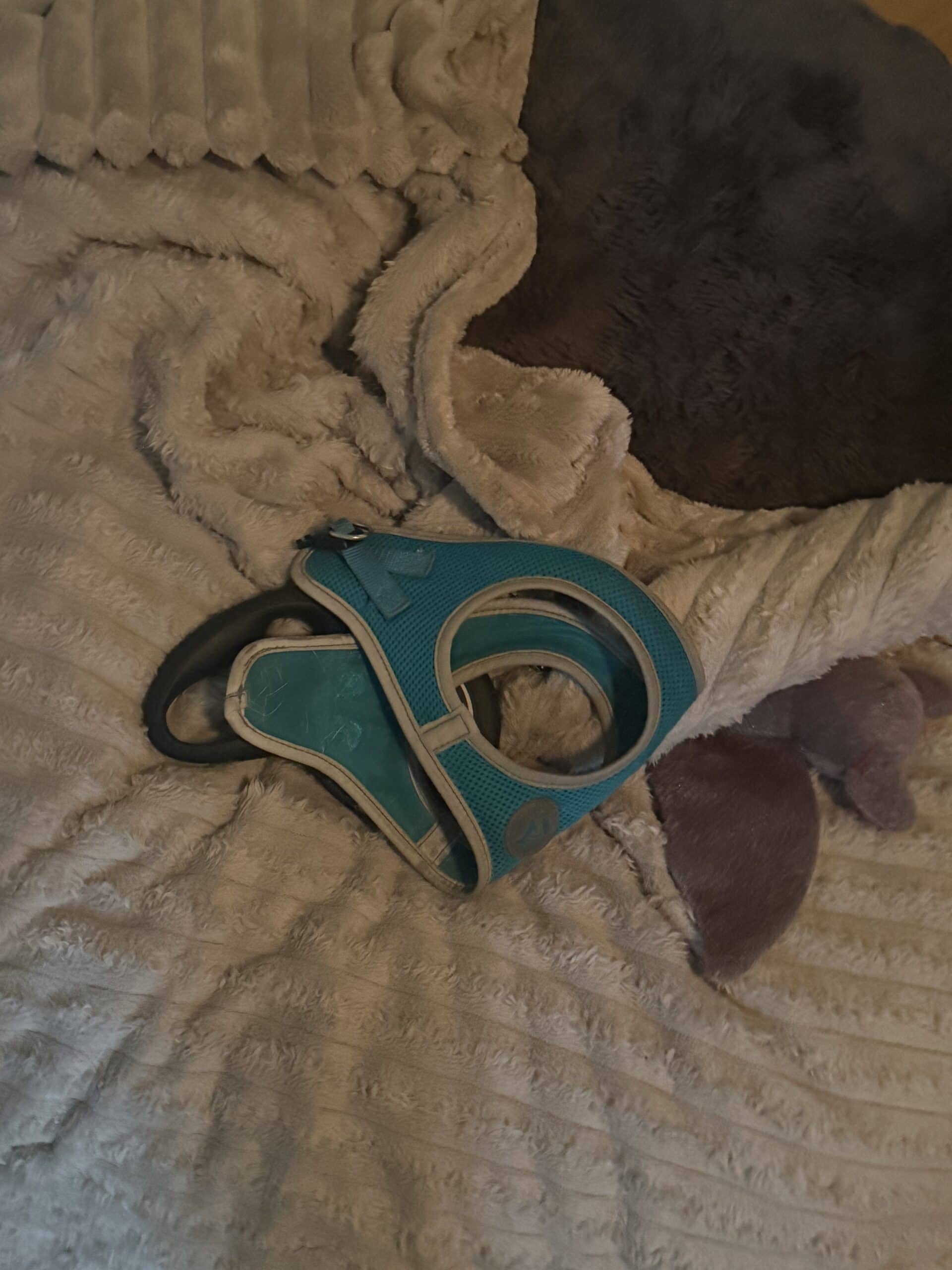
Before she came home I bought a leash, a harness, a bed, and a kennel. Two of those were unavoidable, because you cannot collect a dog without a leash and a harness. The other two were guesses.
The bed guess was right and turned out to be the best purchase I have made for her. The kennel guess was wrong in an interesting way, which is the next section. Neither outcome was knowable in advance, which is the point.
Preparing feels responsible, and buying is how preparation expresses itself. But everything bought before the dog exists is a bet on an animal you have not met, and the odds are worse than the confidence. First dog essentials covers the genuinely short list.
Assuming an Item Will Do the Job You Bought It For
The kennel, and it is a more useful story than a straightforward mistake would be.
I bought it expecting it to be where she settles. It is not. What it is now is how she travels, which is a real job and not the one on the box. Her safe spot ended up being a bed in a corner instead.
So the kennel was not a waste. It found a use I did not plan, which is different from being wrong and different from being right. That is worth naming because the standard advice treats gear as either correct or a mistake, and a lot of it is neither.
The lesson is not to skip the crate. It is to hold your expectation loosely and let the dog assign the job. Crate vs dog bed covers the choice, and choosing a crate covers sizing if travel turns out to be the answer for you too.
Buying Duplicates You Do Not Need
Quieter, and it compounds in a small place.
A spare leash, a second bed, a backup bowl. Each purchase is individually defensible and collectively it is a cupboard. The scenario they were bought for often does not arrive, and if it does, buying then would have been fine.
The exception is genuine: a second set of bowls when another dog visits is worth owning because the problem is real and recurring. The distinction is whether the duplicate serves a situation that actually happens.
In an apartment, storage is a constraint with no slack, which makes this less forgiving than it would be in a house. Whether an apartment is too small covers that constraint.
Mistaking Price for Fit
Where money genuinely does not solve the problem.
A harness that does not fit is not improved by costing more. Fit is a measuring job, and a well-fitted inexpensive harness beats an expensive one sized wrong, every time, and the failure mode of a bad fit is a dog reversing out of it rather than mild discomfort.
The same is true of beds in a different way. A large expensive bed a dog does not choose to lie in has failed at the only thing it was for.
Which is the through-line of this whole page: the specification that matters is usually whether the thing suits your dog and your day, and price is a poor proxy for that. Choosing a harness for small dogs covers fit properly.
The Rule That Prevents Most of This
One question, asked before buying anything.
How often will this be in use? Every day, several times a day, is a case for spending properly, and that is where my water bowl went wrong. Rarely or never is a case for not buying it yet, and that is where the toys went wrong.
The second rule is to wait. Preferences are narrow, unpredictable, and obvious within a few weeks of the dog arriving. Almost every mistake on this page is a purchase made before that information existed, and the information is free.
Choosing dog gear covers the framework, and gear worth spending on covers where the money should go once you know.
Recommended Reading
See choosing dog gear, first dog essentials, and crate vs dog bed.
Dog Gear Mistakes FAQ
What is the most common dog gear mistake?
Buying wide instead of buying well. I bought a lot of toys early and most sit there. Dogs have narrow preferences, so eight toys is one chance and seven objects rather than eight chances. Buy one, watch, buy more of what lands.
What would you spend more on?
My gravity water bowl. It is in use every hour she is awake and I economised on it, which achieved nothing except a slightly worse version of something I depend on daily. That is the same error as the toys, running the other direction.
Should I buy gear before the dog arrives?
Only what you cannot collect them without: a leash and a harness. Everything else is a bet on an animal you have not met. Preparing feels responsible and buying is how it expresses itself, but the odds are worse than the confidence.
Was buying a crate a mistake?
Not exactly. I expected it to be where she settles and it is not; she uses it for travel now, and her safe spot became a bed in a corner. It found a use I did not plan, which is neither right nor wrong. Hold the expectation loosely.
Are spare items worth buying?
Only if the scenario actually happens. A second set of bowls for a visiting dog is a real recurring need. A backup leash for a situation that never arrives is a cupboard, and in an apartment storage has no slack.
Does spending more get a better harness?
Not if it does not fit. Fit is a measuring job, and a well-fitted inexpensive harness beats an expensive one sized wrong. The failure mode of a bad fit is a dog reversing out of it, which is not a comfort issue.
How do I avoid wasting money?
Ask how often the thing will be in use. Daily is a case for spending properly. Rarely is a case for not buying it yet. That single question would have caught both of my mistakes, in opposite directions.
How long should I wait before buying?
A few weeks. Preferences are narrow, unpredictable, and obvious once the dog is there. Almost every mistake here is a purchase made before that information existed, and the information costs nothing but patience.
