
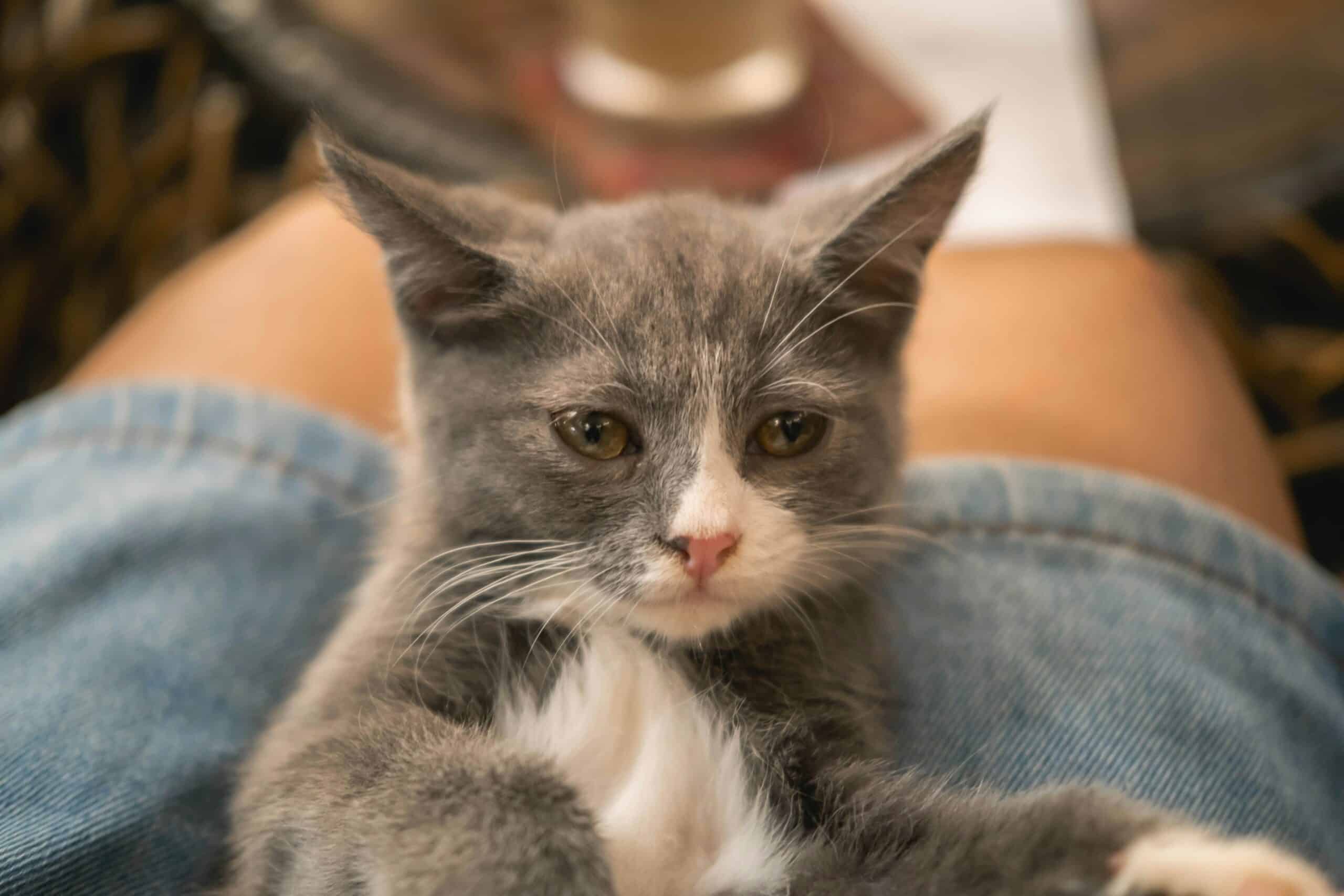
Because your chest is the warmest, most stable, most reassuring place in the room, and the rise and fall plus the heartbeat underneath make it more so. A cat sleeping on your chest is choosing heat, a familiar rhythm, and a safe vantage point, which are the three things that decide where any cat sleeps.
Where a cat settles is a deliberate decision rather than a random one. Our guide to why cats sleep so much covers how much of the day that decision governs.
Quick Answer
Body heat is the main draw, since cats prefer a warmer resting temperature than people do. Your breathing and heartbeat replicate the rhythm of a litter, your chest is a defensible high spot, and your scent is concentrated there. Bonded cats also sleep near companions by instinct.
Key Takeaways
- Cats seek resting temperatures warmer than most rooms.
- Breathing and heartbeat echo the security of a litter.
- Elevation and a clear view matter to a sleeping cat.
- Your scent is strongest on your chest and neck.
- Sleeping close is a trust signal, since sleep is when cats are vulnerable.
- A heated bed is the usual substitute if you want your chest back.
| Reason | What is driving it |
|---|---|
| Warmth | Preferred rest temperature above room temperature |
| Rhythm | Breathing and heartbeat, like a litter |
| Elevation | Height gives a view and an escape route |
| Scent | Your smell is concentrated at chest and neck |
| Bonding | Cats sleep touching companions they trust |
| Routine | It worked before, so it is now the spot |
Heat Is the Biggest Single Factor
Cats are comfortable resting at temperatures noticeably above what people set a thermostat to. A room that feels fine to you is cooler than a cat’s preference.
That explains the whole pattern of cat sleeping spots: sunbeams, laundry, the top of a warm appliance, a lap, a chest.
Your torso radiates steadily and it does not cool the way a sunbeam does when the sun moves. It is the most reliable heat source in the house overnight.
Our roundup of heated cat beds covers the direct substitute, and our roundup of cat blankets and throws covers the low-tech version.
The Rhythm Underneath
Kittens sleep piled against their mother and littermates, with breathing and heartbeats all around them. That is the sensory environment of safety during the period when safety is being learned.
An adult cat lying on a human chest gets a close approximation. Slow, regular movement and an audible heartbeat are the same signals in a different package.
It is also part of why purring often accompanies it. Purring and kneading both belong to the early-life comfort set. Our guide to why cats knead covers the companion behavior, and our guide to why cats purr covers the sound.
None of that means the cat is distressed or regressed. These are normal adult behaviors that happen to originate early.
Elevation and the Escape Route
Cats sleep where they can see and where they can leave. A chest on a bed or sofa is raised off the floor with sightlines across the room.
It is also a spot with only one approach. Nothing can come up behind a cat lying on you, which removes a category of thing to monitor.
That is the same logic behind cats choosing shelves, the top of a wardrobe, and window perches. Our roundup of cat window perches covers the daytime version of the preference.
If your cat only sleeps on you and never anywhere elevated, that is worth noticing. It can mean there is no good alternative in the house.
Why Some Cats Never Do It
Plenty of well-bonded cats sleep near a person without ever lying on them. Preference for stability is usually the reason, since a chest moves and a mattress does not.
Size plays a part too. A larger cat gets less benefit from a narrow surface and more from stretching out beside you.
Early handling matters as well. Cats accustomed to close contact as kittens are likelier to seek it as adults, and a cat that came to people later often keeps a small distance without that meaning anything is wrong.
What It Says About Trust
Sleep is when a cat is least able to react, so where a cat chooses to sleep is a genuine statement about what it considers safe.
Choosing a person, and choosing to be in contact with them, places you inside the small category of things that do not need watching.
Scent reinforces that. Cats identify group members by smell, and your chest and neck carry the strongest concentration of yours.
Our guide to why cats rub against you covers how that scent relationship gets maintained while awake.
If You Want to Sleep Instead
- Put a heated bed where you want the cat. Heat is the main draw, so replace it rather than removing it.
- Place it close by at first. Beside your pillow beats across the room, then move it gradually.
- Add something that smells like you. A worn shirt on the bed carries the scent that makes your chest appealing.
- Give it height. A raised bed or a perch competes better than a floor-level one.
- Move the cat gently and consistently. Lifting rather than pushing, every time, without scolding.
- Feed and play before bed. A cat that has hunted and eaten settles more readily on its own.
- Expect weeks rather than nights. A habit that works for the cat takes time to relocate.
Our roundup of cat beds for indoor cats covers the options, and our guide to cats who wake you at 4am covers the other half of the sleep problem.
When the Behavior Is Worth a Closer Look
A sudden change is the thing to pay attention to. A cat that never slept on you and now will not leave your chest has changed something, and cats seek warmth and contact more when they feel unwell.
Watch for it alongside other changes. Hiding, eating less, reduced grooming, or a shift in litter box habits alongside new clinginess makes a vet visit sensible.
The reverse matters too. A cat that always slept on you and stops is also reporting something.
For a healthy cat with a long-standing habit, there is nothing to fix. Our guide to caring for an aging cat covers the life stage where heat-seeking and clinginess both increase for ordinary reasons.
Recommended Reading
Frequently Asked Questions
Why does my cat sleep on my chest?
Mainly for warmth, since cats prefer resting temperatures above what people keep a room at. Your breathing and heartbeat also echo the rhythm of a litter, the position is elevated with a clear view, and your scent is concentrated there.
Does it mean my cat trusts me?
Yes, in a meaningful way. Sleep is when a cat is least able to react, so choosing to sleep in contact with you places you among the things it does not need to monitor. Cats do not sleep on things they are wary of.
Why the chest specifically and not my legs?
The chest offers heat, movement, and sound together, plus elevation and the strongest concentration of your scent. Legs give warmth alone. Cats that prefer legs are usually choosing more stability and less disturbance.
Is it safe to let a cat sleep on my chest?
For most adults, yes. Take care if you have breathing difficulties or a cat heavy enough to be uncomfortable, and never let a cat sleep on an infant’s chest. Consider allergies affecting anyone sharing the bed.
Why does my cat purr and knead first?
Both behaviors belong to the same early-life comfort set as sleeping against a warm body. They signal contentment rather than distress, and adult cats keep them without anything being wrong.
How do I get my cat to sleep somewhere else?
Replace the heat rather than removing it. A heated bed placed close by, with something that smells like you on it, competes far better than an unheated bed across the room. Move it gradually and expect weeks.
My cat suddenly started doing this. Why?
Could be a colder season, a change in the household, or a change in how the cat feels. Cats seek warmth and contact more when unwell, so new clinginess alongside hiding, reduced appetite, or less grooming is worth a vet visit.
When should I see a vet about it?
If the behavior is new and accompanied by hiding, appetite change, reduced grooming, or a shift in litter box habits. Also if a cat that always slept on you suddenly stops, since that is equally a change worth investigating.
