
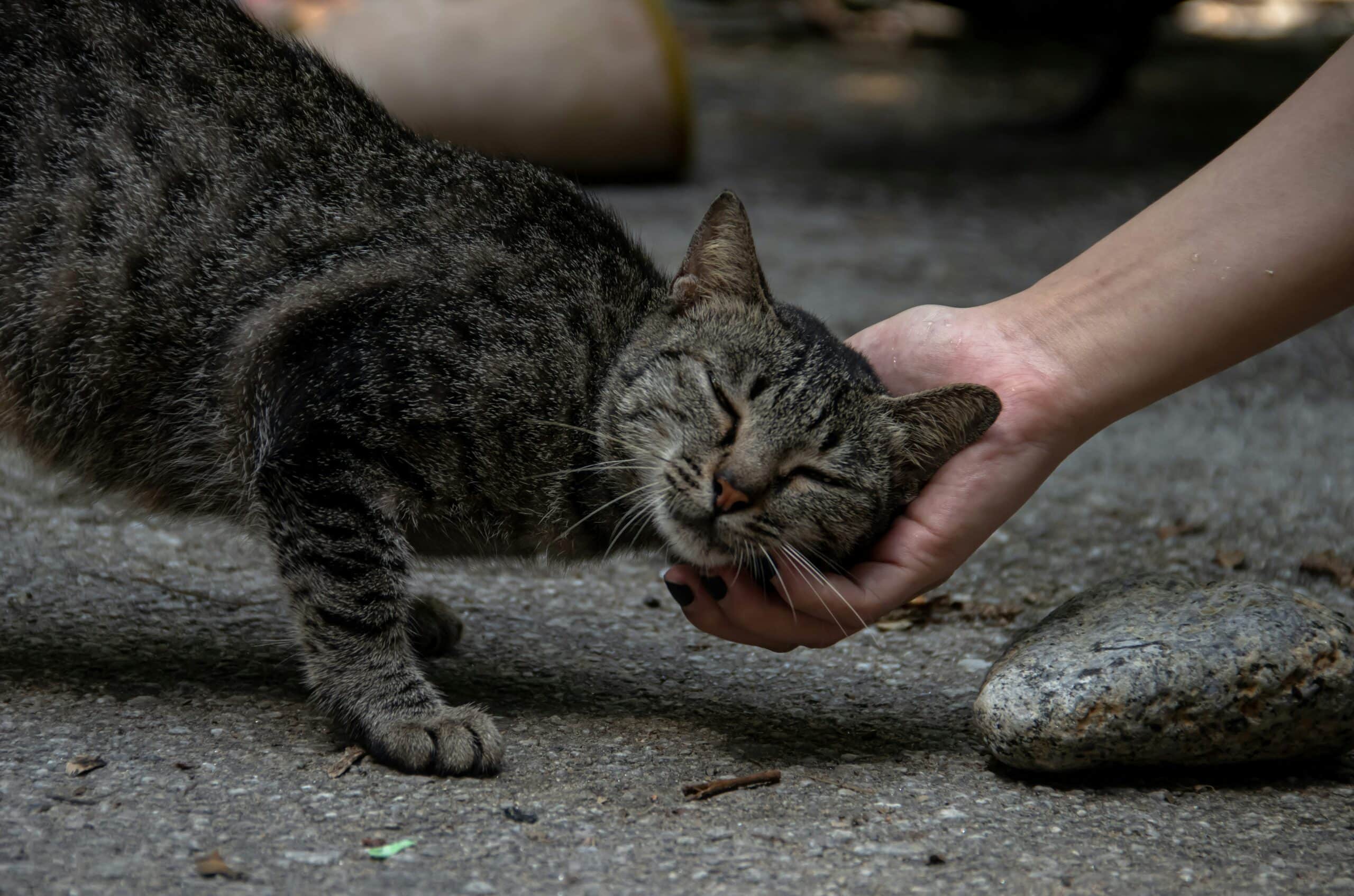
Because a soft bite that does not break skin is usually communication rather than aggression, and it most often means either affection or that the petting has gone on long enough. When your cat bites you gently, the two explanations that cover almost every case are social nibbling between bonded cats and the overstimulation signal that arrives at the end of a long stroking session.
The behavior travels with grooming. Our guide to why cats knead covers another comfort behavior from the same set.
Quick Answer
A gentle bite with no pressure is a love bite or a stop signal. Cats nibble each other during grooming, and they nip when petting tips into too much. Read the tail and ears, stop the petting, and the bite usually does not escalate.
Key Takeaways
- A soft bite that does not break skin is communication, not attack.
- Overstimulation is the most common trigger during petting.
- Grooming nibbles are normal between bonded cats.
- The warning signs come before the bite, not with it.
- Pulling away fast makes it worse; going still works better.
- Any bite that breaks skin needs wound care, regardless of intent.
| Context | What it usually means | What to do |
|---|---|---|
| During grooming or licking | Social nibbling | Allow it, or redirect |
| End of a long petting session | Overstimulation | Stop petting, stay still |
| Cat initiates, then bites | Play invitation | Offer a toy instead of hands |
| You touched belly or tail base | Sensitive area | Stick to head and cheeks |
| Bite while being held | Wants down | Put the cat down |
| New biting, harder than usual | Possible pain | See a vet |
The Overstimulation Explanation
Repetitive stroking is pleasant and then it is not. Cats have a threshold where continued contact flips from comfortable to irritating, and that threshold is lower than most people expect.
It is a genuine physical response rather than a mood. Static sensitivity builds along the back, and the cat reaches a point where the input has to stop.
The bite is the message. From the cat’s side it is polite, because a cat that actually wanted to hurt you would use its claws and its full jaw.
Ending sessions early is the fix. Short and frequent beats long and pushed past the limit, and the cat will usually come back for more.
Reading the Warning Signs
Tail movement
A tail that starts flicking or thumping is the clearest early signal. A relaxed cat’s tail is still or slowly curling.
Skin rippling
A twitch or ripple running along the back during petting means the threshold is close.
Ear position
Ears rotating sideways or flattening slightly is a withdrawal of consent. Forward ears mean the cat is still engaged.
Body tension
A cat that was loose and goes firm under your hand has changed its mind. Our guide to reading cat body language covers the whole vocabulary.
Why Grooming Nibbles Are Different
Cats that groom each other nibble as part of it. Small bites work through fur to reach skin, and they are a normal component of allogrooming rather than an interruption of it.
When a cat licks your hand and then nibbles, that can be the grooming sequence rather than the stop signal. The difference is usually in the surrounding behavior.
A grooming nibble comes with continued licking, a relaxed body, and often purring. A stop-signal bite comes after tail flicking and tends to end the interaction.
Our guide to why cats rub against you covers the scent and bonding behaviors that sit alongside it.
Play Biting and Why Hands Are a Bad Toy
Kittens learn bite control by playing with littermates who bite back. A kitten raised without that feedback, or one taught that hands are prey, grows into a cat that uses teeth on people.
Hands invite it. Wiggling fingers move like prey, and a cat responding to that is doing exactly what the movement asked for.
The correction is equipment rather than discipline. Put a toy between your hand and the cat every time, so hunting behavior lands on something that is supposed to be bitten.
Our roundup of cat wand toys covers keeping distance between teeth and fingers, and our roundup of interactive toys for indoor cats covers the unsupervised version.
Where You Pet Changes Everything
Cats tolerate contact very differently depending on the location. Head, cheeks, and under the chin are where scent glands sit and where cats groom each other, so those areas are usually welcome for a long time.
The back gets less tolerance the further down you go. By the base of the tail, many cats are at their limit within a few strokes.
The belly is the least tolerated of all. A cat rolling over is often displaying trust rather than requesting a belly rub, and taking it as an invitation is a common route to a bite.
Adjusting where you pet solves more biting than any correction does, because it removes the trigger rather than punishing the response.
Responding in the Moment
- Go still rather than pulling back. Fast withdrawal triggers the grab reflex and turns a nibble into a puncture.
- Stop the petting immediately. The bite asked for that; giving it removes the reason to escalate.
- Do not punish. Scolding or tapping damages trust and does not teach bite control.
- Redirect to a toy. Especially if the bite came from play arousal rather than petting.
- End the session for a while. Coming back later resets the threshold.
- Adjust where you pet. Head, cheeks, and under the chin are usually tolerated far longer than the back, belly, and tail base.
Our guide to mentally stimulating a cat covers giving that energy a daily outlet.
When a Gentle Bite Is Not the Whole Story
New biting in a cat that did not bite before is worth taking seriously. Pain makes cats defensive about being touched, and biting during petting can be the first sign of something sore.
Biting concentrated on one area of the body points the same direction. A cat that tolerates head scratches and bites when you reach the hips may be telling you the hips hurt.
Escalation matters too. Bites getting harder, more frequent, or arriving with less warning is a change rather than a quirk.
Any of those warrants a veterinary visit. And any bite that breaks the skin needs cleaning and a look from a clinician for you, because cat bites carry real infection risk. Our guide to reducing vet visit stress covers making that trip easier, and our roundup of cat carriers for vet visits covers the equipment.
Recommended Reading
Frequently Asked Questions
Why does my cat bite me gently?
Usually either social nibbling, which cats do to each other during grooming, or overstimulation, where petting has gone past what the cat wanted. A soft bite that does not break skin is communication rather than aggression.
Are love bites real?
The behavior is real, even if the label is ours. Cats nibble bonded companions during grooming, and a soft bite delivered in a relaxed, purring state is that behavior rather than a warning.
How do I tell affection from a warning?
By what came before it. A grooming nibble arrives with licking, a loose body, and often purring. A stop signal follows tail flicking, rippling skin along the back, or ears rotating sideways, and it ends the interaction.
Why does my cat bite when I pet them too long?
Repetitive stroking builds sensitivity until continued contact becomes unpleasant. The threshold is lower than most people expect and varies by cat. Short sessions ended early avoid it entirely.
Should I pull my hand away?
No. Sudden movement looks like fleeing prey and invites a grab with claws. Going still and stopping the petting removes the reason for the bite and usually ends it there.
How do I stop play biting?
Take your hands out of the game. Use a wand toy or something with length so hunting behavior lands on an object rather than fingers. Punishment does not teach bite control and costs you trust.
Do cat bites need treatment?
Any bite that breaks the skin should be washed thoroughly and looked at by a clinician, even a small one from a gentle cat. Cat bites are narrow and deep, which makes infection a real risk.
When should I see a vet about biting?
If biting is new, getting harder, arriving with less warning, or concentrated when you touch one area of the body. Pain often shows up first as defensiveness about being handled, so a change in biting is worth a check.
