
Feeding guidelines are printed in cups and grams, and most people own neither a scale in the kitchen they feed from nor much patience for weighing twice a day. What they do instead is eyeball it, which works considerably better than the guidance implies provided one thing is true: you do it the same way every time.
Consistency is what makes eyeballing viable. A portion that is slightly generous every single day is easy to correct once you see the effect on the dog. A portion that varies wildly gives you nothing to adjust from. Our note on how much a small dog should eat covers the quantity question.
A Quick Note
This is general information about feeding routines, not veterinary advice. Portion size depends on age, weight, activity, neutering status, and any health condition, and a vet is the right source for a specific dog. Weight changing in either direction is a reason to check in rather than to adjust further on your own.
Why the Printed Guidance Is a Starting Point
Feeding charts are built around averages for a weight band, and individual dogs vary considerably in how much they actually need. Two dogs of the same weight can differ substantially depending on activity and metabolism.
That means the number on the bag is where you begin rather than where you land. The dog tells you the rest over the following weeks, through body condition rather than through the chart.
This is also why precision matters less than people assume. Measuring to the gram against a figure that was an approximation to begin with is precision applied to the wrong step.
Use One Vessel Every Time
The single most useful habit is feeding with the same scoop, cup, or container at every meal. Once the vessel is fixed, the portion is repeatable even if you never know what it weighs.
A mug, a yogurt pot, or the scoop that came with the food all work equally well. What matters is that it is the same one every time, filled the same way, rather than what the vessel happens to be.
Filling matters too. Level, heaped, and loosely tipped are meaningfully different amounts from the same vessel, so pick one and stay with it. Our roundup of dog food storage containers covers the scoops that come with them.
Calibrate Once
If you can borrow a kitchen scale for five minutes, weigh what your usual vessel actually holds when filled your usual way. Write it down and you never need the scale again.
That one measurement converts your eyeballing into a known quantity, which matters if a vet asks how much you feed or if you switch foods and need to compare.
Different foods also have different densities, so a cup of one kibble is not a cup of another. Recalibrating after a food change takes the same five minutes.
How I Do It
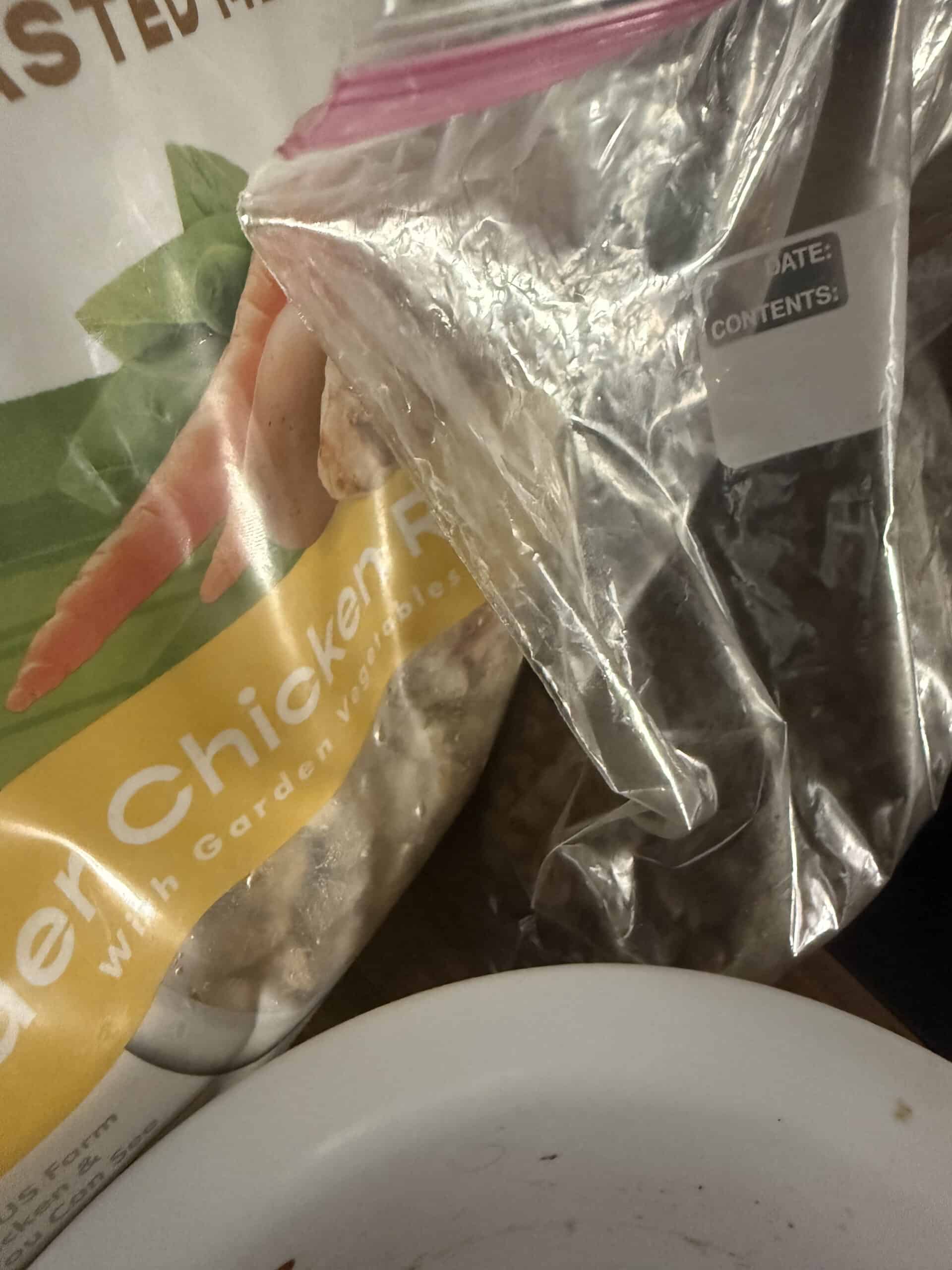
Mine gets fed twice a day, breakfast and dinner, and the food is Freshpet mixed with dry kibble, roughly two thirds fresh to one third dry. I eyeball the portions rather than measuring them.
Eyeballing carefully is the part I would stress. It is not casual, it is the same amount arranged the same way each time, and the mix ratio stays consistent because I put them in the same order and to roughly the same level.
She is a Jack Russell and Chihuahua mix at around twenty-five pounds, and the routine has been stable for a long time. What tells me it works is her rather than a number, which is the way round it should be.
What I would say to anyone doing the same is that mixed feeding makes weighing genuinely awkward, because you are portioning two things with different densities into one bowl. Consistency of habit is doing the work that a scale would do with a single food.
Mixed Feeding Specifically
Combining fresh or wet food with kibble complicates portioning, since the two are not interchangeable by volume and the packaging guidelines assume you are feeding one or the other.
The usual approach is to work out what proportion of the daily total each contributes and reduce both accordingly, rather than feeding a full portion of one plus some of the other. That second version is how dogs gain weight on mixed feeding.
Because the arithmetic is genuinely fiddly, this is the situation where a vet conversation is most worth having, particularly at the start. Our note on mixing fresh and dry dog food covers the combination.
Let the Dog Correct You
Body condition
Ribs that can be felt easily under a thin layer, a visible waist from above, and a tuck-up from the side are the standard markers. This is more informative than any measurement.
Check monthly
Run your hands over the ribs at a regular interval rather than watching daily, since gradual change is invisible when you see a dog constantly.
Adjust slowly
Small changes made over weeks rather than large ones made immediately. Feeding is a long-run average, and any single day on its own is meaningless.
Weigh occasionally
Many vets will let you use their scale, and a number every few months catches drift that hands alone can miss. Our note on signs a dog is overweight covers assessment.
Common Mistakes to Avoid
Changing vessels
Switching between a scoop, a mug, and a handful means the portion changes without you deciding it should.
Forgetting treats count
Treats and chews contribute to the daily total, and small dogs have very little margin before they add up meaningfully.
Feeding a full portion of each in mixed feeding
A complete serving of fresh plus a complete serving of kibble is roughly double what the dog needs. Both have to come down.
Adjusting after one bad week
Appetite and weight fluctuate. Look at trends over weeks rather than reacting to a single day. Our roundup of bowls for mixed feeding covers the practicalities.
Portioning Without a Scale FAQ
Is eyeballing dog food accurate enough?
For most healthy adult dogs, yes, provided you use the same vessel and fill it the same way every time. Consistency is what allows you to adjust based on body condition, which is more useful than the printed figure anyway.
What can I use instead of a scale?
Any consistent vessel, including the scoop that came with the food, a mug, or a marked container. Weighing what it holds once, if you can borrow a scale, converts your habit into a known amount permanently.
Do different foods measure the same by volume?
No, and kibble densities vary considerably between brands and piece sizes. A cup of one food can be meaningfully different from a cup of another, so recalibrating after a food change is worth the effort.
How do I portion mixed fresh and dry food?
Work out what share of the daily total each contributes and reduce both, rather than feeding a full portion of one plus some of the other. The arithmetic is fiddly enough that it is worth checking with a vet.
How do I know if I am feeding too much?
Body condition rather than the bowl. Ribs should be easy to feel under a thin covering, with a visible waist from above and a tuck-up from the side. Check monthly, since gradual change is invisible day to day.
Should I measure treats too?
They count toward the daily total, and small dogs in particular have little margin. A couple of generous chews can be a meaningful share of the day, which is easy to overlook when only the bowl feels like feeding.
How often should I adjust portions?
Slowly, based on trends over weeks rather than individual days. Appetite and weight both fluctuate normally, and reacting to a single day tends to produce swings rather than stability.
When should I see a vet about this?
At the start if you are mixing food types, since the arithmetic is genuinely fiddly, and any time your dog’s weight is moving in either direction without you having changed anything. Unexplained weight change is a symptom rather than a portioning problem, and it is worth investigating rather than correcting with the bowl.
Sources
- American Veterinary Medical Association. Pet owner nutrition resources. https://www.avma.org/resources-tools/pet-owners
- American Animal Hospital Association. Nutritional assessment guidelines for dogs and cats. https://www.aaha.org/aaha-guidelines/
Recommended Reading
See our note on choosing the right dog food.
