
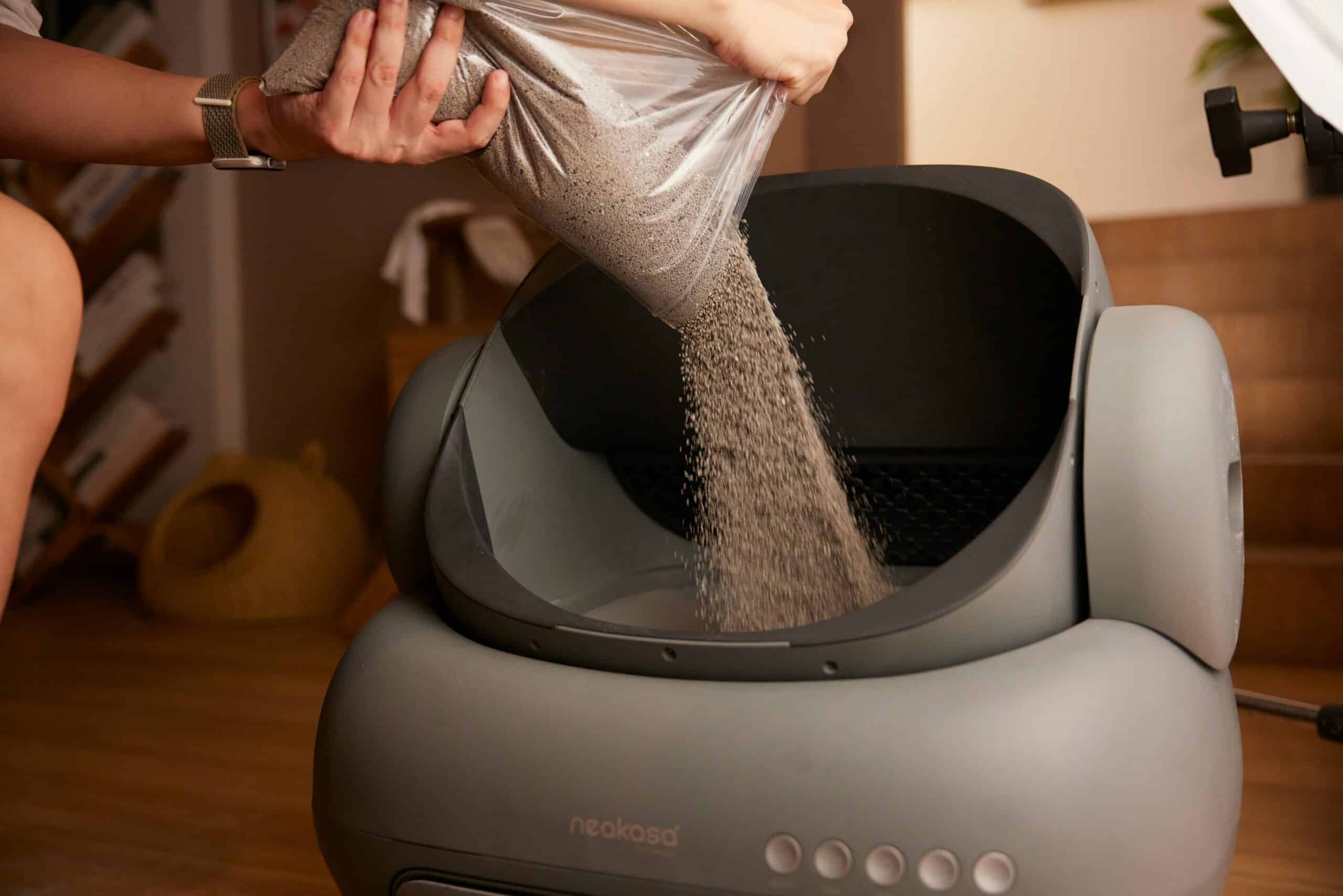
One box per cat plus one is the number almost everyone quotes, and it is a convention rather than a studied requirement. A cat litter box calculator is useful mainly because two other variables get ignored alongside it: how many floors the cats actually use, and whether the boxes are big enough for the cats in them.
Box size is the more common failure. The usual guideline is an interior length of about one and a half times the cat’s body from nose to the base of the tail, and a great many boxes sold as large fall short of that for an average adult cat, which is part of why choosing a litter box is not just a styling decision.
A Quick Note
This page offers general guidance on setup, not veterinary advice. A cat that stops using a box it used before, strains, goes more often than usual, or starts eliminating elsewhere may have a medical problem, and urinary blockage in male cats is an emergency. That is a vet conversation first and a litter question second.
Quick Answer
Aim for one box per cat plus one, or one per floor in use, whichever is higher. Size each box to roughly one and a half body lengths long and about one body length wide, measuring the cat from nose to the base of the tail. Keep the boxes in separate locations, because two side by side work as one box from the cat’s point of view.
Key Takeaways
- One per cat plus one is a convention, not a measured requirement, and it addresses queueing.
- Interior length of about 1.5 body lengths is where most commercial boxes fall short.
- Placement spread matters as much as count; adjacent boxes count as one.
- Multi-floor homes want at least one box per floor the cats use.
- For an older or arthritic cat, a low entry matters more than size.
- A change in box habits is a medical signal before it is a preference signal.
Enter the number of cats and floors, then the body length of the largest cat.
| Cats | Floors in use | Boxes to aim for | Driven by |
|---|---|---|---|
| 1 | 1 | 2 | Cat count |
| 1 | 3 | 3 | Floor count |
| 2 | 1 | 3 | Cat count |
| 2 | 2 | 3 | Cat count |
| 3 | 2 | 4 | Cat count |
| 4 | 3 | 5 | Cat count |
Take the higher of the two figures. The point of the extra box is choice, so a cat that finds one occupied or unpleasant has somewhere else to go.
Where the One Per Cat Plus One Rule Comes From
The rule is a practical heuristic from shelter and behavior practice rather than a finding from a controlled study. Its logic is about resource competition: cats guard resources, and a single box creates a chokepoint one cat can control.
The spare box also covers the ordinary case of a box being soiled when a cat needs it. That is the most frequent real-world reason a cat uses the floor instead.
Treat it as a floor rather than a target. Plenty of single-cat households run two boxes happily, and plenty of multi-cat households need more than the formula suggests. The fuller discussion sits in how many litter boxes you need.
Size Is the Measurement Most Boxes Fail
One and a half body lengths
A cat needs room to turn, dig and position without touching the walls. Nose to the base of the tail, multiplied by about 1.5, is the usual interior length guideline.
An average adult needs more than Large
A 16 inch cat wants roughly 24 inches of interior length, which exceeds many boxes marketed as large, and most covered models.
The storage tub solution
For a large cat, a plastic storage tub with an entry cut into one end is a common and considerably cheaper answer than any purpose-built box.
Depth is separate from footprint
High sides contain scatter from an enthusiastic digger, but the entry still needs to be low enough to step over comfortably.
Placement Does the Work the Count Cannot
Two boxes in the same corner of the same room do not provide two options. From the cat’s perspective that is one resource in one place, and a cat guarding the area controls both.
Spread them across rooms and, where there is more than one storey, across floors. A cat will not reliably travel down two flights when caught short, and older cats will not do it at all.
Avoid dead ends and noisy appliances. A box beside a washing machine that starts mid-use teaches a cat to go elsewhere, and boxes tucked in cabinets need the same escape-route thinking as enclosed litter box furniture.
Older Cats Need a Different Box
Arthritis is common in cats over about ten and frequently undiagnosed, and the first visible sign is often a cat that starts going just outside the box rather than in it.
A high lip is the obstacle. Swapping to an entry of around three inches, or cutting down one side of a tub, removes the barrier without changing anything else.
That change is worth making before concluding anything about preference, and the options are covered in low entry boxes for senior cats. Any new avoidance still warrants a vet visit.
Litter Depth and Scooping Rhythm
Two to three inches of litter suits most cats. Less than that lets urine reach the plastic, and more than four inches gets kicked out during digging.
Depth interacts with box count. A household running the bare minimum number of boxes needs daily scooping, while an extra box buys some slack on a busy week.
Top up after scooping rather than waiting for the level to drop by half. Cats notice a shallow box, and some of them stop using it well before you would.
Counting Boxes in a Multi-Floor Home
The calculator takes the higher of two figures: one box per cat plus one, or one per floor the cat uses. Both constraints have to hold at once.
A single cat in a three story house needs three boxes, not two. Stairs are a real barrier for a kitten, an older cat, or any cat avoiding another pet on the way.
Two cats across two floors need three boxes split across both levels, not three in the basement. Where the boxes sit matters as much as how many there are.
What Trips People Up
Counting boxes without measuring them
Three boxes that are all too small is a worse setup than two correctly sized ones. Hit the size guideline first, then the count.
Grouping them in one spot
It is tidier and it defeats the purpose. Separation is what makes the extra box an actual alternative.
Changing litter and box at once
If a cat then avoids the new setup you cannot tell which change caused it. Change one variable at a time, and keep the old box available during a transition. Litter type is its own variable, covered in litter for odor control.
Treating avoidance as misbehavior
It almost never is. Medical causes, box size, litter texture, cleanliness and location account for most of it, and scatter outside the box is a containment issue that litter mats address.
Litter Box Setup FAQ
How many litter boxes do I need for two cats?
Three, by the one per cat plus one convention, placed in separate locations. If the cats use two floors, make sure at least one box sits on each.
What size should a litter box be?
Roughly one and a half times the cat’s body length from nose to the base of the tail, and about one body length wide. For a 16 inch cat that means around 24 inches of interior length.
Can two cats share one box?
Many do without visible problems, but it removes the choice that prevents queueing and guarding. Adding a second box is cheap insurance against a habit that is hard to reverse.
Does every floor need a litter box?
Every floor the cats actually spend time on, yes. Expecting a cat to descend a staircase at short notice is the common cause of accidents on upper floors, and it gets worse with age.
Are covered boxes a problem?
Not inherently, though they are usually smaller inside than they look and they trap odor if not scooped often. Some cats dislike the single exit, which matters most in a multi-cat home.
My cat suddenly stopped using the box. What now?
Treat it as medical until a vet rules that out, particularly if there is straining, frequent trips or any sign of discomfort. A male cat unable to urinate needs emergency care. Setup changes come after that, not before.
How many boxes is too many?
There is no behavioral downside to more, only a practical one in floor space and scooping time. Households that go well past the formula usually do so because it solved a problem, which is a reasonable basis.
