
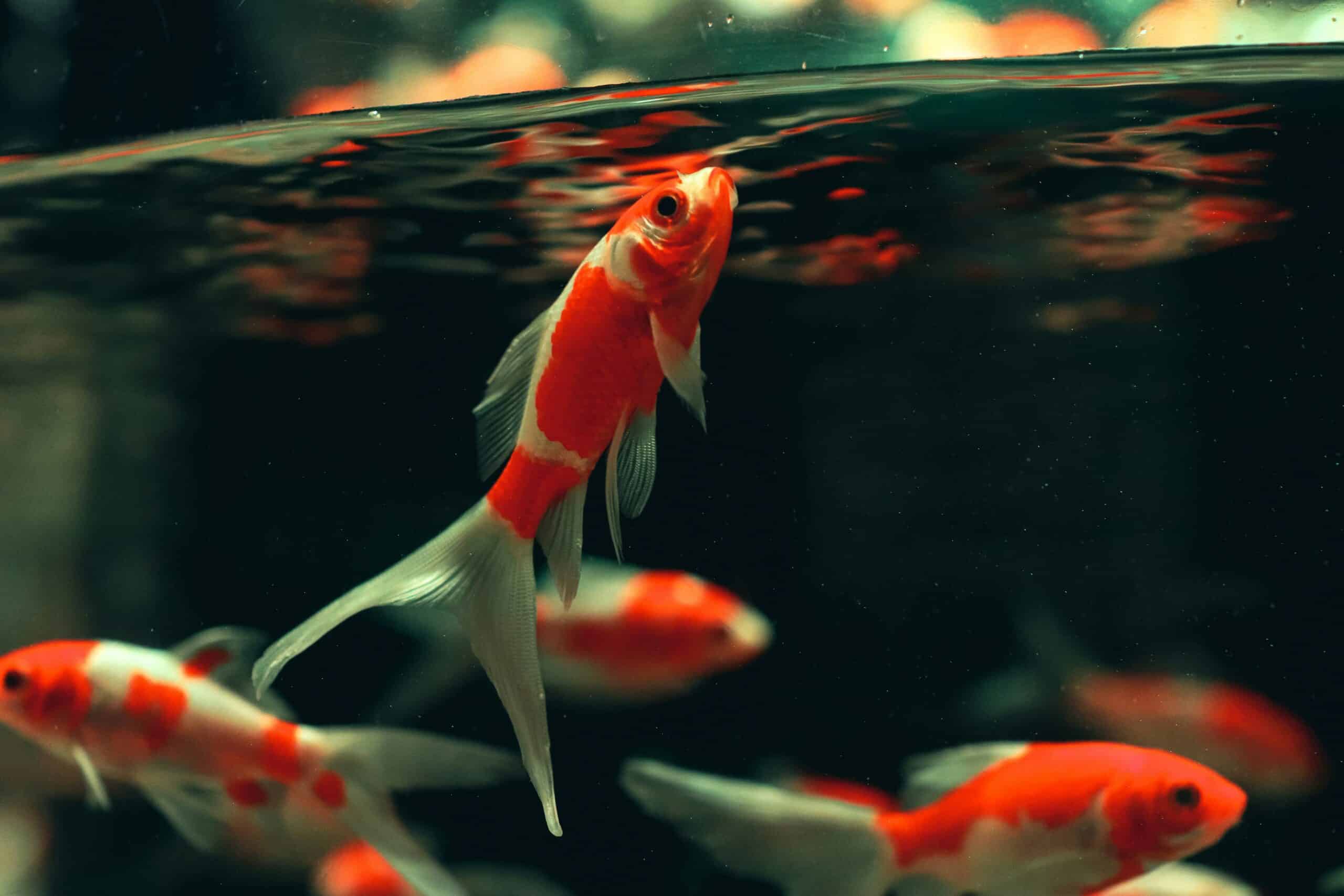
Float the sealed bag in the tank until the temperatures match, then introduce tank water to the bag gradually and net the fish across without pouring the bag water in. Knowing how to acclimate new fish is mostly about slowing down two changes that would otherwise happen at once.
Those two changes are temperature and water chemistry, and fish handle neither well when they arrive abruptly. Our guide to cycling a new fish tank covers the step that has to be finished before any of this matters.
Quick Answer
Float the closed bag for around twenty to thirty minutes so temperature equalizes. Then add small amounts of tank water to the bag over a further period. Net the fish into the tank and discard the bag water. Keep the lights off afterward and skip feeding until the next day.
Key Takeaways
- Temperature equalizes first, and floating the sealed bag does it.
- Chemistry takes longer than temperature and needs gradual mixing.
- Bag water goes down the drain, not into the tank.
- Net the fish across rather than pouring them.
- Lights off after introduction reduces stress considerably.
- Quarantine is a separate step and the minimum is thirty days.
- A cycled tank matters more than any acclimation technique.
| Step | Why it matters | Rough duration |
|---|---|---|
| Dim the room and tank lights | Reduces panic on arrival | Before you start |
| Float the sealed bag | Equalizes temperature | Around twenty to thirty minutes |
| Open and add tank water in stages | Eases the chemistry change | A further stretch, in small additions |
| Net the fish into the tank | Leaves the transport water behind | Moments |
| Discard the bag water | Avoids importing waste and pathogens | Immediately |
| Leave the lights off | Lets the fish settle and find cover | The rest of the day |
| Skip the first feeding | Stressed fish rarely eat, and food fouls water | Until the next day |
| Quarantine tank, if you have one | Keeps disease out of the display | Thirty days minimum |
Step by Step
- Turn the lights down before the fish arrives. A dark tank is far less frightening than a bright one.
- Float the bag unopened. Rest it on the surface so the water temperature in the bag drifts toward the tank’s.
- Give it around twenty to thirty minutes. That is generally enough for temperature to equalize.
- Open the bag and roll the top down. Rolling the rim creates a collar that keeps it floating upright.
- Add a small amount of tank water. Repeat every few minutes so the chemistry shifts in steps rather than in one jump.
- Watch the fish while you do it. Gasping or thrashing means slow down and add less each time.
- Net the fish out and into the tank. Support the net and move once rather than chasing.
- Pour the bag water away. It carries waste from transit and anything the fish was shipped with.
- Leave the lights off and do not feed. Give the fish the rest of the day undisturbed.
Why Temperature Comes First
Fish take their body temperature from the water, so a sudden change is a whole-body shock rather than a discomfort.
Floating the sealed bag solves it without any mixing, which is why it goes first. Around twenty to thirty minutes of floating allows the bag to reach the tank’s temperature.
Keeping a separate thermometer on the tank is worth the small cost, because holding water temperature in the right range for your species is one of the things that matters most to their health.
A tank running cooler or warmer than the bag by a wide margin needs more floating time, not less. Our roundup of aquarium heaters and thermostats covers holding that temperature steady.
Why the Bag Water Stays Out
It has been accumulating waste
A fish in a sealed bag has been producing ammonia the whole journey with nothing to process it.
Opening it changes the chemistry fast
Carbon dioxide escapes once the bag is opened, which shifts pH upward and makes any ammonia present more toxic than it was.
It may carry more than water
Shop water can bring parasites or bacteria into your tank alongside the fish you wanted.
Netting solves all three
Lifting the fish out with a net and discarding the rest takes seconds and avoids every one of those problems.
Quarantine Is a Separate Question
Acclimation deals with the shock of arrival. Quarantine deals with what the new fish might be carrying, and they are not substitutes for each other.
A thirty-day period is the minimum for quarantine, and longer may be necessary depending on the species and what you are watching for.
Koi are usually held for at least thirty days and at a controlled temperature, commonly around 24 degrees Celsius, which is about 75 degrees Fahrenheit.
A quarantine tank does not need to be pretty. A bare tank with a heater, a sponge filter and somewhere to hide does the job. Our guide to what size aquarium suits a beginner covers sizing a second tank sensibly.
What Goes Wrong Most Often
Rushing the temperature step is the common one, and it usually happens because the fish looks fine in the bag and the owner is impatient.
Pouring the bag straight in is the second, and it imports transport waste along with the fish.
Adding a new fish to a tank that has not finished cycling is the most serious, because no acclimation technique protects against ammonia. Our guide to why aquarium water goes cloudy covers a symptom that often signals a tank not yet ready.
Feeding immediately is the last. A stressed fish generally will not eat, and the food then breaks down and adds to the load. Our roundup of aquarium filters covers the equipment carrying that load.
After the First Day
Add fish in stages rather than all at once. Each addition raises the waste load and the bacterial colony needs days to grow to match it.
Watch for hiding, clamped fins and refusal to eat over the following week, since those are the early signs worth acting on.
Keep new water dechlorinated, because chlorine and chloramine both need treating and a newly introduced fish has the least margin.
Resist rearranging the tank to help the new arrival settle. Established fish lose their territory boundaries and the disruption costs more than it gains. Our guide to how often to change aquarium water covers the routine from here.
Related Reading
Frequently Asked Questions
How do you acclimate new fish?
Float the sealed bag on the tank surface for around twenty to thirty minutes so temperatures equalize. Then open it and add small amounts of tank water in stages so the chemistry shifts gradually. Net the fish into the tank, discard the bag water, and leave the lights off afterward.
How long should acclimation take?
Temperature equalizing takes roughly twenty to thirty minutes of floating. The chemistry stage is best done in small additions spread over a further stretch rather than rushed. Sensitive species and larger differences between the bag and the tank both justify going slower than the minimum.
Can I pour the bag water into the tank?
Avoid it. The bag has been accumulating waste in transit, opening it shifts the pH upward as carbon dioxide escapes, and shop water can introduce parasites or bacteria. Netting the fish across takes seconds and leaves all three problems in the bag.
What is drip acclimation and do I need it?
It is a slower version of the chemistry stage, using airline tubing to trickle tank water into a container holding the fish. It suits shrimp, sensitive species and larger chemistry gaps. For most community freshwater fish, staged additions of tank water achieve the same thing.
Do I have to quarantine new fish?
It is the single most effective way to keep disease out of an established tank. A thirty-day period is the minimum, and longer may be necessary. A bare tank with a heater, a sponge filter and a hiding place is enough, and it avoids treating your whole display later.
Should I feed a new fish straight away?
Wait until the next day. A stressed fish usually will not eat, and uneaten food breaks down into waste that the tank then has to process. Skipping one feeding costs a healthy fish nothing and keeps the water cleaner while it settles.
Why leave the lights off afterward?
Bright light on arrival adds stress to a fish that has already had a difficult day, and darkness encourages it to find cover and stop swimming frantically. Leaving the tank lights off for the remainder of the day is one of the cheapest improvements available.
When should I ask a fish vet or specialist?
If a new arrival shows lesions, growths, laboured breathing or unusual swimming that does not resolve within a few days, or if existing fish begin showing symptoms after an addition. An aquatic veterinarian or an experienced local shop can examine the fish itself, which water testing cannot do.
