
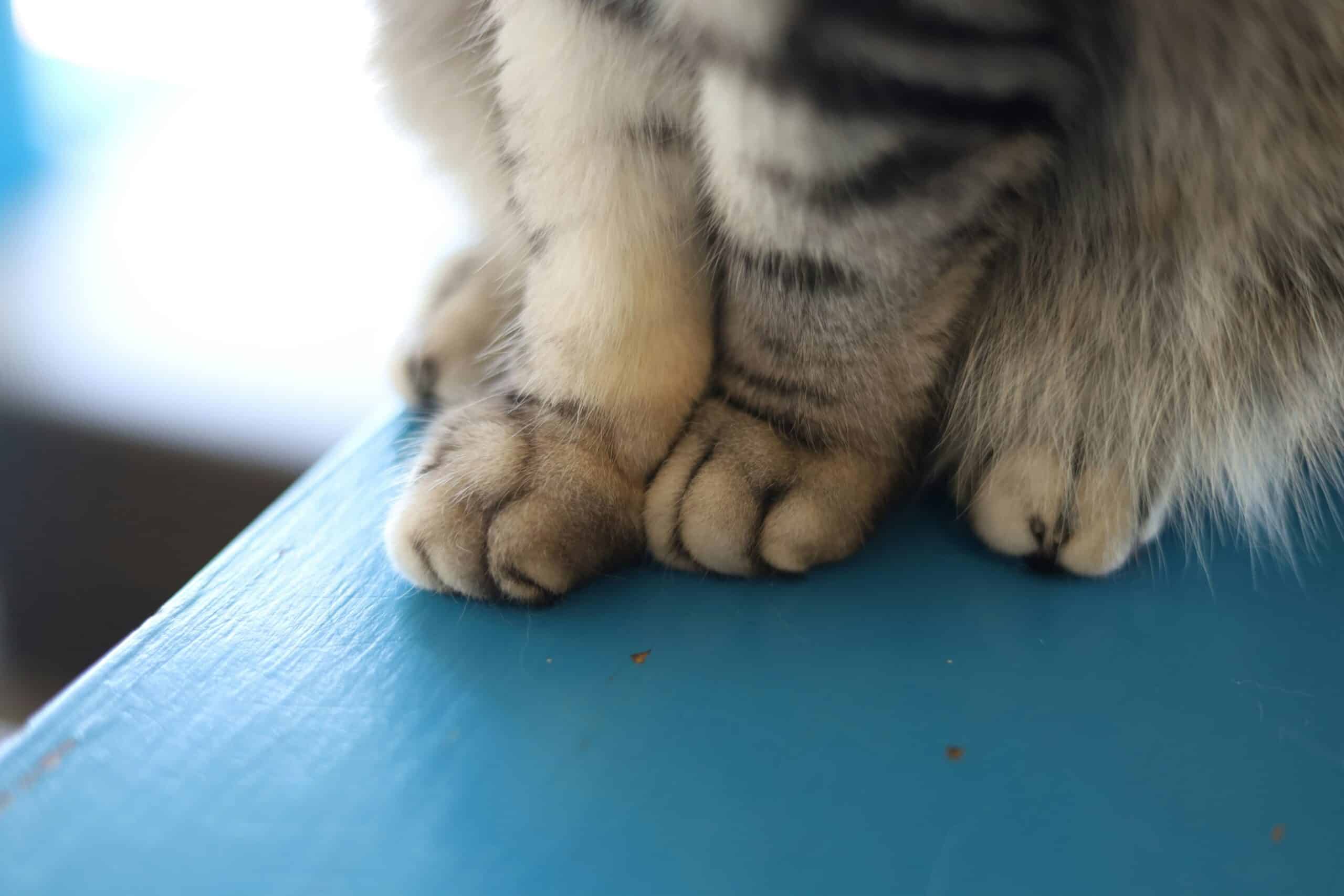
Trim only the sharp hooked tip of each claw, stay well clear of the pink quick inside, and do a few claws per sitting rather than all of them at once. That habit covers most of how to trim a cat’s nails without a struggle. Shallow cuts hurt nothing at all.
Trouble at home usually comes from aiming too far up the claw or trying to finish sixteen nails at once. Nail work belongs inside the wider routine described in this guide to cat grooming basics. Little and often beats one long wrestling match.
Quick Answer
Wait until the cat has already settled, hold one paw loosely, and press a toe pad to extend a single claw. Cut just the clear hooked tip and leave an obvious gap before the pink quick. Two to four claws per session is plenty.
A Quick Note
This article offers general guidance only. Cats differ in temperament, claw color, and health history, so a veterinarian should guide anything health related. That includes bleeding that will not stop, a swollen toe, or a claw growing oddly.
Key Points
- The target is the sharp hook at the end of the claw. Everything behind it stays.
- The quick is living tissue with blood supply and nerve endings, so cutting it hurts and bleeds.
- Pale claws show the quick as a pink wedge. Dark claws hide it, so those need smaller cuts.
- Short sessions build tolerance. Long sessions teach a cat that paw handling means trouble.
- A cat who genuinely refuses is a candidate for a vet or groomer, not a harder grip.
Step by Step
- Pick a moment when the cat is already settled. A drowsy cat on a cushion after a meal is the easiest starting point.
- Sit beside or slightly behind her and rest one paw in your palm. The hold should feel like support rather than restraint, because hard gripping is what most cats fight.
- Press gently on the pad just behind one toe. The claw slides forward and stays out while that light pressure holds.
- Look down the extended claw for a pink wedge near the base. That is the quick, and it stops well short of the tip.
- Line the clipper across the clear hooked end, leaving an obvious gap in front of where the pink stops. Cut top to bottom rather than side to side, since that direction keeps the claw from splitting.
- Move to the next claw only while the cat stays loose and quiet. A flicking tail, flattened ears, or a paw pulling back means the session is over.
- Stop early on purpose. Two or three claws done calmly beats a full set done badly, and the rest are fine left sharp for now.
- Check the extra claw higher up the inside of each front leg. It never touches the floor, so it never wears down, and it can curl toward the skin if months pass.
How to Trim a Cat’s Nails Without Hitting the Quick
The quick is the living core of the claw, and it carries blood vessels and nerve endings. Cutting into it hurts sharply and bleeds more than such a small wound suggests. That one event is how many cats learn to hate nail trims.
A claw does not have feeling all the way through. The quick sits near the base and tapers off, leaving the outer hook as dead keratin with no sensation in it.
Even a cut that stops just short can pinch, since pressure travels through the claw, so a generous margin costs nothing.
How to Find the Quick in Pale and Dark Claws
In a pale claw the quick shows plainly as a pink triangle running from the base outward. Hold the extended claw against a light background and the boundary becomes easy to read. Cut in the clear zone beyond the pink.
Dark claws hide the quick completely. Shining a small light behind the claw sometimes reveals a shadow, and often it reveals nothing.
The safe method there is to take only the very tip, then look at the cut face. A chalky, uniform face means dead keratin. A pale oval in the center means the quick is close, so that claw is finished for the day.
How Often Cat Nails Need Trimming
Most cats do well with a trim every few weeks, though the right interval varies widely. Claws that snag on blankets or click across hard floors are already past due. Checking every couple of weeks beats tracking a calendar.
Indoor cats need trims far more often than cats with outdoor access. Climbing, bark, and hard ground file claws down constantly, while carpet and a soft bed do almost nothing.
Back claws usually need less attention. They grow slower, sit shorter, and get worn by walking and by the cat grooming them herself.
Clippers Versus Grinders for Cat Nails
Two tools dominate home nail care, and most cats tolerate one clearly better than the other. Scissor style and plier style clippers make a single quick cut with no noise. A rotary grinder files the claw down gradually instead.
Clippers suit most cats for a plain reason: the whole event lasts about a second per claw. Sharp blades matter, since dull ones crush and split. The common shapes sit side by side in this roundup of cat nail clippers worth considering.
Grinders leave a smoother edge and make it harder to take too much at once. The trade off is noise, vibration, and a longer hold per claw, so cats who spook at appliances rarely accept one.
Paw Tolerance: How to Trim a Cat’s Nails With Less Struggle
Tolerance gets built outside of trimming sessions, not during them. Touch the cat’s paws briefly while she dozes, then stop before any reaction. Repeated over weeks, paw contact stops registering as a warning.
Add one element at a time. Handle a paw, then later extend a claw and release it, then later let her see and sniff the clippers without any cutting.
Pairing paw handling with a treat afterward speeds all of this up. Trimming one claw and stopping counts as a win.
What to Do If You Cut Too Short
Cutting the quick happens to almost everyone eventually, and it is rarely an emergency. Hold clean gauze firmly against the claw tip for a couple of minutes without peeking. Steady pressure stops most bleeding.
Styptic powder made for pets works faster, and cornstarch pressed into the tip works in a pinch. Keeping either within reach is the point of a stocked cat first aid kit.
Bleeding that outlasts ten or fifteen minutes of pressure needs a veterinarian. So does a claw that starts bleeding again hours later.
Nail Caps, Scratching Posts, and Cats Who Will Not Allow It
Soft nail caps glue over trimmed claws and blunt the tip so it cannot hook or tear. They protect furniture and skin for a few weeks, until they shed along with the claw sheath. Fit and application get compared in this look at soft nail caps for cats.
Caps add a step rather than removing one, because the claws have to be short before they go on.
Scratching surfaces belong in every home, yet they do not replace a trim. Scratching peels off the loose outer sheath and leaves a fresh point underneath, so a cat with excellent scratching posts still ends up with needle tips.
Some cats will not accept trims at home, however patient the approach. Handing the job to a veterinary technician or a groomer every few weeks is sensible rather than a failure.
A few situations move past technique entirely. A thickened or twisted claw, a swollen or warm toe, or a cat who suddenly objects to paw handling she once accepted all point toward pain. Those belong in front of a veterinarian.
What Trips People Up
Trying to finish all sixteen claws
A cat’s patience runs out long before the claws do. Pushing past that point teaches her to flee the clippers next time.
Squeezing the paw to hold it still
A firm grip triggers the exact struggle you want to avoid. Support the paw from underneath and use light pressure on one toe pad instead.
Cutting side to side across the claw
Clipping across the flat of the claw crushes and splits it. Turning the clipper to cut from top to bottom gives a clean edge that will not catch.
Recommended Reading
Readers whose cat might sit better for a filing tool than a blade can compare the quieter models in this roundup of cat nail grinders. Blunt claws help with furniture, though placement matters more, which is the case made in this guide to redirecting a cat away from furniture. For sofas already taking damage, the shapes in this piece on couch and corner scratchers tend to work better than a standard post.
Frequently Asked Questions
How to trim a cat’s nails if she pulls her paw away every time?
Shorten the session until she stops objecting, even if that means one claw. Extend the claw, cut the tip, release the paw, and offer a treat straight away. Repeat every day or two rather than once a month, because cats resist long holds far more than the cut itself.
How much of the claw should come off?
Only the clear, curved hook at the very end should come off. On a pale claw, stop with a visible gap before the pink quick begins, and on a dark claw take a small tip then check the cut face before going further. Taking too little is never a problem, since claws can be trimmed again sooner.
Is it safe to trim a kitten’s claws?
Yes, and starting young makes the whole job easier later. Kitten claws are small and soft, so a tiny cut at the tip is all that is needed. The bigger benefit is behavioral, since a kitten whose paws get handled from the start rarely grows into a cat who fights the clippers.
What about declawing instead?
Declawing removes the last bone of each toe, which makes it an amputation rather than a nail trim. Many veterinarians decline to perform it, and it is restricted or banned in a number of places. Regular trimming, good scratching surfaces, and nail caps address the same concerns without surgery.
Do back claws need trimming too?
Sometimes, though usually less often than front claws. Back claws grow slower, stay shorter, and get worn down by walking and by grooming. Check them every month or so and trim only if the tips feel sharp or catch on bedding.
Does scratching keep the claws short on its own?
No. Scratching peels away the worn outer layer and exposes a new sharp point underneath, which is why a cat with a favorite post still snags on sweaters. Scratching surfaces keep claws healthy and save furniture, yet they never replace the trim itself.
When should you talk to a veterinarian about a cat’s claws?
Call if a claw looks thickened, split, discolored, or is growing into the pad. Book a visit for a swollen, warm, or tender toe, for bleeding that pressure will not stop, or for limping after a trim. A cat who suddenly resents paw handling she once accepted is worth checking too.
