
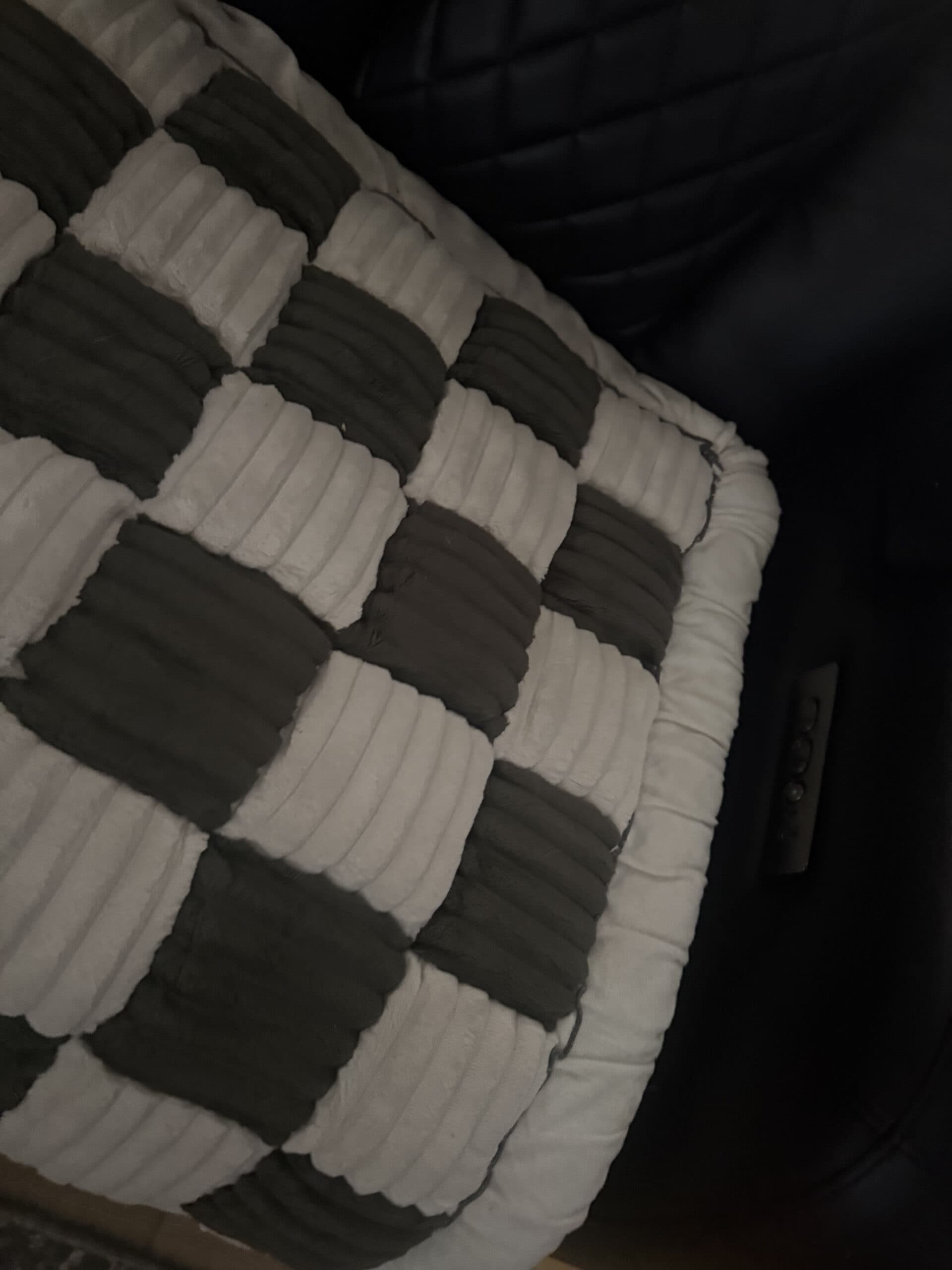
For most small dogs, a throw-style padded cover is the right pick, because it holds hair on the surface, sits comfortably under a dog and a person, and comes off in one piece on wash day. Couch covers for small dogs live or die on three things: how much hair the fabric traps, how well it stays put when a 15-pound dog jumps up, and how often you can realistically wash it.
A small dog changes the math: less weight on the fabric, but more digging and circling before she settles. My own setup is a full three-seat throw-style padded cover on a leather couch, and it has been down for over a year.
What it does with hair is hold it. It is comfortable to sit on.
It stays in place for the most part, and slipping has not been an issue here. I wash it monthly, and it has not developed a smell I have noticed.
That is one cover, one dog, one couch, so the rest of this guide leans on research into the other five styles rather than my own use. If you want the broader version of this comparison, the general roundup of dog couch covers covers larger breeds too.
Couch Covers for Small Dogs at a Glance
| Cover Style | Hair Behavior | Grip on Cushions | Best Wash Rhythm |
|---|---|---|---|
| Throw-style padded cover | Holds hair on the surface, shakes off outside | Good on leather, decent on fabric | Monthly |
| Fitted stretch slipcover | Hair works into the weave | Very high, tucked at the seams | Every 3 to 5 weeks |
| Waterproof-backed cover | Hair sits loose, lint-rolls easily | Moderate, backing can slide | Every 2 to 3 weeks |
| Reversible quilted protector | Traps hair in the quilting channels | Moderate, strap dependent | Every 3 weeks, flip between |
| Sectional and L-shape cover | Varies by panel and seam placement | Weakest at the corner joint | Monthly, panel by panel |
| Single-seat pet blanket | Concentrates hair in one small zone | Low without a grip backing | Weekly, it is small |
Key Takeaways
- Small dogs shift covers less by weight but more by circling, so grip matters more than thickness.
- Padded throw covers hold hair on the surface, which makes a shake outside more effective than a lint roller.
- Waterproof backing solves accidents and drool, but it adds crinkle and can slide.
- Monthly washing works for a dog that splits time between a couch and her own bed.
- A couch-only dog roughly doubles the wear, so plan for a shorter wash cycle or a second cover.
- Sectionals need two pieces, because one cover cannot follow an inside corner cleanly.
How We Picked
Grip came first. A cover that migrates every evening becomes a chore, and most people quit on it inside a month. So each style is judged on how it anchors: tuck flaps, straps, silicone dots, or plain friction.
Hair behavior came second, and it splits two ways. Some fabrics hold hair on top, where a shake outdoors clears most of it. Others let hair sink into the weave, where only a wash gets it out.
Wash practicality mattered third. A cover that needs a commercial machine is one you wash less often than you should. Weight, bulk, and drying time decide whether it stays clean over a year.
Finally, we weighted small-dog fit. A three-seat cover under a 15-pound terrier behaves differently than the same cover under a shepherd: less mass, more fidgeting, one favorite corner.
1. The Throw-Style Padded Cover
Why It Stands Out
This is the style I use, so it carries the only first-hand notes here. Mine is the padded throw-style version on a leather couch.
What it does with hair is hold it, which is what you want from a barrier layer. It is comfortable to sit on, and a cover people avoid gets folded up and forgotten.
It stays in place for the most part, and slipping has not been an issue for me. I wash it monthly. Those are one owner’s observed numbers, not test results.
Worth Knowing
Context changes those numbers. My dog is a small Jack Russell terrier mix, a rescue, and she splits her time between her own bed and the couch.
That puts roughly half the wear on the cover that a couch-only dog would. If your dog sleeps there nightly, assume the monthly rhythm shortens. The cover is there mainly for the dog rather than for looks, and padded throws do read as covers, not upholstery.
This suits a small dog who uses the couch part-time, especially on leather furniture where grip is the usual worry. Skip it if you want the couch to look uncovered, or if your dog has accidents, since padding without a backing soaks through.
Check Price on Amazon2. The Fitted Stretch Slipcover
Why It Stands Out
Fitted stretch slipcovers pull tight over the frame and tuck into the crevices between cushions and arms. That tuck is the whole point.
Once the fabric anchors below the seat line, a digging dog cannot drag it far. People choose this style when they want the couch to still look like a couch.
Worth Knowing
The tradeoff is hair. Stretch knits are dense and textured, so hair works into the weave instead of resting on top.
A lint roller helps, but only a wash resets it, and a full slipcover is bulky in a home machine. I have not used this style, so treat it as research rather than experience.
Good fit for owners who care how the room looks, with a dog who nests rather than one who has accidents. Skip it if you manage shedding weekly, since digging hair out of a knit gets old fast. Tuck-in anchoring gets a closer look in whether couch covers really stay put with a dog on them.
Check Price on Amazon3. The Waterproof-Backed Cover
Why It Stands Out
A waterproof-backed cover puts a thin membrane between the top fabric and your cushions. For small dogs, that membrane earns its keep in three cases: senior bladders, post-surgery recovery, and dogs who chew wet toys on the couch. Nothing else here protects the cushion foam itself, and soaked foam rarely recovers.
Worth Knowing
Two costs come with the backing. First, sound: cheap membranes crinkle when a dog shifts, and some dogs avoid the spot.
Second, grip: a slick backing slides on leather unless it adds silicone dots or straps. I have not used a waterproof-backed cover, so this section is research rather than my own use.
Right choice for accident-prone or aging dogs, and for anyone with light-colored cushions. Skip it if your dog is house-solid and you mainly want hair control. The full comparison lives in the guide to waterproof couch covers built for pets.
Check Price on Amazon4. The Reversible Quilted Protector
Why It Stands Out
Reversible quilted protectors give you two usable faces, which sounds like a gimmick until you own one. Flip it and guests get a fresh surface without a wash cycle. The quilting also stops the filling from bunching after repeated washes, the usual failure mode of cheap padded covers.
Worth Knowing
Quilting creates channels, and channels catch hair along the stitch lines. Shaking the cover outside clears the flat areas but leaves hair packed in the seams, so a vacuum brush joins the routine.
Most rely on tuck straps rather than weight for grip, and straps loosen. This is research, not first-hand use.
Best for households with regular visitors, or anyone who wants a two-tone look. Skip it if your dog sheds heavily, since seam hair is tedious. Shedding strategy gets its own treatment in the covers picked specifically for heavy shedding months.
Check Price on Amazon5. The Sectional and L-Shape Cover
Why It Stands Out
Sectionals break every assumption a rectangular cover makes. The inside corner is the problem: fabric that lies flat along one run has to fold or gap when it turns. Purpose-built sets ship two or three pieces sized per run, so the seam falls at the corner instead of across it.
Worth Knowing
Multi-piece covers move independently, so the corner seam opens whenever a dog crosses it. Small dogs cross it constantly, because the corner is the warmest, most enclosed spot on the couch.
Grip clips or foam tucks keep the gap closed. I have not covered a sectional myself, so this is research.
Suits anyone with an L-shape or chaise who has given up stretching one cover across it. Skip it if your dog uses only one section, since covering that run alone is cheaper. Sizing and piece counts are broken down in the guide to sectional couch covers made for pet households.
Check Price on Amazon6. The Single-Seat Pet Blanket
Why It Stands Out
Small dogs are creatures of habit. Many claim one cushion and stay there, which makes a full three-seat cover overkill.
A single-seat blanket covers that spot, washes in a normal load, and dries in one cycle. For a 12-pound dog with a favorite corner, this is often the whole solution.
Worth Knowing
Coverage is the obvious limit. Hair still lands on neighboring cushions, and a dog who changes spots defeats the plan overnight.
Blankets also slide more, since no weight or tuck holds them down without a grip backing. I have only used the one three-seat cover, so this comparison comes from research.
Great for one-cushion dogs, apartments, and anyone checking whether a cover routine will stick before buying a full one. Skip it if your dog roams. The direct head-to-head sits in this breakdown of covers against blankets.
Check Price on AmazonWhat to Look For in a Small-Dog Couch Cover
Does the Size Match Your Cushions or Your Sofa?
Cover sizes get listed by sofa width, but the number that matters is seat depth. A cover cut for 21-inch seats bunches badly on a deep-seated couch. Measure seat depth first, then width across the arms.
How Does the Cover Anchor Itself?
Look for the anchoring method in the listing photos, not the description. Tuck flaps hold best, straps come second, and silicone dots help on leather. A cover with none of these relies on its own weight.
Will It Fit Your Washing Machine?
A three-seat padded cover is heavy when wet. If your machine is a compact front-loader, a two-piece or single-seat option keeps the routine sustainable. A cover you wash beats a better cover you do not.
Does the Texture Suit Your Dog?
Some small dogs refuse slick surfaces, and some avoid anything that crinkles. If your dog already ignores a certain blanket, that fabric is a bad bet for a whole couch. Watch what she picks now and buy close to it.
Cover vs Blanket for a Small Dog
When the Blanket Is Enough
A blanket wins when the dog uses one spot, the upholstery is durable, and accidents are not a concern. It washes easily, costs less, and folds away when guests arrive. For a small dog with a fixed napping cushion, it solves the actual problem.
When You Need the Full Cover
A full cover wins when the dog roams, when the upholstery is light or delicate, or when you want hair contained across the whole seat. It also wins on leather, where nail marks matter too. Grip trouble with either option is covered in this guide to stopping a dog from slipping on a couch cover.
What Trips People Up
Buying for Looks Instead of the Dog
A cover chosen to match the room usually loses on function. Thin decorative throws slide, and thin fabrics let hair through. Decide first whether the cover is for the dog or the room, then buy accordingly.
Washing Too Rarely to Notice Buildup
Hair and dander build up gradually, so the couch never smells wrong on any given day. A fixed schedule beats waiting for a signal, and monthly is a reasonable starting point for a part-time couch dog.
Ignoring the Backing on Slick Upholstery
Leather and tight microfiber offer almost no friction. A cover without silicone dots, straps, or a tuck creeps toward the front edge daily. Check the backing before you buy, not after.
Skipping the Shake-Out Step
Between washes, shaking the cover outside clears more hair than most people expect, especially on surface-holding fabrics. Two minutes of that beats ten with a lint roller.
Worth reading next: if you are still unsure a cover is needed at all, read the case for dogs who already have their own bed. Once you have one down, this piece on how often a dog couch cover needs washing settles the schedule.
For sliding trouble on slick cushions, the non-slip furniture covers for pet homes are worth a look. And if a blanket is all you need, browse the dog blankets and throws.
Frequently Asked Questions
Do couch covers for small dogs actually stay in place?
It depends on the cover and the couch. On my leather couch, the padded throw-style cover stays in place for the most part, and slipping has not been an issue for me.
Covers with tuck flaps or silicone backing hold better on slick upholstery. Lightweight decorative throws with no grip feature creep forward within a day or two.
How often should I wash a small-dog couch cover?
Monthly is what I have been doing, with a dog who splits her time between her own bed and the couch. A dog who sleeps on the couch full-time puts roughly twice the wear on the fabric, so a shorter interval makes sense there. Between washes, shaking the cover outside removes a surprising amount of loose hair.
Does a padded cover trap odor over time?
Mine has not developed a smell I have noticed over the year-plus it has been down, on a monthly wash schedule. Odor usually builds when moisture gets trapped, which is more of a risk with waterproof-backed covers that dry slowly. Drying a cover fully before putting it back is the practical safeguard.
Is one large cover better than several small ones?
A single full-couch cover gives continuous coverage with no gaps, which matters for dogs who move around. Separate cushion covers wash more easily and let you replace one piece instead of the set. For a small dog with one favorite spot, the smaller option often does the job for less.
Will a cover work on a leather couch without sliding?
It can. My padded cover sits on leather and has not been a slipping problem, though a heavier cover generally grips better than a thin one.
Silicone dots on the backing and tuck flaps along the seat crevice both help considerably. Thin, slick-backed covers are the ones most likely to slide on leather.
Do I still need a cover if my dog has her own bed?
Often yes, because most dogs use both. My dog splits her time between her bed and the couch, which cuts the wear on the cover roughly in half compared with a couch-only dog. The bed reduces how hard the cover works, but it rarely eliminates hair on the sofa entirely.
What size should I buy for a two-cushion loveseat?
Measure the width across the outside of both arms, then the seat depth from the back cushion to the front edge. Buy up when you are between sizes, since excess fabric tucks away but a short cover cannot stretch. Loveseat-specific sizing beats trimming a sofa cover down.
