
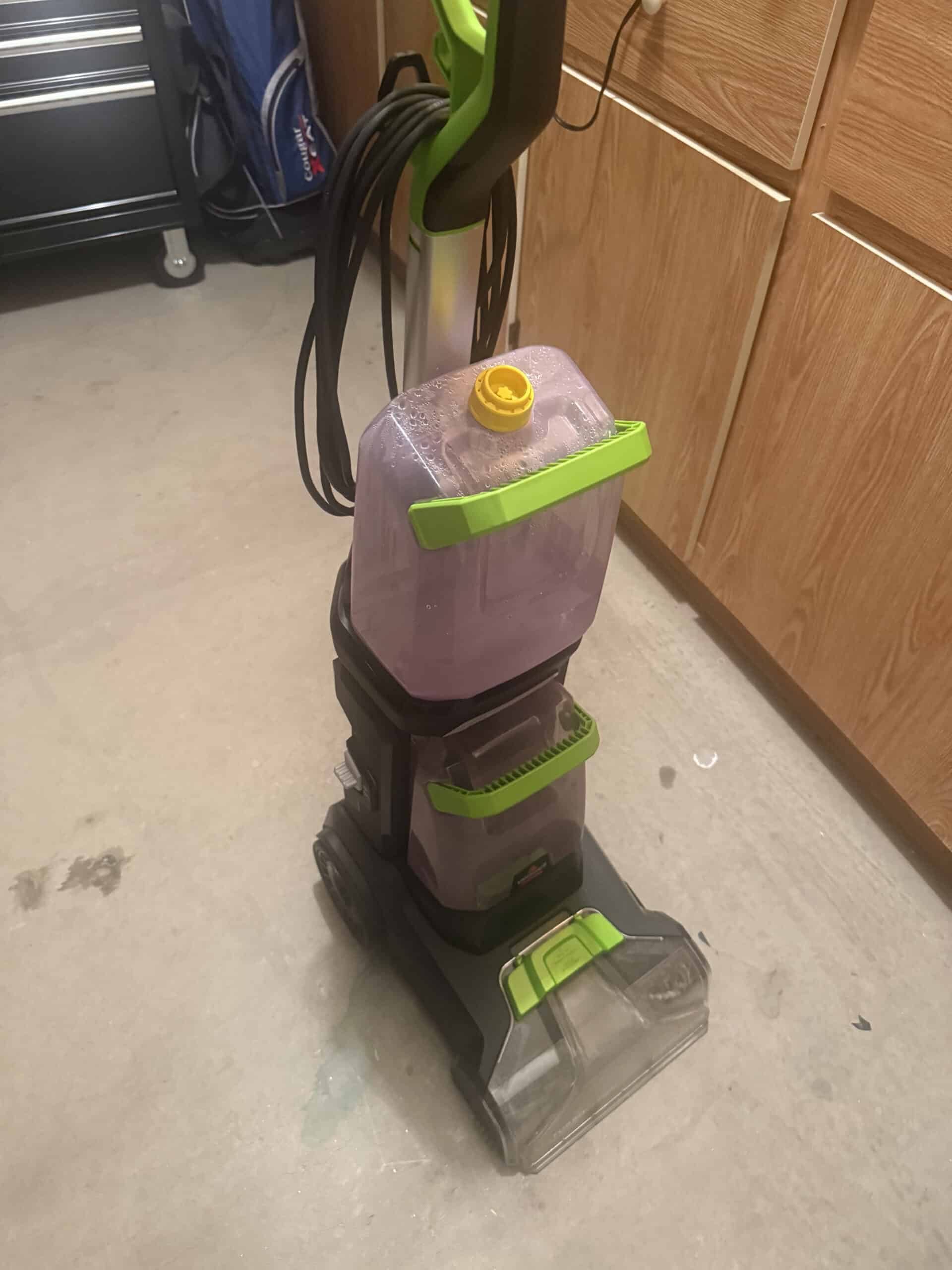
The specification that matters on a pet stain machine is suction. Anything can spray solution onto carpet. Pulling it back out of the padding, along with what was down there, is the part that separates a machine that removes odor from one that spreads it.
Mine is a wet dry vacuum type, several years old. It handles odor well and does the job really well. The tank is awkward and refilling it is the part I like least, which is worth saying because nobody mentions the handling. Our note on whether carpet cleaners remove dog smell covers the odor mechanism.
Types at a Glance
| Type | Best for | Limitation |
|---|---|---|
| Wet dry vacuum style | Strong extraction, occasional deep cleanup | Bulky, tanks awkward to handle |
| Upright deep cleaner | Whole rooms of carpet | Heavy, storage space |
| Portable spot cleaner | Single accidents, quick response | Small tank, limited suction |
| Cordless spot cleaner | Speed, no setup | Runtime and weaker extraction |
| Rental machine | Rare use, no storage needed | Not there when you need it |
| Steam cleaner | Not this job | Heat sets protein stains |
How We Picked
Selections are grouped by extraction method and tank arrangement, since those decide whether a machine removes the source of odor or merely wets the carpet.
Descriptions come from documented product characteristics alongside my own use of a wet dry vacuum style cleaner over several years.
1. A Wet Dry Vacuum Style Cleaner, Best Overall
Why It Stands Out
Built around suction rather than around brushing, which is what pulls liquid out of the padding where odor actually lives.
This is what I use, and it handles odor well across accidents and the occasional time the dog is sick on the carpet.
Worth Knowing
The tanks are awkward and refilling is genuinely irritating.
Bulky to store for something used rarely. Our note on getting urine out of carpet covers the technique.
This suits homes with occasional accidents. Skip it if storage is tight.
Check Price on Amazon2. A Portable Spot Cleaner, Best for Quick Response
Why It Stands Out
Light enough to grab immediately, and speed matters more than power on a fresh accident.
Small footprint means it lives somewhere accessible rather than in a closet.
Worth Knowing
Small tanks mean frequent refilling on anything larger than a spot.
Less extraction than a full-size machine. Our roundup of stain and odor removers covers what goes in it.
This suits fast cleanup. Skip it for a saturated area.
Check Price on Amazon3. An Upright Deep Cleaner, Best for Whole Rooms
Why It Stands Out
Covers large carpeted areas efficiently, with brush rolls that agitate fibers as they clean.
The right tool where carpet runs through most of a home.
Worth Knowing
Heavy, and overkill for occasional spot cleanup.
Brush agitation can damage delicate fibers. Our roundup of handheld vacuums covers dry pickup.
This suits mostly-carpet homes. Skip it if you have mostly hard floors.
Check Price on Amazon4. A Cordless Spot Cleaner, Best for Speed
Why It Stands Out
No cord to unwind, which removes the friction that stops people dealing with an accident immediately.
Grabbing it takes seconds, and speed genuinely determines how much work follows.
Worth Knowing
Battery runtime limits how much you can do in one session.
Suction is generally weaker than corded. Our note on potty trip frequency covers prevention.
This suits frequent small accidents. Skip it for deep cleaning.
Check Price on Amazon5. A Machine With Separate Clean and Dirty Tanks, Best Design
Why It Stands Out
Fully separated tanks mean you are never running dirty water back through the carpet, and emptying is straightforward.
Wide tank openings make refilling and rinsing far less unpleasant.
Worth Knowing
Adds bulk compared with combined-tank designs.
Tank handling is where most machines are annoying. Our note on cleaning a dog bed covers the other soft surfaces.
This suits anyone who has used a bad tank design. Skip it if space is tight.
Check Price on Amazon6. Renting a Machine, Best for Rare Use
Why It Stands Out
Commercial-grade extraction for a day, with no storage and no maintenance between uses.
Makes sense where accidents are genuinely rare.
Worth Knowing
Not available at the moment you need it, and speed matters on a fresh stain.
Costs add up if you rent more than twice a year. Our roundup of potty training doorbells covers reducing accidents.
This suits an annual deep clean. Skip it as your only option.
Check Price on AmazonExtraction Is the Whole Specification
Urine soaks through carpet into padding, and padding is absorbent by design, which makes it the layer holding the odor.
A machine that sprays and brushes without pulling hard leaves that layer wet, and wet padding both smells and keeps the original problem in place.
Strong suction pulls liquid back up through the carpet, which is the only way to get at something you cannot reach directly.
Dry passes matter as much as the wet ones. Running the machine over a treated area without solution removes considerably more than most people expect.
That is why wet dry vacuum designs work well here despite being less refined than purpose-built carpet machines. Our note on how to clean dog toys covers the mechanism.
Tank Design Decides Whether You Use It
Refilling is the friction point
An awkward tank means the machine gets used less.
Emptying dirty water is unpleasant
Wide openings and a proper spout help considerably.
Capacity against your carpet area
Small tanks mean stopping repeatedly.
Rinsing after use matters
Residue left in lines develops its own smell.
Solution Matters as Much as the Machine
Enzyme formulas break down the uric acid crystals in urine rather than diluting them, and that chemistry is what stops odor returning weeks later.
Ammonia-based cleaners are the one to avoid outright, since ammonia is a component of urine and the smell invites a dog to mark the same spot again.
Pre-treating before the machine runs gives the enzyme dwell time to work, which spraying through the machine does not allow.
Some solutions foam excessively in an extractor, and foam in the recovery tank reduces suction, so machine compatibility is worth checking.
Manufacturer solutions are generally formulated for their own machines, which is the argument for them over a cheaper generic. Our roundup of how to clean a dog leash covers the options.
How Often You Will Actually Use It
Buying decisions here get made during a bad moment, and the honest question is how many bad moments a year you are planning for.
A home with mostly hard flooring and a house-trained adult dog might need a machine two or three times a year, which is a different purchase from one that runs weekly.
Mine falls into the first category. Most of the floor here is hardwood, so it comes out only when the dog has an accident on the carpet or is sick on it, and that is infrequent.
For that pattern, storage and reliability matter more than convenience features, since the machine spends most of its life in a closet.
A puppy in training or a senior dog with incontinence is the opposite situation, and there a lighter machine you will actually reach for beats a better one that stays put away. Our note on caring for a senior dog covers the later years.
Heat Is the Mistake to Avoid
Steam cleaners get recommended for carpet generally and they are wrong for pet stains specifically.
Heat sets protein, and both urine and vomit are protein-bearing, so hot water bonds the residue to the fibers permanently.
A stain treated with heat becomes considerably harder to remove afterward than it was before, which is the worst possible outcome from an attempt to fix it.
Cool or lukewarm water is the correct approach on anything from an animal.
That applies to the machine’s own heated setting where it has one, which is worth switching off for this specific job.
Maintenance Nobody Mentions
A carpet cleaner that sits dirty between uses develops problems that have nothing to do with how well it cleans.
Solution and dirty water left in the lines grow bacteria, and the machine then puts that smell into the carpet the next time it runs.
Running clean water through after each use flushes the lines, and it takes a few minutes at the point where you least want to do anything else.
Brush rolls and nozzles collect hair, which is guaranteed in a pet household and which reduces suction as it accumulates.
Leaving tanks apart to air dry rather than reassembling them wet is the other habit that prevents a machine developing its own odor over months in storage. Our roundup of how to clean a dog water bowl covers hair pickup between deep cleans.
What to Look For
Suction over brushing
Extraction is what reaches the padding where odor lives.
Tanks you can live with
Refilling and emptying decide whether the machine gets used.
No heated setting, or one you can disable
Heat sets protein stains permanently.
Size matched to how much carpet you have
An upright is overkill in a mostly hard-floor home.
Common Mistakes to Avoid
Buying on brush features rather than suction
Agitation cleans fibers. Extraction reaches the padding.
Using heat on urine or vomit
It sets the protein and makes the stain permanent.
Skipping the dry passes
Solution left in the padding produces a musty smell of its own.
Ammonia-based solutions
They smell like urine to a dog and invite repeat marking.
Recommended Reading
See our note on potty training a puppy, our roundup of dog blankets, our note on choosing dog gear, and a roundup of paw cleaners.
Carpet Cleaners for Pet Stains FAQ
What should I look for in a pet carpet cleaner?
Suction above everything else. Extraction is what pulls liquid out of the padding, which is the layer holding odor.
What do you use?
A wet dry vacuum style cleaner, several years old. It handles odor well and does the job really well. The tank is awkward and refilling is the part I like least.
Is a spot cleaner enough?
For fresh accidents caught quickly, frequently yes. Speed matters more than power on something that has not soaked in yet.
Should I use a steam cleaner?
No. Heat sets protein, and both urine and vomit are protein-bearing. It makes the stain permanent rather than removing it.
Does the solution matter?
Considerably. Enzyme formulas break down uric acid crystals rather than diluting them. Avoid anything ammonia-based, since that invites repeat marking.
Is renting a reasonable option?
For genuinely rare use, yes. The problem is that it is not available at the moment you need it, and speed determines how much work follows.
How much carpet justifies an upright?
Enough that you are cleaning whole rooms. In a mostly hard-floor home a smaller machine covers the occasional accident.
What about the tanks?
Separated clean and dirty tanks with wide openings make a real difference. Tank handling is where most machines are annoying, including mine.
