
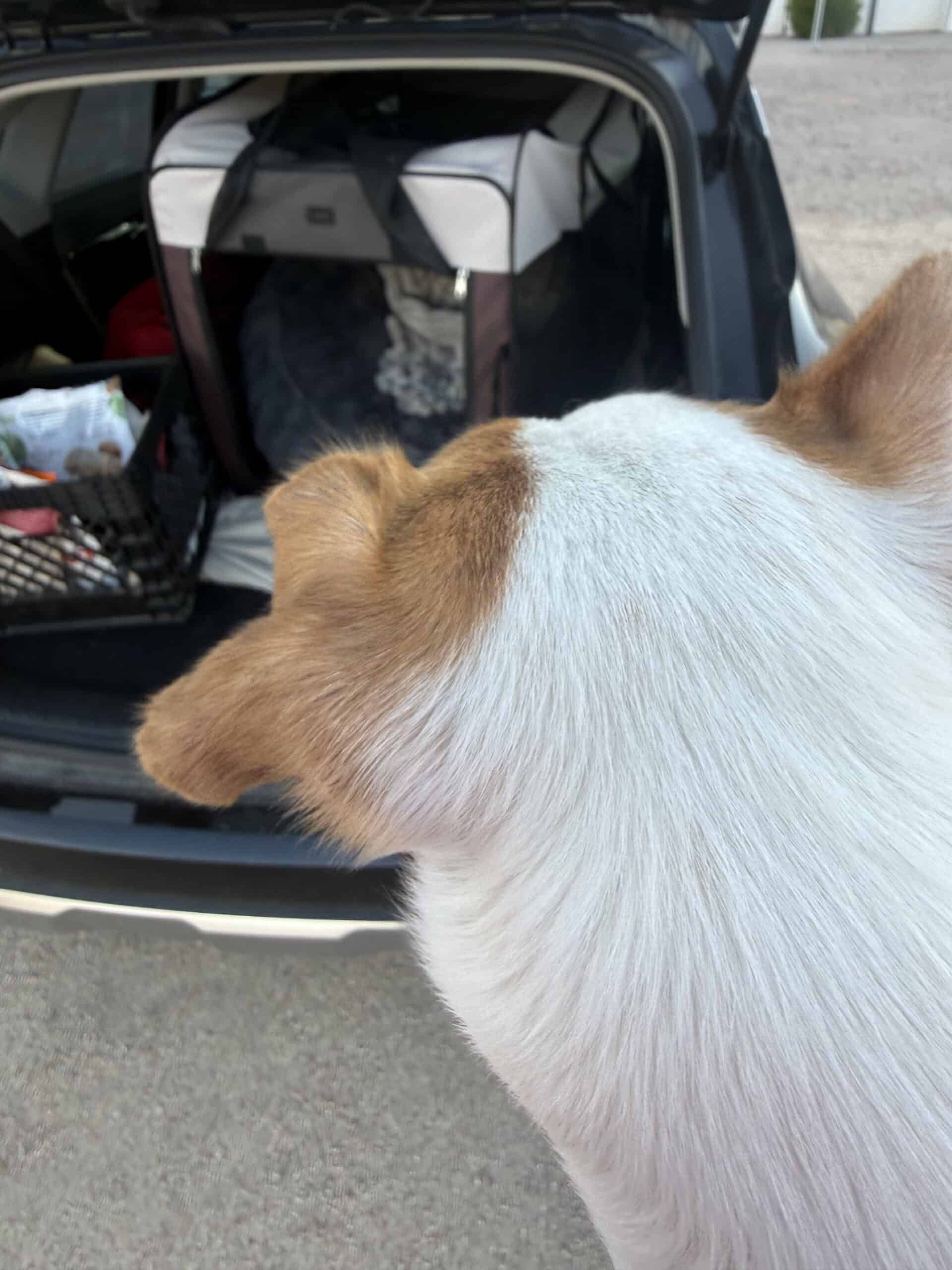
Most advice about lifting a dog into a vehicle assumes the dog cannot manage the jump. The more common situation is a dog who can jump and probably should not be doing it repeatedly.
I pick her up and put her in her kennel in the car, and lift her back out at the other end. Not because she is unwilling, but to protect her joints, and the vehicle is an SUV so the load height is higher than a normal car. Our roundup of dog car barriers covers the vehicle setup.
A Note on Scope
This is general information rather than veterinary advice. Any dog showing stiffness, reluctance to jump, or difficulty with stairs should be assessed by a vet rather than simply lifted. Joint conditions are diagnosed, not inferred from behavior.
Quick Answer
Lifting is reasonable for small dogs where the vehicle load height is high relative to the dog. The landing impact rather than the jump up is what tends to concern owners.
What Changes the Answer
| Factor | Effect |
|---|---|
| Vehicle load height | SUVs and trucks are far higher than sedans |
| Dog size and build | Small dogs face a proportionally larger jump |
| Age | Older dogs recover less well from repeated impact |
| Frequency | Daily trips accumulate differently from occasional ones |
| Landing surface | Hard boot floors versus a padded bed |
| Owner capability | Lifting has to be safe for the person too |
Why Vehicle Height Matters So Much
The relevant measurement is not the dog’s size or the vehicle’s size on their own, but the load height relative to the dog.
An SUV or truck tailgate sits considerably higher than a car boot, and for a small dog that difference is proportionally enormous.
A jump that a large dog handles casually is, for a small dog, closer to jumping onto a kitchen counter.
That is why owners of small dogs with tall vehicles arrive at lifting independently, without anyone advising it. Our note on carrying a small dog on stairs covers the same reasoning indoors.
Jumping Down Is the Harder Part
Getting up into a vehicle is a controlled effort. Coming down is an impact, and the forces on landing are higher than those on takeoff.
Landing loads the front legs and shoulders first, since dogs come down front-end down from a height.
Repetition is what turns that from unremarkable into a consideration. A dog making the trip twice a day is landing several hundred times a year.
This is why many owners who let a dog jump up will still lift them down, which is a reasonable middle position rather than an inconsistency.
Lifting Safely
Support the chest and the rear together
One arm under the chest and one under the hindquarters keeps the spine level rather than letting the back end hang.
Never lift under the front legs alone
It puts the whole weight through the shoulders and armpits, which is uncomfortable and poorly supported.
Keep the dog close to your body
Held out at arm’s length, both the dog and your own back are worse off.
Bend at the knees
The same rule as any lift, and easy to forget with something that only weighs twenty-five pounds. Our roundup of dog lift harnesses covers assisted lifting.
When a Ramp Makes More Sense
Ramps let a dog load themselves, which preserves independence and removes the lift entirely for the owner.
They suit heavier dogs where lifting is genuinely hard on a person, and dogs with diagnosed joint conditions where a vet has advised against jumping.
The obstacles are practical. Ramps need storage space in the vehicle, take time to deploy at every stop, and many dogs need training to use one confidently.
For a small dog that can be lifted in two seconds, a ramp frequently ends up unused in a garage. Our roundup of dog stairs and ramps covers the options.
What Mine Involves
She gets picked up and placed into her kennel in the car, and lifted out again at the other end.
She is not unwilling to jump. The lifting is about protecting her joints rather than compensating for something she cannot do, which is a preventive choice rather than a response to a problem.
The SUV load height is the main reason it seems worth doing, since the gap is larger than it would be with a lower vehicle.
Her bed, a blanket, and a couple of toys go in with her, which is a separate consideration from the lifting and part of the same intention. Our note on making a crate comfortable for car travel covers that.
Protecting Your Own Back
Advice about lifting dogs rarely mentions the person, and vehicle loading is an awkward lift regardless of the dog’s weight.
The reach over a tailgate or into a rear seat puts the load away from your body at the moment it is heaviest.
Setting the dog down inside rather than holding position while arranging a crate reduces how long the awkward part lasts.
Anyone who finds the lift genuinely difficult should treat that as the reason to use a ramp, independent of what the dog needs.
Signs to Take Seriously
Preventive lifting is a choice. Reluctance to jump is information, and the two should not be confused.
A dog who previously jumped in willingly and now hesitates has changed, and that change is worth a veterinary conversation rather than an accommodation.
Stiffness after rest, difficulty with stairs, or a shortened stride are all things a vet assesses rather than an owner interprets.
Lifting a dog who is developing a problem can mask the signs that would otherwise prompt an earlier diagnosis. Our note on helping a senior dog with arthritis covers that.
Setting the Landing Area Up
Where a dog lands matters as much as whether they jump, and it is the easier thing to change.
A bare boot floor is hard plastic or thin carpet over metal, which absorbs almost nothing on impact.
A bed or thick blanket in the loading area gives the landing somewhere softer to arrive, and it costs nothing if the bedding is going in anyway.
Grip matters alongside cushioning. A dog landing on a slick surface scrabbles for traction, which twists joints in a way a clean landing does not.
The same applies at the other end of the journey, since a dog jumping down onto tarmac or concrete is landing on the hardest surface in the trip. Our roundup of dog car seat covers covers surfaces and grip.
Common Mistakes to Avoid
Lifting under the front legs
Puts the whole weight through the shoulders with nothing supporting the rear.
Assuming small means light work
The awkward reach into a vehicle matters more than the weight involved.
Letting them jump down onto hard ground
Landing is the higher-impact half, and a hard surface makes it worse.
Treating hesitation as preference
A dog who used to jump and now will not is telling you something worth investigating.
Lifting a Dog Into the Car FAQ
Should I lift my small dog into the car?
It is reasonable where the vehicle load height is high relative to the dog. An SUV tailgate is proportionally a very large jump for a small dog.
Do you lift yours?
Yes, in and out. Not because she is unwilling to jump, but to protect her joints, and the SUV height makes the gap larger than in a lower car.
Is jumping up or down worse?
Coming down is the higher-impact half, since landing loads the front legs and shoulders. Many owners allow the jump up and lift the dog down.
How should I lift a dog?
One arm under the chest and one under the hindquarters, keeping the spine level and the dog close to your body. Never lift under the front legs alone.
Is a ramp better?
For heavier dogs, or where a vet has advised against jumping. For a small dog that lifts in two seconds, ramps frequently go unused.
Does frequency matter?
It is the whole question. A dog making the trip twice daily is landing several hundred times a year, which is different from occasional travel.
What about my own back?
Vehicle loading is an awkward lift regardless of the dog’s weight, because the reach puts the load away from your body. That alone can justify a ramp.
When should I see a vet?
If a dog who used to jump willingly now hesitates, or shows stiffness after rest or difficulty on stairs. That is a change to assess rather than accommodate.
