
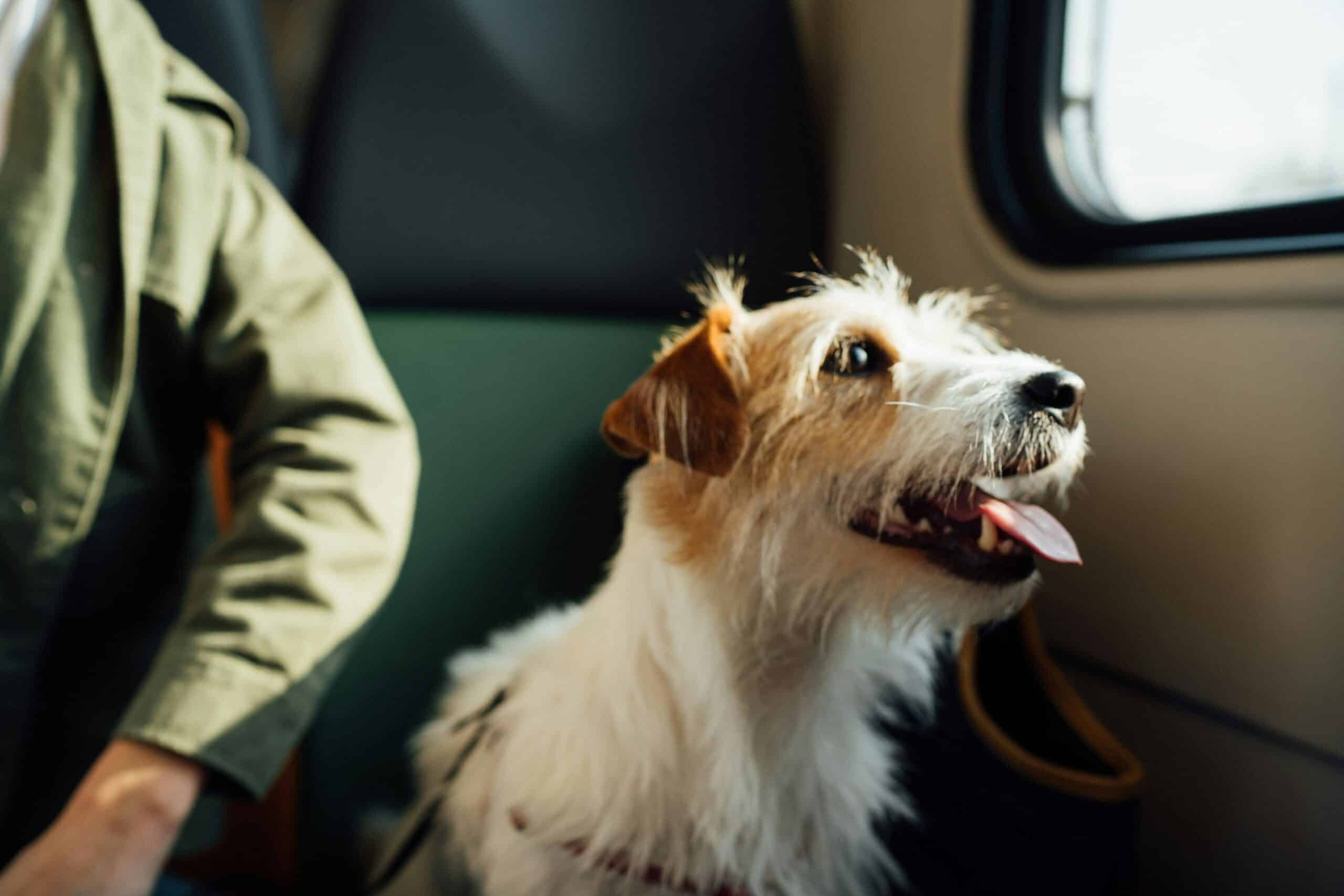
Flying with a dog comes down to three decisions made in order: whether your dog flies in the cabin or as cargo, whether your airline and destination will accept them, and whether your veterinarian signs off on the trip at all. Size decides the first one for you, since only dogs small enough to fit in a carrier under the seat can travel in the cabin.
The paperwork is where most plans fall apart, and the timing is unforgiving. The American Veterinary Medical Association notes that if your dog is traveling in the cargo hold, you should check whether the airline requires a health and acclimation certificate, in addition to any certificate of veterinary inspection, which needs signing by your veterinarian within 10 days of travel.1
A Quick Note
This article is general information and not veterinary advice. Whether your dog should fly at all is a question for your veterinarian, particularly for short-nosed breeds, senior dogs, puppies, and any dog with a heart or respiratory condition. Airline rules, destination requirements, and health certificate validity all change, so confirm current requirements directly with your airline before booking.
Quick Answer
Book your seat and your dog’s spot at the same time, since airlines cap how many animals travel per flight. Choose a nonstop flight, and in warm months an early morning or late evening departure. Get the certificate of veterinary inspection signed within the airline’s window, and do not sedate your dog.
Cabin, Cargo, or Not Flying at All
| Option | Who it suits | Key requirement | Main risk |
|---|---|---|---|
| In cabin, under seat | Small dogs in a soft carrier | Carrier fits under the seat in front | Limited spots per flight |
| Checked as baggage | Larger dogs, same flight as you | Health and acclimation certificate | Temperature and breed restrictions |
| Manifest cargo | Large dogs, relocations | Airline cargo booking and paperwork | Handling and connection times |
| Ground transport | Dogs who should not fly | Time and driving distance | Trip length |
| Pet sitter or boarding | Dogs unsuited to travel | Vaccination records | Separation, facility quality |
Key Points
- Book your dog’s spot when you book your own, since airlines limit animals per flight
- A certificate of veterinary inspection typically needs signing within 10 days of travel
- Nonstop flights avoid the handling and delay risk of connections
- Sedation is advised against for air travel unless a veterinarian says otherwise
- Short-nosed breeds face additional restrictions and additional risk
- A defective or ill-fitting crate is a leading cause of escape and injury in transit
Decide Whether Your Dog Should Fly
This is the first question and the one most often skipped. AVMA’s guidance is direct that some pets should not travel due to illness, injury, or temperament, and that hiring a reliable pet sitter or using a well-managed boarding facility is the alternative to consider.2
Short-nosed breeds are the clearest case. Pugs, bulldogs, boxers, Boston terriers, shih tzus, and similar breeds have compromised airways at the best of times, and heat, stress, and reduced air circulation compound that. Many airlines restrict or refuse them outright, and AVMA maintains specific guidance for these breeds.1
Age, existing conditions, and temperament matter too. A dog who has never been crated, who panics in confinement, or who is managing a heart or respiratory condition is not a good candidate for a cargo hold. Have that conversation with your veterinarian before you book anything, not after.
Sort the Booking and the Paperwork
Reserve your dog’s place when you reserve your own seat. AVMA notes that reservations should be made at the same time because airlines often limit how many pets are allowed on each flight.3 Cabin spots in particular fill early on popular routes.
Book nonstop where you can. AVMA advises booking a nonstop flight and avoiding layovers and busy holidays, and in warm weather choosing early morning or late evening flights when temperatures are lower.1 Connections add handling, waiting on tarmacs, and the chance of a missed transfer.
For the paperwork, expect a certificate of veterinary inspection signed within 10 days of travel, plus a health and acclimation certificate if your dog is going in the cargo hold. Destination requirements are separate again, and international travel adds vaccination timelines that can run months rather than days. Check destination rules before booking flights, not after.
Choose and Prepare the Crate
The crate matters more than most people expect. AVMA states that defective crates or carriers are the most common cause of escaped or injured animals during air travel.1 A crate that is sound, correctly sized, and properly latched is doing real safety work.
Size is regulated: your dog should be able to stand, turn around, and lie down naturally. Too small fails inspection, and too large lets a dog slide during turbulence. Ventilation must be unobstructed on the required number of sides, and hardware should be bolted rather than clipped.
Prepare well ahead. A dog meeting their travel crate for the first time at the airport is being asked to do something difficult with no preparation. Feeding in it, letting them sleep in it, and building positive association over weeks is the work that makes travel day manageable, and it follows the same approach as crate selection and introduction generally.
Label it clearly with your contact details, your dog’s name, and feeding instructions. AVMA notes that unless specified by a veterinarian, you cannot instruct handlers to withhold food and water entirely.
Do Not Sedate
This is the point where well-meaning owners cause the most harm. AVMA’s position is that sedatives and tranquilizers should not be given to pets traveling by air unless a veterinarian determines it is medically necessary for that individual animal.
The reason is altitude. A sedative that produces mild calm at ground level can have exaggerated effects in a pressurized hold, with documented risks to breathing and cardiovascular function, plus loss of balance that can lead to injury inside the crate. Airlines including major US carriers refuse sedated animals for this reason.
If anxiety is the concern, address it through crate conditioning in the weeks beforehand and by discussing options with your veterinarian, who can advise on what is and is not appropriate for your dog specifically.
Travel Day
Exercise your dog well before leaving for the airport. A tired dog settles better than a fresh one, and AVMA suggests arriving early enough to give your pet a chance to move before check-in.3
If your dog is flying in the cabin, check in as late as the airline allows, which reduces the time spent waiting in a busy terminal. If your dog is going in the hold, tell the flight attendant once you board that your dog is in the cargo hold, and collect them as soon as you land.3
Carry a photo of your dog and copies of their health paperwork with you rather than only attached to the crate. Labels come off, and a photo makes identification straightforward if anything goes wrong. Also research veterinarians at your destination in advance, since finding one during an emergency in an unfamiliar city is not the time to start.
What Trips People Up
Leaving the health certificate too late
Certificates have a validity window measured in days, and veterinary appointments are not always available at short notice. Book the appointment as soon as flights are confirmed.
Buying the crate the week before
A dog needs weeks to accept a crate, not days. Late purchase is how dogs end up spending their first crated hours in a cargo hold.
Assuming your airline’s rules match another’s
Breed restrictions, temperature limits, carrier dimensions, and fees all vary by carrier and change seasonally. Confirm with your specific airline for your specific dates.
Booking a connection to save money
Every connection adds handling, tarmac time, and the possibility of a missed transfer with a dog in the hold. Nonstop is worth paying for here in a way it usually is not.
Related Reading
- the wider picture on traveling with dogs
- carrier options and sizing
- driving as an alternative to flying
- packable bowls for the journey
- bedding for unfamiliar places
Frequently Asked Questions
Can my dog fly in the cabin with me?
Only if they are small enough to fit in an approved carrier under the seat in front of you, and only if the airline has a spot available. Airlines cap the number of animals per flight, so book your dog’s place at the same time as your own seat.
Is it safe for a dog to fly in cargo?
Millions of animals fly each year and most arrive without incident, but cargo carries more risk than the cabin. Nonstop flights, moderate temperatures, a sound crate, and a veterinary assessment beforehand are what reduce that risk.
Should I sedate my dog for a flight?
No, unless your veterinarian determines it is medically necessary. AVMA advises against sedatives and tranquilizers for air travel because their effects are unpredictable at altitude, and many airlines refuse sedated animals outright.
What paperwork does my dog need to fly?
Typically a certificate of veterinary inspection signed within 10 days of travel, and for cargo travel a health and acclimation certificate as well. Destinations have their own requirements, and international travel may involve vaccination timelines measured in months.
What size crate does my dog need?
Large enough to stand, turn around, and lie down comfortably, with unobstructed ventilation. Oversized crates allow sliding during turbulence, and undersized ones fail airline inspection, so measure rather than estimating.
Can short-nosed breeds fly?
Many airlines restrict or refuse them, and the risk is genuinely higher because of their compromised airways. AVMA publishes specific guidance for short-nosed breeds, and this is a conversation to have with your veterinarian before booking.
When should I talk to my veterinarian?
Before booking, not after. Your vet can advise whether your dog is a suitable candidate at all, handle the required certificates within their validity window, and discuss anything specific to your dog’s age, breed, or health.
Sources
- American Veterinary Medical Association, “Traveling with your dog or cat.” https://www.avma.org/resources-tools/pet-owners/petcare/traveling-your-animal
- American Veterinary Medical Association, “Traveling with Your Pet.” https://ebusiness.avma.org/files/productdownloads/TravelingWPet_2016.pdf
- American Veterinary Medical Association, “Traveling with your pet FAQ.” https://www.avma.org/public/PetCare/Pages/Traveling-with-Your-Pet-FAQs.aspx
