
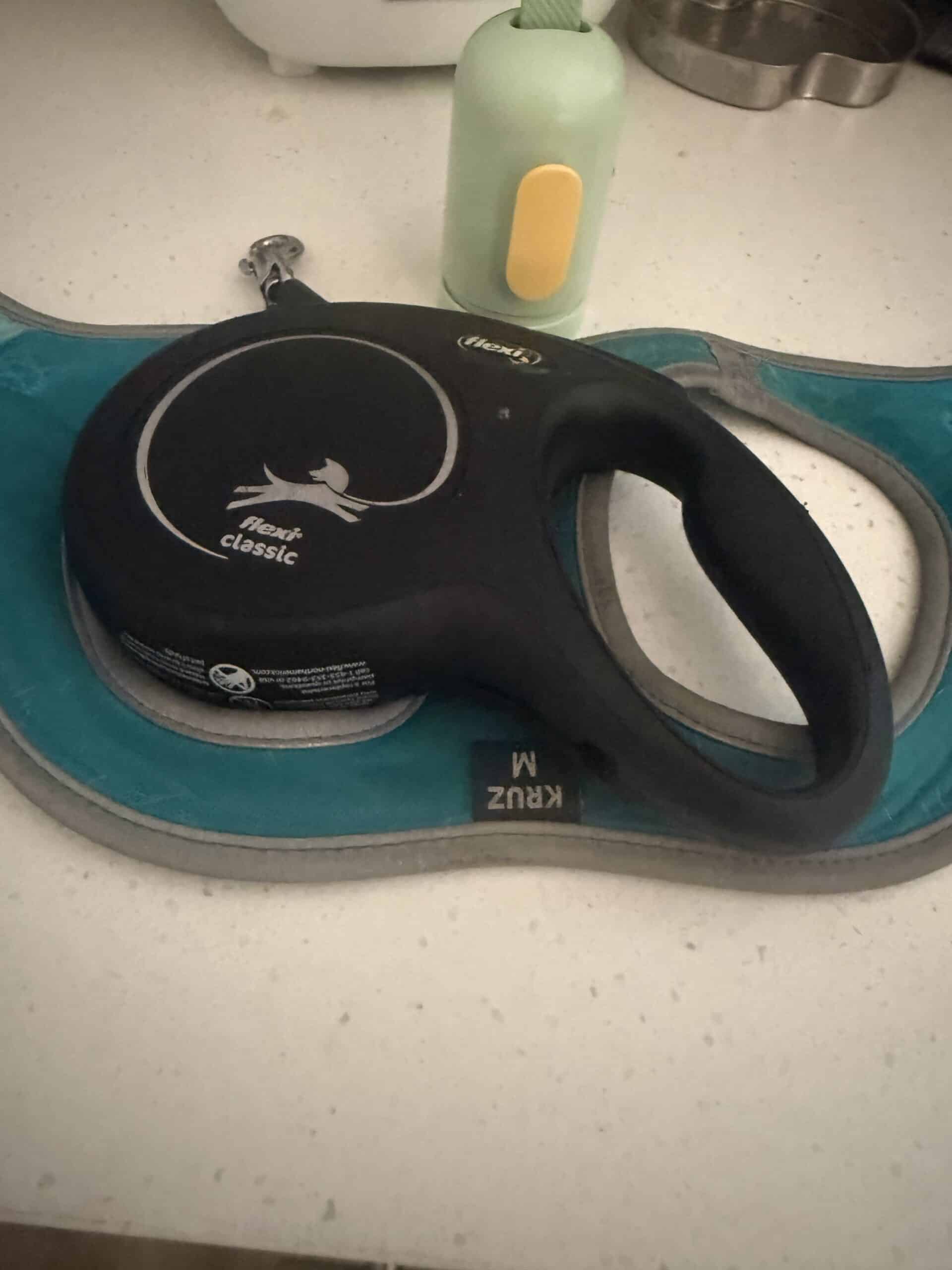
One spot near the door, and clip the bag dispenser to the leash so it can never be somewhere else. That single arrangement removes most of the reason people leave the house without something, because the two items that matter most are physically attached to each other.
Everything beyond leash and bags is optional and varies by household. What does not vary is that supplies split across three locations produce a hunt every time you go out, and a dog watching you hunt gets more wound up with every second.
Quick Answer
Pick one location near the exit and put the leash, harness, and bags there permanently. Clip the dispenser directly to the leash. Hooks work for hanging, a drawer or basket works for the rest, and consistency matters more than which you choose.
Key Points
- One location beats a good system spread across several
- A dispenser clipped to the leash cannot be forgotten separately
- Near the door matters more than tidy
- Height decides whether a dog can help themselves to it
- Wipes and extras can live elsewhere without causing problems
- The spot only works if you return things to it every time
What Belongs in the Main Spot
| Item | Where it goes | Why |
|---|---|---|
| Leash | Main spot, hung or in reach | Needed every single time |
| Bag dispenser | Clipped to the leash | Cannot be separated or forgotten |
| Harness | Main spot, alongside the leash | Goes on before the leash clips |
| Refill bag rolls | Drawer or basket nearby | Needed occasionally, not each walk |
| Treats | Main spot if used on walks | Only if part of the routine |
| Wipes | Wherever suits | Not needed on every trip |
| Water bottle | Nearby in warm months | Seasonal rather than constant |
Why One Location Beats a Clever System
Elaborate storage fails for the same reason simple storage works. Every extra location is another place to check, and checking happens while a dog is already excited about going out.
The failure mode is predictable. Leash by the door, harness in a bedroom, bags in a kitchen drawer, and every walk starts with a circuit of the apartment.
Consolidating removes the decision. There is one place, everything is there, and you either grab it or you notice immediately that something is missing. Broader setup sits in setting up an apartment for a dog.
How Mine Is Set Up
Everything lives in one spot, apart from the wipes. Leash, harness, and bags are together, and the wipes sit somewhere else because they are not part of every trip.
My dispenser is clipped to the leash. That is the arrangement I would recommend above any storage product, because the bags travel with the thing you cannot leave without.
I have drawer and counter space available for the leash and harness, which is more room than a lot of entryways offer. Having the space did not change the approach, since the point is that everything is in the same place rather than that the place is large.
I have not walked out without something, and I think that is the arrangement rather than me being organized. There is nothing to remember when the answer to where anything is has only one answer.
My experience covers one small dog in an apartment with four trips out a day. It does not cover multi-dog households, houses with several exits, or homes where a yard means the leash comes out less often.
Storage That Works Near a Door
Wall hooks
The default for a reason. A leash hangs without tangling, stays visible, and takes no floor or counter space. Two hooks let the harness hang beside it.
A drawer
Keeps things out of sight, which suits anyone whose entryway is also a living space. The tradeoff is that a closed drawer hides whether something is missing.
A basket or tray
Everything drops in, nothing needs hanging, and it works on a counter or a shelf. Least tidy and lowest friction, which is often the right trade.
An over-the-door organizer
Uses space that has no other purpose, and it suits households where several people take the dog out and need everything visible.
Getting Out the Door Faster
The storage spot is half of it. The other half is the order you do things in, which most people never think about until a dog is spinning by the door.
Harness before leash, every time. Clipping a leash to a collar first and then wrestling a harness on afterwards means managing an attached dog with both hands occupied.
Get the harness on somewhere the dog stands still, which is rarely at the door itself. A few feet back into the room works better, since proximity to the exit raises excitement past the point of cooperation.
Doing it the same way each time also helps the dog. A predictable sequence becomes a cue that settles rather than escalates, and the fitting side sits in fitting a dog harness properly.
Height Matters More Than People Expect
A leash within reach of a dog is a chew toy eventually. So is a harness, and so is a roll of bags, and each one is a genuine hazard rather than just an expense.
Storing above dog height solves it without any training. Hooks at adult shoulder level are out of reach for most dogs, and a closed drawer works equally well.
The exception is a household with a dog trained to bring their own leash, and even then a supervised routine differs from unsupervised access. Chew alternatives sit in choosing a dog chew.
What Does Not Need to Be There
Wipes, towels, and grooming items get used after some walks rather than before any. Keeping them near a sink or in a bathroom makes more sense than crowding the exit, and options sit in grooming wipes.
Spare bag refills belong nearby rather than in the dispenser spot, since you need them every few weeks rather than every day.
Seasonal gear moves in and out. Cooling items in summer and reflective gear for dark evenings both belong in the main spot during their season and elsewhere the rest of the year, covered in reflective collars for night walks.
Keeping the Spot Working
The whole arrangement depends on things going back. A leash dropped on a sofa after one walk is the beginning of the scattered version returning.
Returning items immediately on getting in works better than intending to later, since later never has a specific time attached to it.
Where several people walk the dog, the spot has to be obvious enough that nobody invents their own. Visible storage beats hidden storage in that situation, whatever it costs in tidiness.
When One Spot Is Not Enough
A single location suits one dog, one exit, and one main walker. That covers most apartments and plenty of houses.
Multiple exits change it, and a second small set at the back door prevents carrying everything through the house. Multi-dog households need each dog’s leash and harness identifiable rather than pooled, since sorting them at the door defeats the purpose. Gear choices sit in apartment dog gear.
Related Reading
- arranging the wider space
- dispensers that clip on
- what to actually carry
- matching leash and harness
- gear suited to apartments
- getting the harness right
Related: to keep by the door for a dog.
Frequently Asked Questions
Where should I keep my dog’s leash?
One consistent spot near the exit you use, above dog height. Hooks, a drawer, or a basket all work, and which you choose matters far less than everything being in the same place every time.
How do I stop forgetting poop bags?
Clip the dispenser directly to the leash. The bags then travel with the one item you cannot leave without, which removes forgetting them as a possibility rather than relying on memory.
Should walking supplies be within the dog’s reach?
No. Leashes, harnesses, and bag rolls all get chewed given the opportunity, and that is a hazard as much as an expense. Hooks at adult shoulder height or a closed drawer both solve it.
Do I need a dedicated storage unit?
Rarely. A hook and a basket cover most households, and elaborate systems add locations to check rather than removing them. Consistency does the work, not the product.
Where should wipes and towels go?
Near a sink or in a bathroom, since they get used after some walks rather than before any. Keeping them at the door crowds the spot with things you do not need on the way out.
What about households with several people?
Visible storage beats hidden storage, since everyone needs to see where things go without being told. A drawer works for one person and a hook works better for four.
Should I keep a second set by another door?
If you regularly use two exits, yes. Carrying everything through the house each time is the friction that eventually causes someone to leave the leash wherever they finished.
What you store depends on what you own. building a gear list covers the essentials.
