
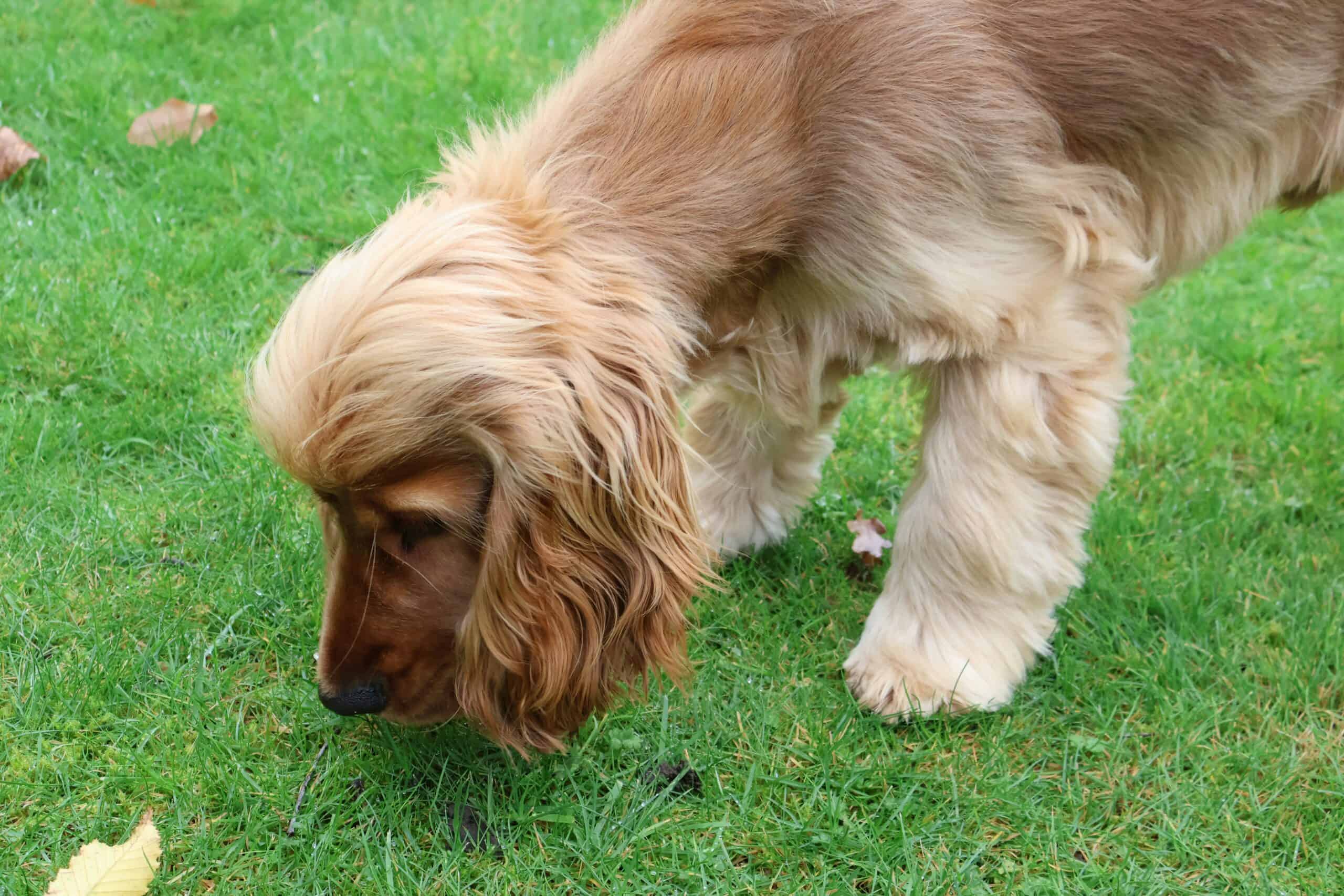
How to stop a dog from eating poop is one of the most Googled training questions because it’s also one of the most frustrating. The behavior has a clinical name (coprophagia), a long list of possible causes, and an embarrassing tendency to happen right in front of dinner guests. Owners often try everything in random order: deterrent sprays, pineapple, hot sauce, scolding, and hovering during walks. Most of it fails because the underlying cause hasn’t been identified. Comparing options? See our best dog poop scoopers roundup.
The behavior is more common than people think. It’s also rarely a sign of disease, though a vet visit is a sensible first step to rule out malabsorption, parasites, or nutritional gaps that can drive the habit. Once medical causes are ruled out, the fix is almost always behavioral and environmental.
This guide walks through the seven-step approach that actually works: rule out medical causes, manage the environment, adjust nutrition, retrain the response, and stay consistent long enough for the new pattern to stick.
Key Takeaways
- Coprophagia is common, rarely dangerous, and almost always reversible with the right combination of medical workup, environmental management, and training.
- Cleanup discipline beats deterrent sprays nearly every time; if there’s nothing to eat, the habit can’t reinforce itself.
- Nutritional gaps and malabsorption can drive the behavior; a vet visit before training adjustments is worth the trip.
- Punishment makes the problem worse by adding stress to an already self-reinforcing behavior.
Why Dogs Eat Poop in the First Place
Coprophagia is a behavior, not a disease. Dogs eat feces for several reasons that range from completely normal to mildly concerning, and identifying the driver is what separates the dogs that respond to training in two weeks from the dogs that frustrate owners for years.
The common drivers fall into four categories. The first is normal canine behavior: mother dogs clean puppies by consuming waste, and puppies sometimes carry the behavior past weaning. The second is nutritional: a diet that doesn’t fully digest or doesn’t deliver the right enzyme balance can leave feces smelling like food to the dog. The third is environmental: bored, anxious, or under-exercised dogs sometimes self-stimulate through scavenging. The fourth is medical, including malabsorption disorders, parasites, exocrine pancreatic insufficiency, and conditions that increase hunger, like diabetes or Cushing’s disease.
Most dogs fall into category two or three. The training response depends on figuring out which.
Step 1: Rule Out Medical Causes With a Vet Visit
Before changing food, buying deterrents, or starting new training, get a vet exam. A simple appointment can rule out parasites (a fecal test catches the most common ones), malabsorption (bloodwork covers most causes), and the underlying conditions like Cushing’s or diabetes that drive scavenging through increased hunger.
This step is the one most owners skip. It’s also the one that saves the most time. A dog with hookworms or Giardia will not stop eating poop until the parasites are gone, no matter how good the training is. A dog with pancreatic insufficiency needs enzyme replacement, not behavior modification.
The vet visit also opens the conversation about diet quality. If the current food is contributing to incomplete digestion, switching to a more digestible formula often solves the problem within weeks. Foods designed for sensitive stomachs (see dog food for sensitive stomachs) sometimes work simply because the dog absorbs more of what they eat.
Step 2: Clean Up Immediately and Consistently
The single most effective intervention is the simplest one: pick up waste the moment it happens, every time, with no exceptions. A dog that never has access to feces cannot develop or maintain the habit.
This sounds obvious. It’s also where most households fail. The yard that gets picked up once a week instead of after each elimination is the yard where coprophagia thrives. Carry waste bags on every walk. Pick up immediately in the yard. If multiple dogs share a space, supervise eliminations and clean between them.
For yard maintenance, a dedicated scoop and a sealed disposal system reduce the friction enough that the habit of immediate cleanup actually sticks. See our roundups of dog poop scoopers for the picks that hold up.
This step alone resolves the issue for many dogs within a few weeks. The behavior fades because it stops being reinforced.
Step 3: Manage the Environment During Walks
Walks present the harder version of the same problem because cleanup discipline depends on someone else’s choices, too. Other people’s dogs, public spaces, and dog parks all generate waste that isn’t always picked up promptly.
The management strategy is awareness plus a reliable leash response. Keep the dog on a short enough leash that you can intercept before they reach anything. Scan the path ahead. Cross the street to avoid known hot spots. If the dog locks onto something on the ground, redirect with a verbal cue and a treat reward before they reach it.
The training cue (often “leave it”) is the bedrock skill, and one of the foundation behaviors our complete dog training guide walks through in detail. It transfers to dropped food, dead animals, and anything else that doesn’t belong in the dog’s mouth. Build it with high-value training treats during low-stakes practice (see dog treats for training), so the dog has a strong association before the real-world test.
Step 4: Address Nutritional Drivers
Dogs eating their own waste sometimes do so because the waste still smells like food. Incomplete digestion leaves enough nutrients in the stool to make it interesting. Several adjustments can shift this.
First, evaluate the current food. A higher-quality protein source, more digestible carbohydrate, and an appropriate fiber level can resolve the problem at the source. Foods specifically formulated for digestion (often labeled “sensitive stomach” or “highly digestible”) often help.
Second, consider whether the mealtime structure is contributing. Free-feeding (food available all day) can interfere with normal digestion patterns. Two scheduled meals a day, eaten at consistent times, often produce firmer and less interesting stools.
Third, digestive support through probiotics can improve nutrient absorption. Slow-feeder bowls (see slow feeder bowls for dogs) also slow rapid eaters whose digestion suffers from gulping.
Step 5: Increase Mental and Physical Stimulation
Bored dogs invent ways to entertain themselves. Coprophagia is one of those inventions for dogs with unmet stimulation needs.
The fix isn’t just more walks. It’s the right combination of physical exercise, mental work, and household engagement. Most dogs need significantly more of all three than they get.
Mental work is often the biggest gap. Puzzle feeders that make the dog work for meals provide twenty minutes of focused engagement and tire them out more than the same time spent walking. Interactive toys, training sessions, and scent games add variety. See our roundup of puzzle feeders for smart dogs for the picks worth starting with.
Aggressive chewers benefit from a rotation of durable toys that occupy them without destruction (see chew toys for aggressive chewers). A dog with a satisfying chew habit has less drive to scavenge.
Step 6: Retrain the Response
Active retraining works once the environment is managed and the underlying drivers are addressed. The training is straightforward but requires consistency.
Start with a strong “leave it” cue in a controlled setting. Place a treat on the floor under your foot, ask the dog to leave it, and reward heavily when they look away. Build up to treats they can see but not reach. Move to walks with planted distractions. The goal is to make “leave it” reflexive enough to work in the real-world moment.
Pair this with a strong recall cue. A dog that comes when called interrupts the scavenging sequence before it completes. Practice recall daily in low-distraction settings before testing it where it matters.
Reward heavily for ignoring waste, even after months of training. The behavior tends to recur in stressful situations or when the environment shifts. Maintain the reinforcement at low intensity indefinitely.
For dogs that struggle with the underlying anxiety driving the behavior, pheromone-based calming products can take the edge off.
📑 Recommended Read: Coprophagia is one of several behavioral issues that respond best to a complete training framework rather than spot fixes. Check out our complete guide on How to Train a Dog for the foundation skills that make every other training problem easier to solve.
Step 7: Stay Consistent Long Enough for the Habit to Fade
The behavior takes weeks to fade once the conditions that created it are gone. Owners who switch food, clean up the yard, add stimulation, and start training all in one week sometimes get discouraged when the dog still scavenges on day three. The expectation is wrong.
Two to six weeks of consistent management is typical. Some dogs need longer. The trajectory is what matters: incidents getting less frequent over time, not zero incidents tomorrow.
Lapses are normal. A single relapse doesn’t mean the approach failed. It means the dog encountered a temptation that beat the current level of management. Tighten the management briefly, reinforce the training, and continue.
Common Mistakes
Punishing the dog. Yelling, scolding, or physical correction makes the problem worse. It adds stress to a behavior that’s often already stress-driven, and it can teach the dog to scavenge faster or hide it.
Using deterrent additives in food without addressing root causes. Products that make feces taste bad (pineapple, commercial deterrents) sometimes help in the short term, but don’t address the underlying driver. They also only work in single-dog households where the dog only eats their own waste.
Skipping the vet visit. Time and money spent on training a dog with an underlying medical cause are wasted until the medical cause is addressed.
Inconsistent cleanup. A yard cleaned three days a week instead of every elimination keeps the habit alive at low intensity.
Free-feeding through the training period. Scheduled meals create more digestive regularity and give you control over reinforcement timing.
Giving up after a week. The habit takes time to fade. Six weeks of consistent work resolves most cases.
Going to dog parks during retraining. Dog parks combine waste, distractions, and limited owner control. They make every other step harder.
Treating it as a moral failure. Dogs that eat poop aren’t dirty or broken. They’re animals with a self-reinforcing behavior pattern that needs to be unwound.
When to Check Back With the Vet
Most cases resolve with the steps above. A few warrant a second vet conversation:
- The behavior started suddenly in an adult dog with no prior history
- The dog is also losing weight, vomiting, or has diarrhea
- The dog seems hungrier than usual or is drinking more water
- Stool quality is consistently poor (loose, oily, undigested food visible)
- The behavior persists after six weeks of consistent management
- Other anxiety symptoms appear alongside the scavenging
- The dog is eating other inappropriate items (rocks, fabric, mulch)
- You’re in a multi-dog household, and one specific dog is targeted
Frequently Asked Questions
Is coprophagia dangerous? Usually no. The main risks are intestinal parasites if eating other animals’ waste, and the issue of household hygiene. A dog eating their own waste is generally not at health risk from the behavior itself.
Why does my dog only eat other dogs’ poop? This is the more common pattern. The other dog’s food, digestion, or scent makes the waste more interesting. The same training approach works, just with stricter walk management.
Does pineapple actually work? Some dogs respond to additives that change the smell or taste, but the effect is inconsistent and only works on the dog’s own waste. Cleanup discipline outperforms it for most households.
Should I switch to a raw or grain-free diet? Not without vet input. Diet changes for coprophagia should target digestibility, not food trends. Speak with a vet about the right adjustment for your dog.
Will my dog grow out of it? Puppies often do. Adult dogs that have been doing it for years usually need active intervention.
Why does my dog do this only sometimes? The behavior is often situational, triggered by stress, boredom, environmental access, or hunger. Identifying the trigger helps target the fix.
Can I use a basket muzzle on walks? Yes, as a management tool during retraining. A basket muzzle lets the dog drink, pant, and take treats while preventing scavenging. It’s a tool, not a punishment.
Is it normal for a mother dog to eat puppy waste? Yes. Mother dogs clean their puppies by consuming waste for the first few weeks. This is normal and protective.
My dog eats poop in the yard, but not on walks. Why? The yard offers privacy and time. Walks involve more handler attention and shorter exposure. Yard cleanup discipline is the fix.
Recommended Reading
See also our guides to dog poop bags and dispensers, how to slow down a fast eating dog, and how to stop a puppy from biting.
Related Reading
Explore more: how to slow down a fast eating dog, stop cat scratching furniture, dog doggles and sunglasses, dog gates, dog muzzles, dog jackets cold weather, how to teach dog come called, and dog tents camping shelters.
