
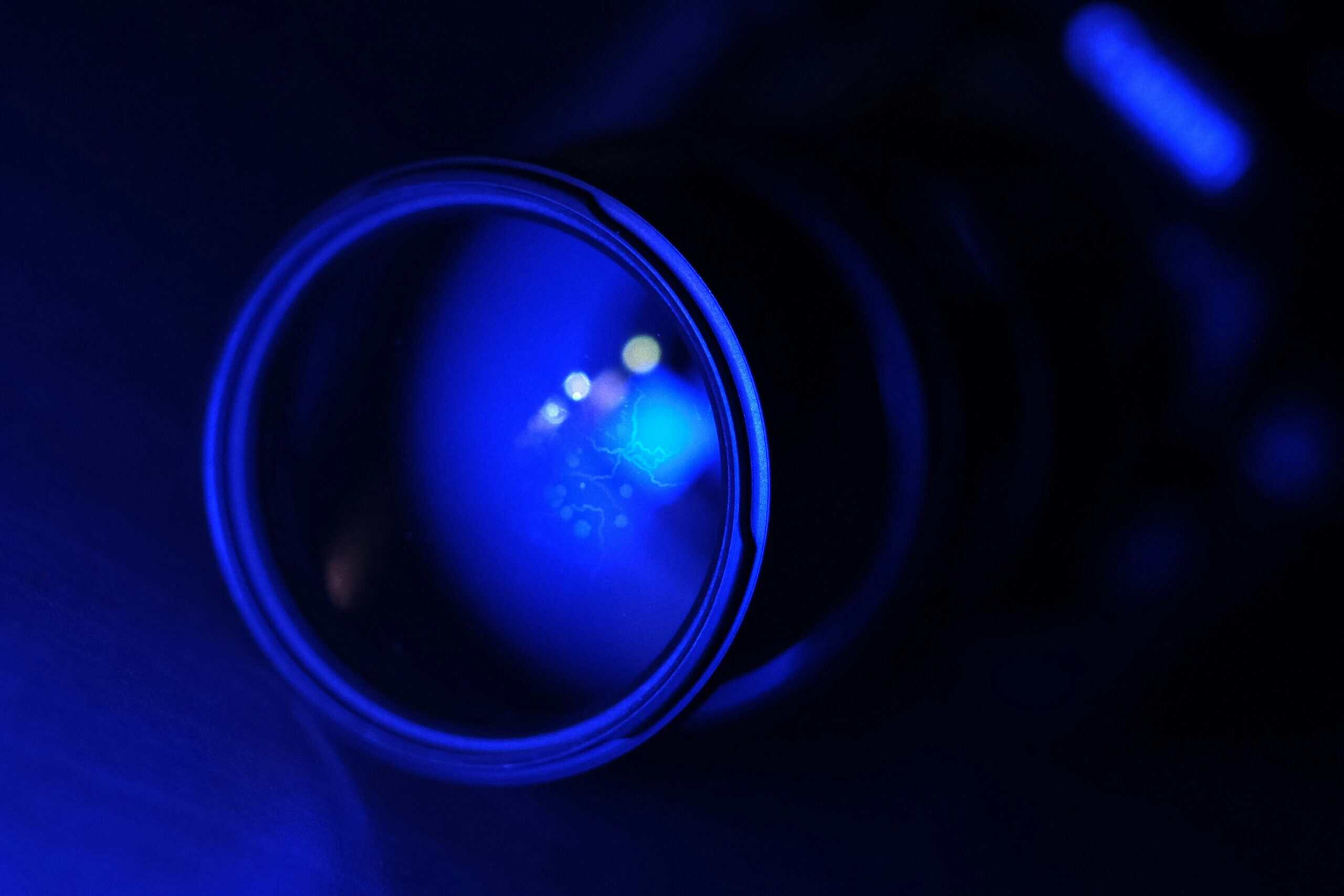
A good UV blacklight flashlight makes dried pet urine glow faintly yellow or green in a fully darkened room, so you can find the spot your nose keeps hinting at. UV blacklight flashlights work because urine carries phosphorus and other compounds that fluoresce under ultraviolet light. That fluorescence is the whole trick, and it is why a cheap purple keychain light and a serious 365nm torch behave so differently.
The light itself does not clean anything. It only shows you where to aim an enzyme-based stain remover once the room goes dark. Finding the spot is step one, and treating it properly is step two.
This guide walks through six categories of UV light, what separates them, and how to read what you see on the floor. It also covers the false positives that send people scrubbing clean carpet at midnight. Expect plain explanations rather than sales talk.
Quick Verdict
A 365nm UV flashlight is the right pick for most households, because it emits far less visible violet haze and lets faint stains stand out against dark carpet. A 395nm budget light still finds strong stains and costs less. Rechargeable models suit anyone hunting repeatedly, and keychain lights handle quick spot checks.
Key Takeaways
- 365nm lights show weak and old stains more clearly because they throw less visible purple light into the room.
- 395nm lights are cheaper and brighter to the eye, but that visible glow washes out faint marks.
- The room must be genuinely dark, not dim, or nothing useful appears.
- Lint, carpet fibers, detergent residue, and some cleaning products also fluoresce, so a glow is not automatic proof of urine.
- Dried older stains fluoresce more reliably than fresh wet ones.
- An enzyme cleaner removes the stain and the odor, while the light only locates it.
How We Picked
This guide is research-based. It draws on manufacturer specifications, wavelength behavior, and the recurring themes in owner reviews across popular UV flashlight listings.
Categories came first, brands second. Shoppers usually decide between a serious 365nm light, a cheap 395nm one, a floodlight, a rechargeable model, a bundle, or a keychain light.
Each category earned a spot because it solves a different problem. A studio apartment with one suspicious rug does not need what a multi-pet house with three levels of carpet needs.
Nothing here relies on a single feature spec. Wavelength, beam shape, power source, and filtering matter more together than any one number does on its own.
1. A 365nm UV Flashlight, Best Overall
Why It Stands Out
A 365nm light sits closer to true ultraviolet, so far less of its output lands in the visible violet range. Your eyes see a dim glow, and the fluorescing stain appears bright against it.
That contrast is the whole reason these cost more. Faint marks, old spots, and stains on patterned carpet all read more clearly than they do under a purple flood.
Better models add a filter that blocks stray visible light. The result looks almost dark to the eye until something fluoresces.
Worth Knowing
Because the beam looks dim, first-time users often assume the light is weak or broken. It is not. Turn off every lamp, cover the window, and the difference becomes obvious.
These lights also reveal more false positives, simply because they reveal more of everything. Expect to see lint, fibers, and old cleaning residue glowing alongside actual urine.
Choose this if you have a recurring odor you cannot trace, light or patterned carpet, or several pets. Skip it if you already know exactly where the accident happened and just want confirmation.
Check Price on Amazon2. A 395nm Budget UV Flashlight, Best for Value
Why It Stands Out
A 395nm light costs a fraction of a good 365nm torch and finds obvious stains without trouble. For a single known accident on dark carpet, that is often enough.
These are also the most widely available UV lights. Almost every general-purpose blacklight sold for pet use sits at this wavelength.
Battery life tends to be generous, since the LEDs are simple and undemanding. Many run on standard AA cells you already keep in a drawer.
Worth Knowing
The tradeoff is visible purple light. A 395nm beam floods the room with violet, and that glow sits on top of everything you are trying to see.
Weak stains and old dried marks can disappear into that haze entirely. You may sweep a room, find nothing, and wrongly conclude the carpet is clean.
Pick this if your budget is tight or the stain is recent and large. Skip it if you are chasing a mystery smell, because the false negatives will frustrate you.
Check Price on Amazon3. A Wide-Beam UV Floodlight, Best for Large Rooms
Why It Stands Out
A floodlight spreads UV across a wide area instead of concentrating it into a narrow circle. Sweeping a whole living room takes minutes rather than a slow grid crawl.
This shape suits open floor plans and long hallways. It also helps when a cat has been marking in several places rather than one.
Some models mount on a tripod or sit on the floor facing outward. That frees both hands for marking spots with tape or sticky notes.
Worth Knowing
Spreading light over a wider area lowers intensity at any single point. Faint stains that a focused beam would catch can slip past a flood.
Many people end up using a floodlight to narrow the search, then a focused torch to confirm. That two-step approach works well and is worth planning for.
This suits large homes, whole-floor sweeps, and anyone pairing UV work with a machine built for pet messes. Skip it for a single small room or an apartment.
Check Price on Amazon4. A Rechargeable UV Flashlight, Best for Repeat Use
Why It Stands Out
Hunting for stains burns batteries faster than people expect. A full-house sweep can mean twenty or thirty minutes of continuous runtime.
Rechargeable models charge over USB and stay ready in a drawer. That matters if you check the same problem area weekly.
Built-in cells also allow steadier output. Alkaline batteries dim as they drain, and dimming UV quietly reduces what you can detect.
Worth Knowing
A rechargeable light is only useful if it is actually charged. Keep it plugged in near the litter area or hallway you check most.
Sealed cells eventually wear out, which limits the useful life of the whole light. Removable cells avoid that problem when they are offered.
This fits households actively managing a marking habit or training a puppy. Skip it if you expect to use a UV light twice a year.
Check Price on Amazon5. A UV Flashlight Bundled with Enzyme Cleaner, Best Complete Kit
Why It Stands Out
Finding a stain and treating it are two separate jobs. A bundle puts the light and the enzyme cleaner in the same box, which saves a second trip.
Enzyme cleaners break down the compounds that cause lingering odor. Ordinary carpet shampoo often lifts the color while leaving the smell behind.
Bundles also reinforce the right habit. Mark the glowing spot, treat it immediately, and recheck once it dries.
Worth Knowing
Bundle quality varies on both halves. Sometimes the light is decent and the cleaner is thin, and sometimes the reverse is true.
Read what the cleaner actually claims to do before buying. Compare it against dedicated options in a roundup of litter deodorizers and additives if odor control is your main goal.
Choose a bundle if you are starting from nothing and want one purchase. Skip it if you already own a cleaner that works for you.
Check Price on Amazon6. A Compact Keychain UV Light, Best for Quick Checks
Why It Stands Out
A keychain UV light is small enough to keep in a pocket or clip to a leash. Checking a rug corner or a suitcase takes seconds.
Travelers use these constantly for hotel rooms and rentals. Pet owners use them to spot-check a crate or a car seat.
Cost is low enough that keeping two around is reasonable. One lives by the door, one lives in the car.
Worth Knowing
Output is limited by size, so faint stains and large areas are out of reach. Treat this as a confirmation tool rather than a search tool.
Most keychain lights sit at 395nm, with all the visible-haze downsides that brings. Hold it close to the surface for the best result.
This suits renters, travelers, and anyone with one small trouble spot. Skip it if you plan to sweep an entire floor of carpet.
Check Price on AmazonUV Flashlights at a Glance
| Category | Typical Wavelength | Best Use | Main Limitation |
|---|---|---|---|
| 365nm UV flashlight | 365nm | Faint and old stains, patterned carpet | Costs more than budget options |
| 395nm budget UV flashlight | 395nm | Known, recent, obvious stains | Visible purple haze hides weak marks |
| Wide-beam UV floodlight | Either | Fast sweeps of large rooms | Lower intensity at any single point |
| Rechargeable UV flashlight | Either | Frequent or long sweeps | Useless when the cell is flat |
| UV light with enzyme cleaner | Usually 395nm | Starting from nothing | One half of the kit is often weaker |
| Compact keychain UV light | Usually 395nm | Quick checks and travel | Too little output for real searching |
What to Look For in a UV Flashlight
Does the wavelength really matter?
Yes, and it matters more than any other spec. The gap between 365nm and 395nm changes how much visible light competes with the fluorescing stain.
Everything else is secondary. A well-filtered 365nm light beats a brighter 395nm one for this specific job.
How wide should the beam be?
A moderate spread works best for floor sweeps. Very tight beams force a slow grid pattern, and very wide ones dilute intensity.
Some lights offer an adjustable head. That flexibility helps when you move from open floor to a corner behind furniture.
Do batteries or charging matter?
They matter more than most buyers expect. Dimming output as batteries drain quietly costs you detection sensitivity mid-search.
Rechargeable cells hold steadier output. Removable cells let you swap in fresh power without waiting.
Is a filter worth paying for?
A filter blocks stray visible light from the LED. That keeps the room darker and the fluorescing spot more obvious.
Filtered lights usually cost more and look dimmer. Both of those things are signs it is working, not failing.
365nm vs 395nm
What 365nm does better
A 365nm light produces very little visible violet, so the room stays close to dark. Against that dark background, a weak stain reads clearly.
Old dried urine and lightly soiled spots benefit most. Those are exactly the stains people fail to find with cheaper lights.
The downside is cost. Producing clean output at this wavelength requires better LEDs and usually a filter.
What 395nm does better
A 395nm light is affordable and easy to find anywhere. Strong, fresh, or heavily soaked stains still glow plainly under one.
It also makes many other things glow, which some people enjoy. That same sensitivity to random materials creates confusion during a serious search.
The visible purple flood is the real limitation. It sits between your eyes and the faint signal you are hunting for.
What Trips People Up
The room is not dark enough
Dim is not dark. Streetlight through a window, a standby LED, or a hallway lamp will erase the effect entirely.
Close doors, cover windows, and give your eyes a minute to adjust. The difference between a dim room and a dark one is dramatic.
Not everything glowing is urine
Lint, carpet fibers, detergent residue, and leftover cleaning product all fluoresce. So do certain fabric softeners and some food spills.
Urine usually shows as a dull yellow or greenish patch with soft irregular edges. Sharp bright white glow is more often lint or residue.
Fresh stains hide better than old ones
A fresh wet accident often fluoresces weakly or not at all. Concentration and drying both increase the glow.
If you know something happened an hour ago, do not rely on the light. Treat it directly and check the area again once dry.
People only check the floor
Marking behavior frequently targets vertical surfaces and low corners. Baseboards, chair legs, curtain hems, and the sides of furniture all deserve a pass.
Protective covers help once you know where the problem sits, and a waterproof cover for the sofa spares the upholstery. Check the back of the litter box area too, since overshoot is common and a mat that catches scatter reduces the mess.
One plain note on health. If a cat or dog repeatedly urinates indoors outside the litter box or usual spot, that can point to a urinary or kidney issue, and a vet visit is worth scheduling.
Behavior and environment matter too. Litter type, box placement, and household stress all influence where a cat goes, and switching to a litter formulated for odor control sometimes settles the issue. Lingering smell in the air is a separate problem, and an air purifier suited to pet odor handles that side.
Recommended Reading
- step-by-step carpet treatment for dog urine
- whether carpet machines actually remove the smell
- enclosed furniture that hides the litter box
- sprays that keep cats off problem areas
- covers that stay put on chairs and cushions
Frequently Asked Questions
Do UV blacklight flashlights really show pet urine?
Yes, urine contains phosphorus and other compounds that fluoresce under ultraviolet light, so dried stains glow a dull yellow or green in a dark room. The effect is real, though it is subtle enough to miss. A weak light or a partly lit room can hide it completely.
Why does nothing show up even though the room smells?
Three causes come up most often. The room is not fully dark, the light is a low-output 395nm model whose purple haze buries the stain, or the accident is fresh and still wet. Try again at night with everything off, and recheck once the area dries.
Is 365nm worth the extra cost?
For serious searching, usually yes. A 365nm light throws far less visible violet into the room, so faint and old stains stand out instead of drowning in glow. If you already know where the stain is and only want confirmation, a cheaper 395nm light does the job.
What else glows besides urine?
Quite a lot glows besides urine, including lint, some carpet fibers, laundry detergent residue, fabric softener, certain cleaning products, and a few food spills. Urine tends to look dull and irregular, while residue often looks brighter and more sharply defined. Confirm with your nose before scrubbing anything.
Is UV light safe around pets and people?
Use normal caution, and never shine the light into anyone’s eyes or point it at a pet’s face. Keep sweeps aimed at floors, walls, and furniture, and keep each session fairly short. Treat it the same way you would treat any bright directional light source.
Does the flashlight clean the stain?
No, the light only locates the spot, and it has no cleaning effect at all. An enzyme cleaner breaks down the compounds causing the odor, which is what actually solves the problem. Mark each glowing spot, treat it, then recheck the area once it is fully dry.
Where should you look besides the carpet?
Check vertical surfaces and low corners, since marking often lands there. Baseboards, chair and table legs, curtain hems, the sides of cabinets, and the wall behind the litter box are common. Also check bedding, rugs under furniture, and any spot a pet returns to repeatedly.
