
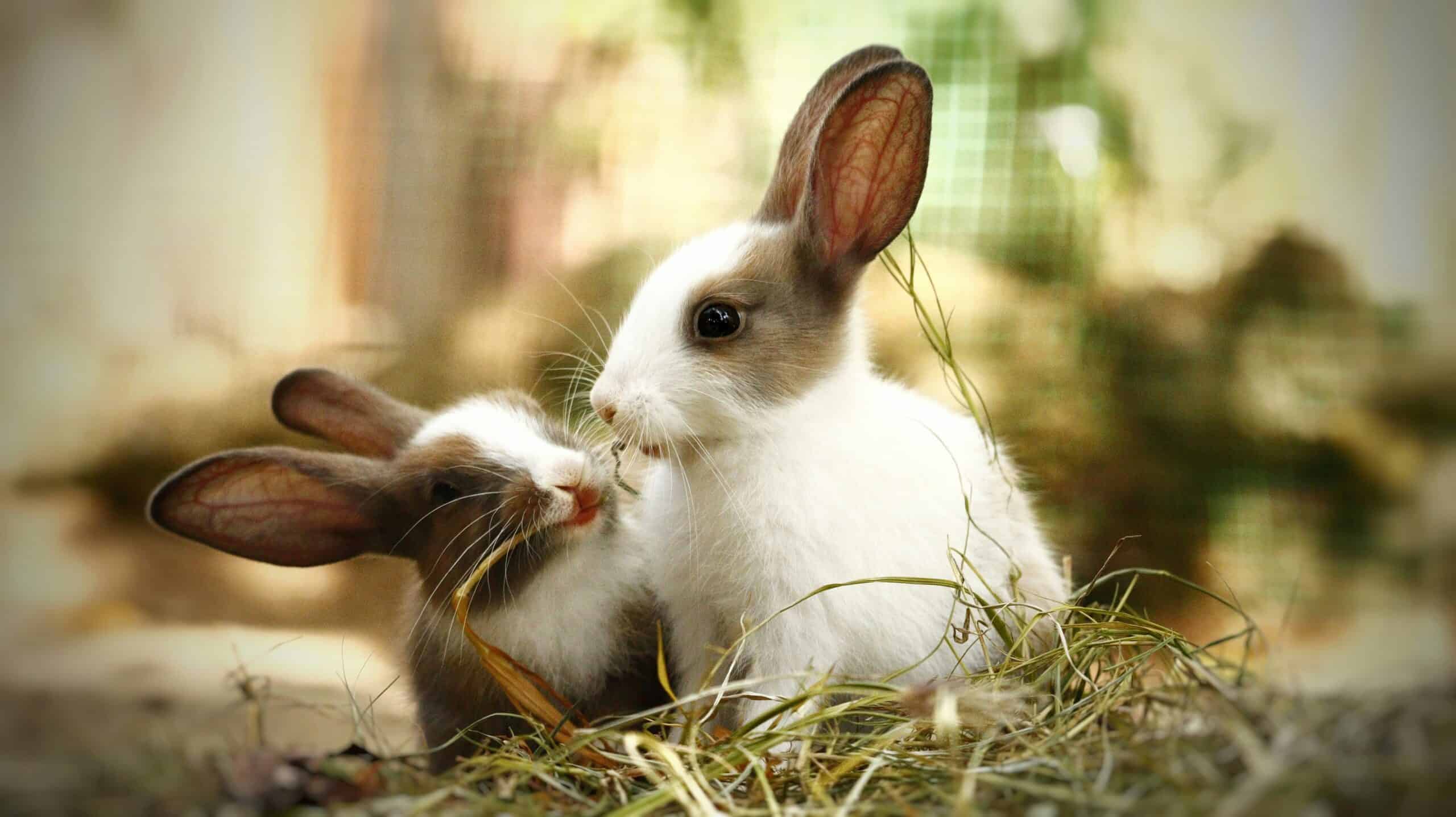
A rabbit should have unlimited grass hay in front of it at all times, with pellets as a small measured extra rather than the main meal. The best rabbit hay and pellets are the ones that get a rabbit chewing for hours a day, because that chewing is what keeps teeth and gut working. Pellets are convenient and easy to over-serve, which is the whole problem with them.
Hay is bulk fiber and it is also a job. A rabbit grinding through a pile of stems all day is doing something a bowl of pellets cannot replicate, and why rabbits need unlimited hay goes through the reason in full.
Quick Verdict
Buy timothy hay as the everyday staple and keep it available without limit. Add a plain timothy-based pellet in a small daily portion, not a scoop. Orchard grass is the swap for a rabbit that turns its nose up at timothy, and alfalfa belongs with growing or underweight rabbits rather than healthy adults.
Key Takeaways
- Grass hay is the staple and it goes in unlimited. Everything else is an extra.
- Timothy is the default grass hay, with orchard grass as the usual alternative.
- Alfalfa is a legume rather than a grass, so it suits young rabbits and not adults.
- Pellets should be plain and timothy-based, never a muesli mix with seeds and corn.
- Smell the hay before you trust it. Fresh hay smells green and sweet.
- Buying hay in bulk is far cheaper, provided you can store it dry.
How We Picked These Hays and Pellets
We grouped these by what the plant actually is, since grass hay and legume hay do different jobs and are not interchangeable. Within the grass hays we weighted palatability and dust.
On pellets we looked at the ingredient list rather than the marketing. A short list built on grass meal behaves differently from a colorful mix with added seeds.
We have not run feeding comparisons or kept rabbits on these, so nothing here is a result from our own animals. Diet questions for a specific rabbit belong with a veterinarian who sees it.
1. Timothy Hay, Best Overall
Why It Stands Out
Timothy is the hay most rabbit care guidance is written around, and it is the easiest to buy consistently. The stems are coarse enough to demand real chewing.
It also comes in recognizable cuts. Second cut is the usual recommendation, since it balances soft leaf against stem, while first cut is stemmier and third is much softer.
Worth Knowing
Quality swings a lot between suppliers and between batches from the same supplier. Bags that sit in a warehouse lose their smell and rabbits notice before you do.
Some rabbits simply prefer another grass, and refusing timothy is not a health problem by itself. Swap rather than argue with it.
This suits almost every healthy adult rabbit as the permanent staple. Skip it only if yours consistently refuses it. Best for: the default unlimited hay for an adult rabbit.
Check Price on Amazon2. Orchard Grass Hay, Best for Fussy Eaters
Why It Stands Out
Orchard grass is softer and sweeter smelling than timothy, and it wins over a lot of rabbits that have been ignoring their hay rack. It does the same fiber job.
Keepers who react to handling hay often find orchard grass easier on them as well, since it tends to be less scratchy.
Worth Knowing
Because it is softer, some rabbits eat the leaf and leave more stem behind. Watch what is actually left in the tray rather than how fast the bag empties.
It is usually a little more expensive than timothy and slightly less widely stocked.
This suits a rabbit that refuses timothy, and anyone who finds coarse hay unpleasant to handle. Skip it if your rabbit eats timothy happily. Best for: winning back a rabbit that has gone off its hay.
Check Price on Amazon3. Alfalfa Hay, Best for Growing and Underweight Rabbits
Why It Stands Out
Alfalfa is a legume, not a grass, and it is richer in protein and calcium than any grass hay. That richness is exactly what a growing rabbit needs.
Rabbits generally love it, which makes it useful for tempting an underweight or recovering rabbit back into eating.
Worth Knowing
That same richness is why it is not an adult staple. Routine alfalfa for a healthy adult rabbit is the single most common feeding mistake in this category.
Whether a particular adult rabbit should have any alfalfa at all is a veterinary question rather than a general rule, especially where urinary history is involved.
Guinea pigs are the usual point of confusion here, since they eat similar grass hay but carry a separate dietary requirement that rabbits do not. Why guinea pigs need vitamin C covers that difference.
This suits young rabbits and underweight ones on veterinary advice. Skip it as the everyday hay for a healthy adult. Best for: growth, recovery and tempting a poor eater.
Check Price on Amazon4. Meadow and Oat Hay Blends, Best for Variety
Why It Stands Out
Mixed meadow hay contains several grasses and the odd dried flower or seed head, so it gives a rabbit different textures to work through. Interest matters when the goal is hours of chewing.
Oat hay brings flat seed heads that many rabbits strip off first, which makes a hay rack worth returning to.
Worth Knowing
Mixed hays vary batch to batch by their nature, so consistency is lower than with single-grass hay. Inspect each bag rather than trusting the brand.
These work best alongside a staple grass hay rather than replacing it. A rabbit picking out only the interesting parts is not eating enough plain fiber.
This suits a rabbit that gets bored, and anyone building enrichment into feeding. Skip it as a sole hay. Best for: topping up a timothy staple with something more interesting.
Check Price on Amazon5. Plain Timothy-Based Pellets, Best Daily Pellet
Why It Stands Out
A uniform grass-based pellet gives every mouthful the same composition, so a rabbit cannot pick out the tasty parts and leave the rest. That is the main argument for pellets at all.
Timothy-based versions keep the protein and calcium lower than alfalfa-based ones, which suits adults.
Worth Knowing
Portion size is where this goes wrong. Pellets are dense and palatable, so a generous bowl displaces the hay a rabbit should be eating instead.
How much to give a particular rabbit depends on its size, age and condition, so ask a veterinarian rather than following the scoop that came in the bag.
This suits every adult rabbit as a small daily supplement. Skip the alfalfa-based versions unless a vet has suggested them. Best for: a measured daily extra alongside unlimited hay.
Check Price on Amazon6. Bulk Hay Boxes, Best Value
Why It Stands Out
Hay bought in a large box costs dramatically less per pound than the small retail bags, and a rabbit on unlimited hay gets through a surprising amount.
Bigger boxes also tend to be packed closer to harvest, so they often smell fresher than a bag that has been on a shelf. A pair gets through roughly double, which is one more reason keeping rabbits in pairs changes the shopping list.
Worth Knowing
Storage is the catch. Hay needs somewhere dry and airy, and a sealed plastic tub traps moisture and encourages mold.
Buying a large quantity of a hay your rabbit then rejects is an expensive way to find out. Try a small bag of anything new first.
This suits anyone with dry storage space and a rabbit already settled on that hay. Skip it if you are still testing preferences. Best for: cutting the running cost of unlimited hay.
Check Price on AmazonRabbit Hay and Pellets at a Glance
| Type | Plant | How Much | Suits |
|---|---|---|---|
| Timothy hay | Grass | Unlimited | Healthy adult rabbits |
| Orchard grass hay | Grass | Unlimited | Fussy eaters, scratchy-hay sensitivity |
| Alfalfa hay | Legume | Limited, on advice | Young, underweight, recovering |
| Meadow and oat blends | Mixed grasses | Alongside a staple | Enrichment and variety |
| Timothy-based pellets | Grass meal | Small daily portion | Every adult rabbit |
| Bulk hay boxes | Usually timothy | Unlimited | Settled preferences, dry storage |
What to Look For in Rabbit Hay
Smell is the fastest quality test
Good hay smells green and faintly sweet. A dusty, flat or sour smell means it is old or has been stored damp, and rabbits often reject it on that basis alone.
Stem and leaf balance
You want both. Leaf is what a rabbit finds appealing and stem is what makes it chew properly, so hay that is all soft leaf does less of the job.
Dust and fine debris
A cloud of dust when you open the bag is worth avoiding, for the rabbit and for you. Fine powder at the bottom of a bag also suggests rough handling.
Where the rack sits matters too. Rabbits graze and toilet in the same spot, so a hay rack above the litter tray gets used far more, as litter training a rabbit explains.
A short pellet ingredient list
The first ingredient should be a grass meal. Added seeds, corn, dried fruit and colored pieces turn a pellet into a selection of snacks a rabbit can pick through.
Hay or Pellets First
Hay is the meal
Hay should make up the overwhelming bulk of what a rabbit eats, and it should never run out. The rack being empty is a problem, not a sign of good appetite.
Pellets are the top-up
Pellets cover gaps and make it easy to deliver a consistent small amount of nutrition. They are not meant to be the thing a rabbit fills up on, and a rabbit that stops eating hay because pellets are better is a rabbit getting too many pellets.
Movement feeds appetite as well. A rabbit with room to move eats more hay than one confined to a small cage, which how much space a rabbit needs sets out.
Common Rabbit Feeding Mistakes to Avoid
Treating alfalfa as a grass hay
It looks like hay and sits beside hay on the shelf, so it gets bought as hay. Rabbits love it, which makes the mistake easy to keep making.
Buying a muesli-style mix
Colorful mixes with seeds and flakes let a rabbit eat the fun parts and leave the fiber. A uniform pellet removes that option entirely.
Storing hay in a sealed container
Airtight plus any residual moisture equals mold. A cardboard box or a fabric bag in a dry room works far better than a clamped plastic tub.
Ignoring a sudden change in eating
A rabbit that stops eating or stops producing droppings needs a vet quickly rather than a different hay. Appetite changes in rabbits are treated as urgent for good reason.
Recommended Reading
Worth reading next: whether rabbits can eat carrots, the full rabbit supplies checklist, how often to trim a rabbit’s nails, and why rabbits thump.
Rabbit Hay and Pellets FAQ
What are the best rabbit hay and pellets
Timothy hay offered without limit, paired with a small daily portion of plain timothy-based pellets. Orchard grass is the usual swap for a rabbit that refuses timothy. Alfalfa and muesli-style mixes are the two to leave on the shelf for a healthy adult.
How much hay does a rabbit need
As much as it wants, continuously. The practical test is that there is always hay available and the rabbit is visibly working through it during the day. An empty rack between refills means the supply is too small.
Can rabbits live on pellets alone
No. Pellets do not provide the long fiber or the hours of chewing that rabbit teeth and digestion depend on. A pellet-only diet is widely treated as a serious husbandry problem rather than a shortcut.
Is timothy or orchard grass better
They do the same job, so the better one is whichever your rabbit actually eats. Timothy is coarser and cheaper to buy consistently, while orchard grass is softer and often more appealing. Many keepers mix the two.
When should a rabbit switch off alfalfa
The switch from alfalfa to grass hay happens as a rabbit finishes growing, and the right timing depends on the individual animal. A veterinarian who knows your rabbit is the right source on when and how fast to change.
How do you store rabbit hay
Somewhere dry, cool and ventilated, in cardboard or fabric rather than sealed plastic. Hay needs to breathe, and trapped moisture is what turns a good box of hay into a moldy one.
Why has my rabbit stopped eating hay
Common reasons include stale hay, too many pellets or treats crowding it out, and a simple preference change. Dental pain also causes it, so a rabbit that suddenly abandons hay should be seen by a vet rather than offered a new bag.
Do rabbits need pellets at all
Many rabbits do well on a small daily amount, and some are kept on hay and fresh greens with few or no pellets. Which approach suits a given rabbit depends on its condition and history, which makes it a conversation with a vet.
