
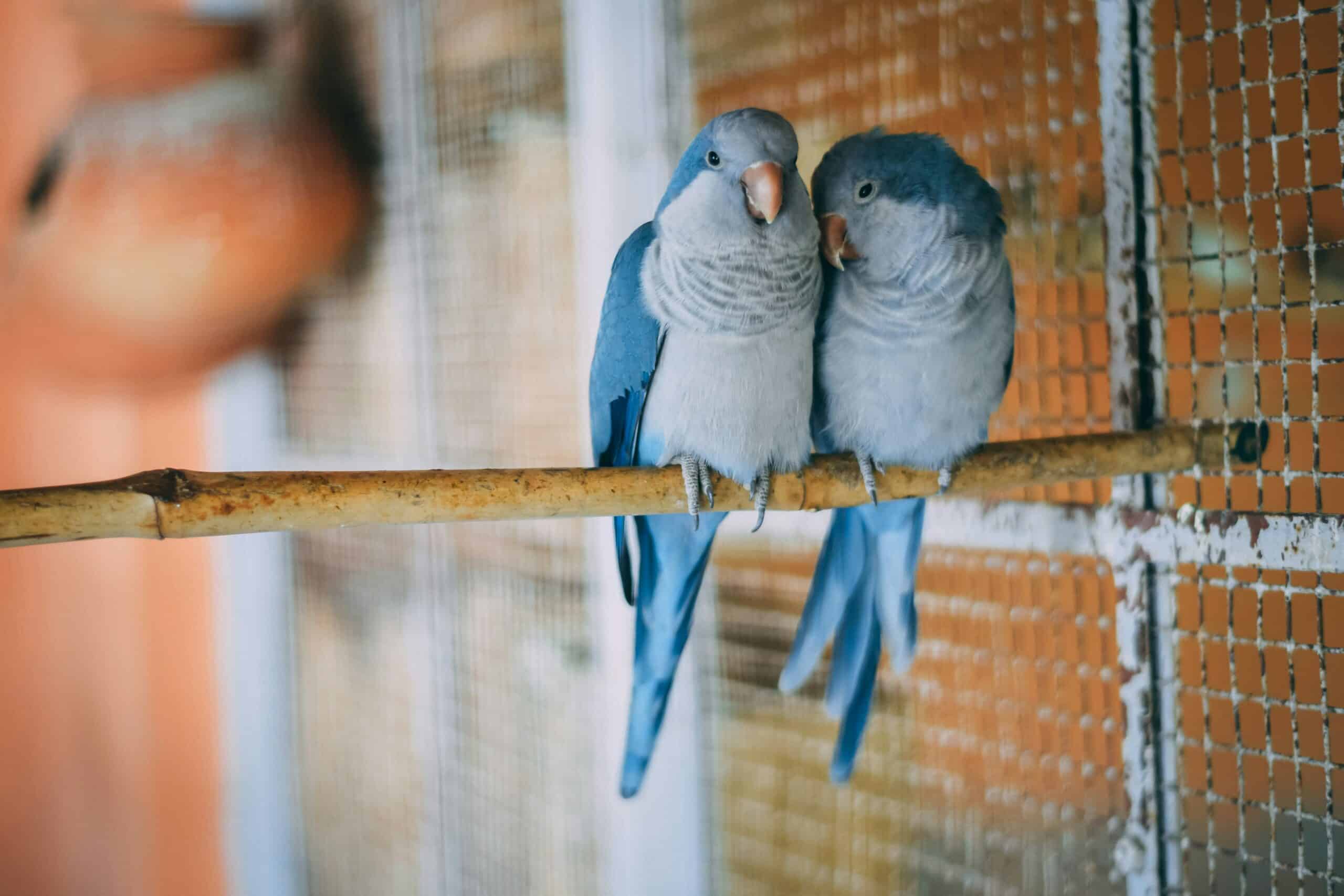
A cage fitted with one perch diameter gives a bird a single shape to stand on all day, and what a bird actually needs is a mix of diameters and materials placed at different heights. The best bird perches and toys work as a set rather than as separate purchases, because each surface and each object covers something the others leave out.
A single uniform dowel holds the foot in one position from morning to night. The grip never changes, so the same contact points take the weight every hour the bird is standing. A branch that changes thickness along its length moves those contact points as the bird shifts, which is the whole argument for variety, and it is cheap to act on.
Toys follow a similar logic, except the lever is rotation rather than quantity. A cage packed with objects leaves no room to move, and after a while the bird stops noticing any of them. Swapping a small number of items in and out keeps the same spend working, and the guide to choosing a cage covers the frame all of this hangs from.
Quick Verdict
Natural branch perches in mixed diameters do the most for the least money, so they belong in the cage first. Rope then adds a softer surface, while a flat platform suits a heavier or older bird. Shreddable and foraging toys fill the hours that otherwise cause trouble.
Key Takeaways
- Mixed diameters matter more than any single perch, because the grip should change as the bird moves around the cage.
- Sandpaper perch covers are still sold, yet they are abrasive rather than helpful, so skip them.
- Rope perches feel softer underfoot, though loose strands catch toes and need checking.
- Shreddable toys are supposed to get destroyed, so plan on replacing them instead of treating that as failure.
- Rotation beats quantity, and a cage crowded with objects gives the bird nowhere to move.
How We Picked These Perches and Toys
We compared the perch and toy categories that keepers buy most often, then grouped them by the job each one does inside a cage. No bird was involved in that process, so nothing here rests on hands-on use. The reasoning comes from product construction, materials, and standard husbandry practice.
Material safety drove most of the screening. Wood species vary in how suitable they are for birds, so products sold specifically for birds rank above generic craft wood. Metal hardware also matters, because stainless or nickel-plated parts avoid the zinc and lead questions that come with cheap hardware.
After that, we assessed replacement cost. Some items are consumable by design, so a shreddable toy that survives a month is a toy the bird ignored. Fit mattered too, because a perch that blocks the path across a cage creates problems no material can fix.
1. Natural Branch Perches in Mixed Diameters, Best Overall
Why It Stands Out
A natural branch changes thickness along its length, so the foot opens wider in one spot and closes in another as the bird shifts position. That variation is the entire argument for them. No molded dowel reproduces it.
Bark also grips better than a sanded surface. Most cages arrive with identical smooth dowels, and replacing one or two of those with branch perches changes the cage more than any toy will. Sets sold with several thicknesses cover more of the cage in a single purchase.
Worth Knowing
Natural wood is not uniform, so a branch that looked right in a listing can arrive thinner, straighter, or more curved than expected. Mounting hardware varies as well, and some sets clamp onto narrow bars better than onto heavy ones.
Branches wear out too. Birds chew them, droppings soak into bark more readily than into plastic, and scrubbing only goes so far before a perch needs replacing.
Almost every cage gains something from a pair of branch perches, which makes this the first upgrade worth making. Anyone wanting a surface that never changes will prefer plastic, though the tradeoff is a single unchanging grip. Best for: any cage still running on the dowels it shipped with.
Check Price on Amazon2. Rope Perches, Best for Comfort
Why It Stands Out
Rope gives a softer surface than wood, and it compresses slightly under the foot. Many designs bend, so one perch can curve along a cage wall or arc across a corner.
That flexibility also makes rope a useful second texture. Once a cage already has branch perches, a rope run adds something different without taking up much room.
Worth Knowing
Rope frays, and that is the real tradeoff. Loose strands catch toes, so a fraying perch needs trimming or retiring rather than another month of service.
Chewers shorten the life of rope considerably. Cotton feels softer yet unravels faster, while sisal holds up longer and feels coarser, so the choice depends on which problem bothers the household more.
Rope suits birds that already have hard perches and need a change of surface, and it suits cages where a curved run fits better than a straight bar. Anyone unwilling to inspect a perch regularly should skip it, because fraying is not optional with rope. Best for: adding a softer texture to a cage that is otherwise all wood.
Check Price on Amazon3. Flat Platform Perches, Best for Resting
Why It Stands Out
A platform lets a bird stand rather than grip. For an older or heavier bird that spends long stretches in one place, that difference is the point of the product.
Platforms also work as a surface for food bowls, toys, or a foraging mat. Because they are flat, items stay where they are put instead of swinging, which some birds clearly prefer.
Worth Knowing
Flat surfaces collect droppings and food debris faster than round ones, so a platform adds a cleaning job. Wood versions absorb more than plastic or acrylic, though they feel warmer underfoot.
Mounting is the other catch. A platform needs solid support at the bars, and a wobbly one gets avoided. The same shelf logic shows up in other small animal housing, which is why the roundup of guinea pig cages treats platform area as a feature rather than an extra.
Platforms suit older birds, heavier species, and any cage where a bird already stands in the same corner for hours. Owners of small active birds that never stop climbing can skip one without losing much. Best for: birds that want somewhere to stand still.
Check Price on Amazon4. Shreddable Foraging Toys, Best for Enrichment
Why It Stands Out
Shreddable toys get destroyed, and that is the function rather than a flaw. Palm leaf, yucca, soft wood, and paper all give a bird something to take apart with its beak and feet.
Destruction also eats time. A bird working through a shredder is occupied, and occupied time is time that does not go into screaming at the window or chewing feathers out of boredom.
Worth Knowing
The obvious tradeoff is cost over time. A toy that lasts a week looks expensive next to a plastic one that lasts a year, so it helps to buy these in bulk and treat them as a running expense.
Shredding makes a mess as well. Fragments land on the floor around the cage every day, which is why many bird households keep a small vacuum nearby, and the handheld vacuum comparison covers the models that handle that kind of debris.
These suit any bird that chews, which is most of them, and they suit households willing to keep restocking. Anyone who wants a toy to last should buy hard wood or acrylic instead and accept that it will hold less interest. Best for: birds that need something to take apart every day.
Check Price on Amazon5. Foraging Puzzles and Treat Toys, Best for Boredom
Why It Stands Out
A foraging toy makes the bird work for food instead of finding it waiting in a bowl. Sliding lids, spinning wheels, and wrapped paper parcels all stretch a snack into an activity.
Because food drives the behavior, these hold attention better than most static objects.
Worth Knowing
Difficulty has to be introduced gradually. A bird that has never foraged may ignore a sealed puzzle completely, so most keepers start with the toy loaded loosely and visible, then tighten it up later.
Construction quality varies, and this is where hardware matters most. Look for stainless or nickel-plated parts rather than zinc, and avoid bells with removable clappers, because a loose clapper is a swallowing risk.
Foraging toys suit birds that are alone during work hours and birds that have grown bored with static objects. Households with a bird that already forages well through its shredders can treat these as optional. Best for: filling long unsupervised stretches of the day.
Check Price on Amazon6. Chewable Wood and Mineral Blocks, Best for Beak Wear
Why It Stands Out
Birds chew, so the practical question is what they chew. Blocks of soft bird-safe wood give a target that is supposed to take damage, which keeps attention off cage fittings and furniture.
Mineral blocks sit in the same part of the cage and offer a harder surface to work on.
Worth Knowing
Wood species is the thing to check. Some woods are not suitable for birds, so buying blocks sold for birds rather than generic craft offcuts removes the guesswork.
Chewing also creates dust around the cage, which matters in a small room. Rabbits run through chew wood the same way, and the rabbit supplies checklist covers the same consumable thinking from the other side.
Chew blocks suit any bird that goes after woodwork, perches, or the cage itself. Birds that already destroy a steady supply of shreddable toys may not need separate blocks at all. Best for: redirecting a determined chewer onto something replaceable.
Check Price on AmazonPerches and Toys at a Glance
| Type | Material | Replaces Often | Suits |
|---|---|---|---|
| Natural branch perches | Bird-safe hardwood with bark | Occasionally | Every cage, as the first upgrade |
| Rope perches | Cotton or sisal over a wire core | Yes, once fraying starts | Cages that are otherwise all wood |
| Flat platform perches | Wood, plastic, or acrylic | Rarely | Older or heavier birds |
| Shreddable foraging toys | Palm leaf, yucca, paper, soft wood | Constantly, by design | Active chewers |
| Foraging puzzles | Acrylic with stainless hardware | Rarely | Birds alone for long stretches |
| Chew and mineral blocks | Bird-safe wood and pressed mineral | Regularly | Birds that attack cage fittings |
What to Look For in a Bird Perch
What size perch does a bird need?
A bird needs a range of perch sizes rather than one correct figure, because the goal is a grip that changes through the day. Some perches should let the foot wrap further around, while others should spread it wider.
Are sandpaper perch covers safe?
Sandpaper covers are abrasive rather than helpful, and they are still sold anyway. They work by rubbing the surface the bird stands on, which is the opposite of what a resting surface should do. Texture variety from different woods and rope achieves the comfort goal without that friction, so there is no reason to fit one.
What wood is safe for bird perches?
Safe wood means wood sold specifically for birds, since several common species are not suitable and some ornamental branches are worse. Buying from bird product lines removes the guesswork. Finishes count too, so unsealed wood beats varnished wood, and any coloring should be stated as food grade.
Where should perches go in the cage?
Perches should never sit directly above the food and water bowls, because droppings land straight into them. Beyond that, placement should leave a clear path across the cage rather than filling it. Height variety helps, and placement interacts with the rest of the room, much as it does in enclosures that run a basking lamp over one end.
Natural Branches or Rope Perches
When natural branches make more sense
Branches make more sense as the primary perch, because they carry the diameter variation that the whole setup depends on. They also handle chewing without becoming a hazard, since a chewed branch gets shorter rather than stringy. For a cage that currently has nothing but dowels, branches are the change that matters.
When rope perches make more sense
Rope makes more sense as a secondary surface once hard perches are already in place. It suits the spots a rigid perch cannot reach, and it gives a softer option for long stationary periods.
Common Mistakes to Avoid
Filling the cage with every toy at once
A cage crowded with objects leaves the bird nowhere to move, and it stops noticing any individual toy. Keeping most of the collection in a box and swapping a few items when interest fades makes the same purchases last far longer.
Hanging a perch above the bowls
A perch directly over the food or water means droppings end up in both. Moving the perch is easier than changing the water repeatedly, so this is worth checking whenever the cage layout changes.
Ignoring hardware and dust
Cheap toy hardware brings zinc and lead questions, and bells with removable clappers add a swallowing risk, so hardware deserves a look before anything goes in the cage. Wood chewing and feather dust also accumulate in the room, which is why many bird keepers run an air purifier sized for pet rooms near the cage.
Recommended Reading
- Connected pet scales for tracking weight at home
- Emergency supplies to keep packed for an evacuation
- Stain and odor removers for cage-area messes
Bird Perch and Toy FAQ
What are the best bird perches and toys for a cage that came with plain dowels?
Start with natural branch perches in several thicknesses, since they fix the single-grip problem the dowels create. Add a rope perch for a softer surface and a shreddable toy for daily chewing. That combination covers standing variety and occupation together, which is more than any single purchase manages. Keep one dowel if the bird clearly favors it.
How many perches does a cage need?
More than one, and ideally enough that the bird can choose between different surfaces at different heights. The limit is movement, because perches that block the path across the cage create a new problem. A practical approach is adding perches gradually and watching which ones get used, then removing the ones that get ignored.
Are sandpaper perch covers worth using?
No, because they are abrasive against the surface the bird stands on all day. They remain on sale, which is why the question keeps coming up. Texture variety from different woods, bark, and rope delivers the comfort the covers claim to provide without the friction, so there is nothing a sandpaper cover adds to a well-mixed cage.
Do rope perches need replacing?
Yes, and the trigger is fraying rather than a schedule. Loose strands catch toes, so a rope perch that has started to unravel needs trimming or retiring. Chewers wear them out faster, and cotton unravels sooner than sisal. Checking the rope whenever the cage gets cleaned keeps this from becoming a surprise.
How often should bird toys be rotated?
Rotate when interest drops rather than on a fixed timetable, since birds differ widely in how fast they tire of an object. Watching which toys get touched gives a clearer signal than any calendar. Keeping a reserve set in a box makes rotation painless, because swapping takes a minute and revives toys the bird had written off.
Which woods are safe for perches and chews?
Woods sold specifically for birds are the safe answer, because several common species are unsuitable and ornamental branches from a yard are harder to identify. Bird product lines already screen for species, which removes the research. Unsealed wood is preferable to varnished wood, and any dye should be described as food grade on the packaging.
Do foraging toys help with boredom behaviors?
Foraging toys fill time, and boredom contributes to behaviors like screaming and feather chewing. That makes enrichment worth doing, though it addresses only the boredom side of the picture. Those behaviors have many causes, so a puzzle toy is one part of a setup rather than an answer on its own. Start easy, then increase difficulty.
