
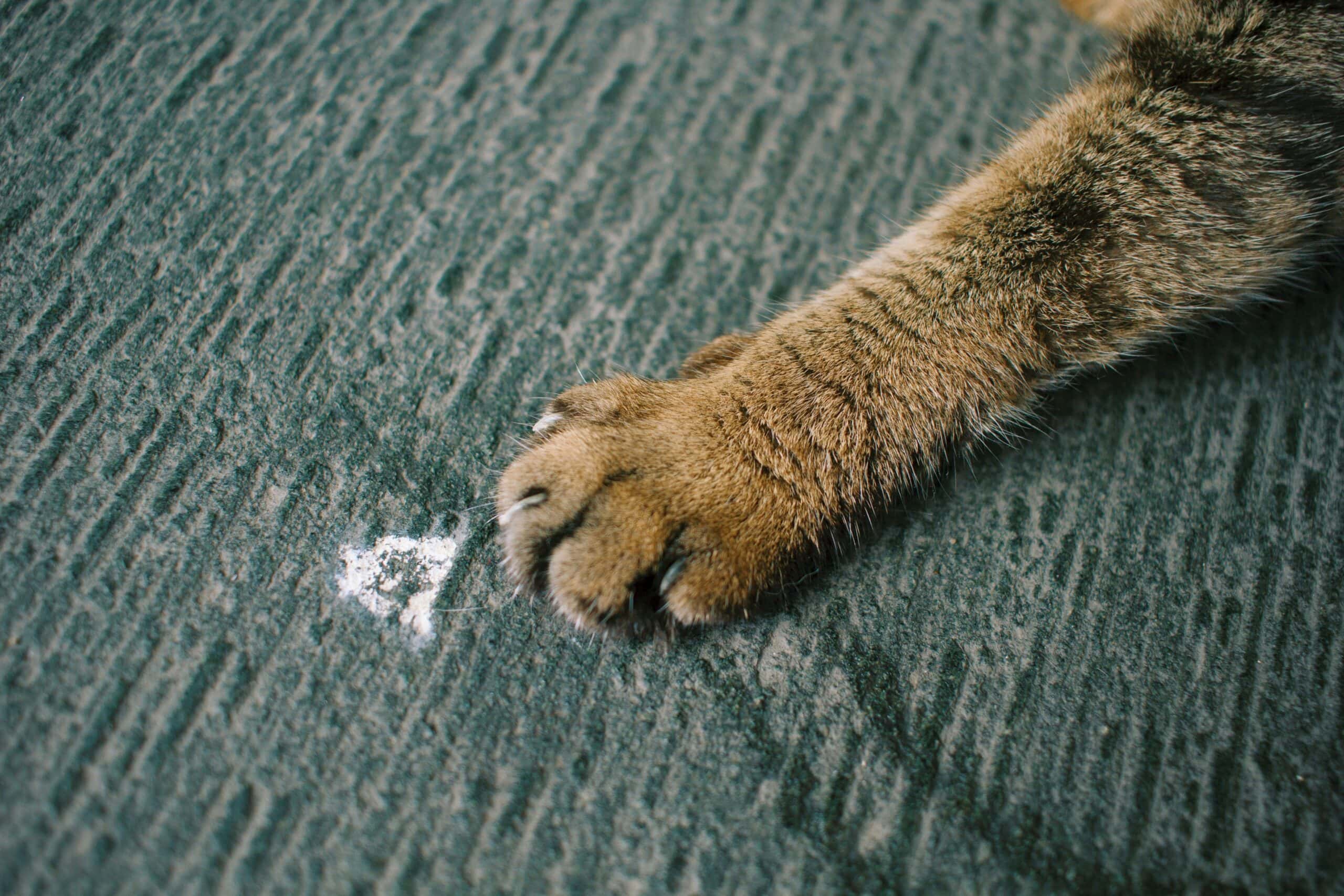
A cat shredding the corner of a sofa is not being spiteful, and that single reframe changes which product actually helps. Scratching is grooming, stretching, and scent marking rolled into one daily habit. The right fix protects the furniture while giving that habit somewhere else to go.
Anti-scratch tape and furniture guards work by making one surface unpleasant to touch. Cats dislike sticky or slick footing far more than they dislike a scolding. That texture response is the whole mechanism, which is why placement decides success more often than brand does.
This guide covers six guard categories, from clear tape strips to textured floor mats. Each one answers a different scratching pattern. Pair any of them with a scratcher that mounts on the couch itself and the guard becomes a short bridge rather than a permanent fixture.
Quick Verdict
Clear double-sided tape strips remain the most flexible starting point for most households, since they fit odd shapes and disappear against light upholstery. Pre-cut corner protectors suit cats who target one predictable spot. Whichever guard you pick, set an approved scratching surface within a stride of it or the behavior simply relocates.
Key Takeaways
- Guards suppress scratching on one surface, so pair every guard with an approved alternative nearby.
- Tape deters through texture underfoot and on claws, not through pain or startle.
- Adhesive can lift finish on wood, leather, and delicate weaves, so patch test somewhere hidden first.
- Clear film blends into smooth leather but stays visible on textured or looped fabric.
- Cats scratch near sleeping spots and room entry points, which makes placement the deciding factor.
- Treat guards as temporary while a scratching post beside the target surface takes over the job.
How We Picked
This guide is research-based. It draws on product listings, manufacturer descriptions, owner reviews, and widely published guidance about why cats scratch.
No products were bought or trialed for this article. Nothing here reports hands-on results, and no performance figures appear because none could be verified.
Categories were chosen to match distinct scratching patterns rather than distinct brands. A cat working a sofa arm needs something different from a cat raking a doorway corner.
Where sources disagreed, the more cautious guidance won. That is why surface testing and adhesive warnings appear throughout instead of in one buried footnote.
1. A Clear Double-Sided Tape Strip, Best Overall
Why It Stands Out
Clear double-sided strips are the most adaptable guard category available. They cut to size, wrap around curves, and cover irregular shapes that rigid products cannot follow.
The deterrent effect comes from tack against paw pads and claws. Most cats withdraw after a contact or two and start avoiding the whole zone.
Worth Knowing
Adhesive is the risk here. On leather, varnished wood, and loose weaves, removal can pull finish or fibers, so patch test an inconspicuous area and wait a day.
Strips also collect hair, dust, and crumbs. Once the surface loses tack it stops deterring, and a spent strip teaches the cat that the spot is safe again.
This category suits owners protecting mixed shapes across several rooms, especially on light upholstery where clear tape nearly vanishes. Skip it if your furniture is antique, oiled wood, or thin painted trim. A freestanding post placed at the trouble spot makes a safer first move there.
Check Price on Amazon2. A Pre-Cut Corner Protector, Best for a Single Target Spot
Why It Stands Out
Sofa corners take the worst damage in most homes. Corners offer the vertical resistance cats want and sit at the natural height for a full-body stretch.
Pre-cut protectors are shaped for that exact geometry. They wrap the vertical edge without the wrinkling that flat tape develops on a fold.
Worth Knowing
Fit is the limiting factor. Rounded arms, thick piping, and boxy sectional edges vary a lot, so a protector cut for one silhouette can gap badly on another.
Many versions rely on pins or adhesive tabs at the edges. Pins hold better on soft upholstery, while tabs suit smooth surfaces where a pin would leave a mark.
Choose this if one corner absorbs nearly all the damage and you want a clean, repeatable fix. Skip it if scratching is spread across arms, backs, and door frames. Scattered damage calls for a broader behavior plan rather than another guard.
Check Price on Amazon3. A Roll of Clear Vinyl Guard Film, Best for Large Panels
Why It Stands Out
Vinyl film covers wide areas in one continuous piece. Sofa backs, chair sides, and lower door panels are easier to protect with a sheet than with rows of strips.
The film presents a slick, unappealing face. Claws skid rather than catch, which removes the satisfying drag cats are seeking.
Worth Knowing
Visibility depends heavily on the surface beneath. On smooth leather the film reads as a faint sheen, while on textured or looped weave it flattens the nap and becomes obvious across the room.
Application takes patience, and large adhesive areas raise the stakes on removal. Air bubbles give cats an edge to pick at, so smooth outward from the center and patch test before committing a full sheet.
This fits homes with large flat expanses under attack, particularly smooth leather sofas. Skip it on chenille, boucle, and heavy woven fabric. On those, the film will look worse than the scratches it hides.
Check Price on Amazon4. A Fabric-Backed Arm Cover, Best Non-Adhesive Option
Why It Stands Out
Fabric arm covers protect through a physical barrier instead of adhesive. Nothing sticks to the furniture, which removes the finish-damage risk entirely.
Tightly woven covers give claws little to hook. They also come off in seconds when guests arrive.
Worth Knowing
Slippage is the main complaint. A cover that shifts under paw pressure becomes a toy rather than a barrier, which is where grippier backing materials earn their place.
These covers do not deter, they only shield. A cat may keep scratching happily on top of the fabric, so the underlying habit stays untouched.
Pick this if adhesive is off the table because of leather, antique wood, or a landlord. Skip it if you need the scratching itself to stop rather than just the damage.
Check Price on Amazon5. A Twist-Pin Upholstery Guard, Best for Loose Slipcovers
Why It Stands Out
Twist-pin guards anchor a protective panel with spiral pins pushed into upholstery. The pin threads into foam and holds without any adhesive at all.
That anchoring suits fabric that refuses to hold tape. Slipcovers, loose cushions, and heavy weaves all sit still once pinned.
Worth Knowing
Pins leave small holes in the fabric. On tight woven upholstery those close up, but on delicate or shiny material the mark can persist.
This category assumes soft, pinnable furniture underneath. Leather, wood, and firm structured frames rule it out immediately.
Consider this for slipcovered or heavily textured sofas that defeat every adhesive you have tried. Skip it on leather, on anything antique, and on fabric where a pinhole would show.
Check Price on Amazon6. A Textured Deterrent Mat for the Base of Furniture, Best for Approach Blocking
Why It Stands Out
Deterrent mats work on approach rather than contact. Placed at the floor beside a target, the odd texture discourages the cat before a paw reaches upholstery.
That upstream position helps with repeat offenders. It also leaves the furniture completely untouched, with no adhesive, pins, or film on the fabric.
Worth Knowing
Designs vary widely, and some use raised nubs that many cats simply step over. Others rely on a stiff or crinkly surface that certain cats ignore within days once curiosity replaces caution.
Mats also move. A determined cat nudges one aside, vacuuming displaces them, and they occupy exactly the walkways people use.
This suits cats who approach from one predictable direction, especially at a doorway or the end of a sofa. Skip it in narrow paths or homes with toddlers. Skip it too when the cat scratches from the seat cushion rather than the floor.
Check Price on AmazonFurniture Guards at a Glance
| Guard Category | How It Deters | Best Surface | Main Tradeoff |
|---|---|---|---|
| Clear double-sided tape strip | Sticky texture on pads and claws | Light fabric upholstery | Adhesive risk and loss of tack |
| Pre-cut corner protector | Covers the exact scratched edge | Standard sofa corners | Fit varies by arm shape |
| Clear vinyl guard film | Slick face gives claws no grip | Smooth leather panels | Visible on textured weave |
| Fabric-backed arm cover | Physical barrier only | Sofa and chair arms | Slips, and does not stop the habit |
| Twist-pin upholstery guard | Pinned panel blocks the target | Slipcovers and soft weave | Leaves small pinholes |
| Textured deterrent mat | Unpleasant footing on approach | Floor beside furniture | Shifts underfoot and blocks walkways |
What to Look For in a Furniture Guard
Will the adhesive harm this specific surface?
Surface compatibility outranks every other feature. Leather, oiled wood, painted trim, and loose weave all react differently to the same adhesive.
Patch testing settles it. Apply a small piece somewhere hidden, leave it a full day, then remove it slowly and check for lifted finish or pulled fiber.
Does the guard match where the cat actually scratches?
Watch before buying. Most cats work a few fixed spots, and those spots cluster near sleeping areas and room entrances.
A guard set slightly off the target line simply narrows the cat’s working area. Map the damage first, then choose the shape that covers it.
How visible will it be on your furniture?
Clear does not mean invisible. Film and tape read as a faint sheen on smooth leather but gloss and flatten the surface of textured fabric.
Decide in advance how much visual compromise you accept. A guard you resent looking at gets removed long before the habit changes.
What happens when you take it off?
Every guard is temporary, so plan the exit. Slow, shallow-angle lifting causes less damage than a quick pull, especially on aging fabric.
Keep the guard on until the cat has been using an alternative consistently. Removing it early usually restarts the whole cycle.
Deterrent vs Redirection
Why blocking alone usually fails
Scratching is maintenance behavior, not misbehavior. Cats shed claw sheaths, stretch their backs, and leave scent through paw glands every time they scratch.
That drive does not disappear because one surface got covered. Block a sofa corner and the cat commonly moves to the chair, the rug, or the door frame.
Making the approved surface the easier choice
Redirection works when the alternative is genuinely better. Place a sturdy post or panel within a step of the guarded spot, not across the room.
Match the orientation the cat already prefers. A vertical scratcher wants height and stability, while a floor-scratcher wants a horizontal pad, a split covered in the comparison between climbing towers and simple posts.
Reward use of the new surface and leave it in place once it works. Moving a successful post is a common way to undo weeks of progress.
What Trips People Up
Skipping the patch test
Most guard regret traces back to a skipped test, and leather and finished wood are the usual casualties. The test costs one day and one small hidden square.
Test again whenever you switch products. Adhesives differ even within the same category.
Treating the guard as the whole solution
A guard buys time, nothing more. Without an approved surface nearby, the cat relocates and the household ends up guarding a second piece of furniture.
Set up the alternative on the same day as the guard. Scent deterrents help at the margins too, and spray options for off-limits zones pair reasonably with a physical barrier.
Ignoring claw maintenance
Long claws catch fabric more aggressively. Regular trimming reduces damage even where a guard slips or lifts, and some owners add vinyl nail covers that blunt the tips without limiting normal stretching.
Declawing is not a scratching solution, and veterinary organizations widely oppose it. Guards, posts, and claw maintenance address the behavior without surgery.
Leaving spent tape in place
Tape stops working once hair and dust kill the tack. A dull strip is worse than no strip, because it teaches the cat that the spot is safe.
Check guards weekly in shedding season and replace anything that no longer grabs a fingertip. Fresh adhesive on a clean patch holds better than a strip laid over old residue.
Recommended Reading
- vertical options that fit tight floor plans
- covers that handle spills as well as claws
- fitted protection for multi-piece sofas
- keeping cables away from curious paws
- a clipper most cats will tolerate
Frequently Asked Questions
Does anti-scratch tape and furniture guards hurt cats in any way?
No, and that matters to understand before applying anything. Tape and guards work through texture that cats find unpleasant underfoot and against their claws, with no pain, shock, or startle mechanism involved. A cat that touches sticky tape simply pulls back and chooses somewhere else to scratch.
How long should a guard stay on the furniture?
Keep it in place until the cat has used an approved scratching surface consistently for several weeks. Pulling a guard the moment scratching stops usually restarts the habit, because nothing has changed except the barrier. Watch for steady use of the post first, then remove slowly at a shallow angle.
Will tape damage a leather sofa?
It can, since leather finish is thin and adhesive removal sometimes lifts color or topcoat on older or heavily conditioned hides. Patch test a hidden section, leave it a full day, then remove slowly and inspect closely. If anything dulls or lifts, switch to a fabric arm cover or a floor mat instead.
Why does the cat move to another piece of furniture?
Because the underlying need never went away when the surface got covered. Scratching serves claw maintenance, stretching, and scent marking, so the cat finds the next best texture, often a chair, a rug edge, or a door frame. Adding an approved surface beside the guarded spot prevents most of this relocation.
Is clear film really invisible on upholstery?
Only on smooth surfaces, where finished leather and tight synthetics reduce it to a slight sheen most guests never notice. On textured weave, boucle, or looped fabric the film flattens the nap and catches light, which makes the covered patch obvious. Check the fabric type before committing to a large sheet.
Where should the guard actually go?
Start where the damage already is, then look at sleeping spots and doorways. Cats scratch right after waking and at points where they enter a room, so those two zones account for most furniture targets. Observe for a few days before applying anything, because placement matters more than which product you chose.
Are deterrent sprays a substitute for a physical guard?
Not really, since sprays rely on scent that fades and varies enormously in effect from cat to cat. A physical guard changes the texture every single time the cat makes contact, which is far more consistent. Sprays can support a guard where tape is impractical, but they rarely stop established scratching alone.
