
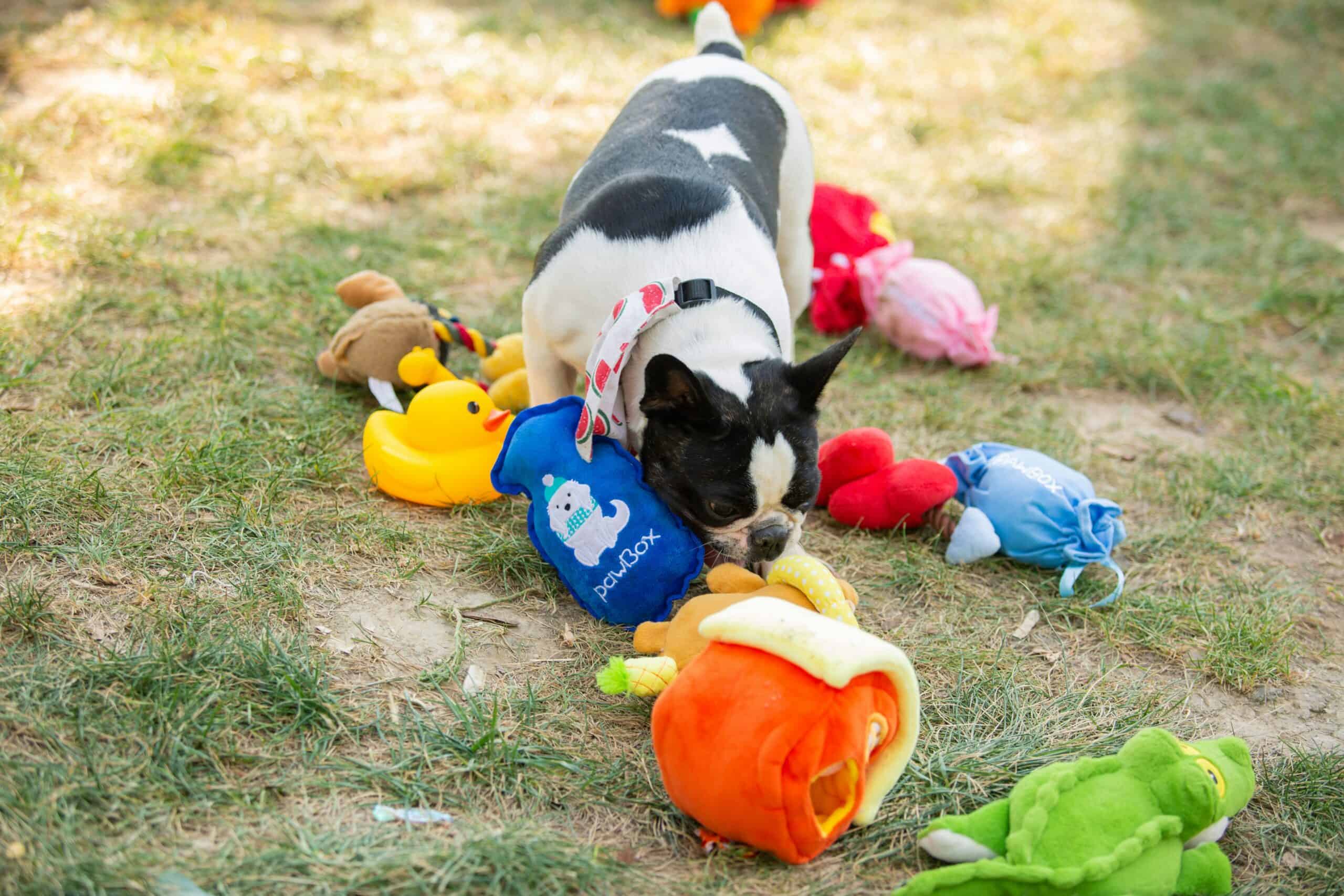
Toy storage does more than tidy a room, because a bin your dog cannot open is what makes toy rotation possible, and rotation is what keeps toys interesting. A dog with everything available at once loses interest in all of it, while the same toys reintroduced after a fortnight get treated as new. Our roundup of puzzle toys for boredom covers the toys most worth rotating.
Quick Verdict
An open basket suits households where the dog should help themselves. A lidded bin suits rotation, since the point is limiting access. Choose something washable if the toys come in wet, and something heavy enough that a determined dog cannot tip it.
Key Takeaways
- Rotation keeps toys interesting; constant access does the opposite.
- Open baskets serve self-service, lidded bins serve rotation.
- Wet and slobbery toys need a container that can be washed.
- Weight and base width decide whether a dog can tip it.
- Separating chew toys from plush prevents transferring damp.
How We Picked
Storage is grouped by whether the dog can access it, since that single question determines what the container is for. Cleanability and stability follow, because dog toys arrive wet and dogs push things over.
Descriptions come from how each design handles access, moisture, and weight rather than from time spent with a particular bin.
1. A Lidded Storage Bin, Best Overall
Why It Stands Out
A closed bin lets you control what is out, which is what makes rotation work. Half the toys go away, the other half stay available, and swapping them every week or two restores interest without buying anything.
A lid also keeps stored toys clean and stops the room reading as a permanent toy pile. Clear or labeled bins help if more than one person in the house does the rotating, since nobody can swap the toys if they cannot tell what is in there.
Worth Knowing
Some dogs learn to open a loose-fitting lid, and a bin that has been opened once will be opened again. A latching or weighted lid matters if yours is that kind of dog.
Ventilation is worth thinking about too, since damp toys sealed in a closed bin develop a smell quickly. Dry anything wet before it goes away. Our note on cleaning dog toys covers keeping the stored half fresh.
This suits rotation and tidy rooms. Skip it if you want your dog choosing their own toys.
2. An Open Basket, Best for Self-Service
Why It Stands Out
A low open basket lets a dog take and return toys themselves, which is the setup most households actually want day to day. Many dogs learn to put toys back with very little training.
Open storage also dries damp toys rather than sealing moisture in, which matters most with rope and plush that come back from the garden wet.
Worth Knowing
Everything is always available, which works against rotation. Households wanting both usually keep an open basket for the current selection and a closed bin for the rest.
Woven baskets with loose fibers become a chew target, and swallowed fibers are a genuine hazard. Tight weaves and fabric-lined designs hold up better.
This suits daily access and drying. Skip it if you are rotating toys.
3. A Washable Fabric Bin, Best for Wet Toys
Why It Stands Out
Canvas and fabric bins go in the machine, which matters because dog toys arrive covered in saliva and whatever was in the garden. A container you can wash is the only one that stays neutral over months.
Fabric also collapses flat when empty, which suits households short on storage space, and it makes a spare bin cheap enough to keep for the half of the collection that is currently put away.
Worth Knowing
Soft sides mean a bin that slumps when partly empty and tips more easily than a rigid one. Check whether it has a stiffened base or internal frame.
Washing removes the scent a dog has marked the bin with, so expect a few days of them treating it as unfamiliar afterward. Our roundup of rope toys covers the toys that most need washable storage.
This suits wet toys and frequent cleaning. Skip it if you need something rigid.
4. A Toy Box With Compartments, Best for Separation
Why It Stands Out
Dividers let you keep damp chew toys away from plush ones, which stops moisture and smell transferring across the whole collection.
Separation also makes rotation practical without emptying everything onto the floor to find what you want.
Worth Knowing
Compartments reduce usable volume compared with a single open space, and a large rope toy may not fit any one section. Check the individual compartment dimensions rather than the overall capacity, since a box advertised by total liters can still fail to hold your dog’s favorite toy.
Fixed dividers are less flexible than removable ones as a collection changes. Our roundup of plush toys covers the ones most affected by damp neighbors.
This suits mixed collections. Skip it if you own a handful of toys.
5. A Storage Bench or Ottoman, Best for Living Rooms
Why It Stands Out
Furniture with hidden storage keeps toys out of sight in a room where a plastic bin would be an eyesore, and it earns its floor space twice by also being somewhere to sit.
The lid weight generally puts these beyond a dog’s ability to open, which makes them a rotation container by default.
Worth Knowing
Heavy lids need a soft-close hinge or a safety stay, since a lid falling on a dog investigating the contents is a real risk. Check for that before buying.
These also cost considerably more than a bin and are harder to clean inside. Our guide to apartment dog gear covers making dog equipment work in shared living space.
This suits living rooms and open-plan homes. Skip it if the toys need washing often.
6. A Wall-Mounted Rack or Hanging Organizer, Best for Small Spaces
Why It Stands Out
Hanging storage uses vertical space, which matters in a flat where floor area is the constraint. It also puts toys out of reach automatically, so rotation happens by default. Over-door versions need clearance behind the door, which is worth checking before ordering in a small room.
Pockets keep individual toys visible, which makes choosing what to bring down quicker than digging through a bin.
Worth Knowing
Weight limits are low on adhesive and over-door versions, and a rack that falls is a mess plus a startled dog. Wall-mounted versions need fixing into something solid.
Hanging pockets suit small toys and handle large rope toys or balls poorly. Our roundup of toys for small breeds covers the sizes that fit these best.
This suits flats and small rooms. Skip it for a collection of large toys.
Toy Storage at a Glance
| Type | Dog access | Washable | Best for |
|---|---|---|---|
| Lidded bin | Restricted | Wipe clean | Rotation |
| Open basket | Full | Depends on material | Self-service |
| Fabric bin | Full or restricted | Machine washable | Wet toys |
| Compartment box | Usually restricted | Wipe clean | Mixed collections |
| Storage bench | None | Hard to clean | Living rooms |
| Hanging rack | None | Varies | Small spaces |
How to Choose Dog Toy Storage
Should your dog reach it?
This is the first question and it decides everything else. Self-service wants an open low basket; rotation wants something closed. Plenty of households run both.
Can it be cleaned?
Toys go in wet and come out smelling. A container that cannot be washed becomes the source of the smell rather than the solution to it.
Will it stay upright?
A dog pulling a toy from the bottom of a tall narrow bin will tip it. Width at the base matters more than height, and weight helps.
Does it suit the toys you own?
Long rope toys, large balls, and antlers all defeat pocket organizers and shallow compartments. Check dimensions against your bulkiest toy. Our roundup of squeaky toys covers the ones that store easily.
Open or Closed?
The case for open
Dogs learn where toys live and many will return them, which is a small pleasure and a genuinely tidier room. Damp toys also dry rather than sitting sealed.
The case for closed
Rotation only works if you control access, and rotation does more for a dog’s interest in their toys than buying more of them. Our guide to tiring out a high-energy dog covers why novelty matters.
Common Toy Storage Mistakes to Avoid
Leaving everything available
A dog with access to twenty toys plays with two. Putting most of them away and rotating restores interest in the whole collection.
Storing toys damp
Saliva and garden water in a closed bin produce a smell within days and can grow mold on fabric toys. Dry before storing.
Using a woven basket a dog can chew
Loose fibers get swallowed, and wicker splinters. A tight weave or a fabric bin removes that risk entirely.
Keeping damaged toys in the rotation
Storage makes it easy to forget what condition a toy is in. Check for split seams and exposed stuffing when you rotate, and our note on rope toy safety covers what to look for.
Recommended Reading
See our roundup of interactive toys, notes on enrichment toys, our food storage picks, and a guide to keeping a dog entertained.
Dog Toy Storage FAQ
Should I rotate my dog’s toys?
Yes, and it is the main practical reason to buy storage at all. Dogs with constant access to everything lose interest in most of it, while the same toys put away for a fortnight and brought back out get treated as new. Rotation costs nothing and works better than buying more.
Can dogs learn to put their toys away?
Many can, and an open low basket makes it possible. It is a straightforward behavior to build with treats and a consistent cue. A lidded bin makes it impossible, which is worth considering if tidying up is something you want the dog involved in.
How often should I clean toy storage?
Whenever you rotate, since the bin is being emptied anyway. Fabric bins can go in the machine; rigid ones need a wipe. Toys go in wet more often than people expect, and the container is usually the source of any smell.
What storage stops my dog getting into it?
A weighted or latching lid, a storage bench, or wall-mounted storage out of reach. Loose-fitting lids get learned quickly, and a dog that opens a bin once will keep doing it.
Should chew toys be stored separately from plush?
It helps. Chews arrive damp and transfer moisture and smell to soft toys stored alongside. Compartments or two separate containers keep each set in better condition.
Is a wicker basket safe for dog toys?
Only if the weave is tight and your dog does not chew it. Loose wicker splinters and the fibers are a swallowing hazard. Fabric-lined baskets and canvas bins avoid the problem.
How big should a dog toy bin be?
Large enough for your bulkiest toy rather than for the total count, since long rope toys and large balls are what defeat most containers. If you are rotating, two medium bins work better than one large one.
Where should toy storage go?
Wherever the dog spends time, if it is self-service. If it is for rotation, somewhere the dog cannot reach and you can, since storage you find inconvenient stops getting used and rotation quietly ends.
For the wider picture, see our guide to how to choose the right dog bed.
