
Two to four years for most foam beds with regular use, and the cover usually fails before the foam does. Cheap fiberfill beds compress within months, and dense foam holds its shape considerably longer.
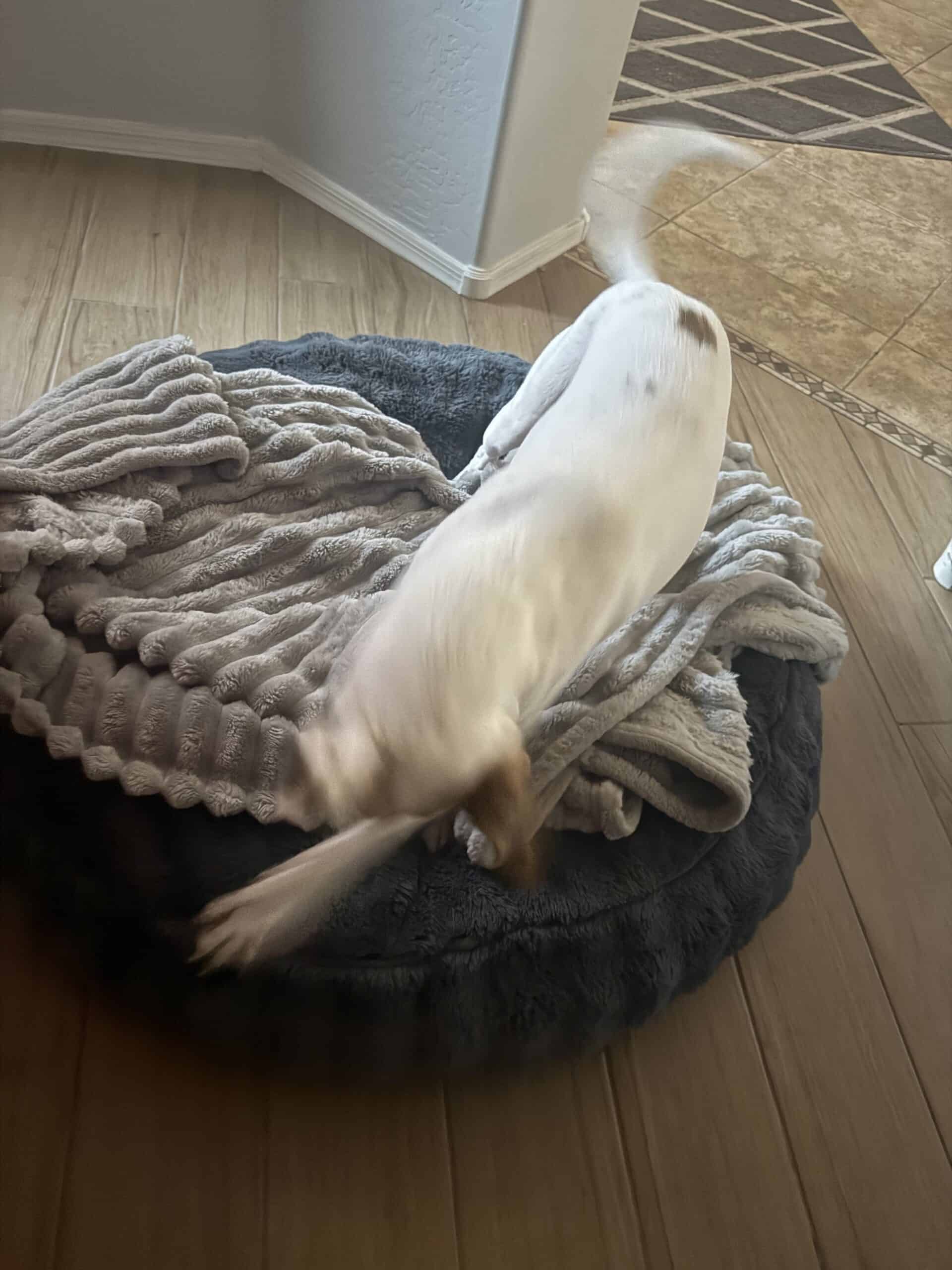
Mine has been in use since I got her, which is the whole time she has lived here. It is a large flat foam cushion and it has held up fine.
A Quick Note
This covers wear rather than veterinary advice. A dog that starts avoiding a bed she used to like, or that seems stiff after resting, is worth mentioning to a veterinarian rather than assumed to be a bed problem.
Quick Answer
Expect two to four years from a decent foam bed, less from fiberfill, more from high-density or orthopedic foam. Replace when the foam no longer springs back, when your dog can feel the floor through it, or when odor persists after cleaning.
Lifespan by Type
| Fill | Typical life | How it fails |
|---|---|---|
| Polyester fiberfill | 6 to 18 months | Compresses into lumps |
| Shredded foam | 1 to 3 years | Settles, needs redistributing |
| Solid foam cushion | 2 to 4 years | Gradual permanent compression |
| High-density orthopedic foam | 3 to 6 years | Slow loss of rebound |
| Memory foam | 3 to 5 years | Softens, stops recovering |
| Elevated cot | 4 to 8 years | Fabric tears, frame outlasts it |
Dog weight matters at least as much as the material does. A twenty-five pound dog on a foam cushion loads it considerably less than an eighty pound dog would on exactly the same bed.
What Actually Wears Out
The cover goes first in the majority of cases. Washing cycles, claws, and any chewing all attack fabric considerably faster than a dog’s weight attacks the foam underneath it.
A bed with a replaceable cover therefore lasts much longer in practice, since the expensive part survives the part that fails.
Foam fails gradually rather than suddenly. Cell structure stops rebounding under repeated compression, and it shows first as a dip where she lies.
Zips, seams, and piping are the other common failure points, and they are usually repairable where foam is not, covered in how often to replace a dog bed.
What Mine Has Done
It has been in use since she arrived and it has held up fine. Large flat foam cushion, plush, and she took to it immediately along with the blanket.
I clean it rather than washing it, which probably helps the cover last since machine cycles are hard on fabric.
It moves around the house daily and comes into the bedroom at night, so it gets handled a great deal more than a bed that simply stays in one corner would, and that has not caused any visible wear at all.
She is a small dog at around twenty-five pounds, which is the least demanding case for foam. A large breed on the same bed would be a different story, covered in choosing the right dog bed.
So my experience is a mild one rather than a stress test, and it is worth reading with that in mind.
Signs It Needs Replacing
The fold test
Press down hard with your palm. Foam with life left pushes back. Foam that stays compressed has stopped supporting anything.
A visible dip
A depression still there in the morning, before she lies on it, means the foam is no longer recovering overnight.
She can feel the floor
Pressing through to the hard surface underneath is the clearest sign. If you can feel the floor through it, so can she.
Cover damage past repair
Torn seams and failed zips are often repairable, and a cover worn through in several places usually means the bed has done its time.
Odor after cleaning
Foam absorbs oils and moisture over years, and a bed that still smells after a proper clean has reached the end of it, covered in cleaning a dog bed.
What Shortens It
Washing the foam itself rather than only the cover is the main one. Foam that gets thoroughly soaked and never fully dries breaks down internally and grows mildew inside where you cannot see it.
Direct sunlight degrades both fabric and foam over months, which matters for beds in conservatories or by patio doors.
Heavy dogs on thin foam compress it far faster than any rating suggests, and buying by your dog’s weight rather than only by her length prevents most of that.
And digging or nesting behavior attacks the cover directly, which is where chew-resistant fabrics earn their price, covered in chew-proof dog beds.
When Replacing Early Is Worth It
Beds get kept past their useful life because they still look fine, and there are cases where earlier replacement is the right call.
Senior dogs are the main one. A bed that was adequate for a healthy adult may not provide enough support for a dog developing joint stiffness, and the point at which that matters arrives before the foam has visibly failed.
Recovery from surgery or injury is similar. Adequate becomes insufficient when a dog is spending far more time lying down than usual.
Weight change in either direction alters what the foam has to do, and a bed sized for a lighter dog compresses faster once she gains.
Persistent odor is worth acting on rather than tolerating, since foam holding years of absorbed oils does not recover and the smell affects whether she wants to use it.
And any bed a dog has started avoiding deserves inspection rather than assumption. Sometimes the answer is wear you cannot see by looking, covered in orthopedic dog beds for senior dogs.
Buying for Longevity
The choices made at purchase determine lifespan more than anything you do afterward.
A removable washable cover is the single most important feature, since the cover is what fails first and replacing one is far cheaper than replacing a bed.
Foam density matters more than thickness. Two inches of high-density foam supports better and lasts longer than four inches of soft foam that compresses immediately.
Check whether replacement covers are sold separately, because a bed with no available spare cover is effectively finished when the fabric goes.
Buy by your dog’s weight rather than only by her measurements, since a bed rated for her size may still be underspecified for how heavily she loads it.
And a waterproof liner between cover and foam protects the expensive part from anything that soaks through, which matters for puppies and older dogs particularly.
Making One Last Longer
Use a washable removable cover and wash that rather than the bed. This single decision extends most beds by years.
Rotate and flip the cushion where the design allows, so the same area is not compressed every night.
Keep it dry. Anything damp put back into use, or a bed stored damp, degrades foam faster than any amount of normal use.
And clean rather than soak. Spot cleaning, vacuuming, and airing handle most of what a bed accumulates without saturating the foam, covered in washable dog beds.
Related Reading
- when to replace one
- cleaning a dog bed
- choosing a dog bed
- washable dog beds
- orthopedic beds
- is a dog bed worth it
Frequently Asked Questions
How long does a dog bed last?
Two to four years for a decent foam bed, six to eighteen months for fiberfill, and three to six years for high-density orthopedic foam.
What fails first?
Usually the cover rather than the foam, since washing, claws, and chewing attack fabric faster than weight attacks foam. Replaceable covers extend a bed considerably.
How do I know when to replace it?
Press down hard. Foam that stays compressed has failed. A dip visible before she lies on it, or being able to feel the floor through it, are the other signs.
Does dog size affect lifespan?
Considerably. A small dog loads a foam cushion far less than a large one, so the same bed can last years longer with a lighter dog.
Can I wash the foam?
Better not to. Foam that gets soaked and does not fully dry breaks down internally and grows mildew. Wash the cover and clean the foam surface only.
Why does it still smell after cleaning?
Foam absorbs oils and moisture over years, and a bed that smells after a proper clean has generally reached the end of its usable life.
Should I replace it early for an older dog?
Often yes. A bed adequate for a healthy adult may not support a dog developing joint stiffness, and that point arrives before the foam has visibly failed.
How do I make one last longer?
Use a removable washable cover, rotate the cushion, keep it dry, and clean rather than soak. The cover decision matters most.
Sources
- American Kennel Club. How to Clean a Dog Bed. https://www.akc.org/expert-advice/home-living/how-to-clean-a-dog-bed/
- ASPCA. General Dog Care. https://www.aspca.org/pet-care/dog-care/general-dog-care
