
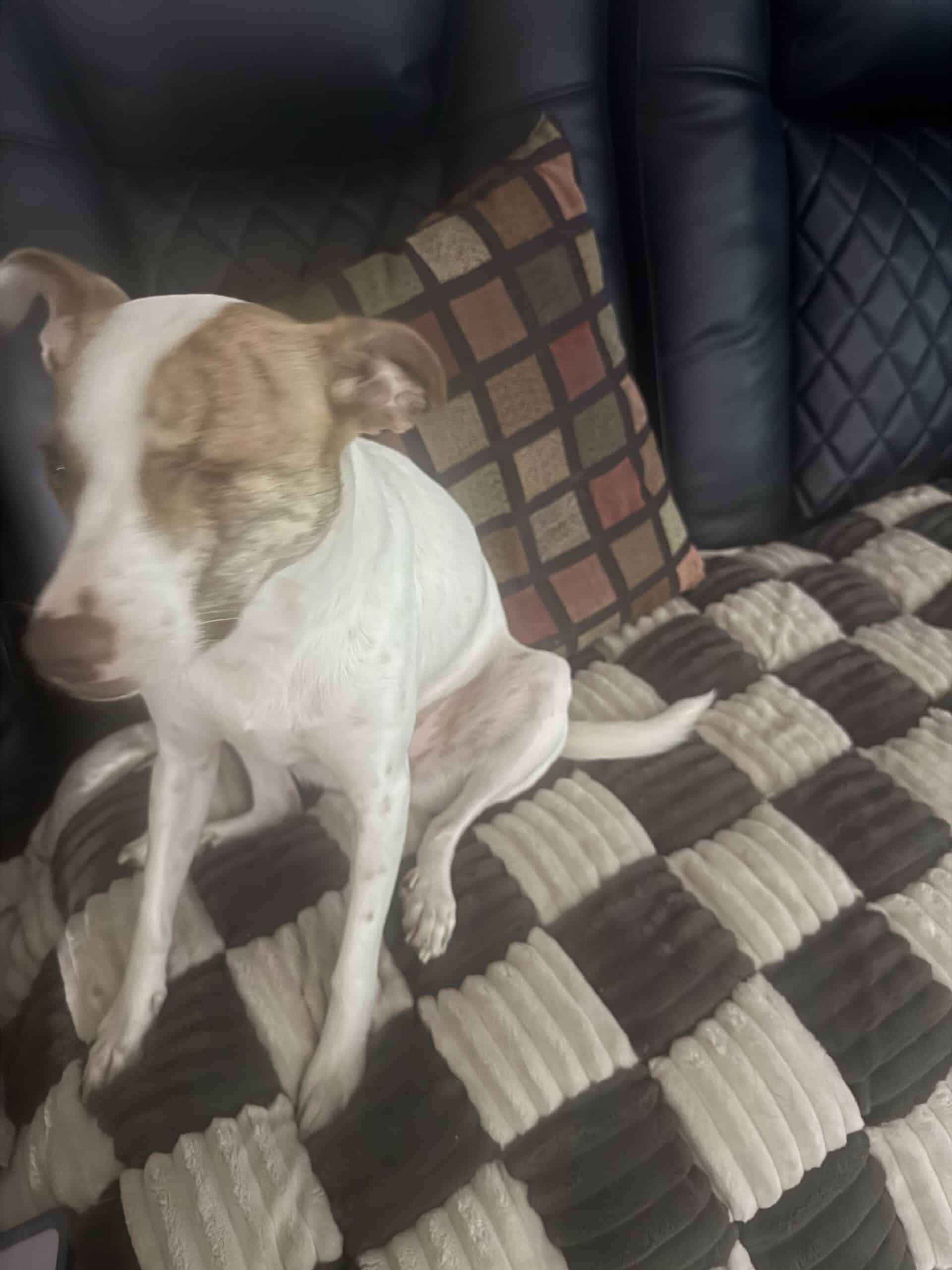
Slipping is a fabric problem more than a cover problem. Smooth polyester and anything with a slick waterproof face gives a dog nothing to grip, and the fix is texture rather than a different product category.
Mine does not have this issue at all. The cover is a cloth material and sturdy enough that she gets proper purchase on it, and that was honestly not something I thought about when choosing it.
A Quick Note
This covers grip and furniture setup rather than veterinary advice. A dog that has started slipping, struggling to get up, or hesitating before jumping may have a joint or mobility issue worth raising with a veterinarian.
Quick Answer
Choose a textured woven fabric over smooth or slick surfaces, secure the cover so it does not move underneath her, and add a small non-slip mat or blanket on her usual spot if the cover itself cannot be changed.
Why Dogs Slip on Some Covers
| Cause | What happens |
|---|---|
| Smooth synthetic face | Claws and pads find no texture |
| Waterproof membrane surface | Slick by design, sheds grip too |
| Cover sliding on upholstery | Whole surface moves under her |
| Fabric softener residue | Coats fibers, reduces friction |
| Long nails | Prevent pads contacting the surface |
| Overgrown paw fur | Same effect as long nails |
Two genuinely different things get called slipping here. The dog sliding around on the cover, and the cover itself sliding across the sofa with the dog on top of it. They have different fixes entirely, so it is worth working out which one is actually happening before buying anything.
Fabric Is the Main Variable
Woven fabrics with visible surface texture give claws and pads something to catch on. Canvas, twill, and heavier cotton blends all work considerably better than smooth microfiber does.
Quilted covers help for much the same reason, since the stitching running through them creates ridges across the surface rather than leaving one flat unbroken plane.
Waterproof covers are the most common culprit by some distance. A membrane face is smooth by design, and the exact property that stops liquid soaking through also stops paws finding any grip.
Sherpa and fleece are genuinely grippy and they also hold hair very heavily, which makes them a trade rather than a clear win, covered in choosing a pet couch cover.
Why Mine Works
The cover is a cloth material and sturdy enough that she has never had trouble on it.
That was not a deliberate choice on my part in any way. I bought it as a cover rather than as a grip surface, and it simply happens to be the kind of fabric that works for her.
Worth saying plainly, because grip is the sort of thing you only ever notice when it is missing. Nobody buys a couch cover while thinking about whether their dog will be able to stand up on it.
She also has her own bed and switches back and forth between the two of them, so she is not spending every waking hour on the cover, covered in whether you need a cover if your dog has a bed.
If I were choosing one again knowing this, I would check the fabric face itself rather than looking only at the waterproofing and the fit.
If the Cover Is Moving Underneath Her
This is the other version of the problem and it needs a completely different fix from the fabric one.
Foam anchor tucks wedged deeply into the crevices stop the lateral movement that makes a cover shift sideways when she pushes off it.
Non-slip rug pad cut to size and laid between the cover and the upholstery grips both surfaces at once, which is the answer that works on leather sofas specifically.
Correct sizing does more than any accessory you can add. Slack fabric moves around and a cover that genuinely fits the sofa does not, covered in whether couch covers stay in place with dogs.
Check the Dog Rather Than the Cover
Nail length
Long nails hold the pads up off the surface, so a dog with overgrown nails starts slipping on things she used to manage without any trouble. This is by far the most common cause people overlook entirely.
Fur between the pads
Overgrown fur between the pads does exactly the same thing as long nails. Trimming it back flush with the pads restores grip immediately and costs nothing.
New hesitation or difficulty
A dog that could get on the sofa and now cannot may have a joint or mobility problem rather than a traction one, which is a veterinary question.
Weight and build
Heavier dogs and short-legged breeds push off harder to get up, which means more force against whatever grip the surface offers.
Age
Older dogs lose confidence on any surface with reduced grip, and ramps or steps often help considerably more than fabric changes do, covered in dog stairs and ramps for senior dogs.
Why Grip Matters Beyond Convenience
A dog slipping on furniture is worth taking more seriously than an annoyance, and the reasons are mechanical.
Scrabbling for purchase puts sudden loads through joints. A dog that pushes off, slides, and catches herself is absorbing forces her legs were not braced for, repeatedly.
Small breeds jumping down onto hard flooring are already landing hard, and a slippery launch surface makes the landing less controlled than it would otherwise be.
Confidence changes too. A dog that has slipped a few times starts hesitating, and hesitation before a jump often means a worse jump rather than a safer one.
Nails suffer as well, since a dog gripping repeatedly at a surface that gives nothing back splits and wears them faster than normal use does.
None of that makes a slippery cover dangerous. It means the fix is worth doing for reasons beyond keeping her comfortable, and mobility support sits in dog stairs and ramps.
Adding Grip Without Replacing the Cover
A textured blanket laid on her usual spot is the simplest fix available. It provides grip exactly where she actually lies without needing to change the whole cover.
A small non-slip mat, of the type sold for holding rugs in place, works underneath a blanket to stop that moving around as well.
Skipping fabric softener matters more than it sounds. Residue coats the fibers and reduces friction measurably, which is something people almost never connect to a dog suddenly starting to slip.
Washing the cover restores some of the texture that has been flattened down by use over time, and it is worth trying that before replacing anything at all, covered in how often to wash a dog couch cover.
Related Reading
- dog couch covers
- non-slip furniture covers
- choosing a cover
- cover against blanket
- dog blankets and throws
- protecting furniture
Frequently Asked Questions
How do you stop a dog slipping on a couch cover?
Choose a textured woven fabric rather than smooth or waterproof-faced material, secure the cover so it does not move, and add a grippy blanket on her spot if you cannot change the cover.
Which fabrics grip best?
Canvas, twill, heavier cotton blends, and quilted surfaces. Smooth microfiber and waterproof membrane faces are the ones dogs slide on.
Are waterproof covers worse for grip?
Usually. The membrane face is smooth by design, and the property that stops liquid soaking through also stops paws finding purchase.
Could it be the dog rather than the cover?
Often. Long nails and overgrown fur between the pads both hold the paw off the surface, and trimming either restores grip immediately.
My dog suddenly started slipping, why?
Nails or paw fur growing out, fabric softener residue, a cover that has flattened with use, or a mobility change worth a veterinary conversation.
Does fabric softener really matter?
It coats fibers and reduces friction, which people rarely connect to slipping. Skipping it on pet fabrics is worth doing regardless.
Why does grip matter beyond comfort?
Scrabbling puts sudden loads through joints, small dogs land harder from a slippery launch, and repeated gripping wears nails faster. It is worth fixing for more than convenience.
What if I cannot replace the cover?
Put a textured blanket on her usual spot with a non-slip mat underneath. That gives grip where she lies without changing anything else.
Sources
- American Kennel Club. How to Trim Your Dog’s Nails. https://www.akc.org/expert-advice/health/how-to-trim-your-dogs-nails/
- ASPCA. General Dog Care. https://www.aspca.org/pet-care/dog-care/general-dog-care
For the wider picture, see our guide to how to choose the right dog bed.
