
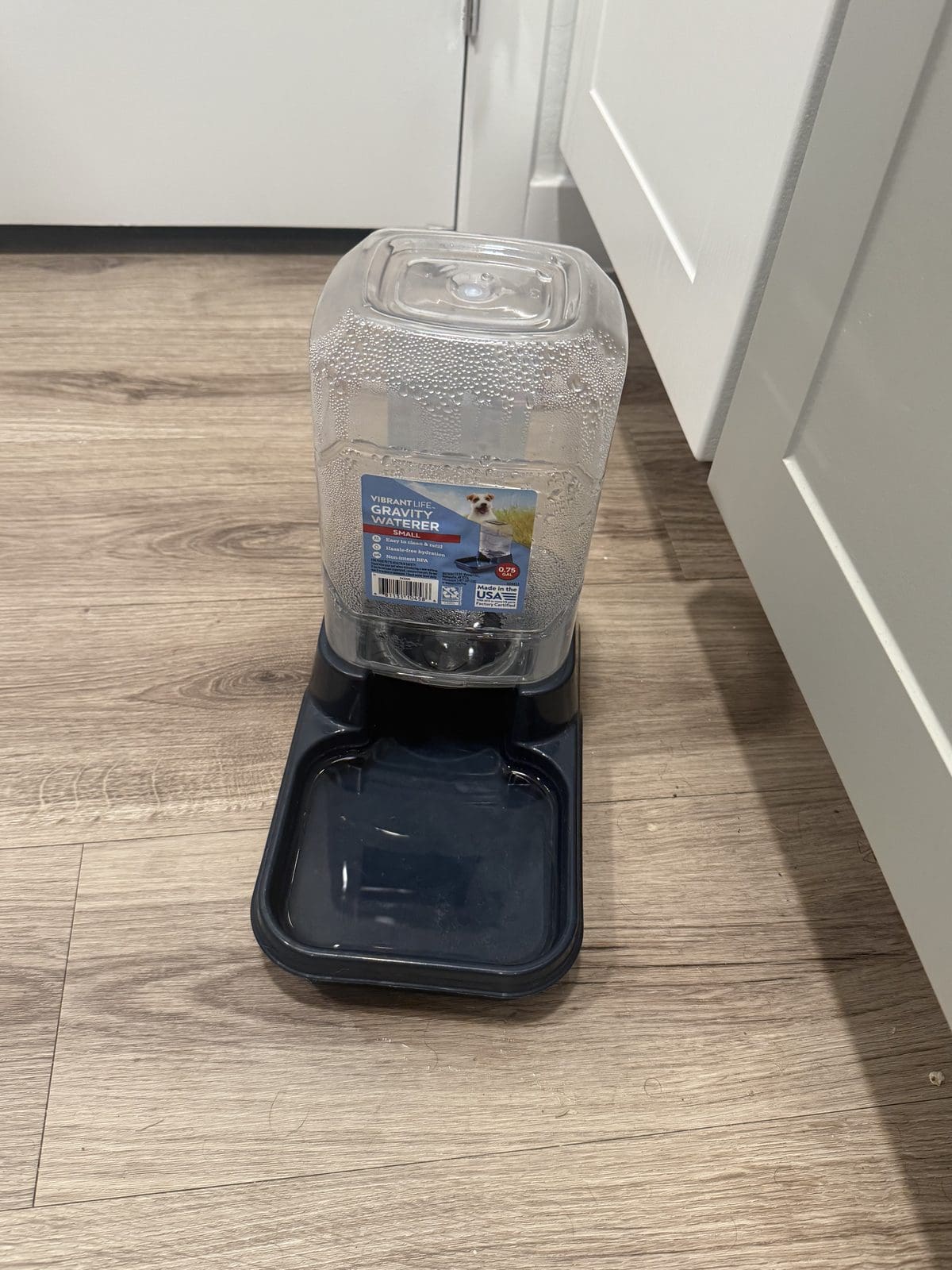
Gravity water bowls are a good option for many dogs and owners, using a reservoir that automatically refills the dish as your dog drinks, so water stays available with far less frequent topping up, though they do need periodic cleaning like any bowl. Whether gravity water bowls are good for dogs really depends on your routine and your dog, and in my experience they work well. Here is an honest look based on using one, and for options see the best gravity dog water bowls.
Quick Answer
A gravity water bowl keeps water topped up automatically from a reservoir, which means less frequent refilling and a steady supply. They suit owners who do not want to refill a dish daily and dogs that drink normally. The main thing to stay on top of is cleaning, since the reservoir and dish still need regular attention to stay fresh.
Key Takeaways
- A reservoir refills the dish automatically as your dog drinks.
- They mean far less frequent refilling than a standard bowl.
- They keep water reliably available throughout the day.
- They still need periodic cleaning to stay fresh.
- They suit most dogs that drink normally.
How a Gravity Water Bowl Works
The mechanism is simple and needs no power. A gravity water bowl has a sealed reservoir sitting above or beside a drinking dish. As your dog drinks and the water level in the dish drops, gravity releases more water from the reservoir to refill it, until the reservoir empties. There is nothing to plug in and no pump, unlike a water fountain, which circulates and filters water electrically. That simplicity is part of the appeal: fewer parts to fail and no electricity needed. The trade-off compared with a fountain is that the water sits still rather than being filtered and aerated, which is why our comparison of gravity versus fountain water bowls is worth a look.
My Experience With a Gravity Water Bowl
I use a gravity water bowl for my small dog, and it has been genuinely low-maintenance. I only need to refill the reservoir about once a week, and in between it reliably keeps water available in the dish without me thinking about it. She has never had any issues drinking from it, and it has simply worked as intended. Compared with a standard bowl that I would be topping up every day, the reduction in daily fuss is the main benefit I have noticed. For an owner who wants water handled with minimal effort, that weekly-refill convenience is exactly what a gravity bowl is supposed to deliver, and in my case it does.
The Benefits
The advantages are practical. The biggest is convenience: a larger reservoir means you refill far less often than a daily-topped standard bowl, which is handy for busy days or longer stretches away from home. It keeps a steady supply of water available, so your dog is less likely to run dry between refills. There is no electricity or pump involved, so nothing to break down and no running cost, and the designs are generally simple and sturdy. For multi-pet or busy households, or just owners who would rather not refill a dish every day, these conveniences add up to a genuinely useful bowl.
The Drawbacks to Know
Gravity bowls are not perfect, and it is fair to note the trade-offs. Because the water sits still in the reservoir and dish rather than being filtered or circulated, it can become stale or develop a film if left too long, which means cleaning matters. The reservoir can make the unit bulkier than a plain bowl, and a determined dog could potentially tip a lightweight one, though many are designed to resist this. They also do not filter the water the way a fountain does. None of these are dealbreakers for most dogs, but they are reasons to stay on top of cleaning, covered in our guide on cleaning a dog water bowl.
Who They Suit Best
Gravity water bowls fit certain situations especially well. They suit owners who want to refill less often, households where someone is away for the day, and dogs that drink at a normal, steady pace. They are a strong middle ground between a plain bowl you top up constantly and a powered fountain with filters and running costs. If your dog drinks normally and you want low-effort, reliable water access, a gravity bowl is a sensible choice. If you want filtered, circulating water, a water fountain may suit better, and if you want automated feeding too, see gravity versus automatic feeders.
Gravity Bowl vs a Standard Water Bowl
It helps to see where a gravity bowl sits next to a plain water dish. A standard bowl holds only what you pour in, so on a warm day or a busy schedule it can run low or empty before you notice, meaning more frequent refills. A gravity bowl, with its reservoir, keeps the dish topped up automatically until the reservoir runs out, which stretches the time between refills considerably. The trade-off is a bulkier unit and a reservoir to clean, but for keeping water reliably available with less daily effort, the gravity design has a clear edge over a plain bowl for many households.
Recommended Reading
- the best gravity dog water bowls, our roundup of picks.
- how to clean a dog water bowl, keeping it fresh.
- how to choose a dog bowl, the full overview.
- gravity versus fountain water bowls, how they compare.
- what size dog bowl for a small dog, sizing for little dogs.
- choosing the right dog food
Related: water bowls for small dogs.
Gravity Water Bowls FAQ
How often do you refill a gravity water bowl?
It depends on the reservoir size and your dog, but far less often than a standard bowl. For my small dog, I refill about once a week. A larger dog or a smaller reservoir would need more frequent topping up, but weekly is realistic for many small dogs.
Do gravity water bowls keep water fresh?
They keep water available, but since the water sits still rather than being filtered or circulated, freshness depends on regular cleaning. Empty, wash, and refill the bowl and reservoir regularly to prevent film or staleness. They keep water supplied, not filtered like a fountain.
Are gravity water bowls better than fountains?
Neither is universally better. Gravity bowls are simpler, need no electricity, and have nothing to break, while fountains filter and circulate water but cost more and need power. Gravity suits low-maintenance reliability; fountains suit owners who want filtered, moving water.
Can a dog tip over a gravity water bowl?
A determined dog could tip a lightweight one, though many gravity bowls are designed with a wide, stable base to resist this. Choosing a sturdy, appropriately sized model and placing it in a low-traffic spot reduces the chance of spills.
Do gravity water bowls need cleaning?
Yes. Like any bowl, the dish and reservoir need regular cleaning to stay fresh and prevent film buildup, since the water is not filtered. Cleaning is the main upkeep task with a gravity bowl, so build it into your routine rather than only refilling.
Are gravity water bowls good for small dogs?
Yes, they work well for small dogs that drink normally, keeping water available with minimal refilling. Choose a reservoir size suited to your dog and a stable base. In my experience with a small dog, a gravity bowl has been reliable and low-maintenance.
Are gravity water bowls safe?
Yes, they are safe for dogs that drink normally. They use no electricity and simply refill the dish by gravity. The main responsibility is keeping the dish and reservoir clean, since the water is not filtered. Choose a stable design to avoid tipping.
How big a gravity water bowl do I need?
Match the reservoir to your dog and how often you want to refill. A small dog does well with a modest reservoir refilled about weekly, while larger dogs or longer gaps call for a bigger capacity. A stable base matters too.
Can I use a gravity water bowl when I am away for the day?
Yes, that is one of their main advantages. The reservoir keeps water available for hours, so your dog is not left with an empty dish while you are out. Choose a reservoir size that comfortably covers the time away, and clean it regularly.
See the complete guide: the complete guide to choosing dog gear.
