
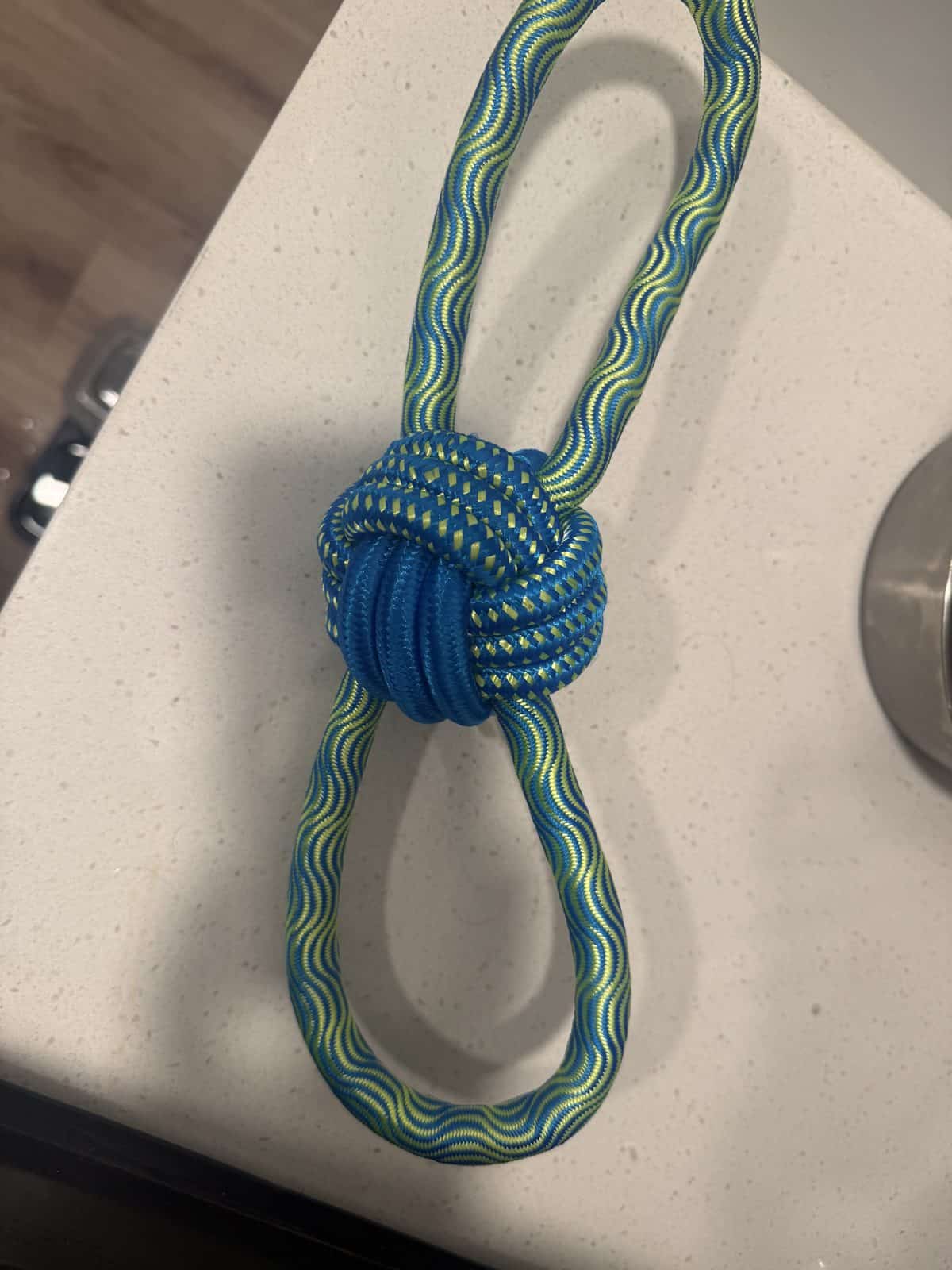
Rope toys can be safe for dogs during supervised play, but they carry a real risk if a dog swallows loose fibers, which do not digest and can bunch inside the intestines and cause a serious blockage, so supervision, appropriate sizing, and discarding frayed toys are essential. Understanding whether rope toys are safe for dogs comes down to how you use and manage them. Here is the balanced picture with my own routine included, and for options see the best dog rope toys.
A Quick Note
This article shares general information and my personal experience, not veterinary advice. Every dog is different. If you think your dog has swallowed rope fibers, contact your veterinarian right away, and talk to your vet about what toys suit your dog.
The Short Version
- Rope toys are for supervised play, never left out unattended.
- The main risk is swallowed fibers causing intestinal blockage.
- Solo chewing is the higher-risk use; supervised tug and fetch are lower.
- Inspect before each session and discard at the first fraying.
- Any dog of any size can swallow fibers, so supervision matters for all.
The Honest Answer: Safe With Supervision
Rope toys sit in a middle ground: safe for many dogs during supervised, controlled play, but genuinely risky if a dog is left to chew one apart alone. The American Kennel Club’s guidance on toys emphasizes supervising play, and that supervision is the single factor that most separates safe rope-toy use from dangerous use. A rope toy given to a dog for interactive tug or fetch, with an owner watching, is a very different thing from a rope toy left in a crate or dropped on the floor for unsupervised chewing. Rather than calling rope toys simply safe or dangerous, it is more accurate to say they are safe when managed and risky when they are not.
The Main Risk: Swallowed Fibers
The central concern is fiber ingestion. Rope does not break down in a dog’s digestive system, and this is true for natural cotton as much as synthetic materials. When a dog tears off and swallows strands, those fibers can gather and press against the intestinal wall, and long strands in particular can become what veterinarians call a linear foreign body, where one end anchors while the rest is pulled forward, causing the intestine to bunch. Veterinary experts, including those at Texas A&M College of Veterinary Medicine, have described how dangerous this can be, sometimes requiring surgery. Because swallowed fibers may not show clearly on an X-ray, the risk is easy to underestimate, which is exactly why prevention matters so much.
Which Use Is Riskiest
Not all rope play carries equal risk, and this is worth understanding. Supervised tug and fetch are the lower-risk uses, because the dog grabs, pulls, and carries the toy without much chance to sit and chew it apart. Solo chewing is the higher-risk use, since a dog left to nibble and pick at a rope is far more likely to work strands loose and swallow them. This does not mean a dog can never gnaw a rope, but it does mean unsupervised solo chewing is the pattern authorities warn about most. Keeping rope toys tied to interactive, watched play, rather than leaving them out as all-day chew items, is one of the most effective ways to lower the risk.
Which Dogs Are Higher Risk
Some dogs should use rope toys with extra caution or skip them. Puppies are higher risk because they explore with their mouths and swallow indiscriminately. Aggressive or destructive chewers who reduce a toy to pieces quickly, and dogs who tend to gulp what they tear off, are also higher risk, and for them a rope toy may not be a good fit at all. Gentle chewers who savor a toy without shredding it are at the lower-risk end. It is worth stressing, though, that any dog of any size or breed can swallow fibers, so no dog is automatically safe, and supervision applies across the board rather than only to known chewers.
How to Use Rope Toys More Safely
If you choose to offer rope toys, a handful of habits meaningfully lower the risk. Supervise every session and never leave a rope toy with a dog that is alone, crated, or unwatched. Inspect the toy before each play session, paying attention to the knot ends where fraying usually starts, and discard it the moment strings begin to come loose rather than waiting for obvious damage. Choose an appropriately sized toy your dog cannot swallow sections of, favor tightly woven natural cotton over loosely braided or synthetic rope, and keep play oriented toward tug and fetch. Storing the toy out of reach between sessions, as our guide on cleaning dog toys also encourages, completes the routine.
My Experience
Here is how it works in my home, offered as one example rather than a safety guarantee. My dog is a small, gentle Jack Russell terrier mix, and her rope toy has held up remarkably well for her, since she does not tear into it the way a determined chewer would. She mostly gnaws it gently on her own with some occasional tug, and because solo chewing is the higher-risk use, I keep it strictly to supervised play: I only let her have it when I am there to watch, and I do not leave it with her when I am away. The toy staying durable without fraying, her gentle style, and that supervision are the conditions that keep this lower-risk, but I still treat it as an active habit rather than something I can set and forget.
What to Do If Your Dog Swallows Rope
If you suspect your dog has swallowed rope fibers, treat it seriously. Contact your veterinarian or an emergency clinic right away, because a linear foreign body tends to worsen the longer it stays in the digestive tract, and early assessment gives the most options. Do not pull on any string you can see hanging from your dog, as this can cause internal damage, and do not induce vomiting unless a vet specifically tells you to. Watch for signs like vomiting, loss of appetite, lethargy, or straining, though symptoms may not appear immediately. When it comes to possible rope ingestion, calling your vet promptly is always the safer choice.
Safer Alternatives to Consider
If the risks give you pause, or your dog is a heavy chewer or a gulper, several alternatives are worth considering. Durable rubber toys built for tug and fetch offer similar interactive fun without loose fibers to swallow, and many are dishwasher safe and long lasting. For dogs that mainly want something to gnaw, a purpose-made chew toy avoids the string-ingestion problem entirely, and our roundup of chew toys for tougher chewers covers sturdy options. Interactive and puzzle toys give a boredom outlet with no fraying material at all. None of this means rope toys are off the table for a gentle, supervised dog, but for higher-risk chewers a lower-risk toy is often the wiser call, and rotating toys keeps any single one from being chewed down.
Recommended Reading
- the best dog rope toys, our roundup of options.
- rope toys for small dogs, sizing for little dogs.
- rope toys versus chew toys, how they compare.
- chew toys for tougher chewers, a sturdier alternative.
- how to manage unwanted chewing, curbing chewing habits.
Are Rope Toys Safe FAQ
Are rope toys safe for all dogs?
No. They can be safe for many dogs during supervised play, but puppies, aggressive or destructive chewers, and dogs who gulp pieces are higher risk and may be better with alternatives. Any dog can swallow fibers, so supervision is essential regardless. Ask your vet.
What happens if a dog swallows rope fibers?
Rope does not digest and can bunch in the intestines, and long strands can form a linear foreign body that causes a blockage, sometimes requiring surgery. Contact your vet immediately if you suspect ingestion, and do not pull on any visible string.
Can I leave my dog alone with a rope toy?
No. Rope toys should never be left with an unsupervised, alone, or crated dog, since unsupervised solo chewing is when dogs are most likely to tear off and swallow fibers. Treat rope toys as interactive toys for watched play only, then put them away.
Are cotton rope toys safer than synthetic ones?
Natural cotton is generally the safer default, being softer and containing fewer added chemicals, but cotton fibers still do not digest and can cause blockages if swallowed. Whatever the material, tight weave, secure knots, and supervision matter more than the fiber type alone.
How do I know when to throw away a rope toy?
Discard it as soon as you notice fraying, loose threads, or knots beginning to unravel, rather than waiting for major damage. Inspect the toy before each session, especially the knot ends. A worn, fraying rope toy is far more likely to shed fibers your dog can swallow.
When should I call my vet about a rope toy?
Call your vet immediately if your dog swallows rope pieces or shows signs like vomiting, lethargy, loss of appetite, or straining. Do not wait for symptoms to worsen, and do not pull visible string or induce vomiting unless your vet directs you. Prompt care matters most.
Do vets recommend rope toys?
Views vary. Many treat rope toys as acceptable for supervised interactive play but caution against leaving them for unsupervised chewing, and some prefer lower-risk alternatives for heavy chewers. The consistent advice is supervise, inspect, discard frayed toys, and consult your own vet.
Are rope toys good for a dog’s teeth?
Rope toys are generally gentle on teeth, and chewing may help remove a little plaque, but this is a minor benefit, not a substitute for proper dental care. Do not rely on a rope toy for dental health; talk to your vet about your dog’s teeth.
Sources
- American Kennel Club, expert advice on dog toys and supervised play
- ASPCA, Position Statement on Dog Chews and Treats
Keep reading: our guide: how to mentally stimulate a dog, our picks for dog enrichment toys for high energy dogs.
